Artwork
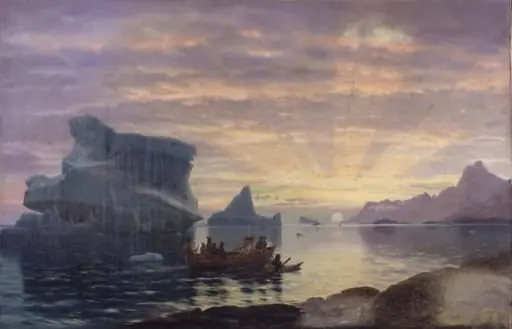
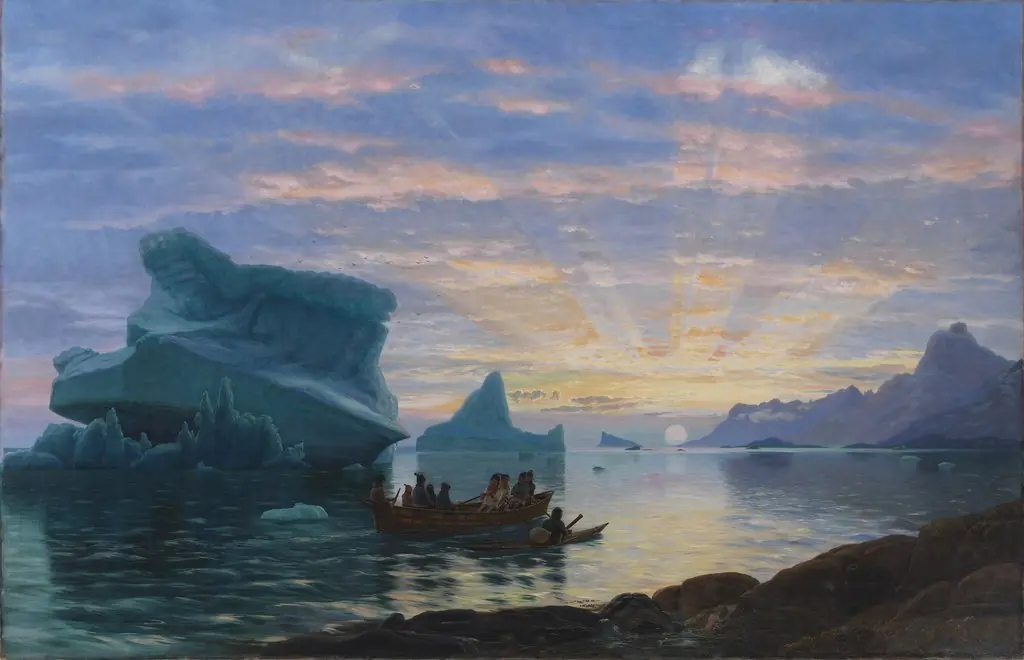
En grønlandsk boplads ved en fjord. Sommer
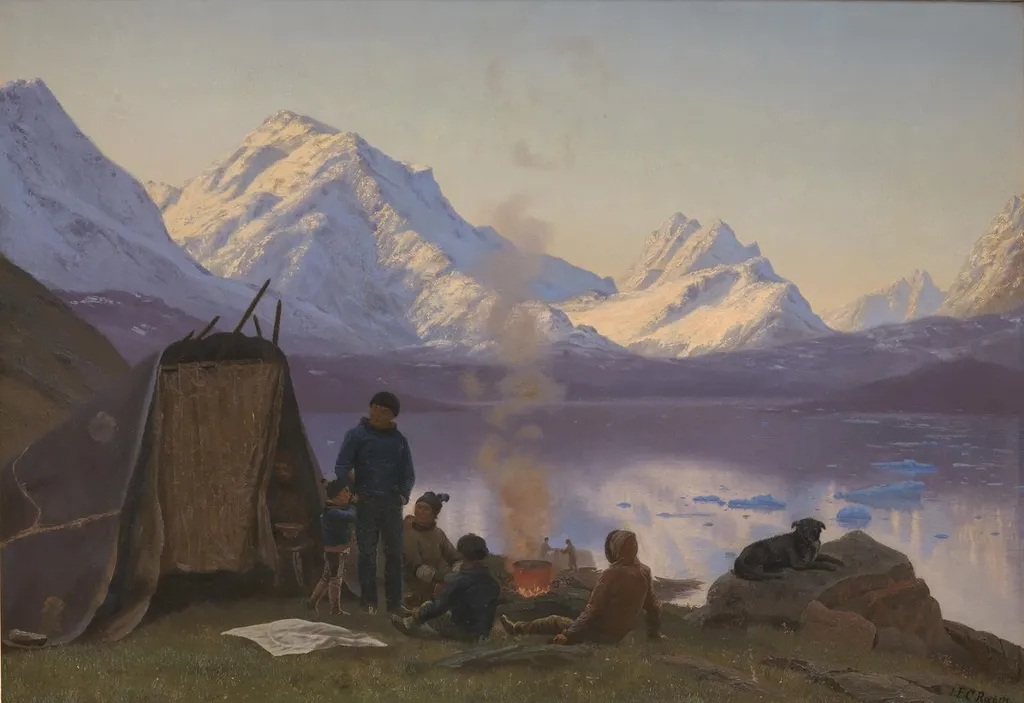
En grønlandsk boplads ved en fjord. Sommer is a photography by the Impressionist artist Unknown. It dates from 1883 and is held in the collection of the Statens Museum for Kunst. Painted in 1883, this work depicts a summer settlement along a Greenlandic fjord.
About this work
Overview
The piece is part of the Museum of Ethnography’s collection, reflecting late 19th-century interest in documenting Arctic communities.
Painted in 1883, this work depicts a summer settlement along a Greenlandic fjord. The artist captures a quiet moment of daily life, with figures near a tent and a dog resting on a stone. The landscape features snow-capped mountains and floating ice, suggesting the region’s harsh yet serene environment. The piece is part of the Museum of Ethnography’s collection, reflecting late 19th-century interest in documenting Arctic communities.
Subject & Meaning
The scene portrays Indigenous Greenlanders engaged in unobtrusive, routine activities—perhaps preparing food, mending gear, or resting. The presence of a dog and tent underscores a nomadic, subsistence-based lifestyle. No dramatic action is shown; instead, the painting conveys dignity in stillness, emphasizing harmony between people and their environment without romanticization or intrusion.
Technique & Style
The artist employs soft, muted tones to render the Arctic light, with subtle shifts in color suggesting the cool air and reflective water. Brushwork is loose but deliberate, avoiding sharp outlines in favor of atmospheric blending. Light falls gently across the figures and terrain, creating a sense of calm intimacy, though the approach differs from Impressionist conventions by prioritizing ethnographic observation over optical effects.
History & Provenance
Created during a period of heightened European interest in Arctic exploration, the painting was likely made after direct observation or from sketches taken on-site. It entered the Museum of Ethnography’s holdings shortly after completion, where it was preserved as a record of Indigenous life. Its provenance reflects the museum’s early mission to collect cultural artifacts from remote regions under colonial-era documentation practices.
Context
In the late 1800s, Scandinavian artists and scientists increasingly traveled to Greenland to study its people and landscapes. This work aligns with a broader trend of ethnographic art that sought to document Indigenous life before perceived cultural change. Unlike exoticizing portrayals common elsewhere, this image avoids spectacle, favoring quiet realism and spatial accuracy.
Legacy
The painting remains a quiet but significant record of Greenlandic life at the turn of the century. It contributes to historical understanding of how Arctic communities were visually represented in European institutions. While not widely exhibited, it continues to inform scholarly work on cross-cultural representation and the ethics of ethnographic art.
Artist & collection

 Domestic Scene
 Giacomo and Cardinal Marco, investing Andrea, Abbot of San Zeno, with his Benefice
 The Nymph of Fontainebleau
 Portrait of a Woman
 Madonna and Child with Saints in the Enclosed Garden
 Venus and Minerva
 Family Group of Four on Sofa
 Wall painting from Room H of the Villa of P. Fannius Synistor at Boscoreale