Artwork
Infancy. From the series: The Four Ages of Man
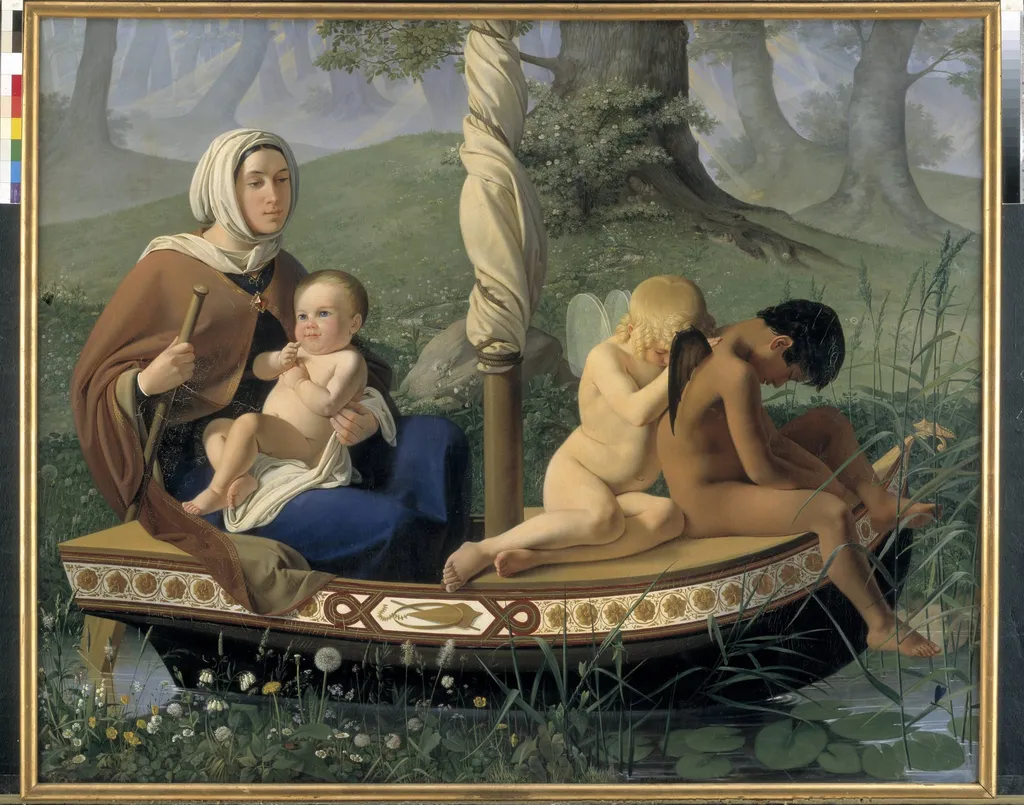
Infancy. From the series: The Four Ages of Man is a photography by Unknown. It dates from 1842 and is held in the collection of the Statens Museum for Kunst. Created around 1842, this image is part of a four-part series depicting human life stages.
About this work
Overview
Created around 1842, this image is part of a four-part series depicting human life stages. It portrays infancy through a quiet domestic scene set in an idealized natural environment. The work is held in the collection of the Museum of Ethnography, where it is studied for its symbolic representation of early life within a broader cultural framework.
Subject & Meaning
A woman in a headscarf cradles an infant while seated on a finely carved boat, evoking a sense of protection and stillness.
A woman in a headscarf cradles an infant while seated on a finely carved boat, evoking a sense of protection and stillness. Behind them, two winged figures play near a tree, symbolizing the innocence and timelessness of childhood. The tranquil setting, with blooming flowers and distant hills, suggests a mythic or allegorical realm rather than a literal place, reinforcing the theme of life’s earliest, untainted phase.
Technique & Style
The composition uses soft contrasts of light and shadow to draw focus to the mother and child, creating a serene, intimate atmosphere. The ornate detailing on the boat and the ethereal quality of the winged figures suggest a blend of realism and symbolic fantasy. The background elements are rendered with gentle gradations, enhancing the dreamlike quality without overwhelming the central figures.
History & Provenance
The work was produced in the early 1840s and entered the Museum of Ethnography’s collection shortly thereafter. Its origins are tied to a broader artistic project exploring the stages of human existence, though the artist’s full identity remains unverified in public records. The piece has been consistently cataloged as part of this thematic series since its acquisition.
Context
This image emerged during a period when European artists increasingly turned to allegory and folklore to explore universal human experiences. The inclusion of mythic elements—such as winged children and symbolic vessels—reflects a broader interest in connecting personal life cycles with timeless, almost archetypal narratives drawn from regional traditions and classical sources.
Legacy
Though not widely exhibited outside specialized collections, the work contributes to scholarly discussions on how 19th-century visual culture represented childhood and the passage of time. Its quiet symbolism and restrained imagery offer a counterpoint to more dramatic portrayals of the era, preserving a contemplative vision of infancy as a sacred, suspended moment.
Artist & collection

 Domestic Scene
 Giacomo and Cardinal Marco, investing Andrea, Abbot of San Zeno, with his Benefice
 The Nymph of Fontainebleau
 Portrait of a Woman
 Madonna and Child with Saints in the Enclosed Garden
 Venus and Minerva
 Family Group of Four on Sofa
 Wall painting from Room H of the Villa of P. Fannius Synistor at Boscoreale
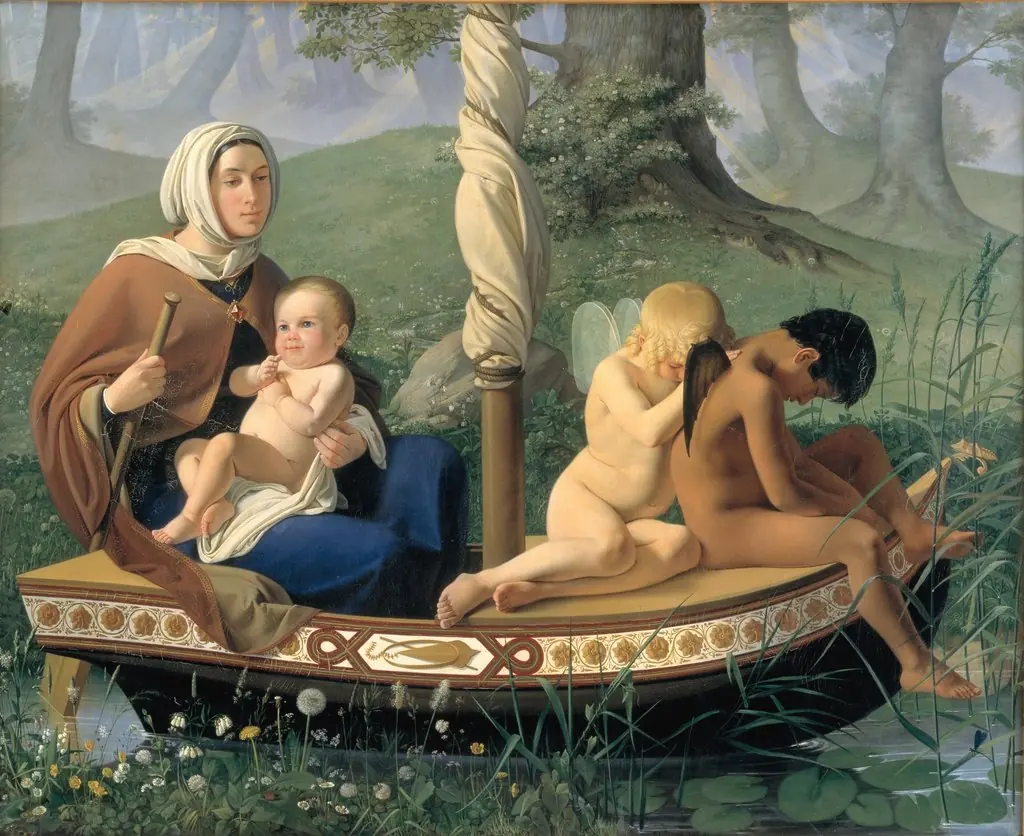 Infancy. From the series: The Four Ages of Man
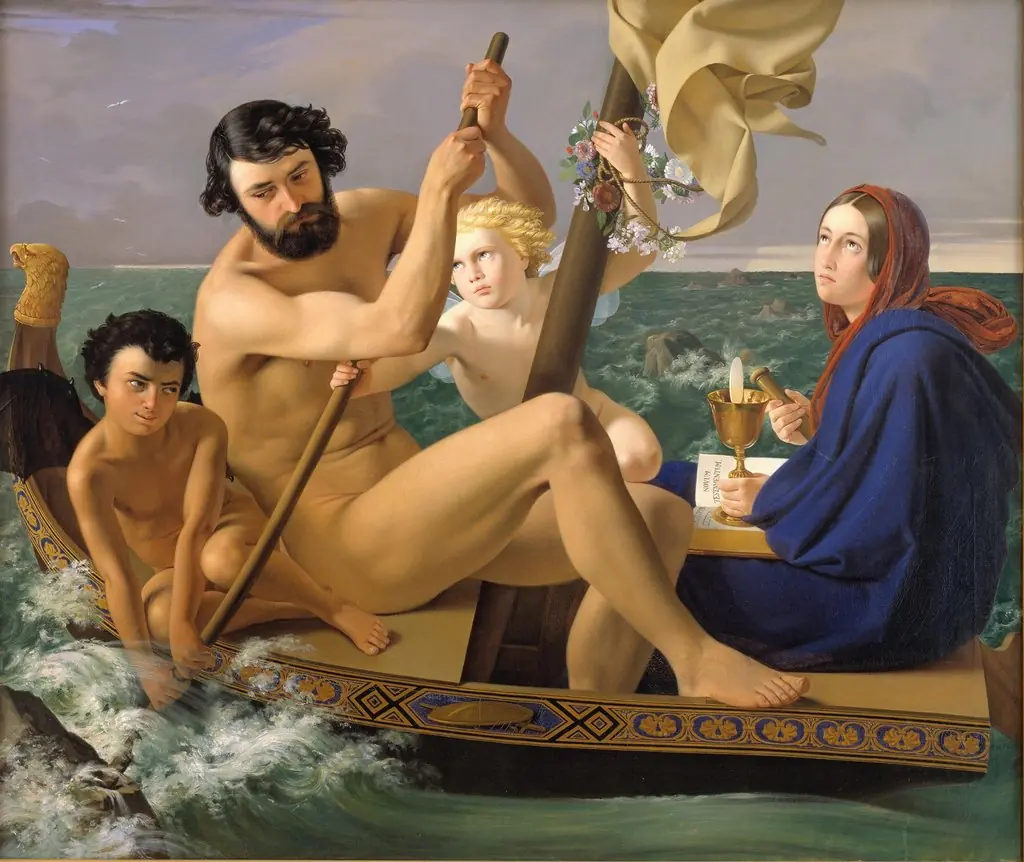 Manhood. From the series: The Four Ages of Man
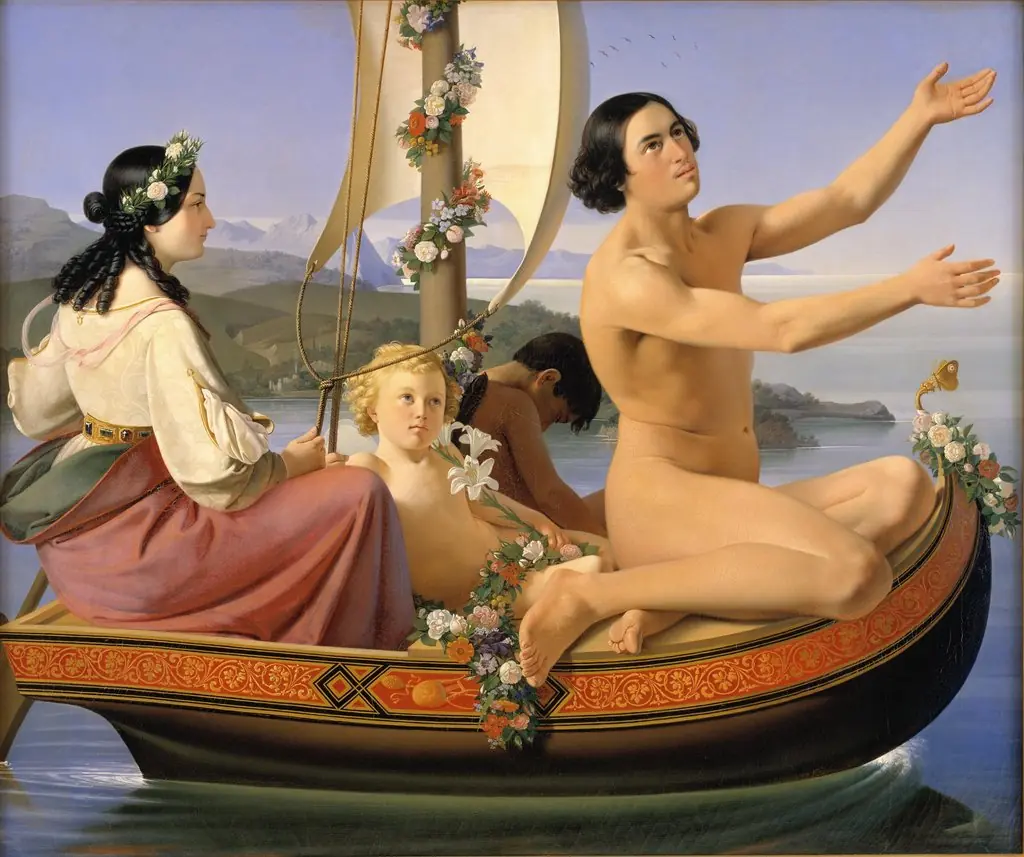 Youth. From the series: The Four Ages of Man
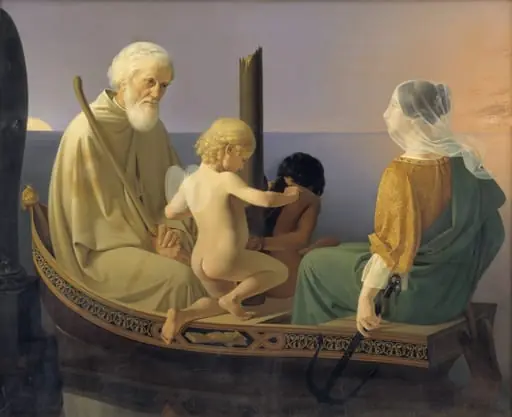 Old Age. From the series: The Four Ages of Man
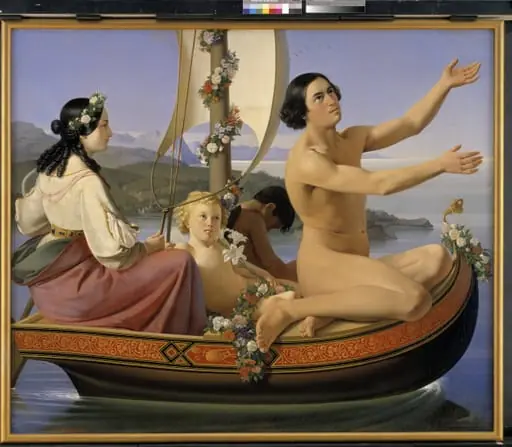 Youth. From the series: The Four Ages of Man
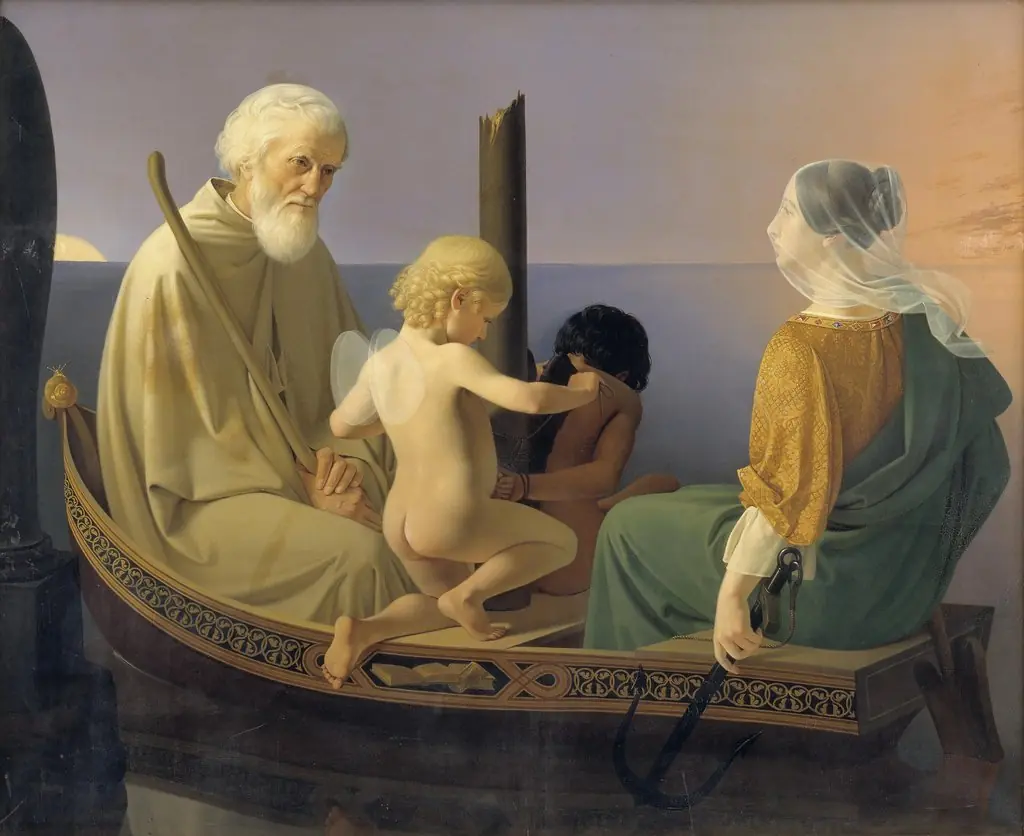 Old Age. From the series: The Four Ages of Man
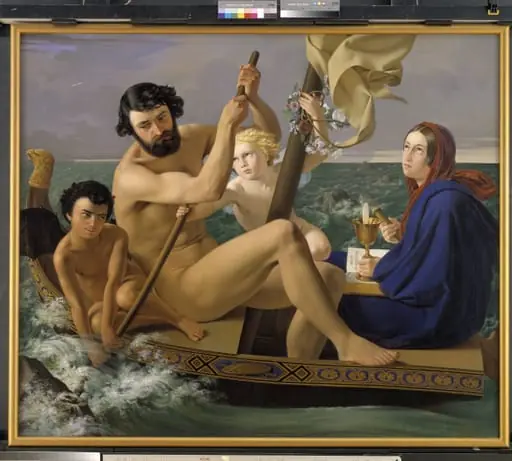 Manhood. From the series: The Four Ages of Man