Artwork
Young Woman with a Candlestick, Old Woman and a Violin Player
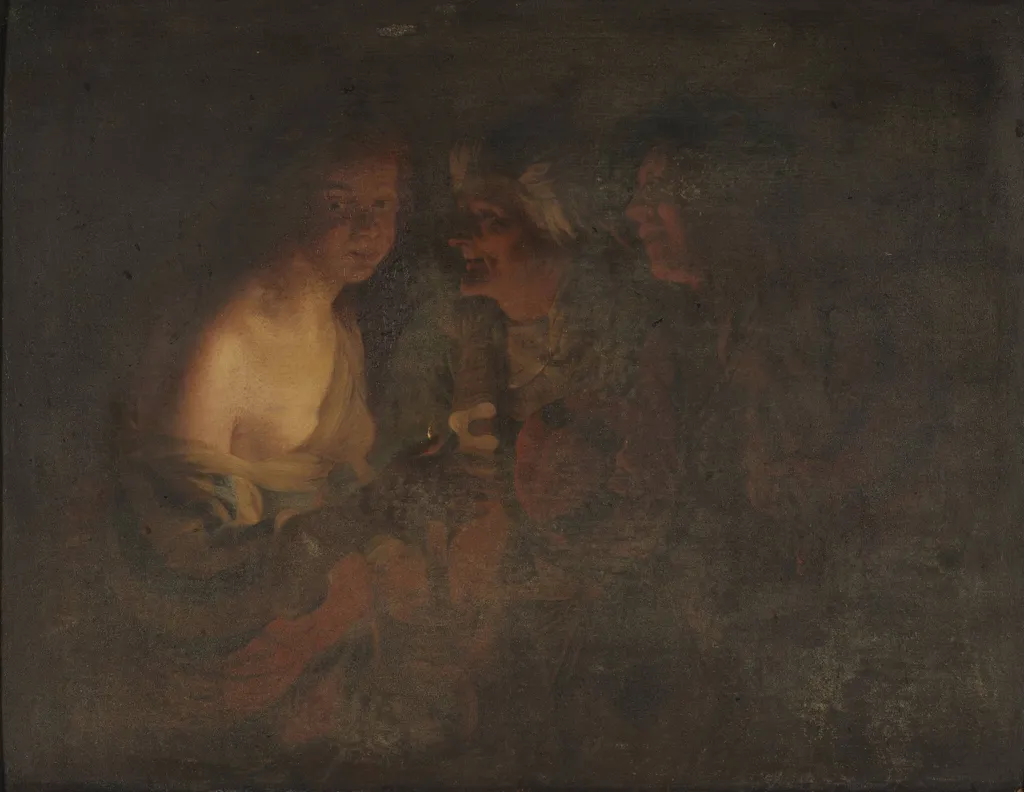
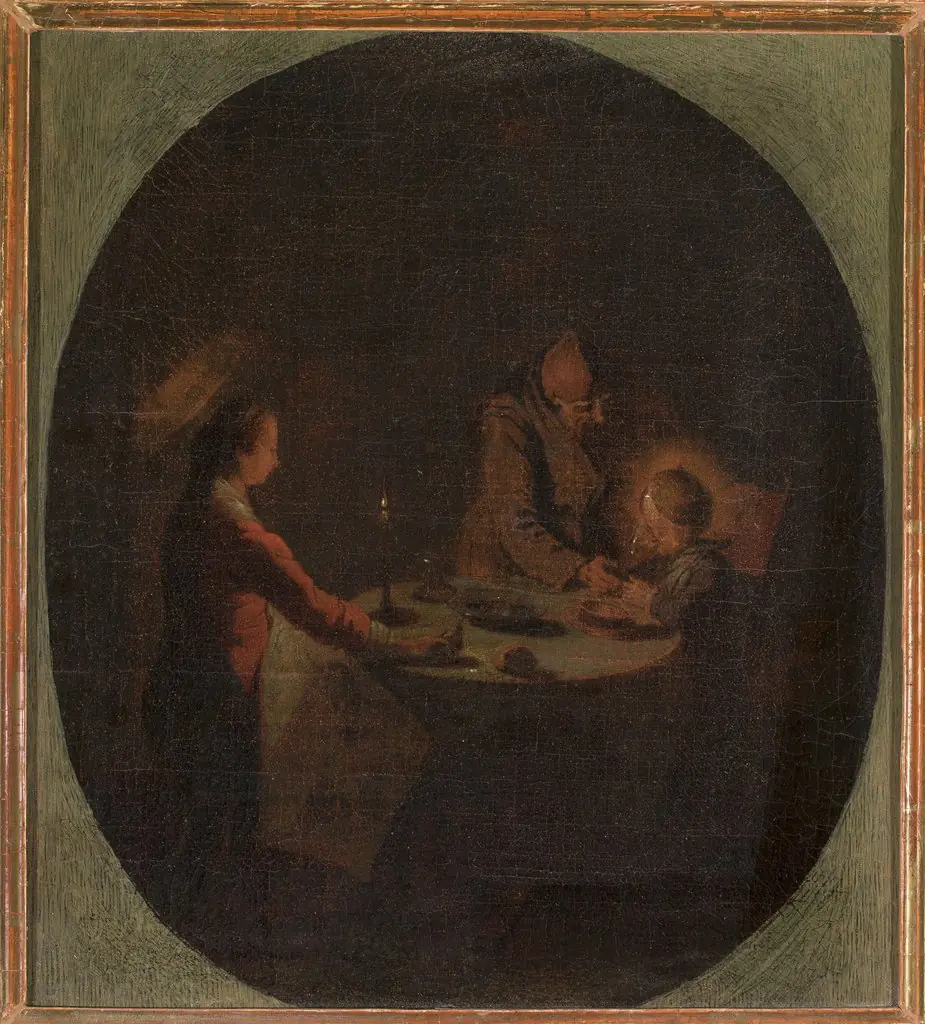
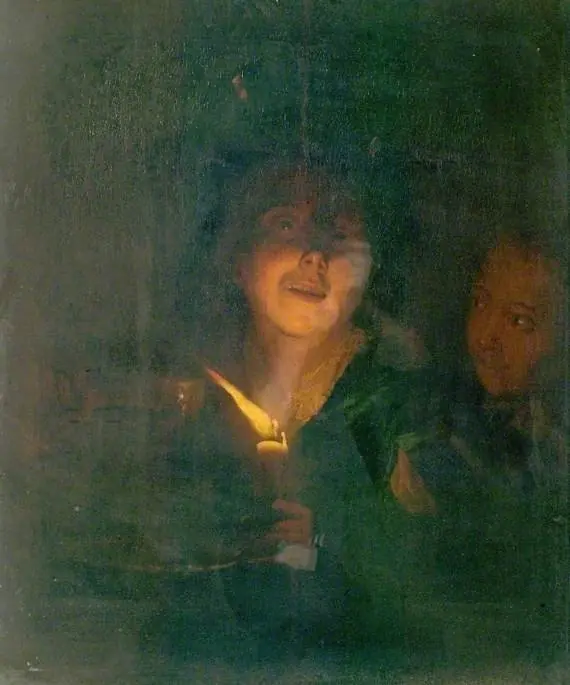
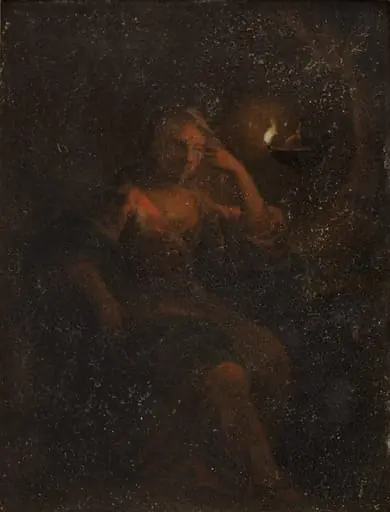
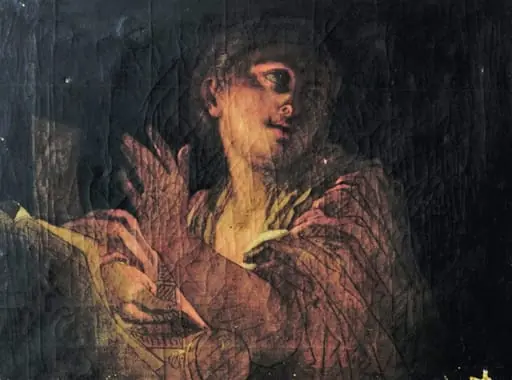
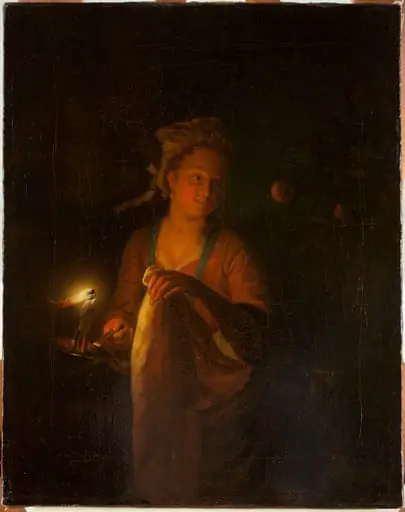
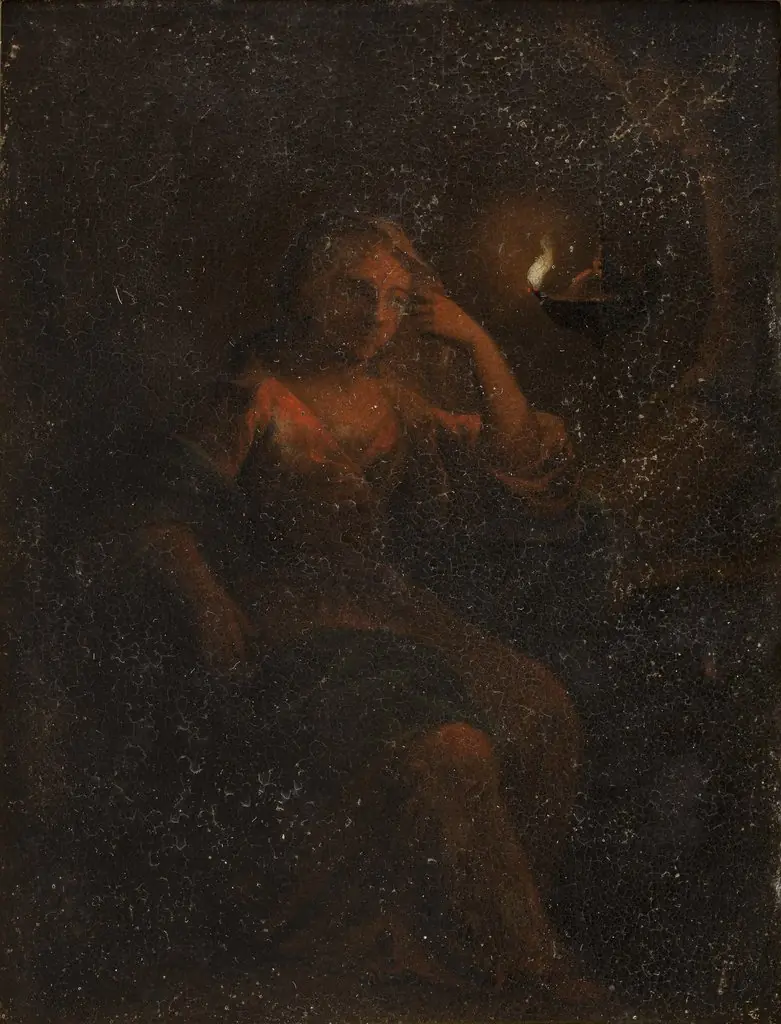
Young Woman with a Candlestick, Old Woman and a Violin Player is a photography by Unknown. It dates from 1650 and is held in the collection of the Statens Museum for Kunst. This painting, dated around 1650, depicts three figures in a dim interior setting.
About this work
Overview
This painting, dated around 1650, depicts three figures in a dim interior setting. A young woman holds a candlestick, a man plays a violin, and an older woman observes them from the side. The composition is tightly focused, with minimal background detail, drawing attention to the quiet interaction between the figures. The work is held in the collection of the Museum of Ethnography.
Subject & Meaning
The candle’s glow isolates the figures in a private sphere, while the violin’s presence implies music as a shared, quiet ritual.
The scene suggests a moment of intimate, unremarkable domestic life. The candle’s glow isolates the figures in a private sphere, while the violin’s presence implies music as a shared, quiet ritual. The observer’s gaze introduces a subtle tension—perhaps contemplation, memory, or detachment—without narrative clarity. The work resists moralizing, instead offering a restrained glimpse into ordinary human presence.
Technique & Style
The artist employs a limited palette dominated by deep browns and blacks, with light concentrated solely on the candle’s glow. Facial features and textures are rendered with subtle gradations, emphasizing tactility over detail. The brushwork is restrained, avoiding dramatic contrasts in favor of atmospheric cohesion. Light functions not as illumination but as a compositional anchor, shaping mood and spatial depth.
History & Provenance
The painting entered the Museum of Ethnography’s collection in the early 20th century, though its earlier ownership remains undocumented. Its attribution to 2619_person is based on stylistic comparison with other works from the same period and region. No records of exhibition or commission exist, suggesting it may have been a private commission or studio exercise rather than a public work.
Context
Created during a time when genre scenes of domestic life gained popularity in Northern Europe, this painting reflects a quiet, non-narrative approach to everyday moments. Unlike theatrical or moralizing genre paintings, it avoids clear symbolism or action, aligning more closely with introspective traditions that valued stillness and observation over storytelling.
Legacy
The work contributes to a broader corpus of 17th-century intimate scenes that prioritize mood over drama. While not widely reproduced or studied, it exemplifies a restrained aesthetic that values subtlety and psychological nuance. Its preservation in an ethnographic context underscores its value as a record of daily life rather than artistic innovation.
Artist & collection

 Domestic Scene
 Giacomo and Cardinal Marco, investing Andrea, Abbot of San Zeno, with his Benefice
 The Nymph of Fontainebleau
 Portrait of a Woman
 Madonna and Child with Saints in the Enclosed Garden
 Venus and Minerva
 Family Group of Four on Sofa
 Wall painting from Room H of the Villa of P. Fannius Synistor at Boscoreale