Artwork
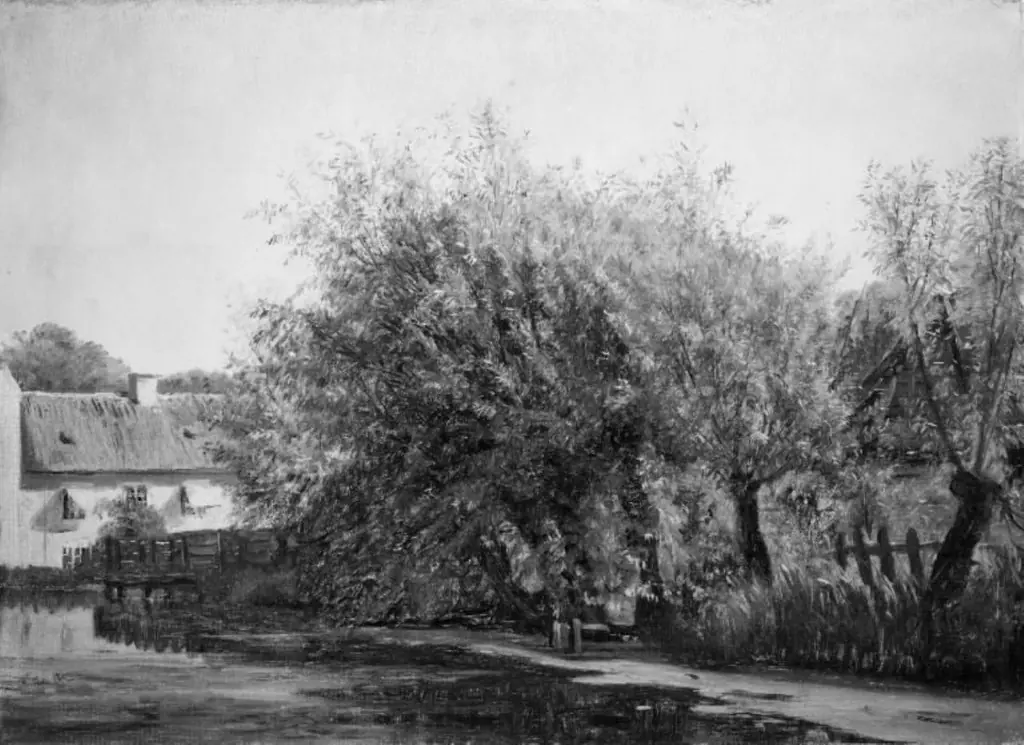
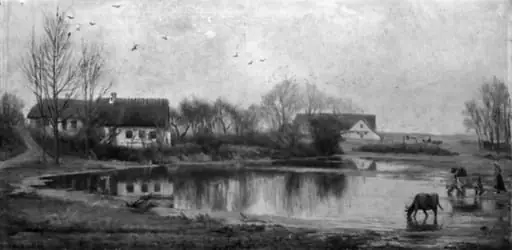
Parti fra knivfabrikken ved Råvaddam
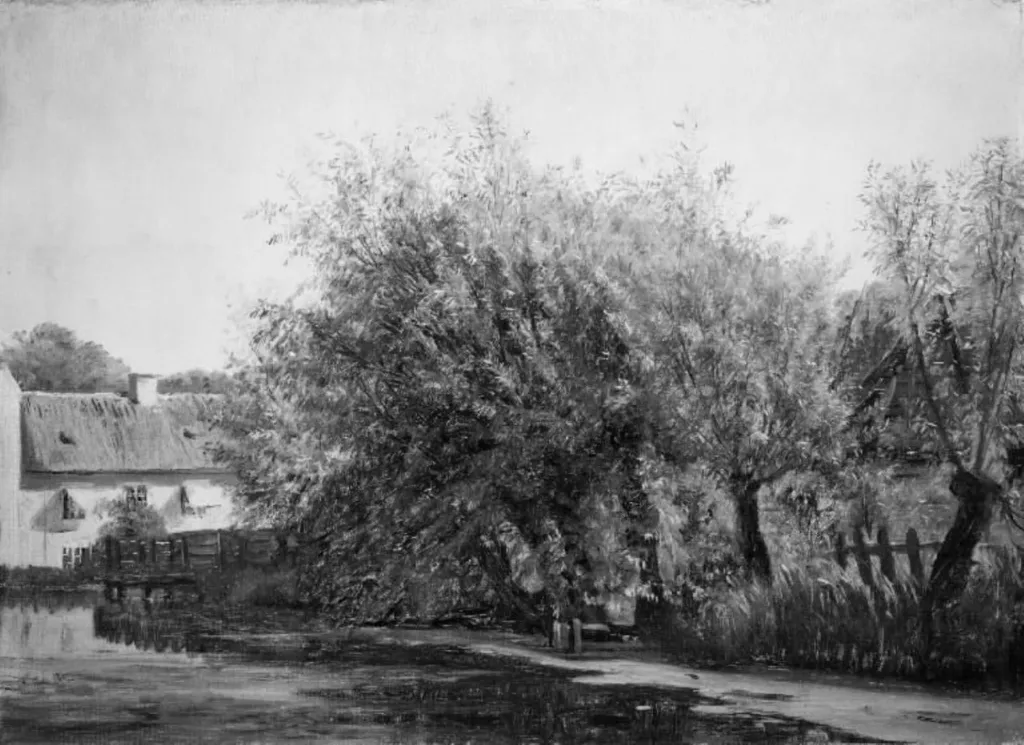
Parti fra knivfabrikken ved Råvaddam is a photography by the Impressionist artist Unknown. It dates from 1866 and is held in the collection of the Statens Museum for Kunst.
About this work
Overview
The work is held in the collection of the Museum of Ethnography, where it is valued for its documentation of rural Danish life during industrial transition.
Created in 1866 by an artist associated with the Danish Realist movement, this image captures a quiet industrial village along the Råvaddam river. Though titled with reference to a knife factory, the scene emphasizes the surrounding landscape rather than the machinery. The work is held in the collection of the Museum of Ethnography, where it is valued for its documentation of rural Danish life during industrial transition.
Subject & Meaning
The image depicts a modest settlement clustered along a riverbank, with simple thatched-roof dwellings and a prominent bare tree. The factory, mentioned in the title, is not visually dominant, suggesting the artist prioritized the harmony between human habitation and nature. The subdued activity implies a rhythm of daily life, where industry exists quietly within the natural environment rather than dominating it.
Technique & Style
The artist employed soft, muted tones and delicate gradations of light to evoke stillness. Brushwork is blended rather than defined, minimizing contrast and creating a hazy, atmospheric effect. The pale sky and shadowed ground merge gently, reinforcing a sense of quietude. This approach aligns with Realist principles, favoring observational truth over dramatic emphasis or idealization.
History & Provenance
The work was completed in 1866 and entered the Museum of Ethnography’s collection shortly thereafter. Its preservation there reflects an early interest in documenting everyday Danish life, particularly in regions undergoing economic change. While the artist’s full identity remains tied to a catalog number, the piece has been consistently referenced in studies of 19th-century regional realism.
Context
In mid-19th century Denmark, industrialization was slowly altering rural economies. This image reflects a moment when traditional village life coexisted with emerging manufacturing, such as the knife factory at Råvaddam. Unlike urban-focused Realists, this artist turned attention to the periphery, capturing how small-scale industry integrated into the landscape without disrupting its tranquility.
Legacy
The work contributes to a broader Danish visual record of rural industrial sites during a period of quiet transformation. It is not widely reproduced, but its restrained aesthetic and documentary value have made it a reference point in studies of regional Realism. Its presence in an ethnographic museum underscores its role as a cultural artifact rather than a celebrated artistic statement.
Artist & collection

 Domestic Scene
 Giacomo and Cardinal Marco, investing Andrea, Abbot of San Zeno, with his Benefice
 The Nymph of Fontainebleau
 Portrait of a Woman
 Madonna and Child with Saints in the Enclosed Garden
 Venus and Minerva
 Family Group of Four on Sofa
 Wall painting from Room H of the Villa of P. Fannius Synistor at Boscoreale
 An Avenue. Frederiksværk
 American Farm
 The Pine Path at Gilleleje
 Country road with willow trees near Bækkeskov
 A Corner of a Rental Garden
 Landevej med piletræer i nærheden af Bækkeskov
 Englandskab. Sommerdag
 Old Homestead
 Bog on a Wooded Islet
 Port Cochere at 39 Elm Street, Worcester, Mass.
 Parti fra knivfabrikken ved Råvaddam
 Gadekæret i Kajerød