Artwork
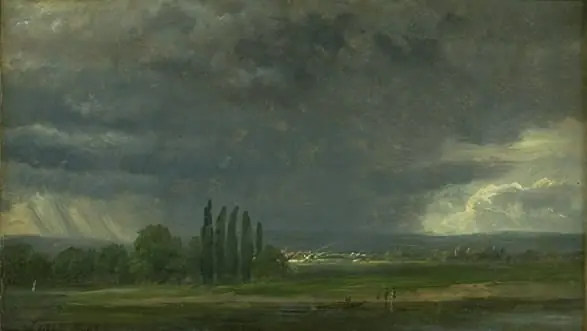
The Elbe Valley near Dresden
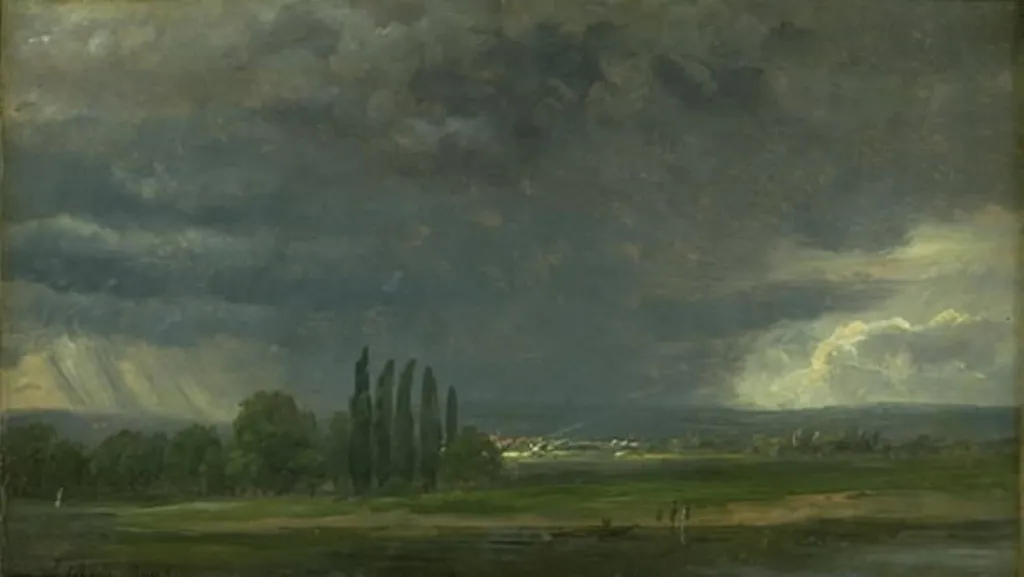
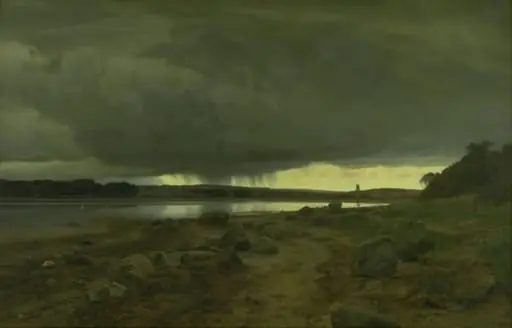
The Elbe Valley near Dresden is a photography by the Romanticist artist Unknown. It dates from 1823 and is held in the collection of the Statens Museum for Kunst. Painted in 1823, this landscape depicts the Elbe River as it flows through the terrain near Dresden.
About this work
Overview
Painted in 1823, this landscape depicts the Elbe River as it flows through the terrain near Dresden. The artist rendered the scene with a focus on atmospheric conditions rather than precise topography. The work is part of the collection at the Museum of Ethnography, though its subject matter aligns more closely with Romantic landscape traditions than ethnographic themes.
Subject & Meaning
Nature here is not merely observed but imbued with emotional weight, reflecting Romantic ideals that saw the wild landscape as a mirror for inner states.
The painting presents a quiet yet turbulent natural setting: a broad river valley under a brooding sky. The contrast between the dark, dense trees and the fractured light breaking through storm clouds suggests a tension between stillness and upheaval. Nature here is not merely observed but imbued with emotional weight, reflecting Romantic ideals that saw the wild landscape as a mirror for inner states.
Technique & Style
The artist employed soft, blended brushwork to dissolve boundaries between sky and land, creating a sense of fluid motion within the clouds. Light is not simply depicted but actively modeled, casting dramatic gradients that emphasize the weight and movement of the atmosphere. The technique avoids sharp definition, favoring tonal transitions that evoke the ephemeral quality of weather.
History & Provenance
Created in 1823, the painting entered the Museum of Ethnography’s collection at an unknown date. Its presence there may reflect early 19th-century collecting practices that grouped natural landscapes alongside cultural artifacts under broad ethnographic or encyclopedic frameworks, despite the work’s lack of direct anthropological content.
Context
This work emerged during a period when German artists increasingly turned to native landscapes as subjects worthy of serious contemplation. Influenced by Romanticism’s emphasis on emotion and the sublime, painters like this artist sought to convey nature’s power and mystery, moving beyond topographical accuracy to express psychological and spiritual responses to the environment.
Legacy
Though not widely reproduced or cited in major art histories, the painting exemplifies a quiet strand of Romantic landscape painting that prioritized mood over narrative. Its preservation in an ethnographic museum highlights how institutional categories sometimes diverged from artistic intent, offering a subtle commentary on the evolving definitions of cultural value in the 19th century.
Artist & collection

 Domestic Scene
 Giacomo and Cardinal Marco, investing Andrea, Abbot of San Zeno, with his Benefice
 The Nymph of Fontainebleau
 Portrait of a Woman
 Madonna and Child with Saints in the Enclosed Garden
 Venus and Minerva
 Family Group of Four on Sofa
 Wall painting from Room H of the Villa of P. Fannius Synistor at Boscoreale
 View towards Jungshoved
 Landscape near Frederiksborg Castle
 Landscape near Frederiksborg Castle
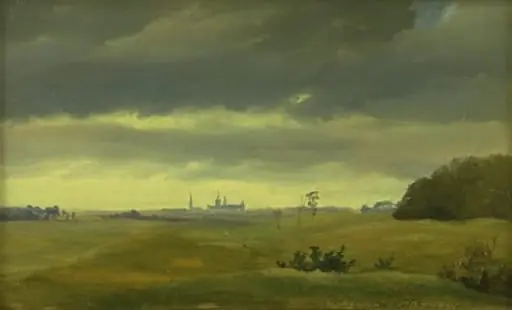 A View of Frederiksborg from Hestehaven
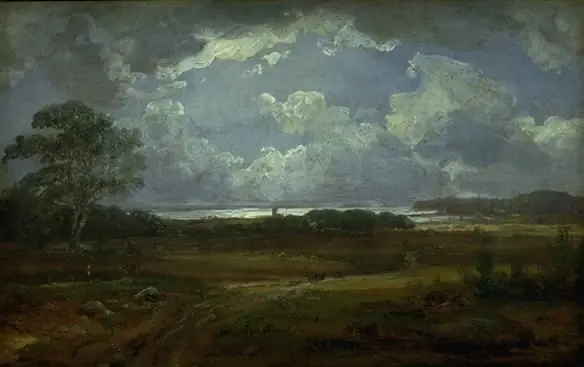 View towards Jungshoved
 Et vadested ved foden af en kirke
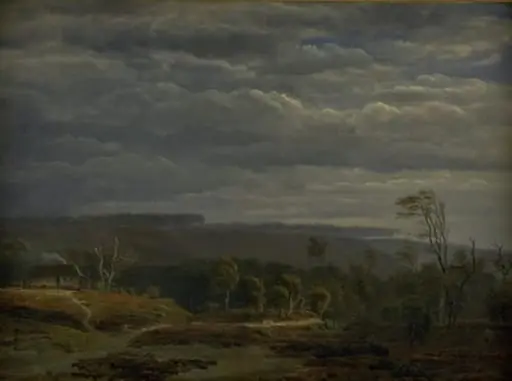 A View of a Wooded Landscape in Jutland
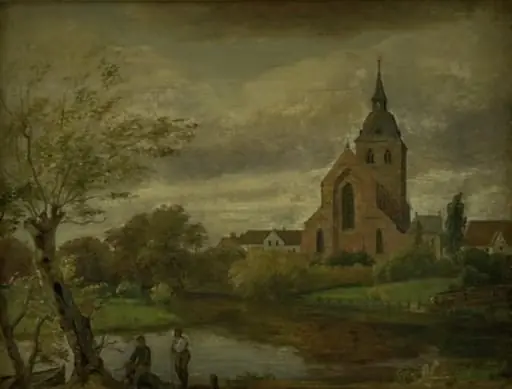 St Knud's Church by the River in Odense. Autumn
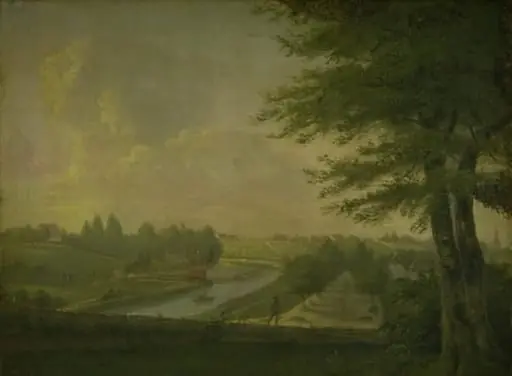 Parti ved Odense kanal
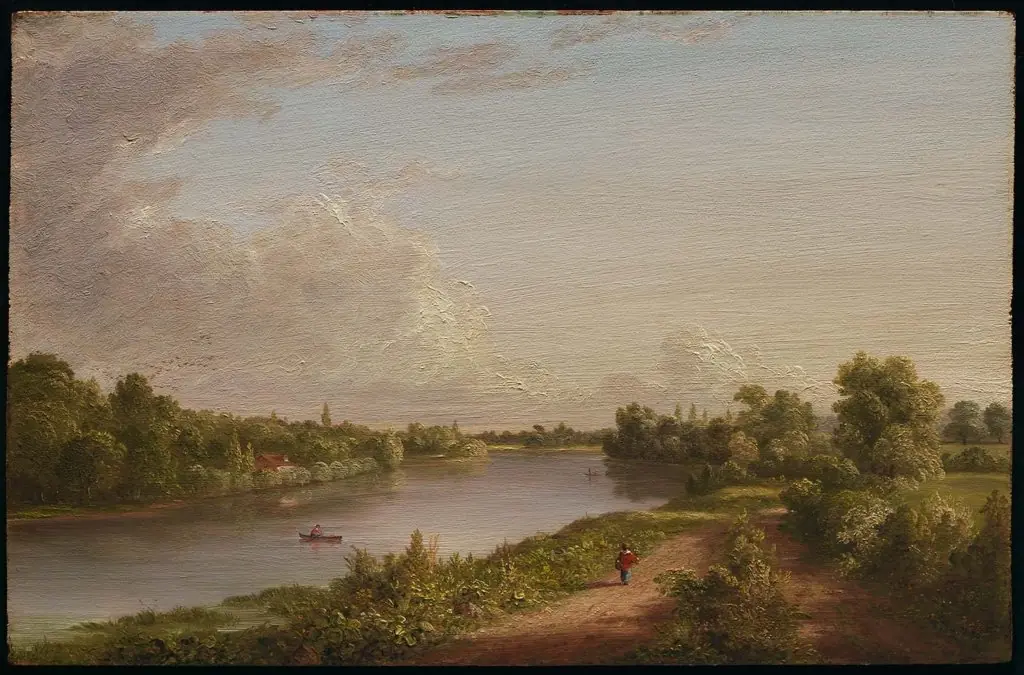 View of the Thames
 The Elbe Valley near Dresden
 A Showery Landscape. Kalø Vig, Jutland