Artwork
Bridge over a Stream in Assens, Funen
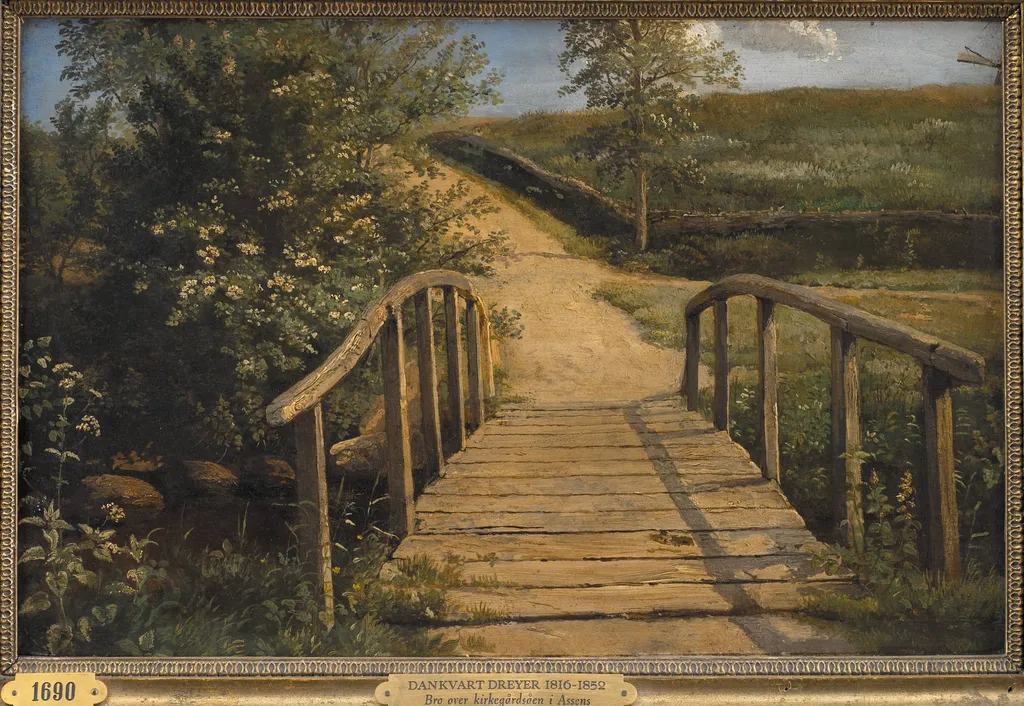
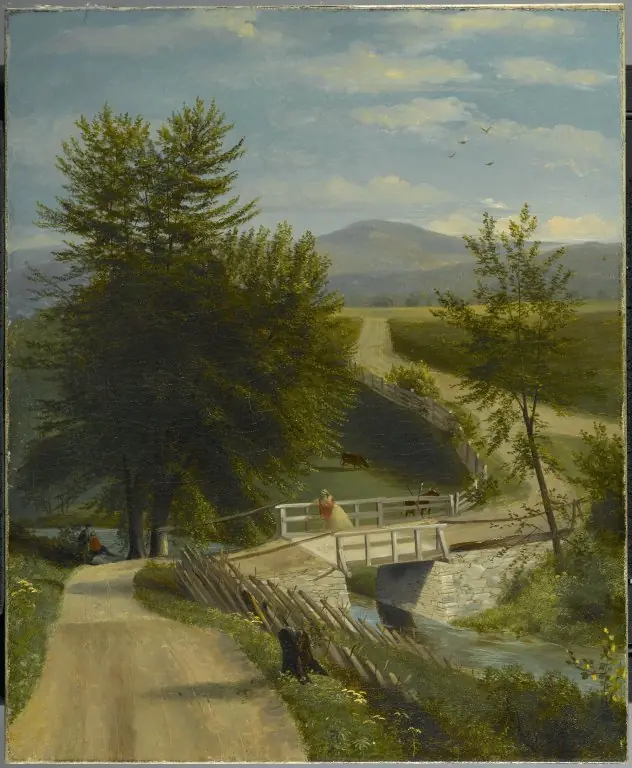
Bridge over a Stream in Assens, Funen is a photography by the Romanticist artist Unknown. It dates from 1842 and is held in the collection of the Statens Museum for Kunst. Painted in 1842, this work depicts a modest wooden bridge spanning a quiet stream in Assens, on the island of Funen.
About this work
Overview
Painted in 1842, this work depicts a modest wooden bridge spanning a quiet stream in Assens, on the island of Funen. Executed in oil, the scene captures a tranquil rural moment with minimal human presence. The painting resides in the Museum of Ethnography, though its subject is not ethnographic in content, suggesting a later acquisition or reclassification.
Subject & Meaning
The bridge serves as a quiet threshold between the cultivated bank and the wilder landscape beyond. Wildflowers and dense foliage suggest seasonal abundance, while the absence of figures emphasizes solitude and stillness. The composition invites contemplation rather than narrative, aligning with a broader 19th-century interest in nature as a space of quiet reflection.
Technique & Style
Soft, diffused light bathes the scene, enhancing the sense of calm. Brushwork is blended and subtle, particularly in the sky and foliage, avoiding sharp edges or dramatic contrasts. The wooden structure of the bridge is rendered with muted tones and textured strokes, reinforcing its age and integration with the natural surroundings.
History & Provenance
The painting was created by an artist active in mid-19th-century Denmark, though the specific identity remains unconfirmed in public records. It entered the Museum of Ethnography’s collection in the 20th century, possibly as part of a broader donation of Danish landscape works. Its classification there may reflect institutional curatorial practices rather than thematic relevance.
Context
Created during the height of Romanticism in Northern Europe, the work reflects a cultural turn toward intimate, unidealized nature. Unlike grand landscapes of mountains or storms, this scene finds dignity in the ordinary—small bridges, local streams, and modest hills—echoing Danish artists’ focus on their own countryside as worthy of artistic attention.
Legacy
Though not widely exhibited or reproduced, the painting contributes to a quiet tradition of Danish landscape painting that valued observation over spectacle. Its presence in an ethnographic museum underscores shifting ideas about what constitutes cultural heritage, bridging art and everyday life in ways that later scholars would reexamine.
Artist & collection

 Domestic Scene
 Giacomo and Cardinal Marco, investing Andrea, Abbot of San Zeno, with his Benefice
 The Nymph of Fontainebleau
 Portrait of a Woman
 Madonna and Child with Saints in the Enclosed Garden
 Venus and Minerva
 Family Group of Four on Sofa
 Wall painting from Room H of the Villa of P. Fannius Synistor at Boscoreale
 Landscape near Hammermøllen, North Zealand
 Landscape near Hammermøllen, North Zealand
 An Old Bridge at Hendon, Middlesex
 Lover's Walk
 A Bridge near Sorrento
 French River Landscape with a Bridge
 Parti af Færgelunden ved Jægerspris
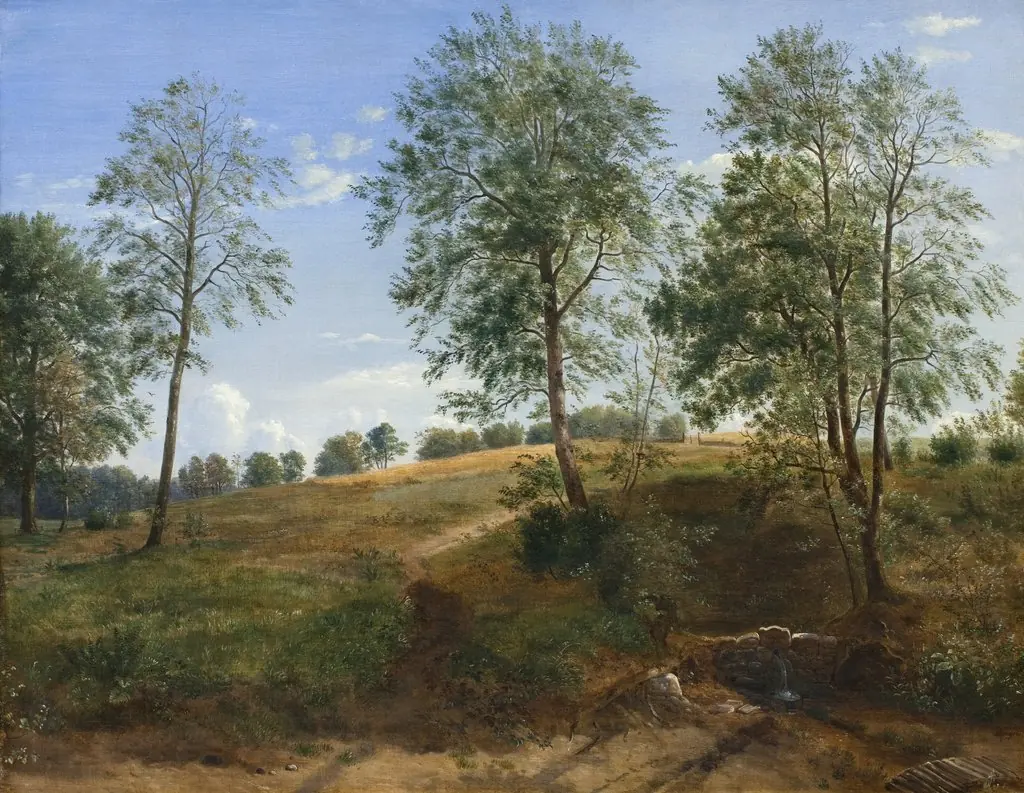 The Caroline Spring at Næsby on Funen
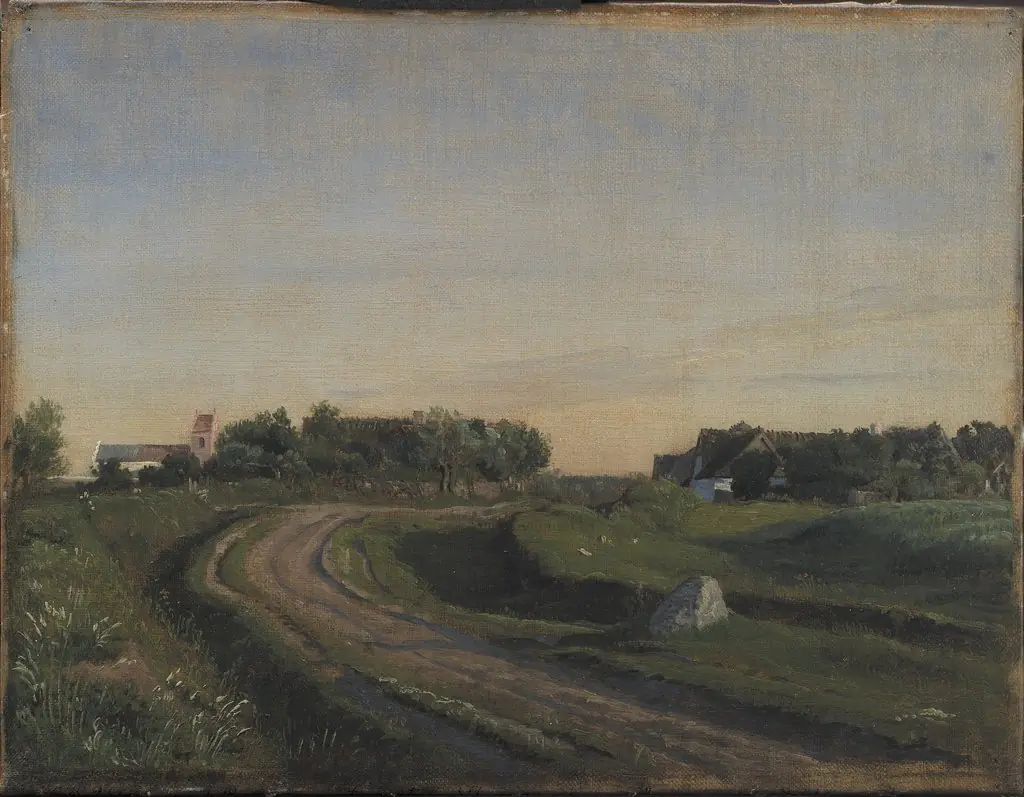 Vejby with the Church seen from the North. Evening Light. Zealand