Artwork
Saul on the Road to Damascus
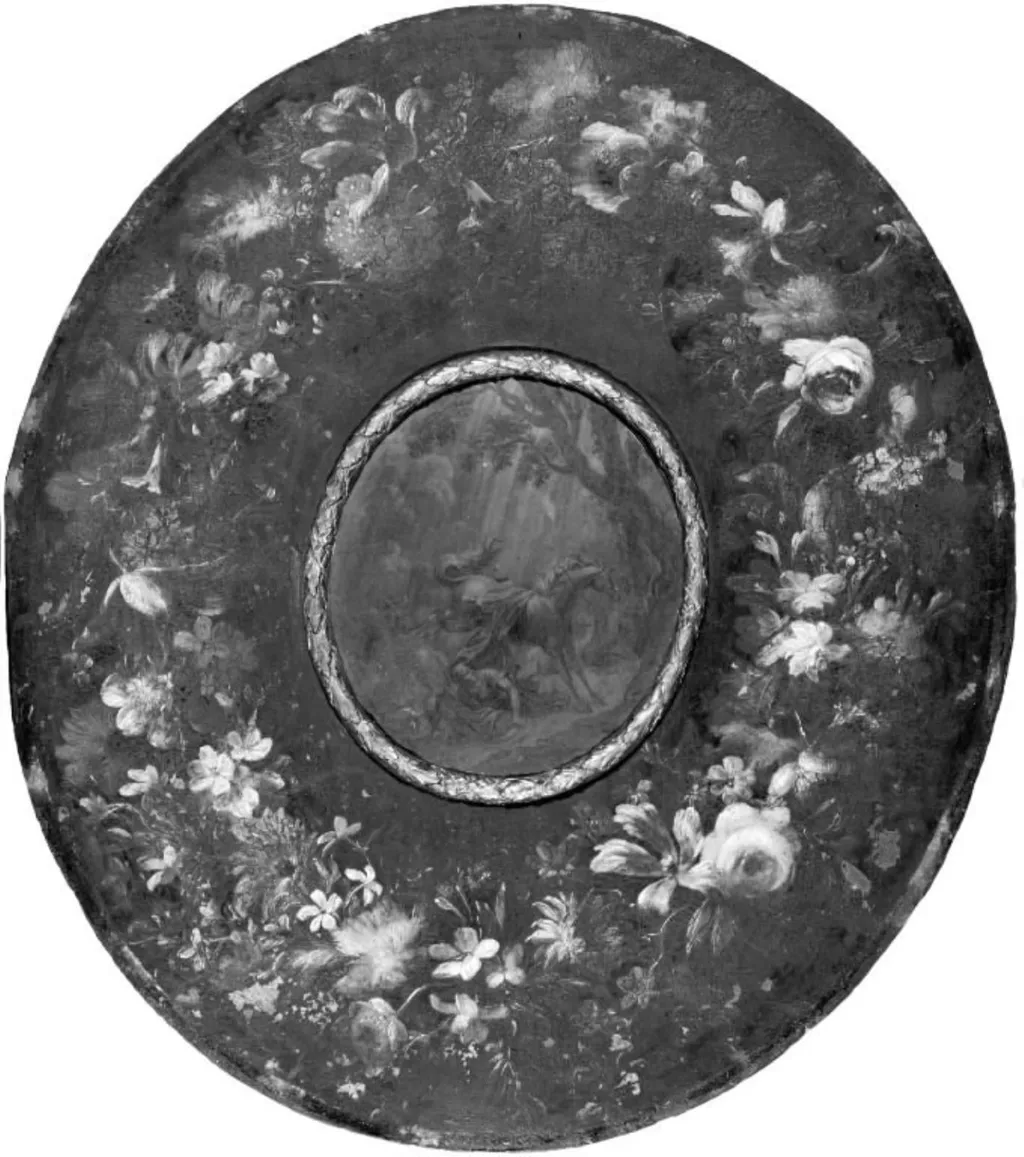
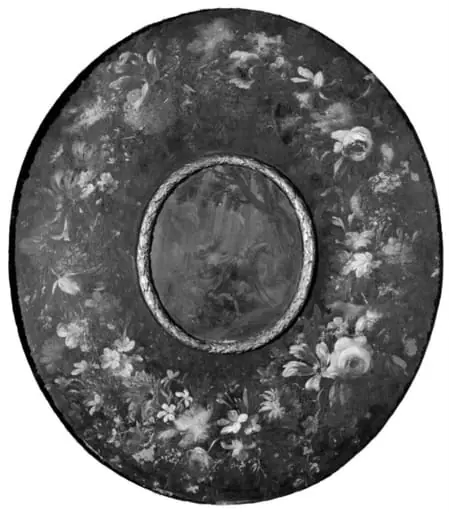
Saul on the Road to Damascus is a photography by Unknown. It dates from 1750 and is held in the collection of the Statens Museum for Kunst. This circular black-and-white photograph, dated around 1750, depicts a hooded figure on the road to Damascus.
About this work
Overview
This circular black-and-white photograph, dated around 1750, depicts a hooded figure on the road to Damascus. Framed by a dark border, the image is adorned with loosely sketched white floral and leaf motifs along its edge. The contrast between the dark background and the pale details creates a stark, meditative atmosphere, emphasizing the figure’s isolation and inward focus.
Subject & Meaning
The figure represents Saul, later known as Paul, at the moment of his divine encounter. His raised hand suggests surprise or surrender, while the hooded form conveys anonymity and transformation. The floral border, though decorative, may allude to spiritual renewal, subtly reinforcing the narrative of conversion without literal illustration.
Technique & Style
The image employs high contrast to isolate the figure against a deep void, enhancing its ethereal presence. The white floral border is rendered in a free, sketch-like manner, contrasting with the restrained rendering of the face. This interplay of precision and looseness suggests a blend of devotional intent and artisanal handwork.
History & Provenance
The work resides in the Museum of Ethnography, indicating its classification as a cultural artifact rather than a fine art piece. Its origin and maker remain undocumented, though its form suggests it may have been produced for private devotion or as part of a devotional object in a religious community.
Context
Created in the mid-18th century, the image reflects a tradition of devotional imagery that favored symbolic representation over naturalism. Its circular format and ornamental border echo medieval illuminated manuscripts and reliquaries, linking it to earlier visual practices of sacred storytelling.
Legacy
Though not widely known, the piece contributes to a broader corpus of vernacular religious art that prioritized emotional resonance over technical refinement. Its preservation in an ethnographic collection underscores its value as a witness to personal piety in pre-modern visual culture.
Artist & collection

 Domestic Scene
 Giacomo and Cardinal Marco, investing Andrea, Abbot of San Zeno, with his Benefice
 The Nymph of Fontainebleau
 Portrait of a Woman
 Madonna and Child with Saints in the Enclosed Garden
 Venus and Minerva
 Family Group of Four on Sofa
 Wall painting from Room H of the Villa of P. Fannius Synistor at Boscoreale
 Untitled
 Schiebedeckel zum Bildnis Ronner (WAF 547 a)
 Stillleben (?)
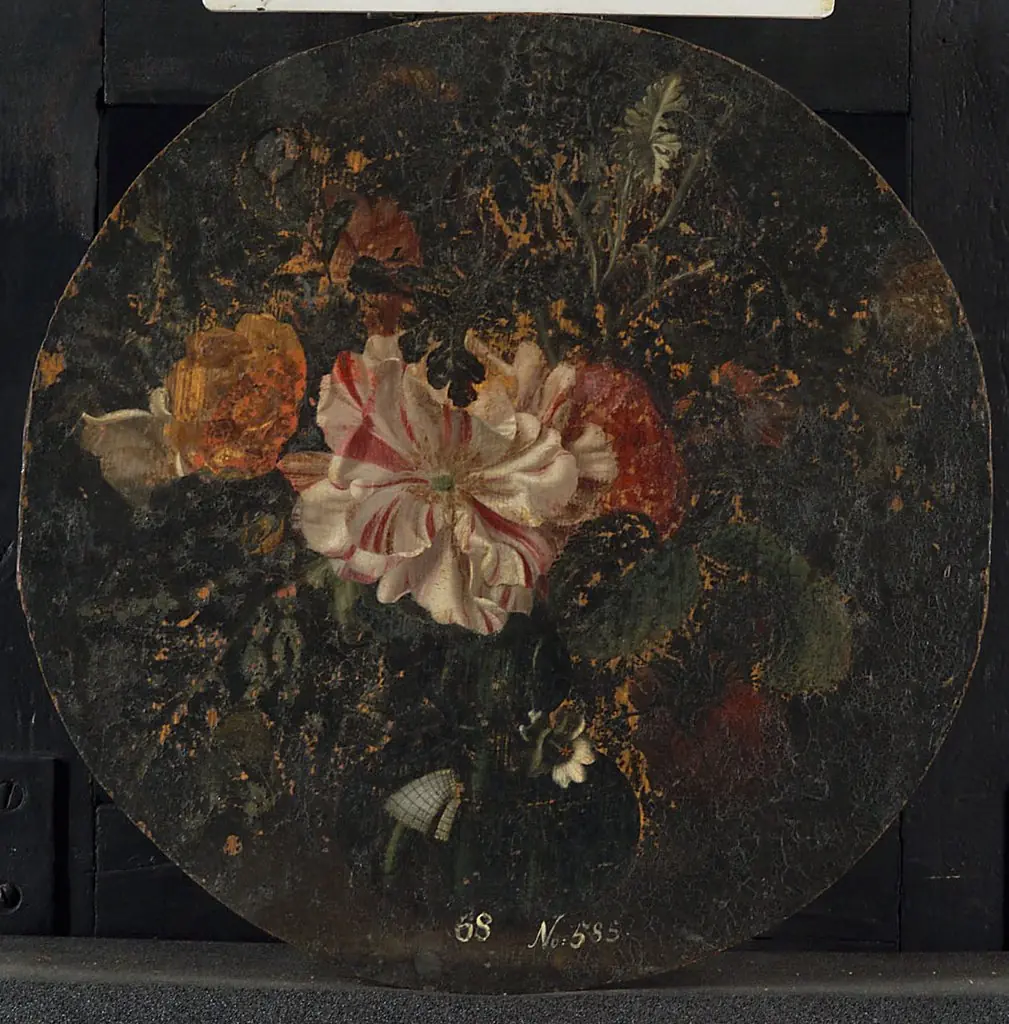 Blumenstück
 Untitled
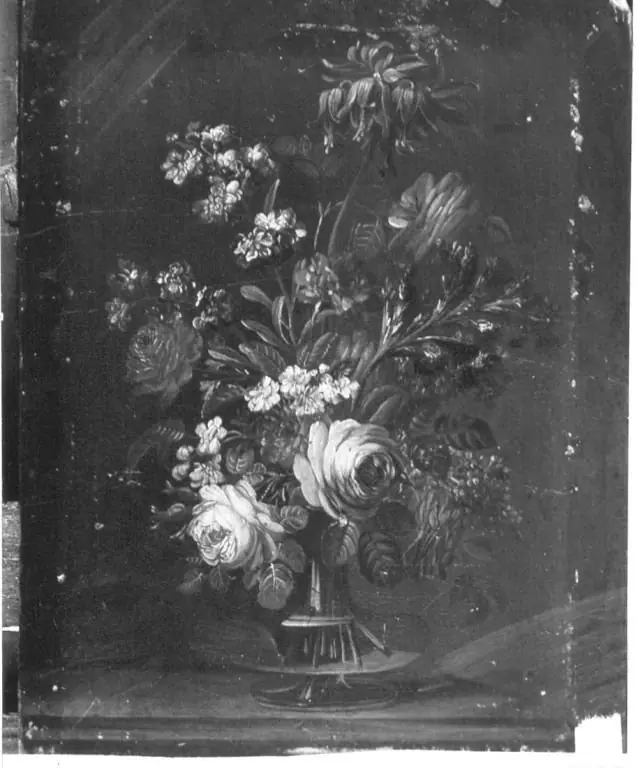 Blumenstück
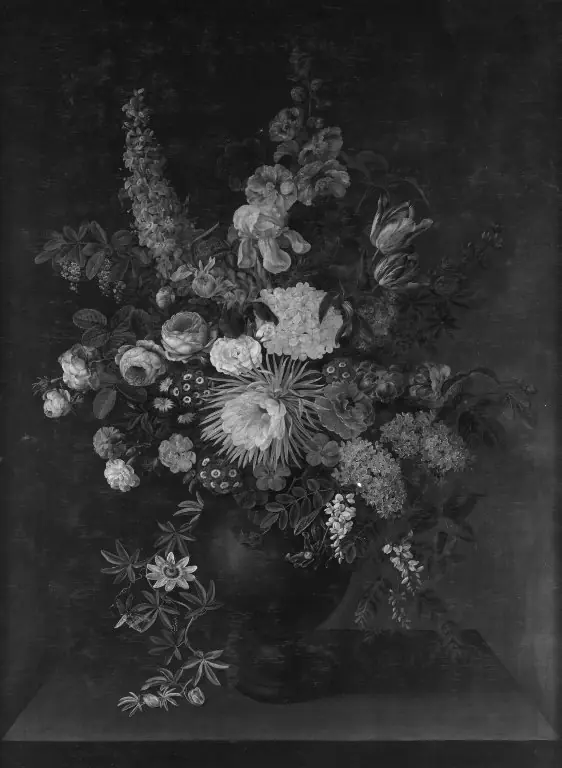 En vase med blomster
 Apotheosis of a Saint (recto); Architectural Sketch(?) (verso)
 Farfurie adâncă, cu buza dreaptă, evazată; este angobată pe suprafața interioară cu un strat de humă albă, peste care este pictat cu pensula decorul monocromatic format din motive vegetale și florale stilizate: registrul decorativ central de pe fundul farfuriei conține o tulpină cu cinci flori de lalea, o floare centrală cu patru petale rotunde și frunze. Registrul decorativ marginal de pe buza farfuriei, încadrat între două linii circulare ondulate ușor, este format dintr-un șir continuu de motive formate dintr-o linie spiralată de formă ovală. Suprafața ornamentată a farfuriei este acoperită cu un strat de smalț transparent. Cromatica: alb, albastru.
 A Biblical Scene