Artwork
Seated Female Nude
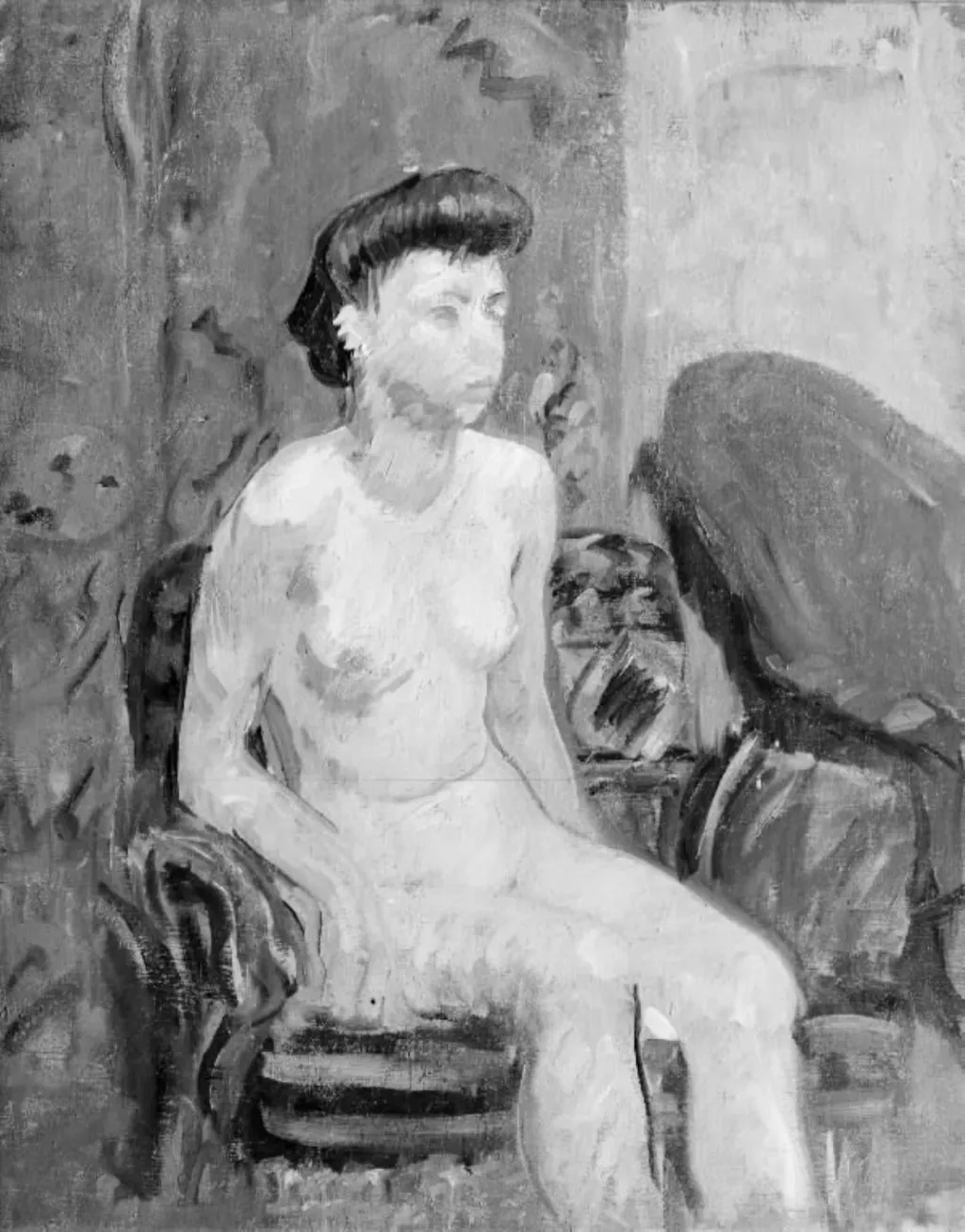
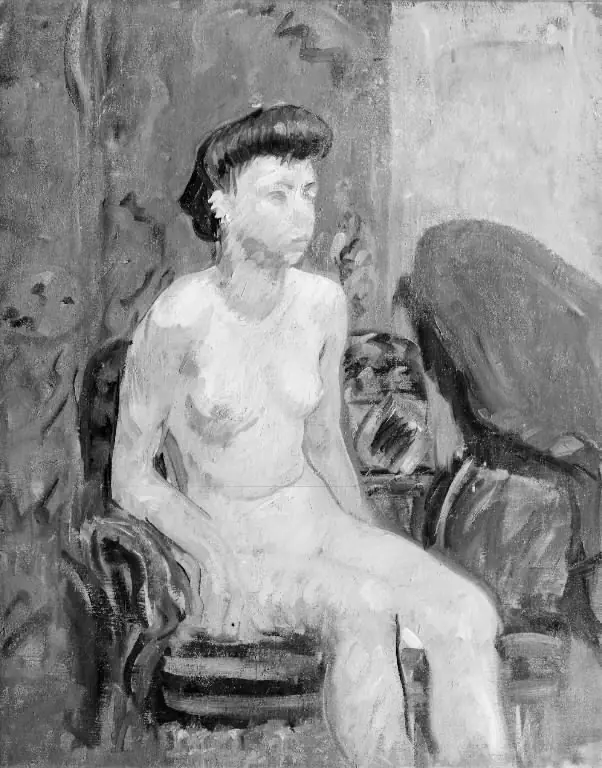
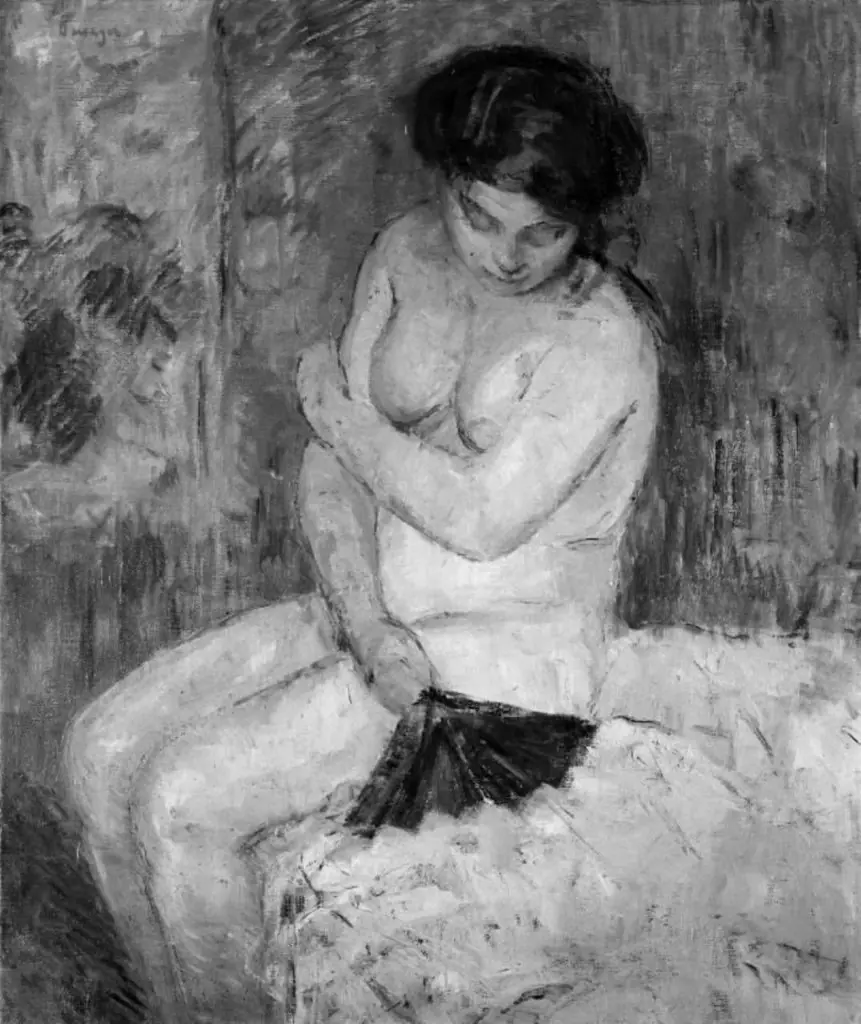
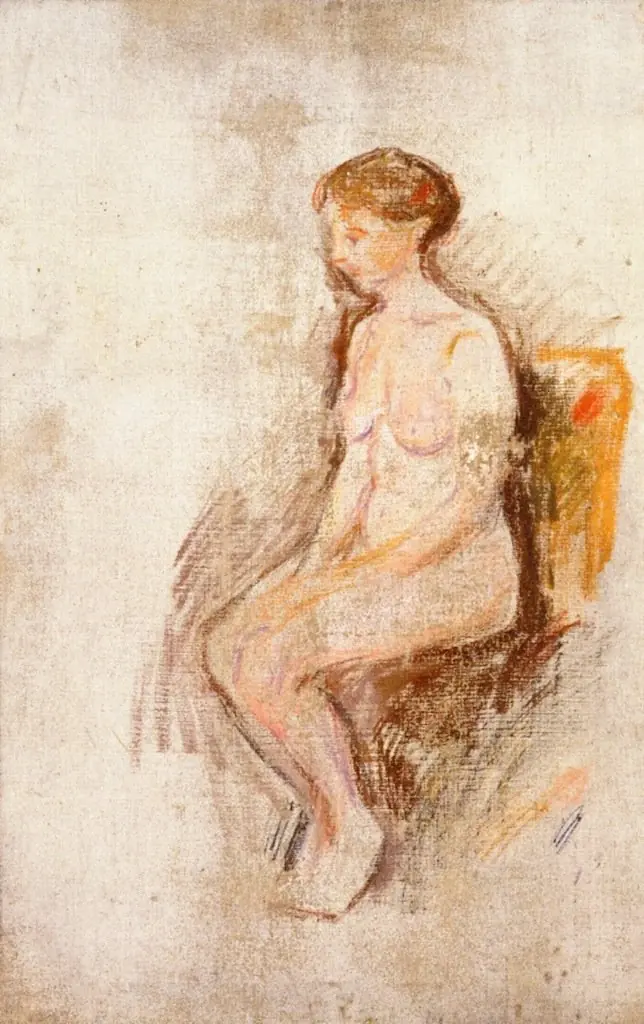
Seated Female Nude is a photography by Unknown. It dates from 1908 and is held in the collection of the Statens Museum for Kunst. This photograph, dated around 1908, depicts a seated woman in a relaxed, unposed posture.
About this work
Overview
The image is held in the collection of the Museum of Ethnography, where it functions as a record of everyday presence rather than a formal portrait.
This photograph, dated around 1908, depicts a seated woman in a relaxed, unposed posture. Taken with informal immediacy, it captures her in a moment of quiet stillness. The image is held in the collection of the Museum of Ethnography, where it functions as a record of everyday presence rather than a formal portrait. Its raw quality—uneven lighting, soft focus, and unrefined edges—suggests an experimental or candid approach to photographic documentation.
Subject & Meaning
The woman, nude except for a loose top and a hat, sits with legs crossed and chin resting on her hand. Her turned gaze and casual attire resist classical ideals of the nude, instead suggesting personal autonomy or domestic intimacy. The absence of narrative context invites interpretation grounded in the ordinary: a private pause, a moment captured without performance. The hat, incongruous with her nudity, adds ambiguity, blurring boundaries between the staged and the spontaneous.
Technique & Style
The photograph employs shallow depth of field and uneven illumination to isolate the figure against a blurred background. Exposure appears hurried, with visible grain and contrast inconsistencies that lend the image a tactile, unpolished character. These technical choices prioritize immediacy over refinement, aligning with early 20th-century shifts toward candid photography. The composition avoids symmetry, emphasizing natural posture over formal arrangement.
History & Provenance
The photograph entered the Museum of Ethnography’s collection as part of a broader effort to document non-artistic visual culture. Its origin remains undocumented beyond the approximate date of creation. Unlike studio nudes of the period, it lacks attribution to a known photographer, suggesting it may have been taken by an amateur or as part of an ethnographic survey. Its preservation reflects institutional interest in vernacular imagery.
Context
Created during a period when photography was expanding beyond portraiture and documentation, this image reflects growing interest in the human form outside academic or erotic traditions. While European art circles explored the nude through painting and sculpture, this photograph captures a more mundane reality—unidealized, untheatrical. Its existence challenges distinctions between art and everyday visual practice in early modern visual culture.
Legacy
The image contributes to a quieter, less celebrated strand of photographic history—one that values authenticity over composition. It has not influenced major artistic movements but remains a quiet reference point for scholars examining how ordinary people were visually represented in the early 1900s. Its enduring presence in the Museum of Ethnography underscores its value as a cultural artifact rather than an aesthetic object.
Artist & collection

 Domestic Scene
 Giacomo and Cardinal Marco, investing Andrea, Abbot of San Zeno, with his Benefice
 The Nymph of Fontainebleau
 Portrait of a Woman
 Madonna and Child with Saints in the Enclosed Garden
 Venus and Minerva
 Family Group of Four on Sofa
 Wall painting from Room H of the Villa of P. Fannius Synistor at Boscoreale