Artwork
Dutch Roadstead
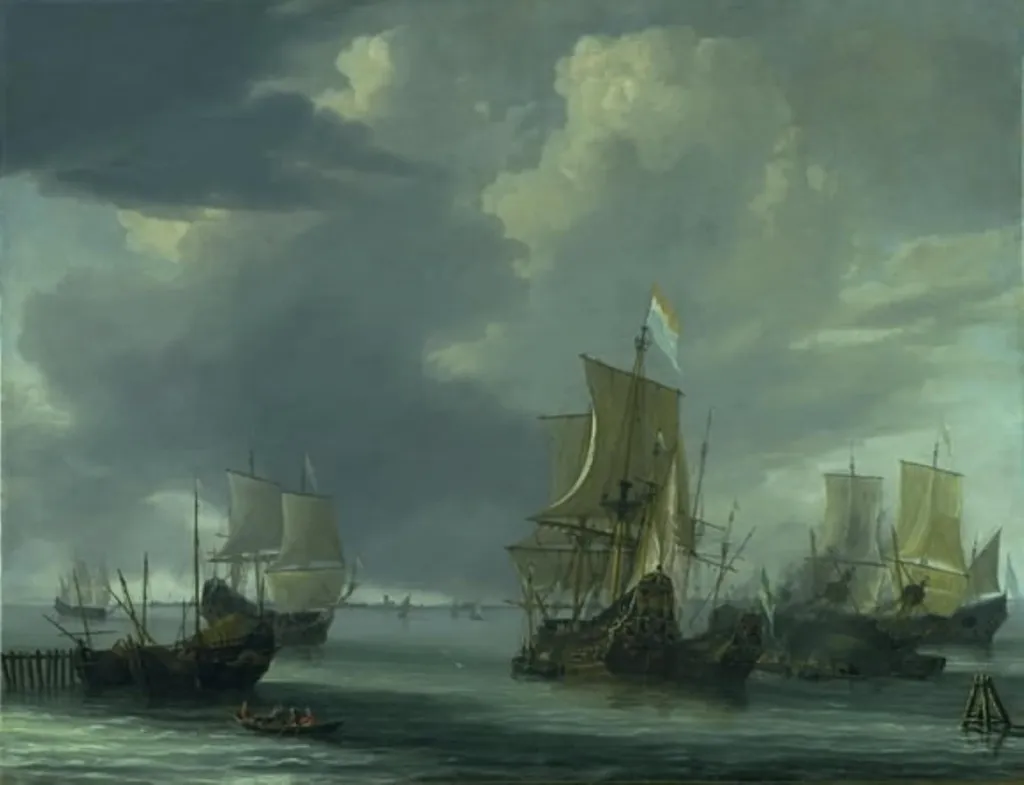
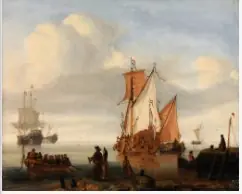
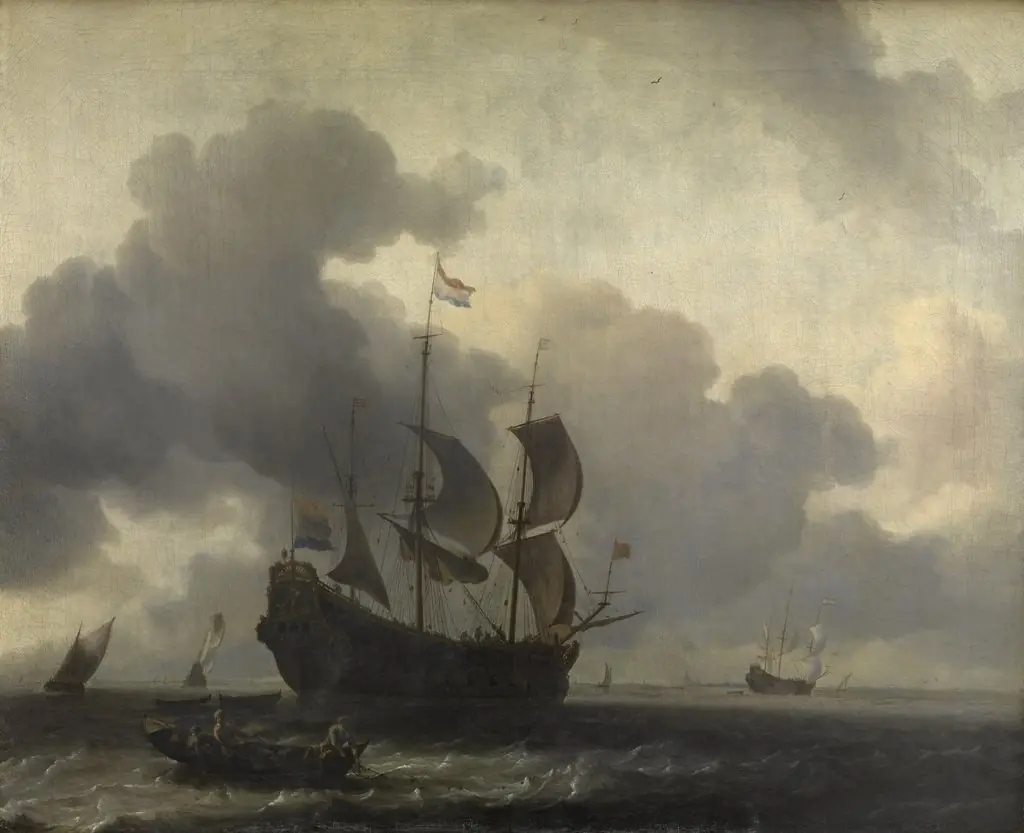
Dutch Roadstead is a photography by Unknown. It dates from 1650 and is held in the collection of the Statens Museum for Kunst. Dated around 1650, this painting depicts a bustling maritime scene off the Dutch coast.
About this work
Overview
The work is held in the collection of the Museum of Ethnography, though its subject matter is rooted in Dutch seafaring life rather than non-European cultures.
Dated around 1650, this painting depicts a bustling maritime scene off the Dutch coast. It captures a fleet of large vessels anchored in turbulent waters, surrounded by smaller craft navigating the choppy sea. The composition emphasizes movement and tension, with a sky heavy with storm clouds and intermittent shafts of light. The work is held in the collection of the Museum of Ethnography, though its subject matter is rooted in Dutch seafaring life rather than non-European cultures.
Subject & Meaning
The scene portrays a typical Dutch roadstead—a sheltered anchorage where merchant ships waited for favorable winds or tides. The presence of multiple vessels suggests commercial activity, while the stormy atmosphere may reflect the perils of maritime trade. Flags on the ships hint at national or commercial identity. The mood conveys neither celebration nor disaster, but the quiet endurance required in seafaring economies of the era.
Technique & Style
The artist employs a restrained palette dominated by dark grays, deep blues, and muted ochres, with strategic highlights to suggest breaking sunlight. Brushwork is precise yet fluid, capturing the texture of waves and the rigging of sails. The contrast between shadow and light follows a chiaroscuro approach, enhancing the drama without overt theatricality. The composition directs the eye across the water, from foreground boats to distant hulls under the brooding sky.
History & Provenance
The painting entered the Museum of Ethnography’s collection in the late 19th or early 20th century, likely through acquisition or donation. Its attribution to a specific artist remains unconfirmed, though stylistic elements align with Dutch marine painters of the mid-17th century. The work was not widely exhibited or published until the 1950s, when scholarly interest in regional maritime art expanded beyond major urban centers.
Context
In mid-17th century Holland, maritime commerce was central to national prosperity. Paintings of harbors and fleets were common, often commissioned by merchants or shipowners. This work differs from celebratory naval scenes by focusing on the quiet, precarious nature of anchorage—moments of pause amid constant movement. It reflects a broader trend toward naturalistic, atmospheric depictions rather than idealized portraiture of ships.
Legacy
Though not among the most famous Dutch marine paintings, this work contributes to the understanding of everyday maritime life beyond grand battles or royal fleets. Its atmospheric treatment influenced later 19th-century landscape painters interested in weather and mood. Today, it serves as a quiet testament to the labor and risk embedded in the Dutch Golden Age’s seafaring economy.
Artist & collection

 Domestic Scene
 Giacomo and Cardinal Marco, investing Andrea, Abbot of San Zeno, with his Benefice
 The Nymph of Fontainebleau
 Portrait of a Woman
 Madonna and Child with Saints in the Enclosed Garden
 Venus and Minerva
 Family Group of Four on Sofa
 Wall painting from Room H of the Villa of P. Fannius Synistor at Boscoreale
 Ships in the River Maas off Rotterdam
 Ships in the River Maas off Rotterdam
 Ships in a Breeze Off the Dutch Coast
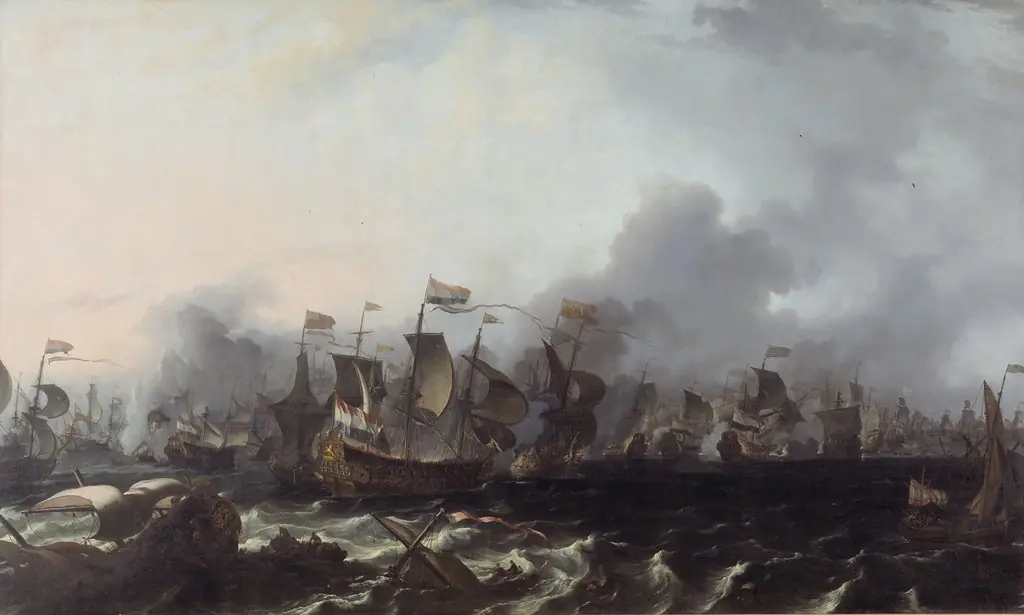 The Four Day's Battle, 11-14 June 1666
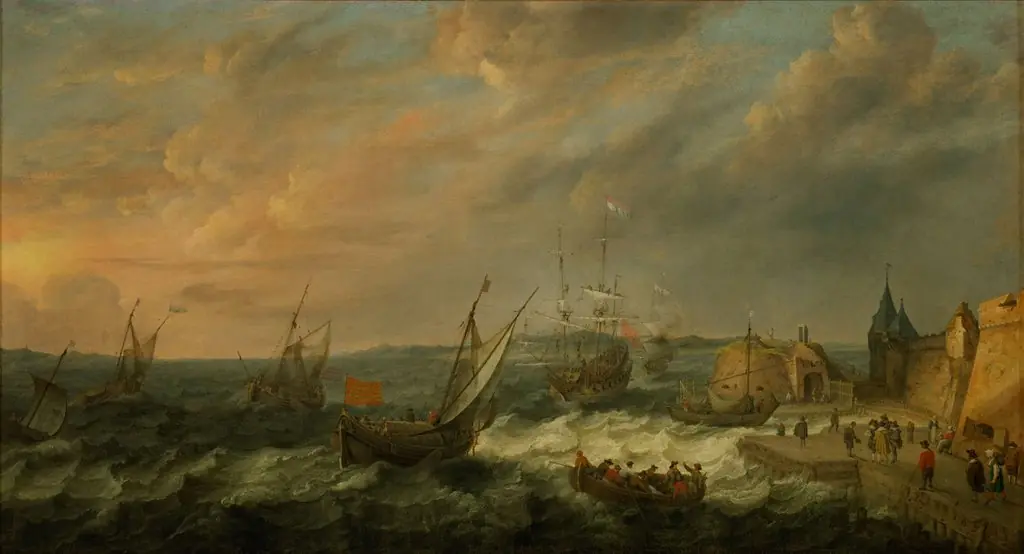 Seehafen
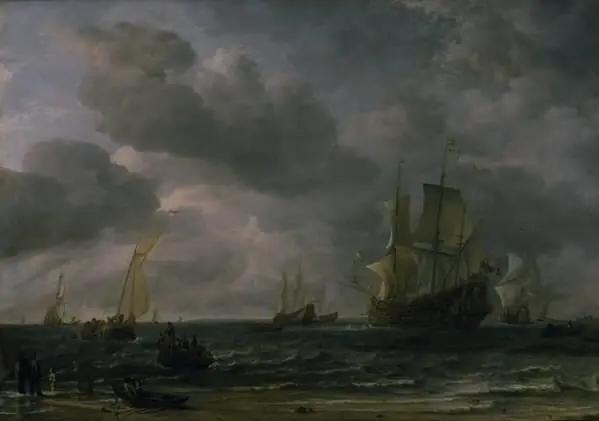 Ships in a Breeze Off the Dutch Coast
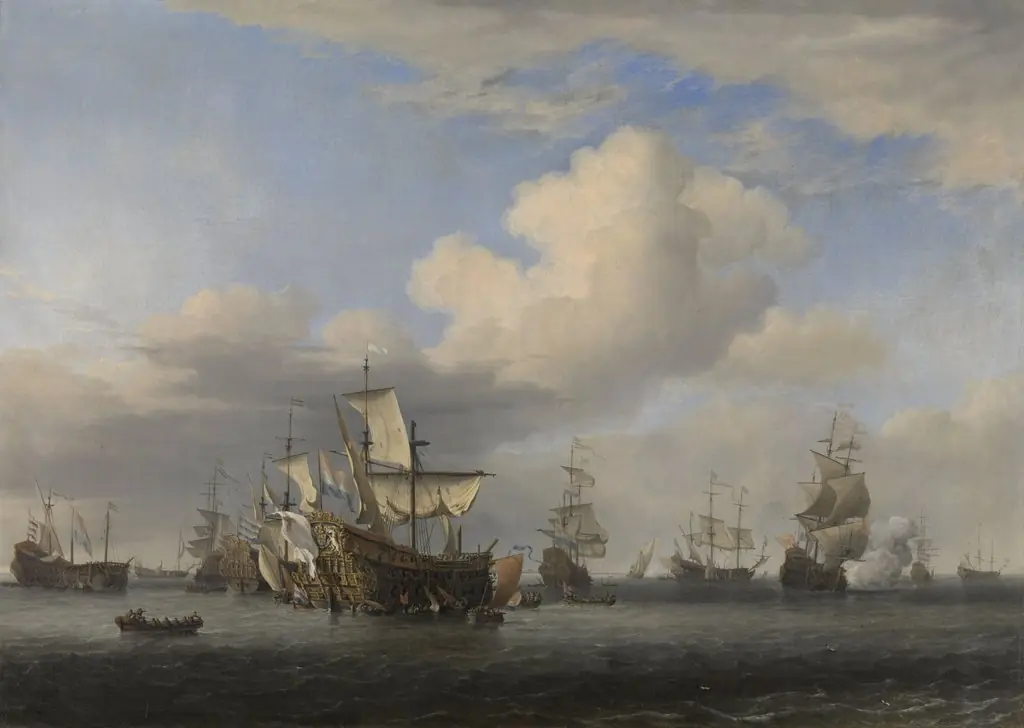 Captured English Ships after the Four Days’ Battle
 A Dutch Yacht with Fishing Boats off a Jetty
 The Warship "De Jacob" at Anchor