Artwork
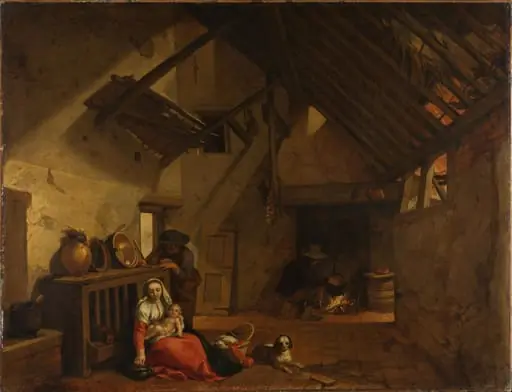
Interior of a Dutch Farm Cottage
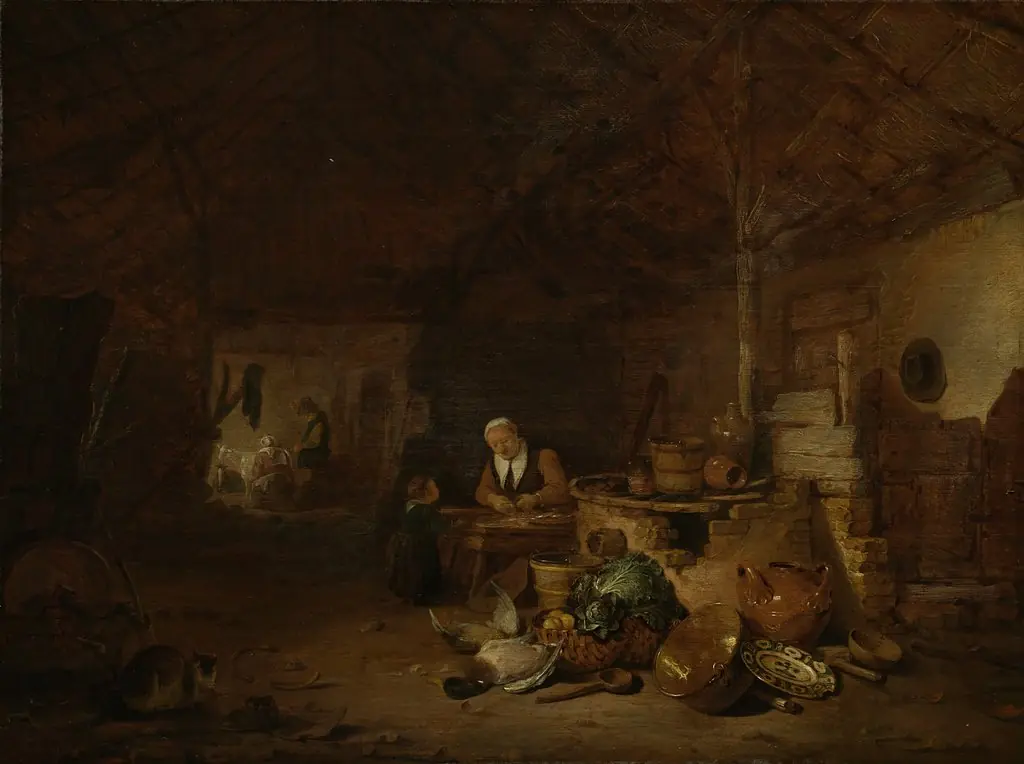
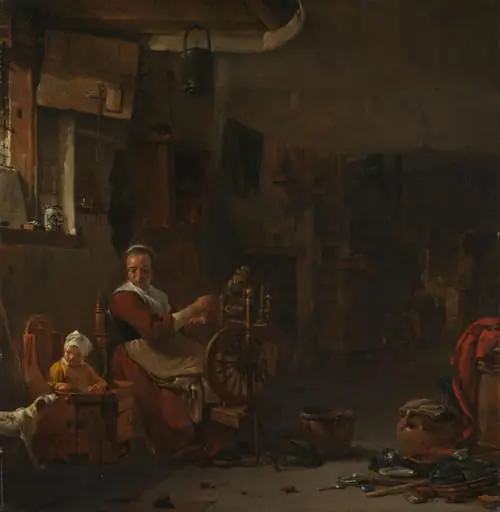
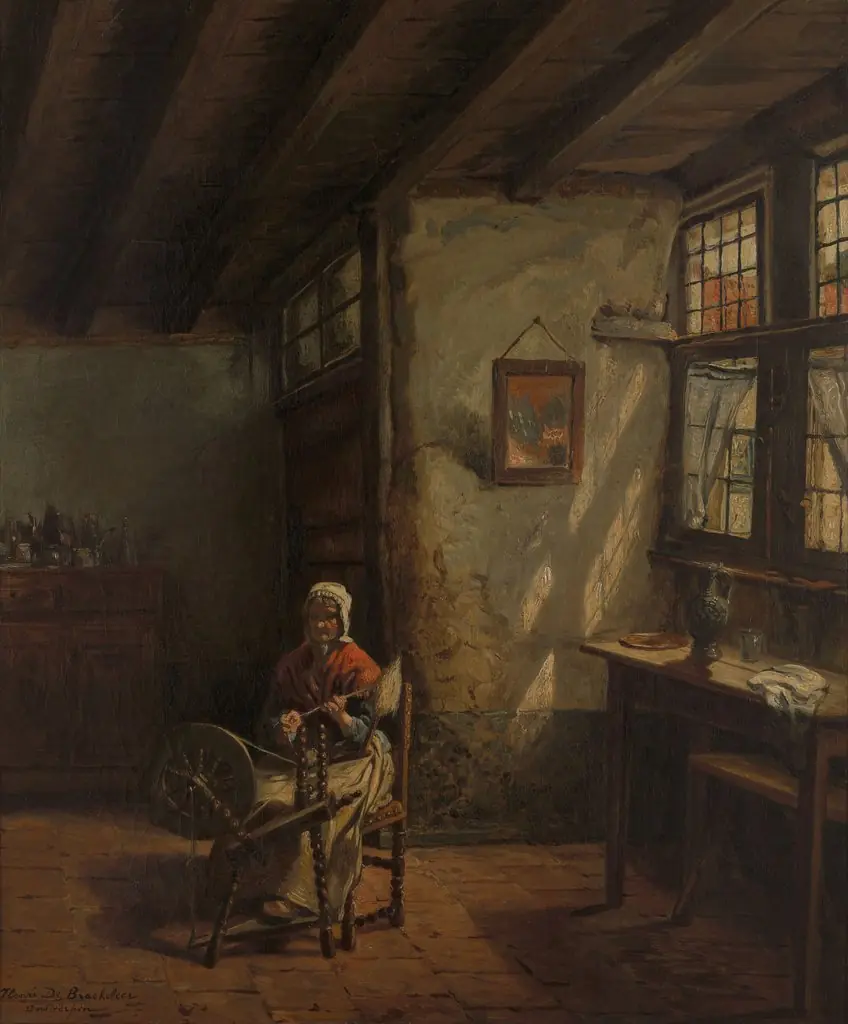
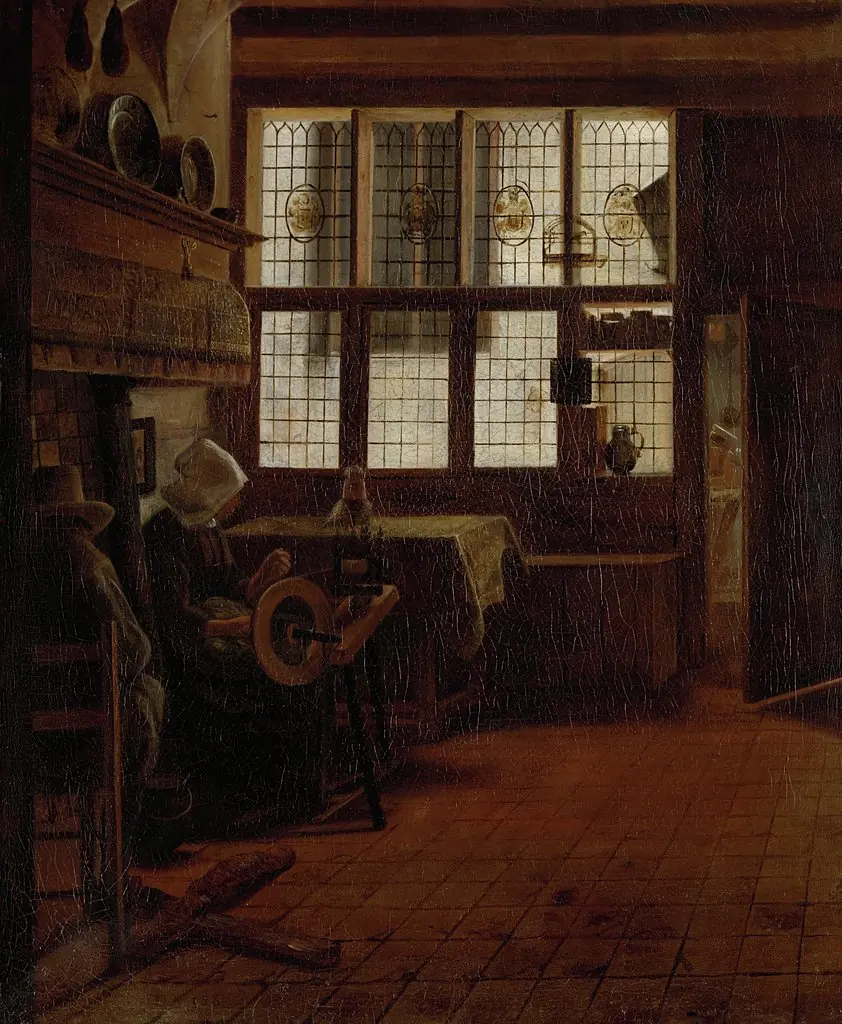
Interior of a Dutch Farm Cottage is a photography by Unknown. It dates from 1650 and is held in the collection of the Statens Museum for Kunst. Painted around 1650, this work depicts the interior of a modest Dutch farmhouse.
About this work
Overview
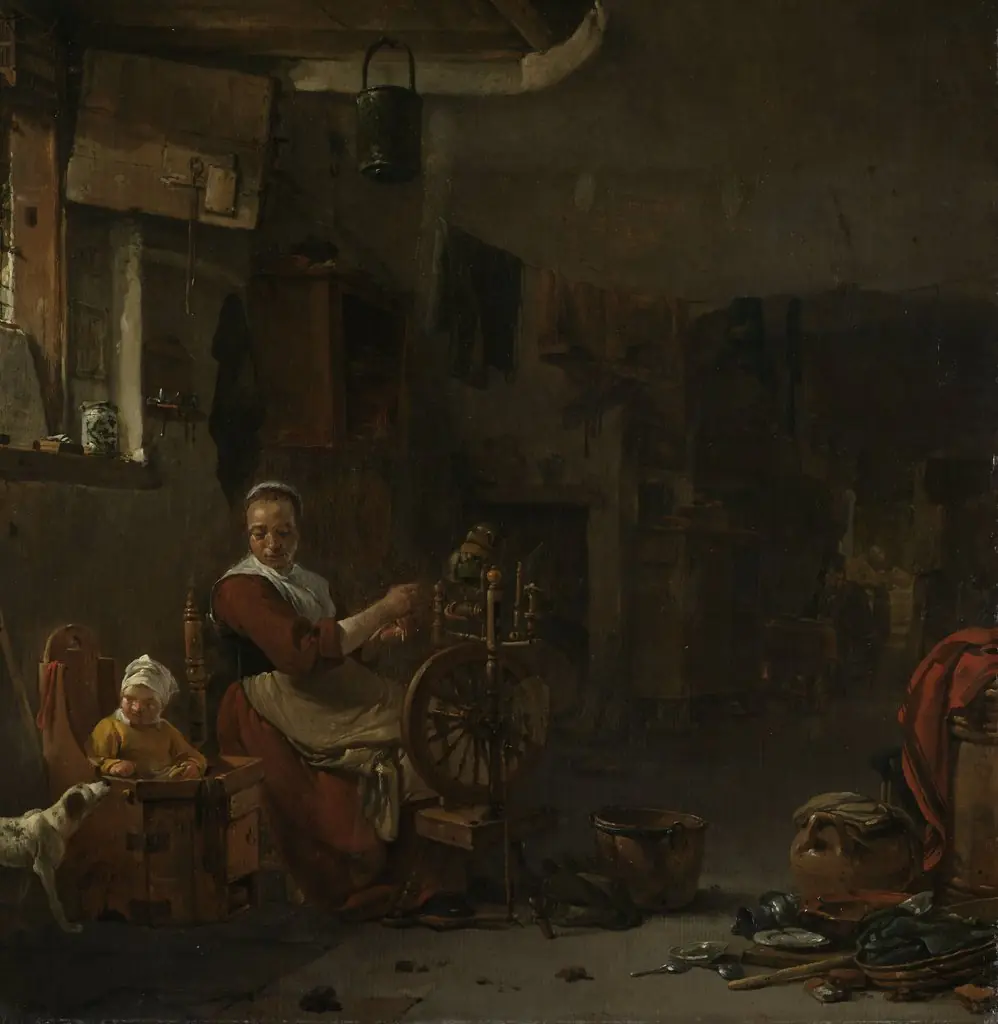
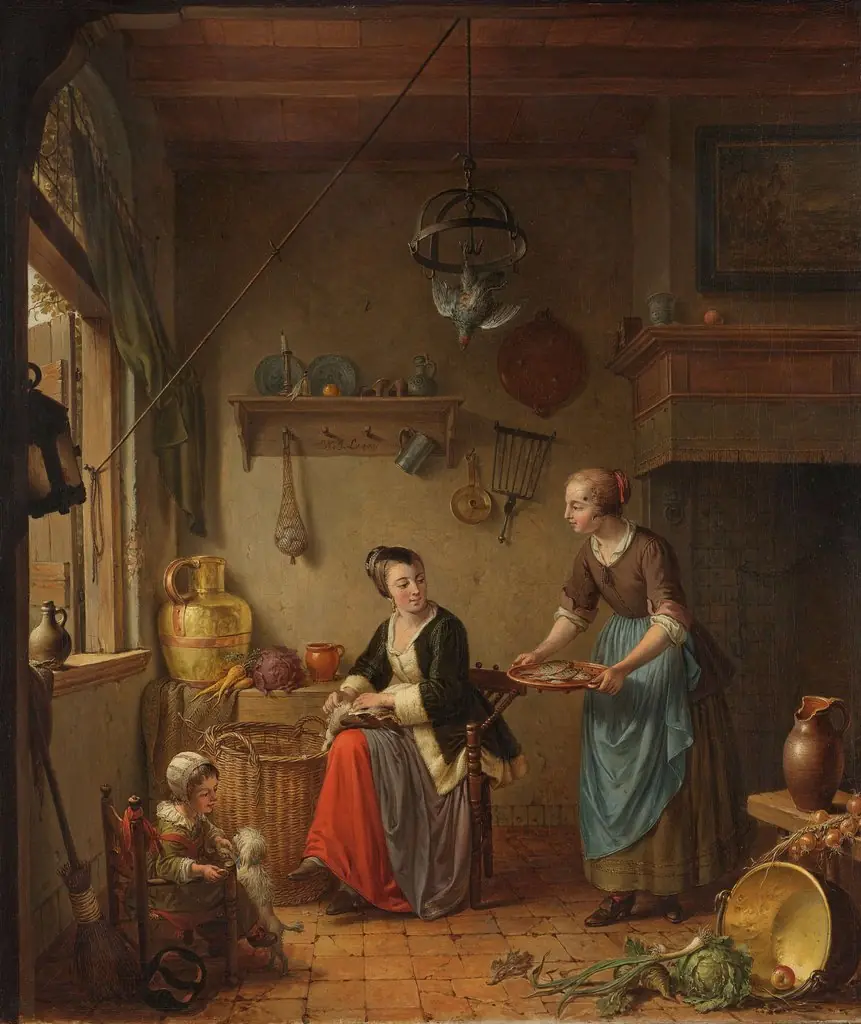
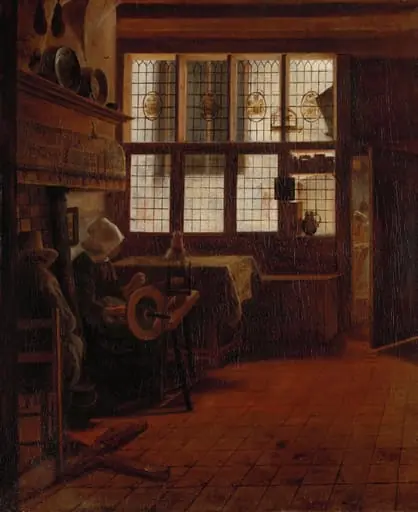
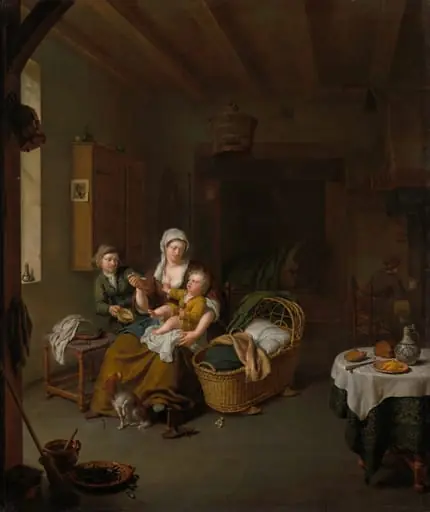
Painted around 1650, this work depicts the interior of a modest Dutch farmhouse. The scene captures a quiet moment of domestic life, rendered in oil on panel. It is currently housed in the Museum of Ethnography, where it serves as a record of everyday material culture in 17th-century rural Holland. The composition emphasizes intimacy and routine, avoiding grandeur in favor of quiet observation.
Subject & Meaning
The act of mending suggests labor and care, and the child’s engagement with a book hints at the value placed on literacy, even in humble settings.
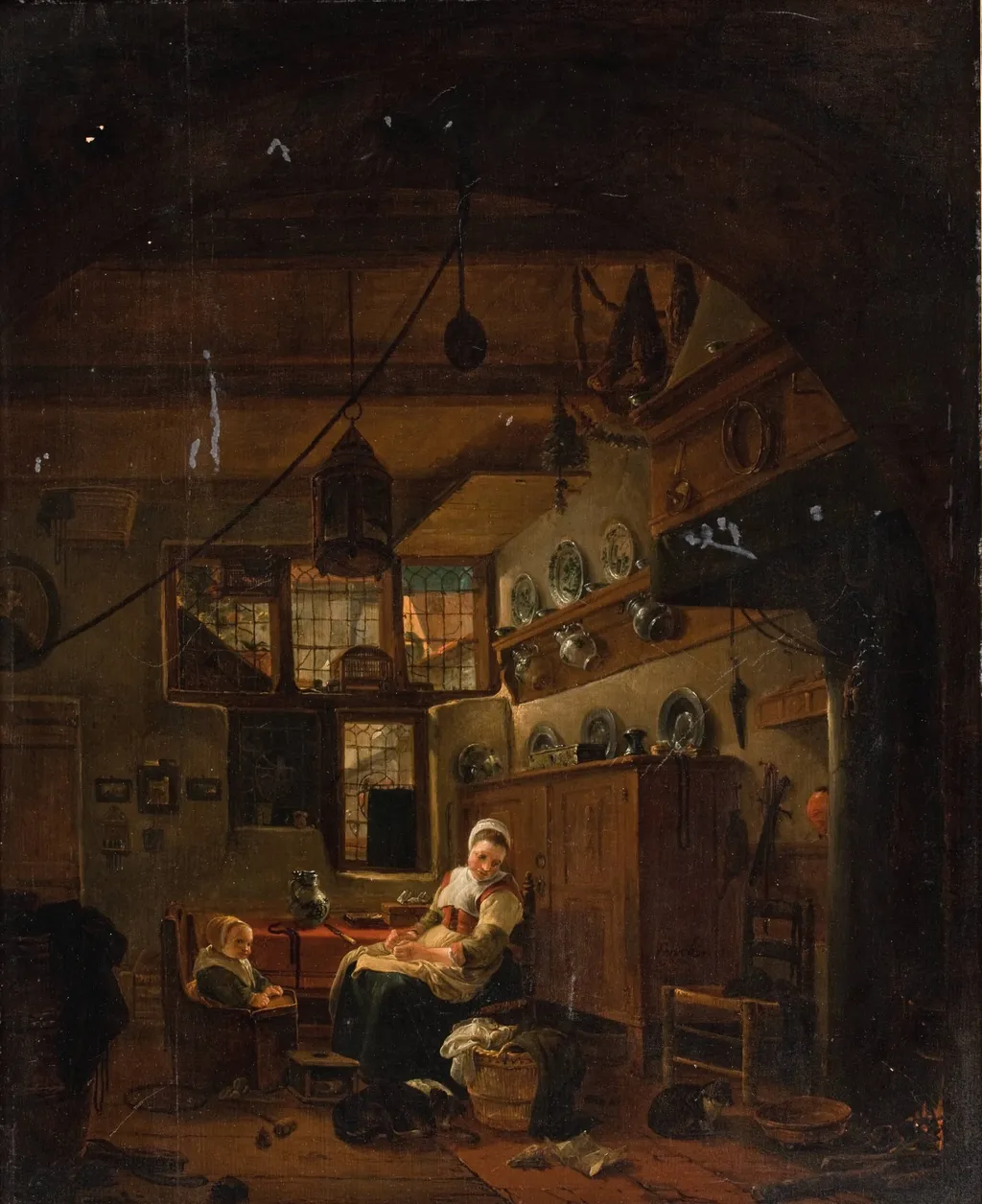
A woman sits by candlelight, repairing clothing, while a child reads beside her. The act of mending suggests labor and care, and the child’s engagement with a book hints at the value placed on literacy, even in humble settings. Objects like the birdcage and stacked pottery reflect the accumulation of daily life. The scene conveys no narrative drama, instead offering a contemplative portrait of domestic rhythm.
Technique & Style
The artist employs chiaroscuro to model forms and direct attention: the candle’s glow illuminates the woman’s hands and the child’s book, while the surrounding walls recede into shadow. Wooden beams and clay vessels are rendered with careful texture, but without ornamental flourish. The palette is restrained—earths, ochres, and muted browns—enhancing the sense of realism and quiet atmosphere.
History & Provenance
The painting entered the Museum of Ethnography’s collection in the late 19th century, likely acquired as part of a broader effort to document vernacular life. Its attribution to the artist 30344_person remains tentative, as many such domestic scenes from this period were unsigned or misattributed. Its survival suggests it was valued early on for its documentary quality rather than its artistic fame.
Context
In mid-17th-century Holland, genre painting flourished as a reflection of civic pride and middle-class values. Rural interiors like this one contrasted with urban scenes, emphasizing self-sufficiency and order in the countryside. Such works were not merely decorative; they affirmed ideals of diligence, piety, and domestic harmony central to Dutch identity at the time.
Legacy
Though not widely exhibited outside ethnographic circles, the painting contributes to scholarly understanding of material culture in early modern Europe. Its unidealized depiction of rural life influenced later ethnographic and realist traditions. Today, it remains a quiet witness to the textures of ordinary existence, valued for its honesty rather than its fame.
Artist & collection

 Domestic Scene
 Giacomo and Cardinal Marco, investing Andrea, Abbot of San Zeno, with his Benefice
 The Nymph of Fontainebleau
 Portrait of a Woman
 Madonna and Child with Saints in the Enclosed Garden
 Venus and Minerva
 Family Group of Four on Sofa
 Wall painting from Room H of the Villa of P. Fannius Synistor at Boscoreale