Artwork
Winter Scene at a Farm
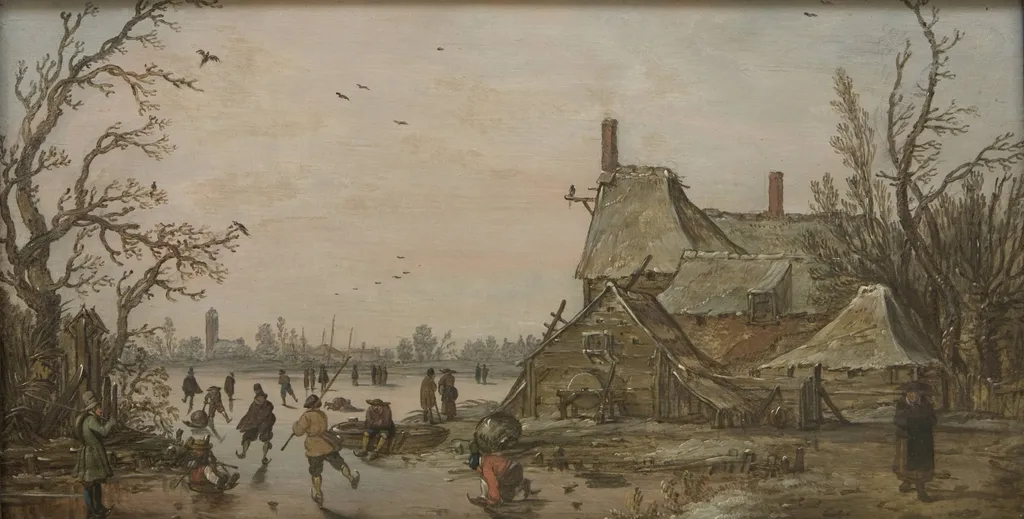
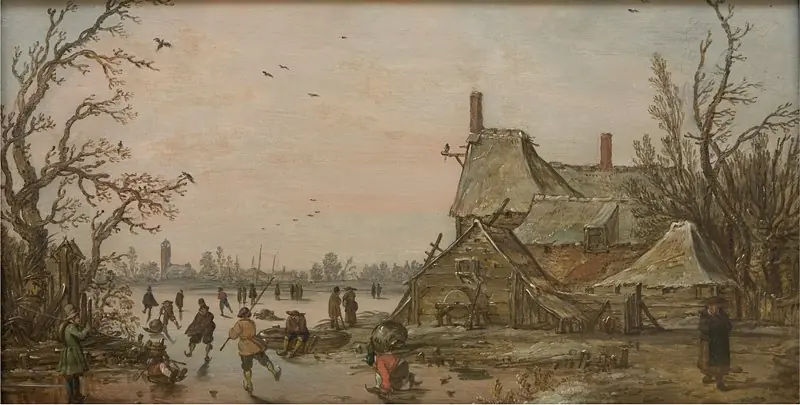
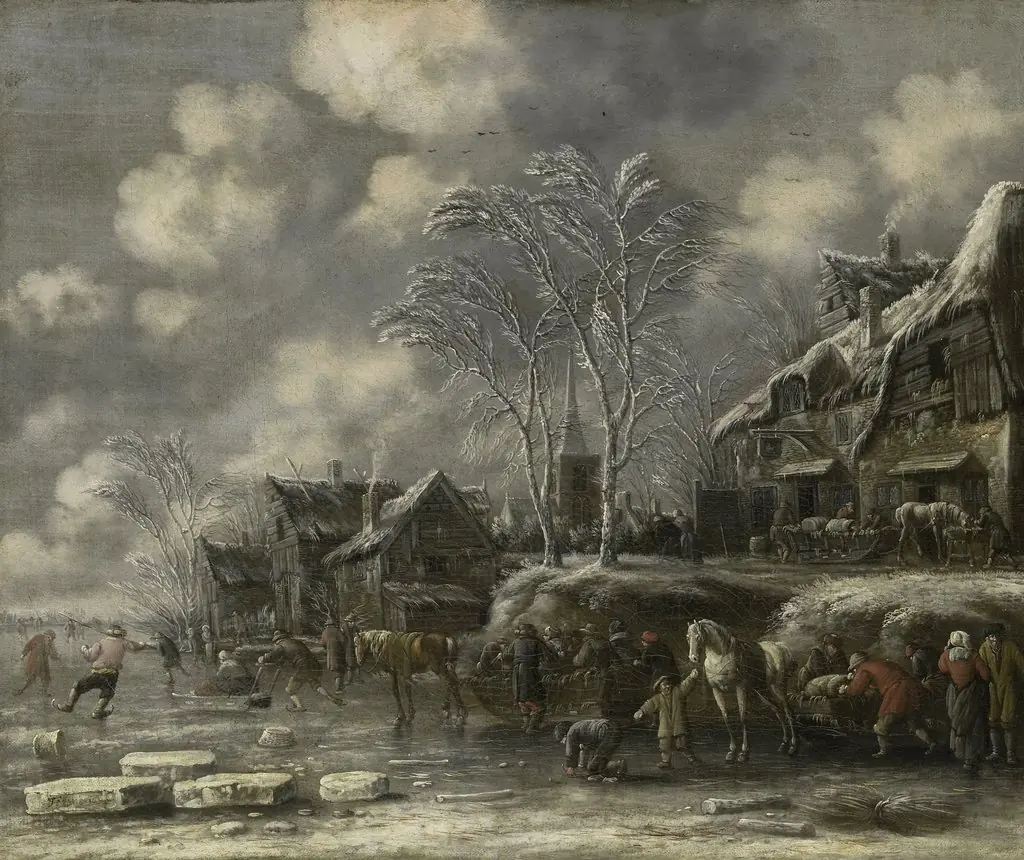
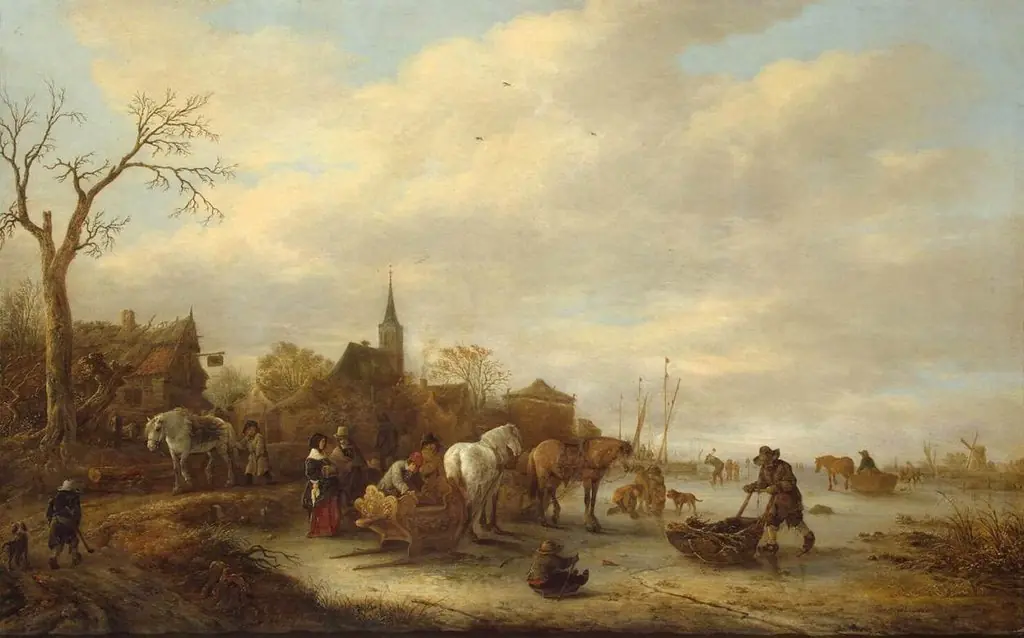
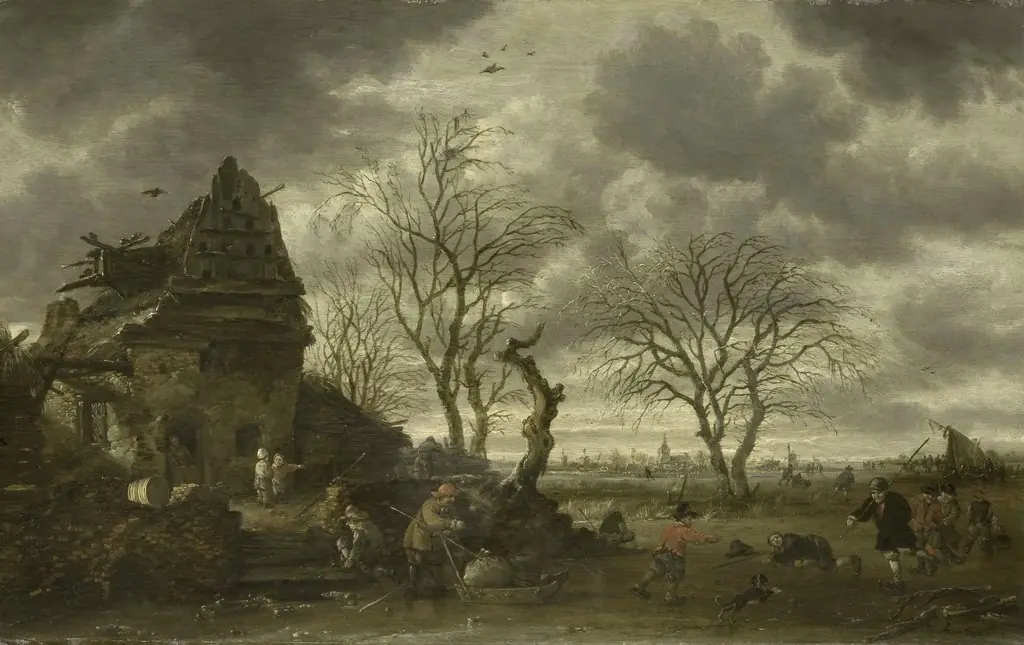
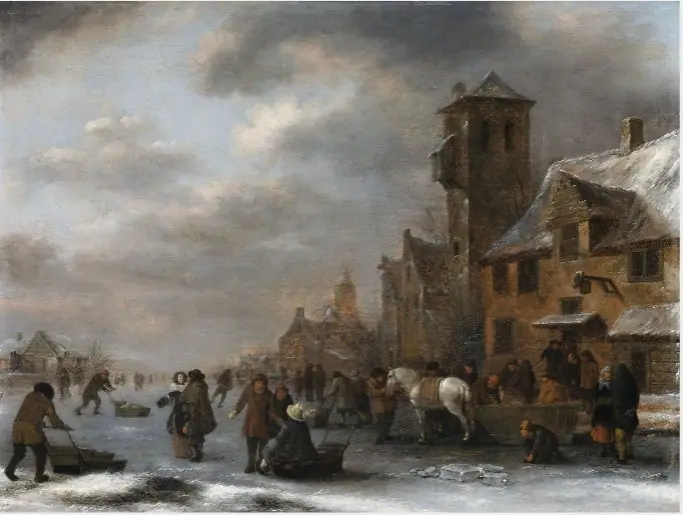
Winter Scene at a Farm is a photography by Unknown. It dates from 1650 and is held in the collection of the Statens Museum for Kunst. Created around 1650, this painting depicts a quiet winter day at a rural farmstead.
About this work
Overview
Rendered in subdued tones of gray, brown, and pale blue, the scene captures a frozen pond before a modest thatched farmhouse.
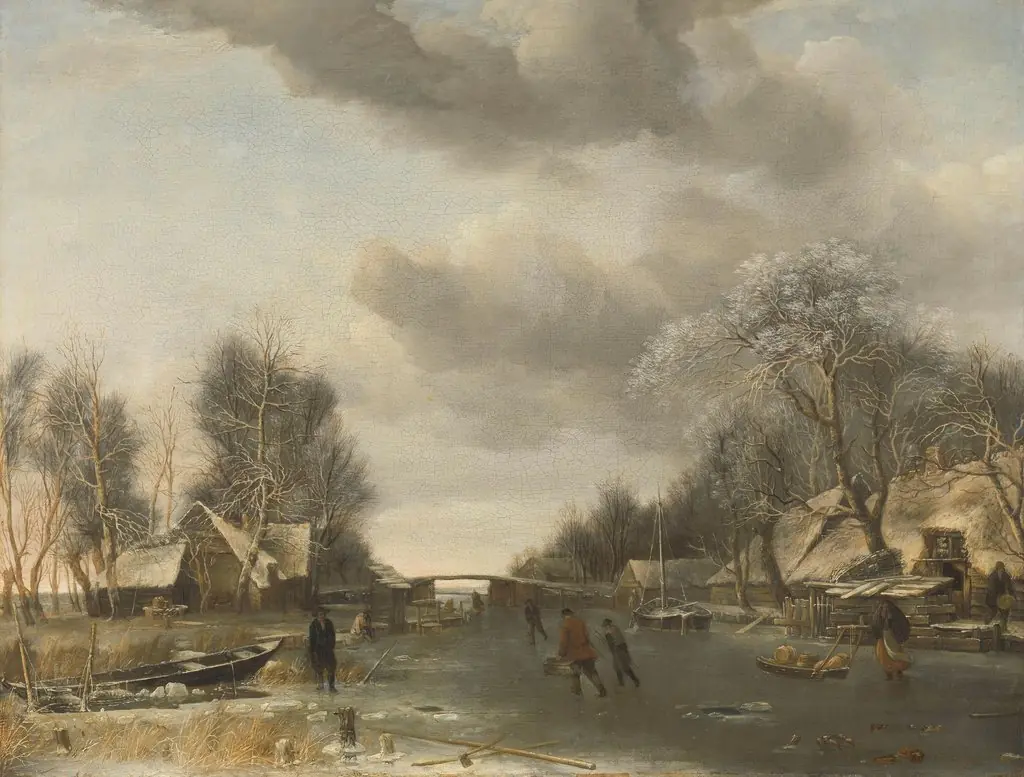
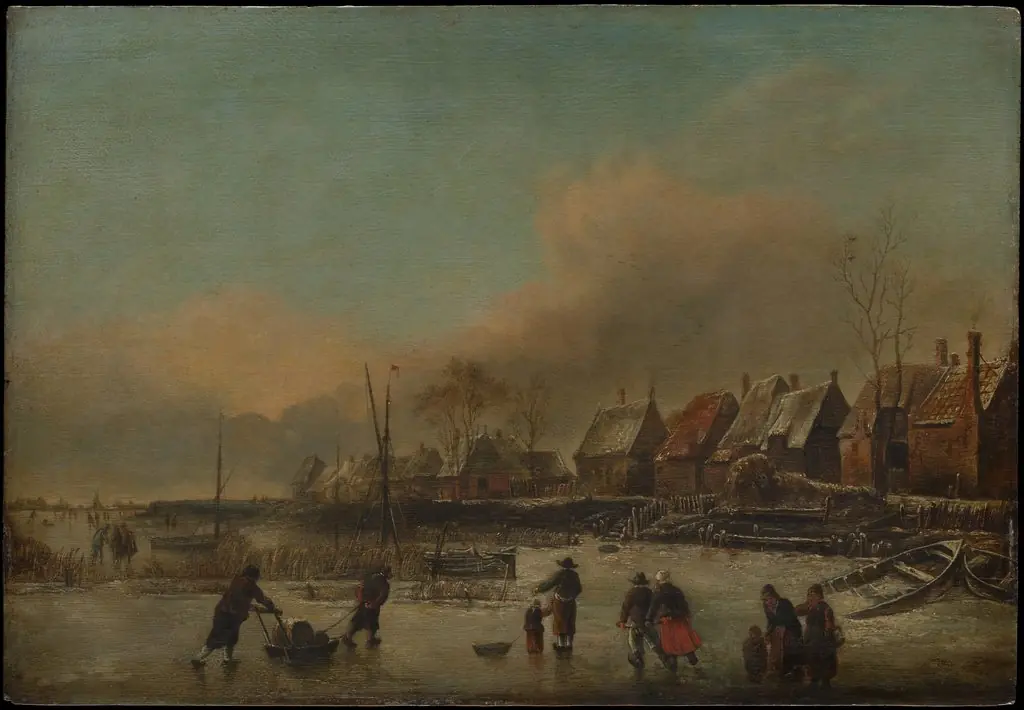
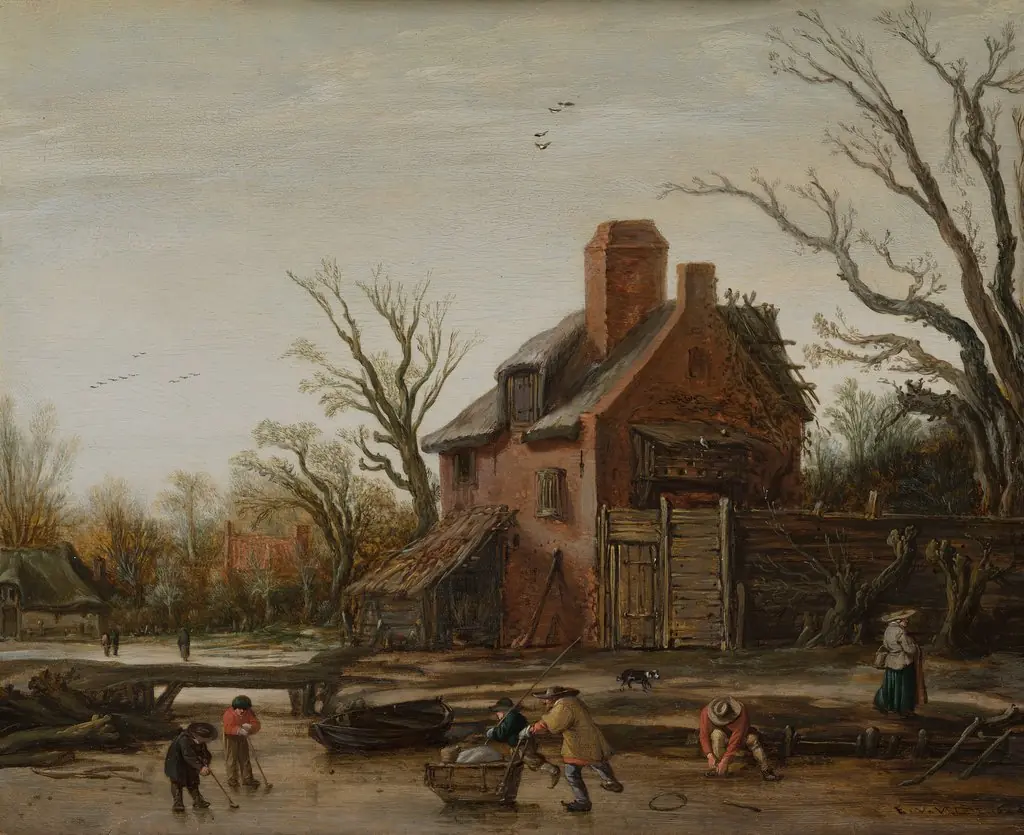
Created around 1650, this painting depicts a quiet winter day at a rural farmstead. Rendered in subdued tones of gray, brown, and pale blue, the scene captures a frozen pond before a modest thatched farmhouse. Figures move quietly across the ice, engaged in ordinary tasks, while bare trees and a low sky frame the stillness. The work is held in the collection of the Museum of Ethnography, reflecting its focus on everyday rural life.
Subject & Meaning
The painting presents winter not as a dramatic event but as a routine condition of peasant life. Figures skate, walk, and crouch near the ice, their actions unremarkable and unhurried. The lone figure bending by the water’s edge suggests maintenance or repair, emphasizing labor over leisure. There is no sense of celebration or hardship—only the quiet persistence of daily existence in a harsh season.
Technique & Style
The artist employs a restrained palette to convey the chill and clarity of winter light. Subtle variations in white and gray suggest the texture of ice, with faint highlights indicating where sun touches the surface. Brushwork is precise but unobtrusive, favoring atmospheric cohesion over detail. The composition is low and wide, drawing the eye across the frozen expanse toward the humble farmhouse and its outbuildings.
History & Provenance
The painting has been in the Museum of Ethnography’s collection since at least the early 20th century, though its earlier ownership remains undocumented. Its attribution to 30498_person is based on stylistic comparison with other works from the period, though no definitive archival records confirm the artist’s identity. The work’s survival suggests it was valued for its depiction of rural authenticity rather than artistic fame.
Context
In mid-17th century Northern Europe, winter landscapes were increasingly painted as reflections of local life, not just idealized scenery. This work aligns with a regional tradition that documented peasant routines through seasonal change. Unlike Dutch genre scenes that emphasized social interaction, this painting favors solitude and environmental immersion, reflecting a more localized, perhaps provincial, aesthetic.
Legacy
The painting contributes to a broader understanding of how rural communities experienced winter beyond literary or artistic tropes. Its quiet realism offers insight into material conditions and daily rhythms of pre-industrial life. While not widely exhibited, it remains a quiet reference point in studies of vernacular art and seasonal labor in early modern Europe.
Artist & collection

 Domestic Scene
 Giacomo and Cardinal Marco, investing Andrea, Abbot of San Zeno, with his Benefice
 The Nymph of Fontainebleau
 Portrait of a Woman
 Madonna and Child with Saints in the Enclosed Garden
 Venus and Minerva
 Family Group of Four on Sofa
 Wall painting from Room H of the Villa of P. Fannius Synistor at Boscoreale