Artwork
A Guardroom
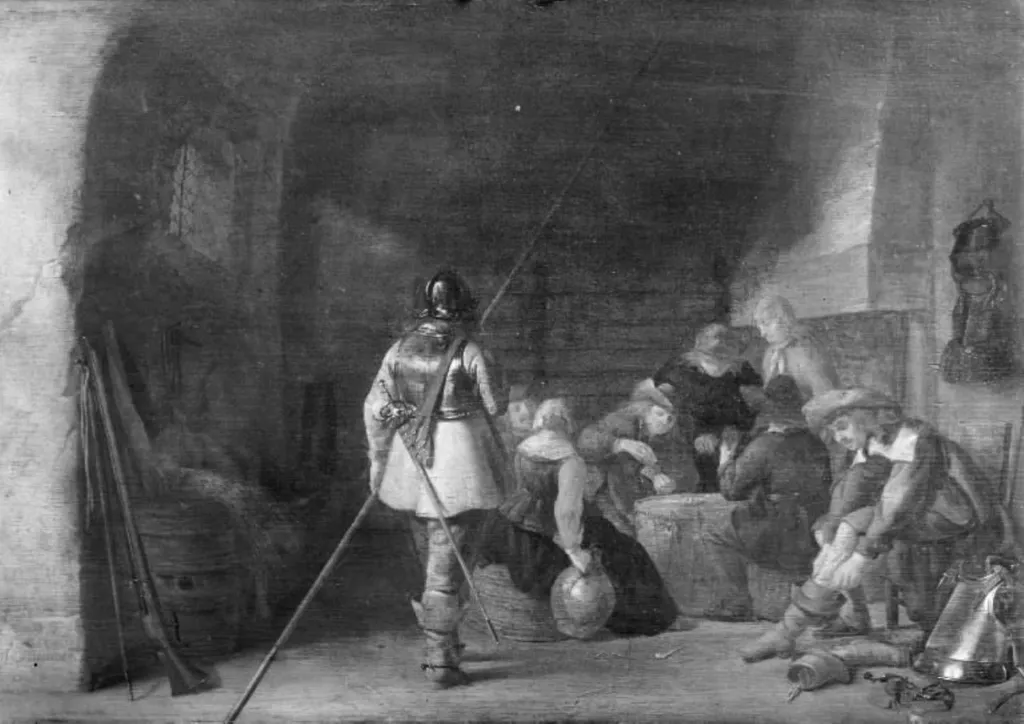
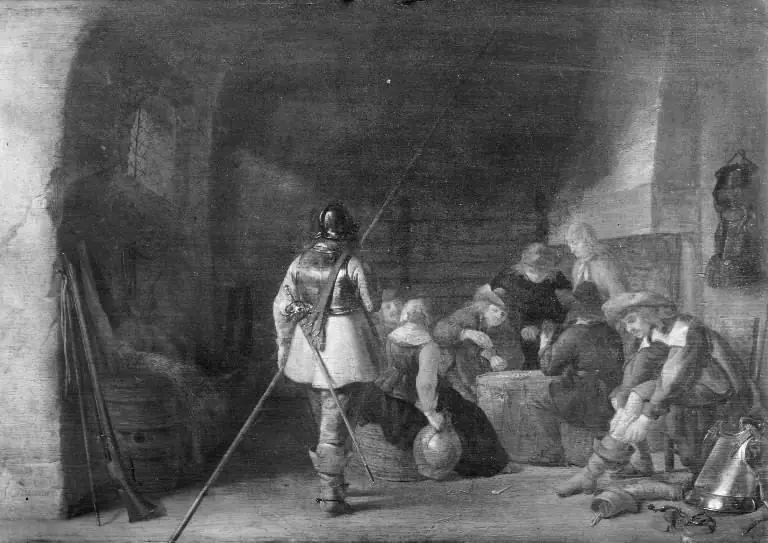
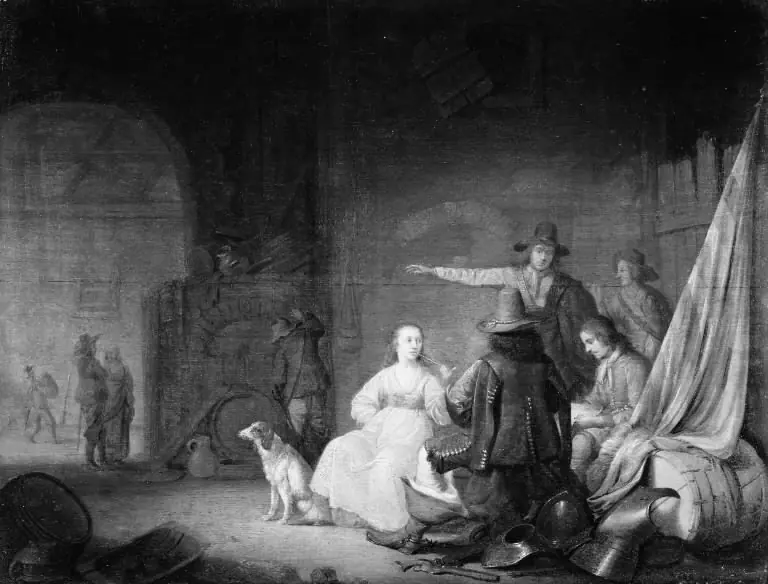
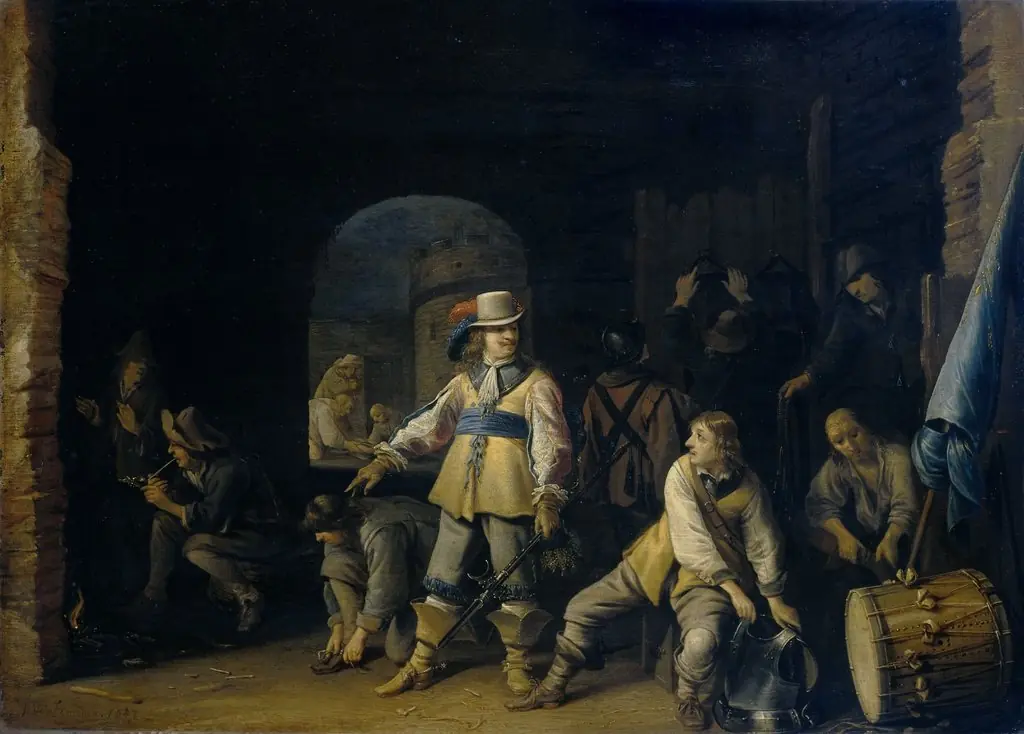
A Guardroom is a photography by Unknown. It dates from 1650 and is held in the collection of the Statens Museum for Kunst. Painted around 1650, this work depicts an interior scene of soldiers and civilians in a modest, dimly lit space.
About this work
Overview
Painted around 1650, this work depicts an interior scene of soldiers and civilians in a modest, dimly lit space. The artist, known for genre scenes, captures a quiet moment of daily life rather than a dramatic event. The painting is part of the Museum of Ethnography’s collection, where it is studied for its representation of social dynamics in early modern Europe.
Subject & Meaning
A soldier in armor, standing with his back turned, appears to be a figure of authority amid a group of civilians—adults and children—gathered near a barrel.
A soldier in armor, standing with his back turned, appears to be a figure of authority amid a group of civilians—adults and children—gathered near a barrel. Their postures suggest fatigue or resignation, not celebration. The absence of overt action or narrative tension implies a pause in routine, possibly reflecting the uneasy coexistence of military presence and civilian life in wartime settings.
Technique & Style
The artist employs chiaroscuro to model forms and deepen spatial depth, using stark contrasts between shadow and weak light sources. Surfaces like armor and rough plaster are rendered with restrained detail, emphasizing texture over polish. Faces are partially obscured, enhancing the sense of anonymity and quiet tension, aligning the work with Northern European traditions of observational realism.
History & Provenance
The painting entered the Museum of Ethnography’s holdings in the late 19th century, likely acquired through a private collection or regional donation. Its attribution to the artist is based on stylistic comparison with other known works from the same period. No documented commission or original owner is recorded, suggesting it was produced for the open market rather than a patron.
Context
Created during a period of prolonged conflict in the Low Countries, the scene reflects the normalization of military presence in civilian spaces. Guardrooms often served as temporary quarters for soldiers, where interactions with locals—especially women and children—were common. The painting avoids glorification, instead presenting a subdued, almost mundane reality of occupation.
Legacy
Though not widely exhibited, the work contributes to scholarly understanding of 17th-century social history through its unembellished depiction of everyday life. It stands as an example of how genre painting could document the quiet intersections of power, labor, and domesticity, influencing later realist traditions without seeking dramatic effect.
Artist & collection

 Domestic Scene
 Giacomo and Cardinal Marco, investing Andrea, Abbot of San Zeno, with his Benefice
 The Nymph of Fontainebleau
 Portrait of a Woman
 Madonna and Child with Saints in the Enclosed Garden
 Venus and Minerva
 Family Group of Four on Sofa
 Wall painting from Room H of the Villa of P. Fannius Synistor at Boscoreale