Artwork
Farvestudie til Langelinie-billedet
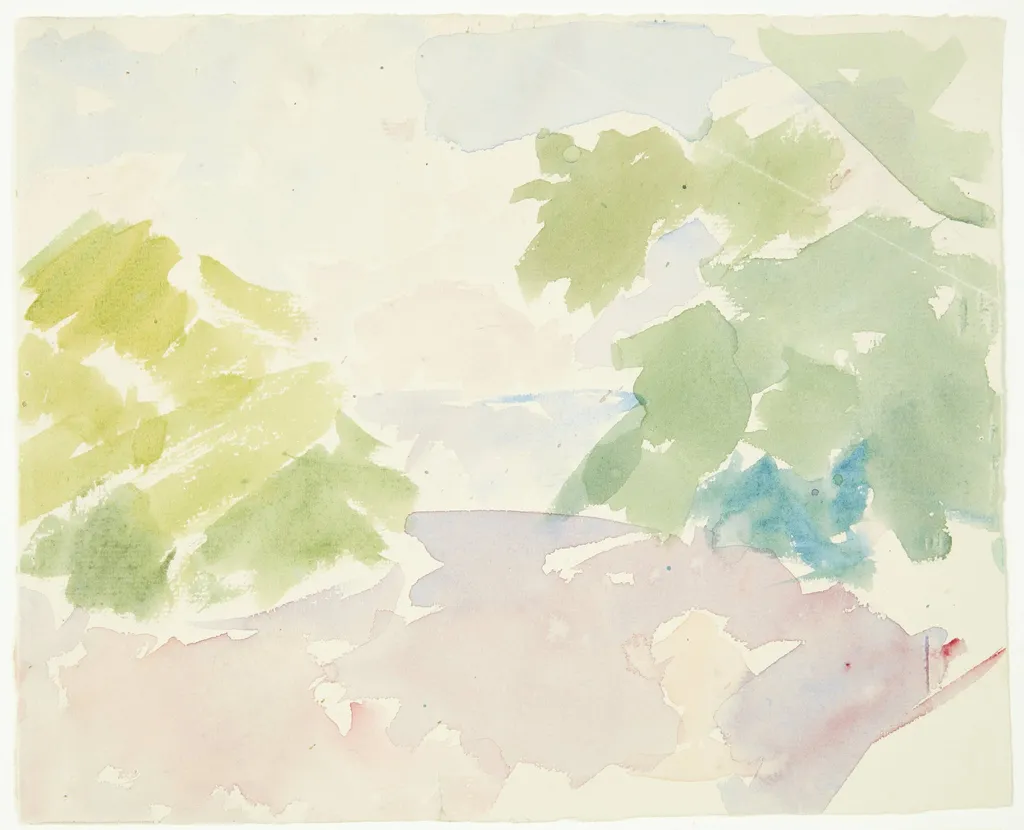
Farvestudie til Langelinie-billedet is an unspecified painting by Unknown. It dates from 1925 and is held in the collection of the Statens Museum for Kunst. Created around 1925, this study was made as a preparatory work for a larger landscape depicting Langelinie.
About this work
Overview
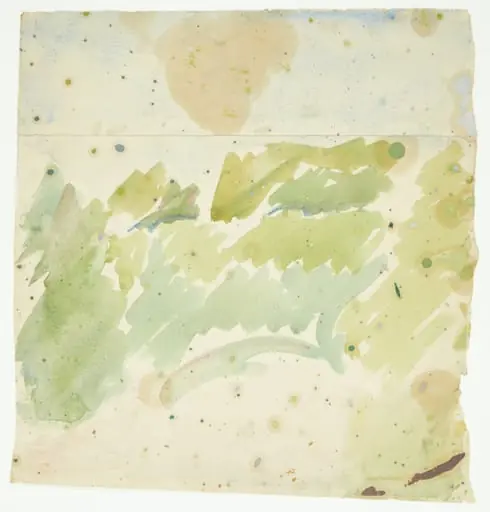
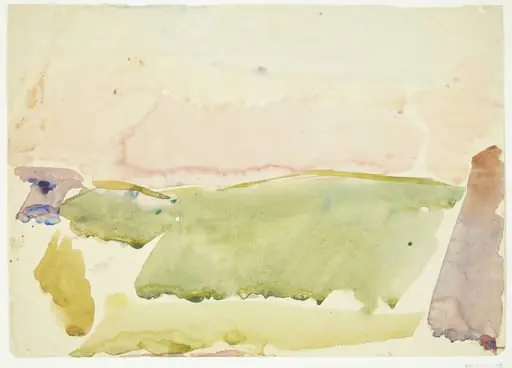
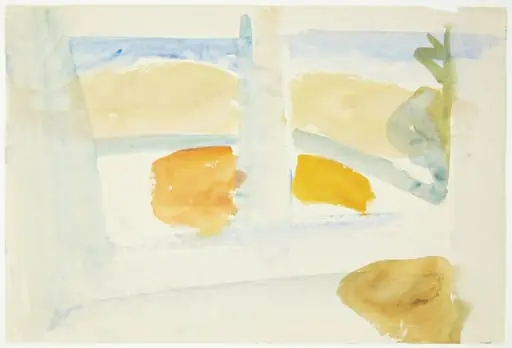
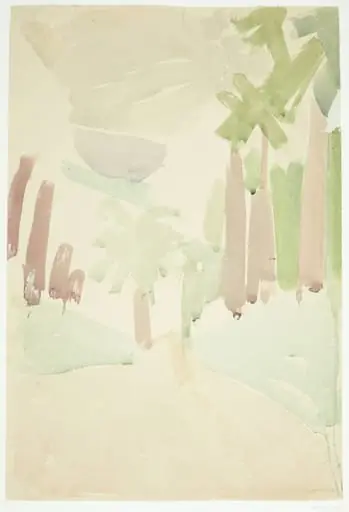
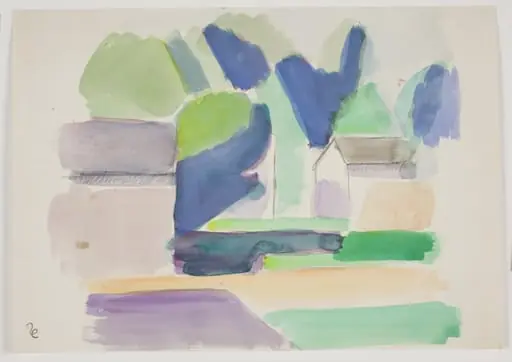
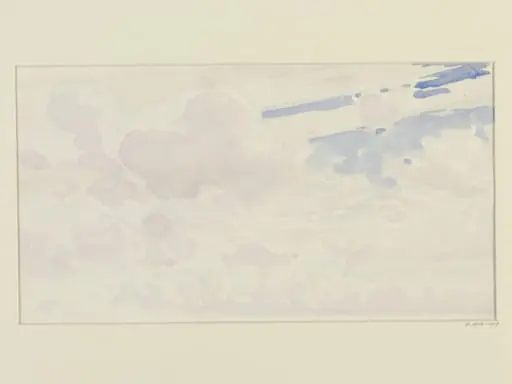
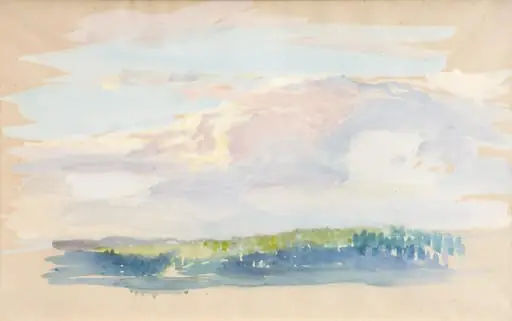
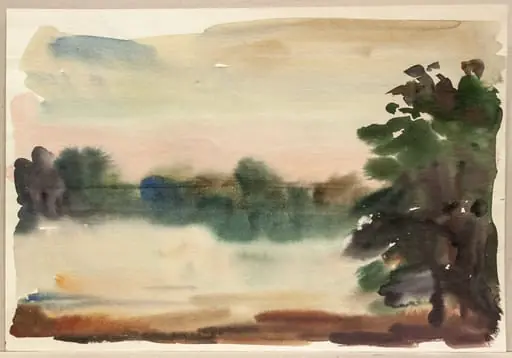
Created around 1925, this study was made as a preparatory work for a larger landscape depicting Langelinie. Executed with fluid, translucent pigments, it captures the atmosphere of a coastal scene through minimal, unstructured brushwork. The piece is held in the collection of the Museum of Ethnography, where it is valued for its experimental approach to color and form rather than its finish.
Subject & Meaning
The subject is a hazy view of Langelinie’s shoreline, rendered without precise detail. Faint suggestions of rolling terrain and distant vegetation evoke a quiet, sunlit coastal expanse. The absence of defined boundaries and the soft transitions between tones suggest a momentary impression rather than a documented view, emphasizing mood over topography.
Technique & Style
The artist applied thin washes of pigment—greens, yellows, and blues—allowing them to bleed and merge on the surface. Edges dissolve into one another, and the paper’s texture remains visible in places. This method resembles watercolor techniques, prioritizing spontaneity and optical blending over controlled rendering, resulting in an impressionistic, almost ephemeral quality.
History & Provenance
It has remained in the museum’s care since the mid-20th century, rarely exhibited but consistently referenced in scholarly discussions of the artist’s process.
This study was retained by the artist’s estate and later acquired by the Museum of Ethnography, likely as part of a broader collection of preparatory works. Its status as a study, rather than a finished painting, explains its modest scale and unpolished surface. It has remained in the museum’s care since the mid-20th century, rarely exhibited but consistently referenced in scholarly discussions of the artist’s process.
Context
Made during a period when many Scandinavian artists were moving away from rigid realism, this work reflects a broader interest in capturing transient light and atmospheric effects. Though not aligned with any formal movement, its approach parallels contemporary experiments in plein air painting and the influence of Japanese ink wash techniques on Nordic modernism.
Legacy
Though never exhibited as a standalone piece during the artist’s lifetime, this study has become a key reference for understanding the evolution of their landscape compositions. Its emphasis on color harmony over detail influenced later generations of Danish painters exploring abstraction and tonal gradation in the early 20th century.
Artist & collection

 Domestic Scene
 Giacomo and Cardinal Marco, investing Andrea, Abbot of San Zeno, with his Benefice
 The Nymph of Fontainebleau
 Portrait of a Woman
 Madonna and Child with Saints in the Enclosed Garden
 Venus and Minerva
 Family Group of Four on Sofa
 Wall painting from Room H of the Villa of P. Fannius Synistor at Boscoreale