Artwork
Landscape in Brazil with Sugar Plantation
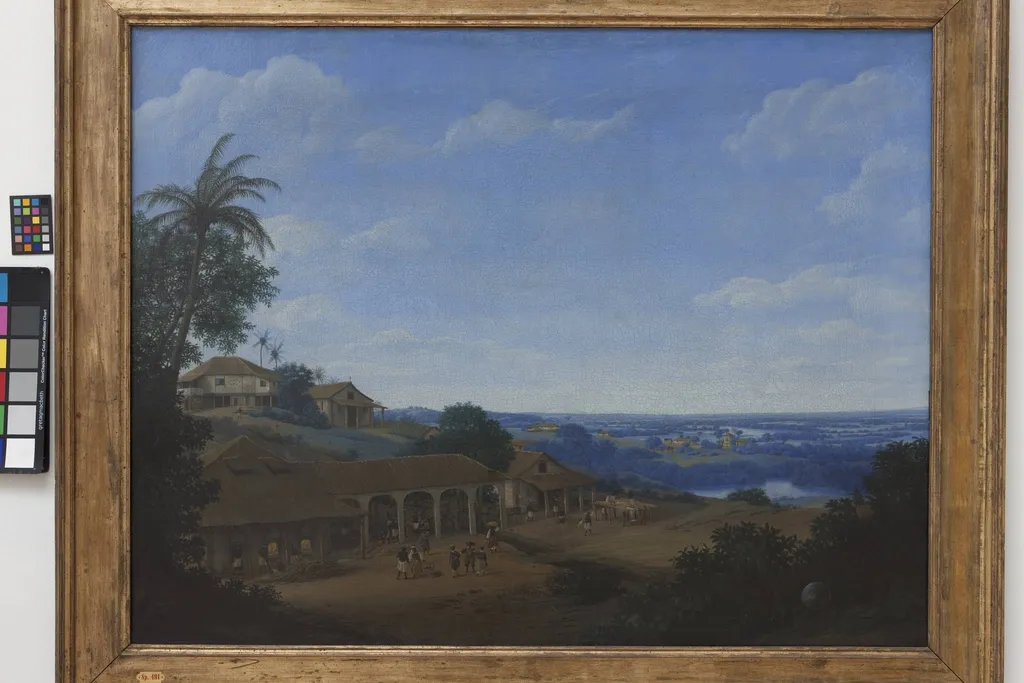
Landscape in Brazil with Sugar Plantation is an unspecified painting by the Barbizon school artist Unknown. It dates from 1660 and is held in the collection of the Statens Museum for Kunst.
About this work
Overview
Landscape in Brazil with Sugar Plantation, executed in 1660 by the artist recorded as 33549_person, is part of the collection of the Museum of Ethnography. The work presents a coastal Brazilian scene rendered in a manner that emphasizes spatial depth through light and shadow.
Subject & Meaning
The composition depicts a sunlit shoreline where a covered arcade shelters several figures, likely laborers or travelers. Beyond the arcade, a prominent house crowns a hill, surrounded by verdant foliage and towering palm trees, while the sea extends to the horizon under a clear sky.
Technique & Style
The artist employs a Baroque‑influenced handling of illumination, allowing sunlight to strike structures and figures and cast defined shadows that enhance three‑dimensionality. The palette of bright blues, greens, and earth tones contributes to a realistic atmospheric effect.
History & Provenance
Created in the mid‑17th century, the painting has been retained within the Museum of Ethnography’s holdings. No further documentation of earlier ownership or exhibition history is currently recorded.
Context
The work reflects European interest in colonial Brazil during the 1600s, particularly the economic importance of sugar plantations. Its depiction of a plantation landscape aligns with contemporary visual narratives that combined topographical detail with idealized scenery.
Artist & collection

 Domestic Scene
 Giacomo and Cardinal Marco, investing Andrea, Abbot of San Zeno, with his Benefice
 The Nymph of Fontainebleau
 Portrait of a Woman
 Madonna and Child with Saints in the Enclosed Garden
 Venus and Minerva
 Family Group of Four on Sofa
 Wall painting from Room H of the Villa of P. Fannius Synistor at Boscoreale
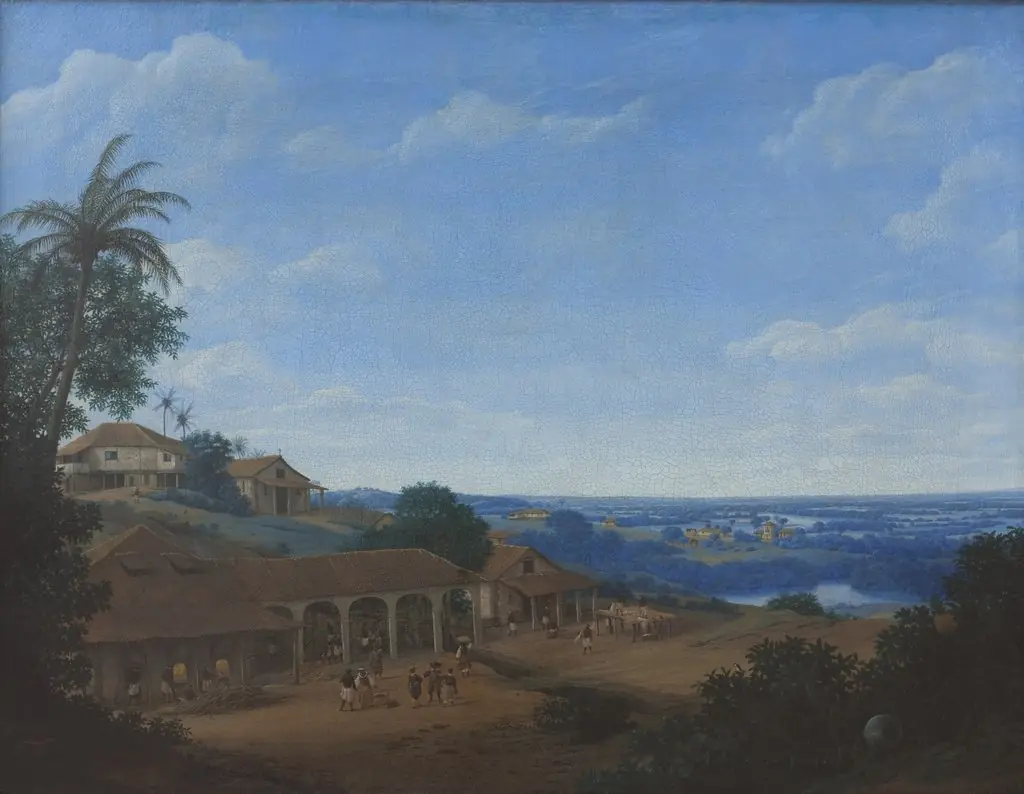 Landscape in Brazil with Sugar Plantation
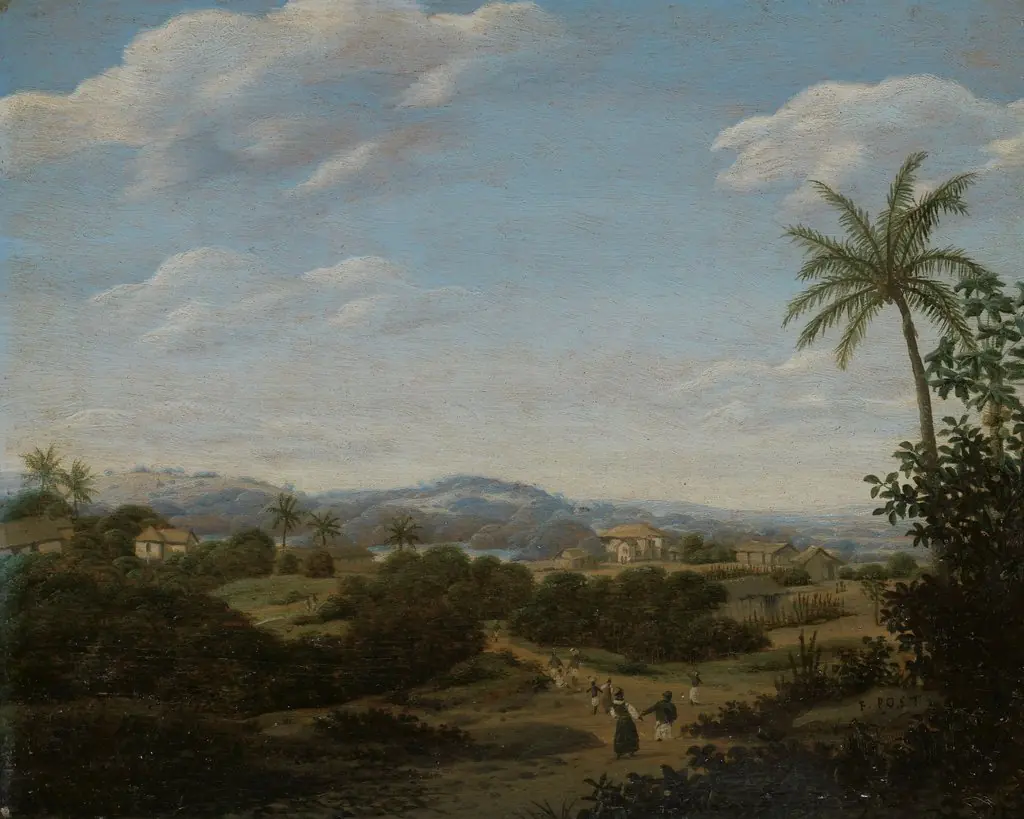 Brazilian Landscape
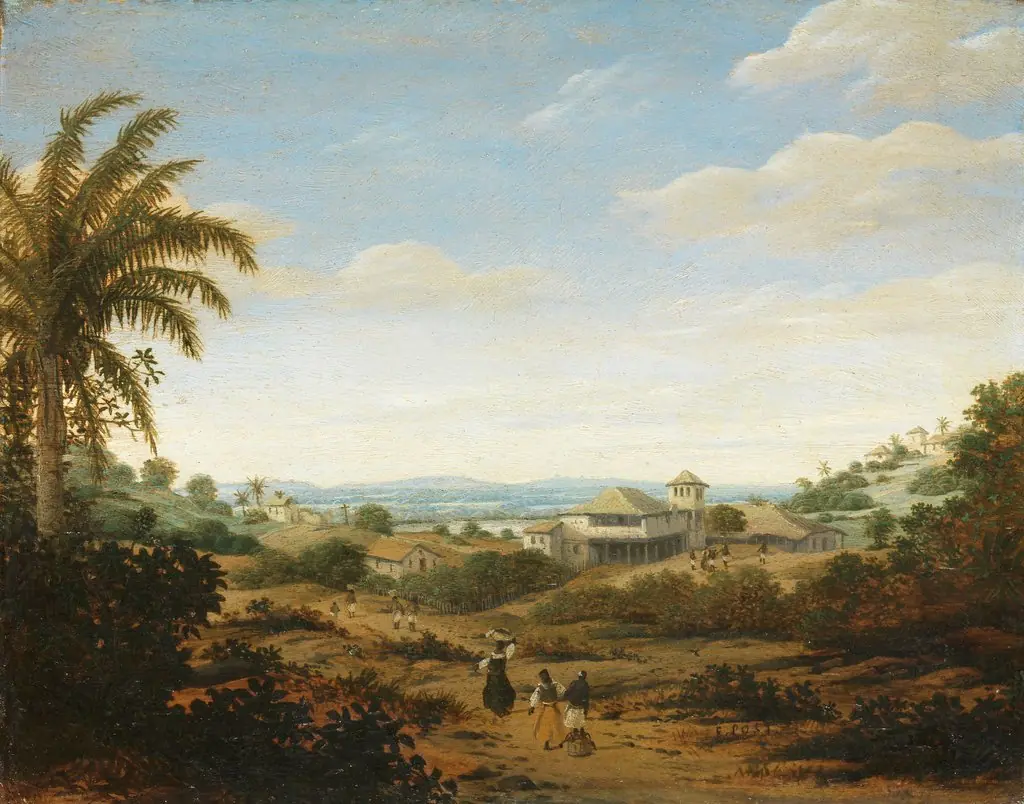 Landscape by the Rio Senhor de Engenho, Brazil
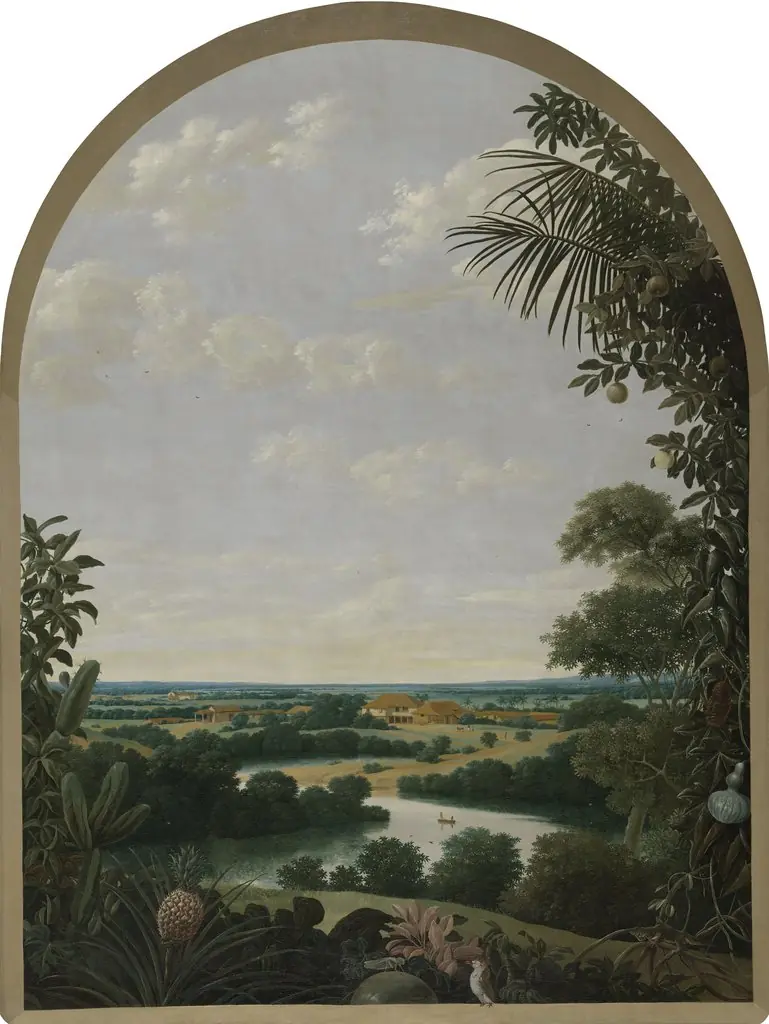 Landscape in Brazil
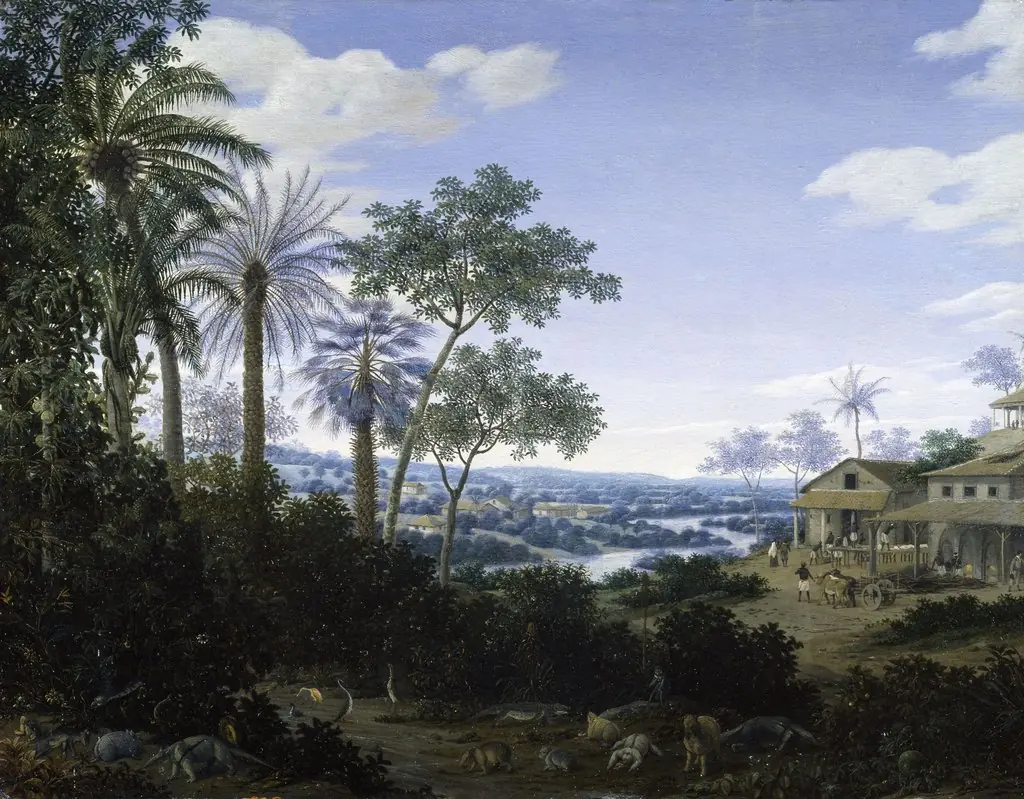 Brazilian Landscape with Sugar Mill
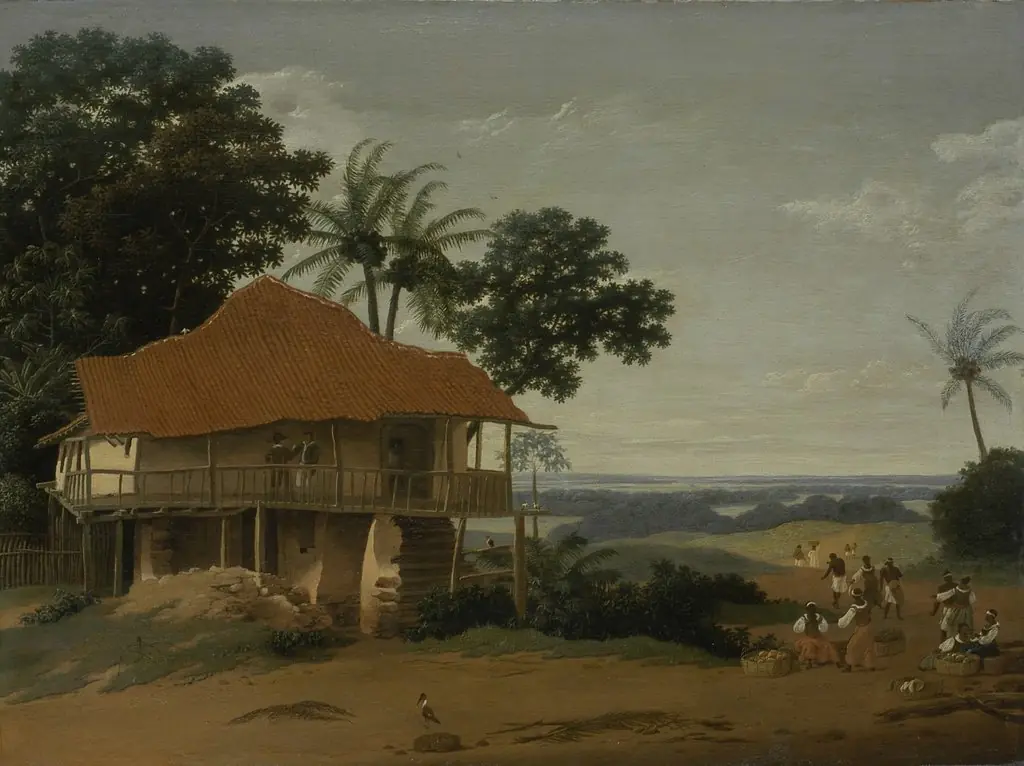 Brazilian Landscape with a Worker's House
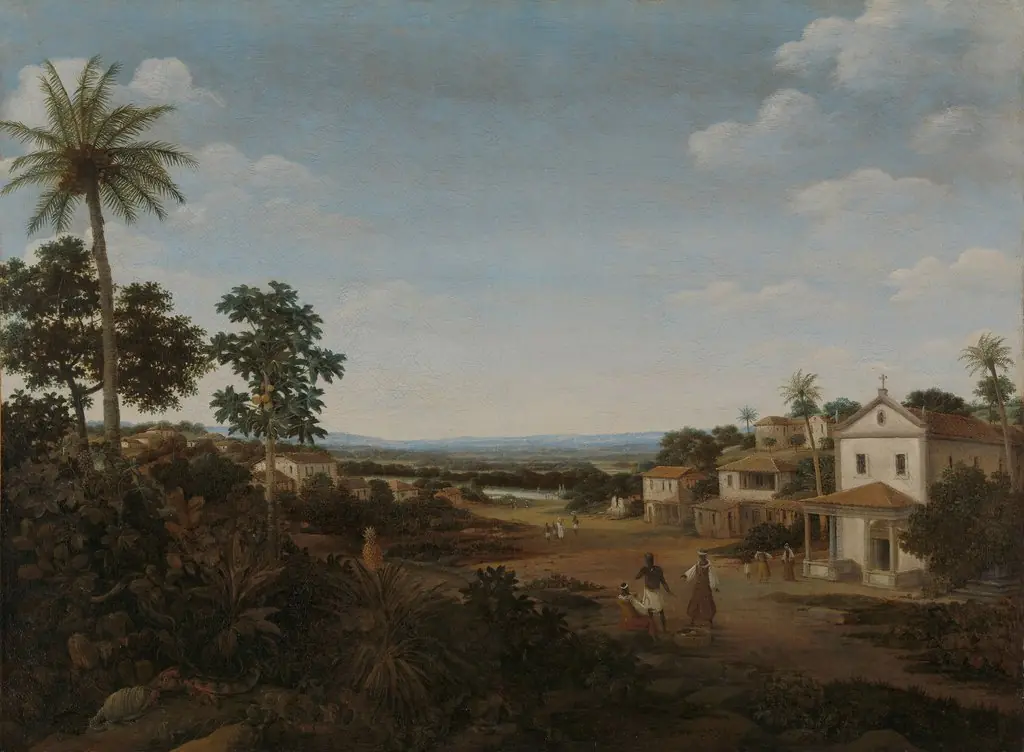 Landscape in Brazil
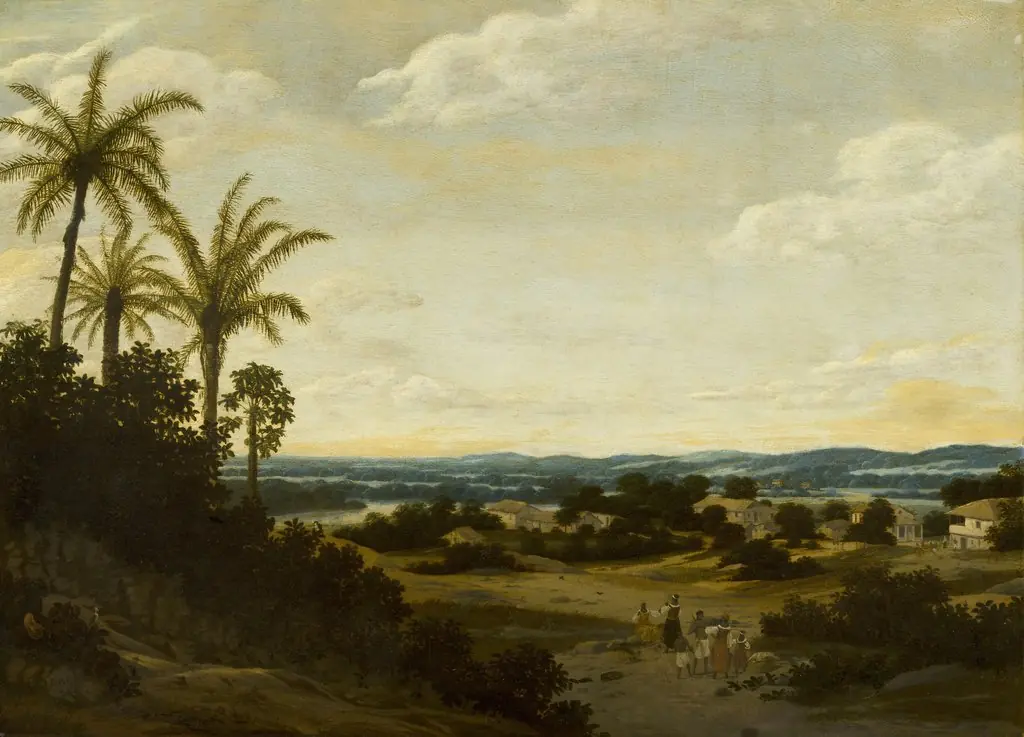 Brasilian Landscape
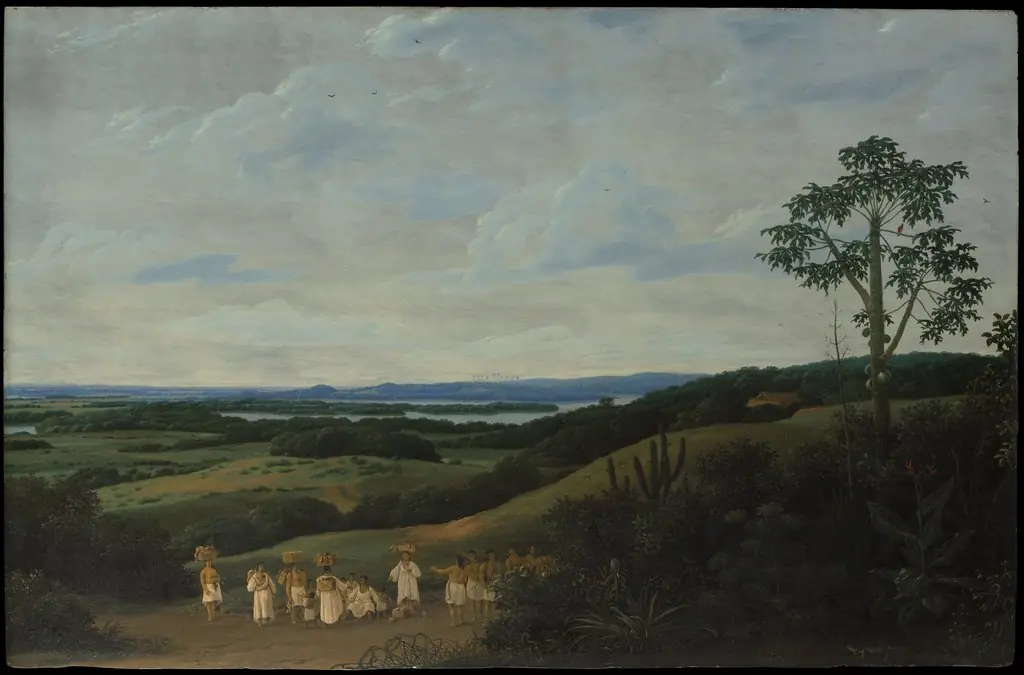 A Brazilian Landscape
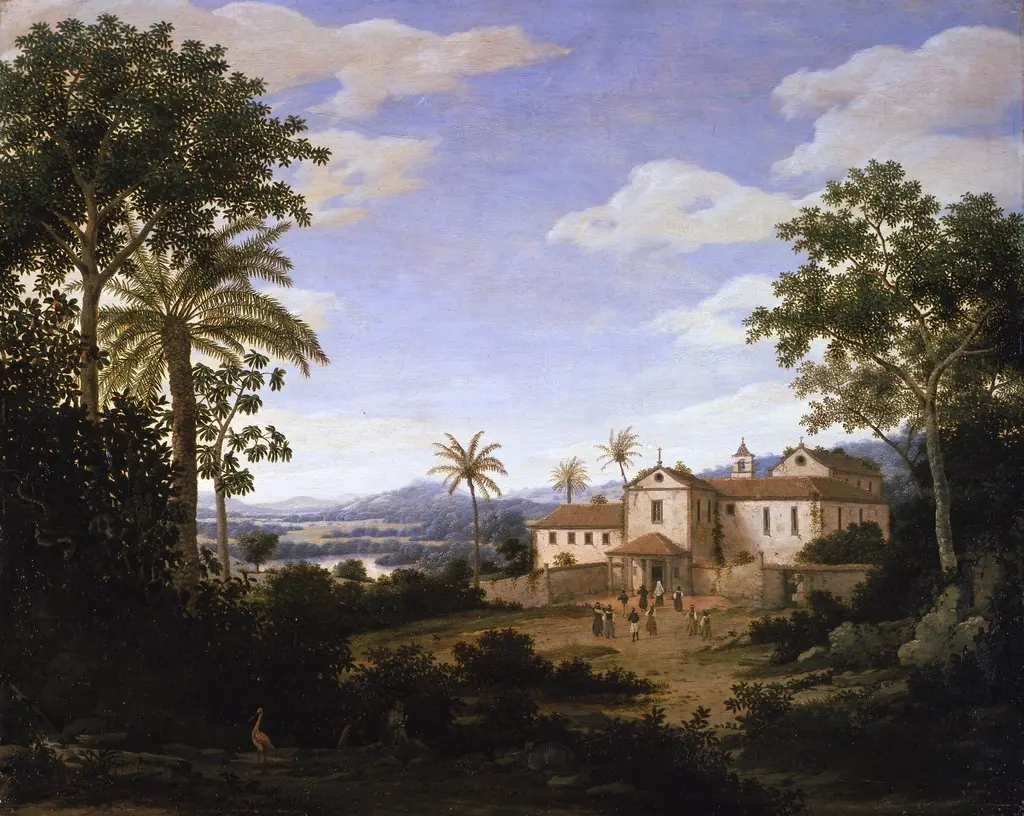 Brazilian landscape with the Igarassu Franciscan Monastery
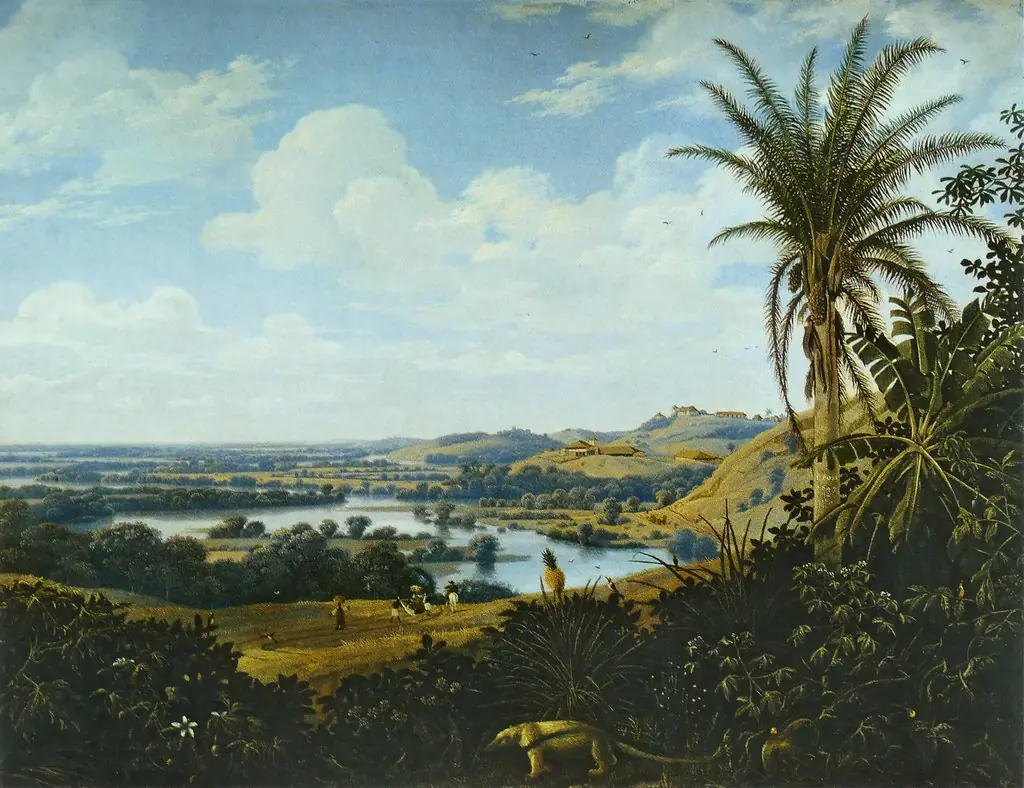 Brazilian landscape with anteater