Artwork
Kysten ved Vordingborg med Gåsetårnet en tidlig morgen
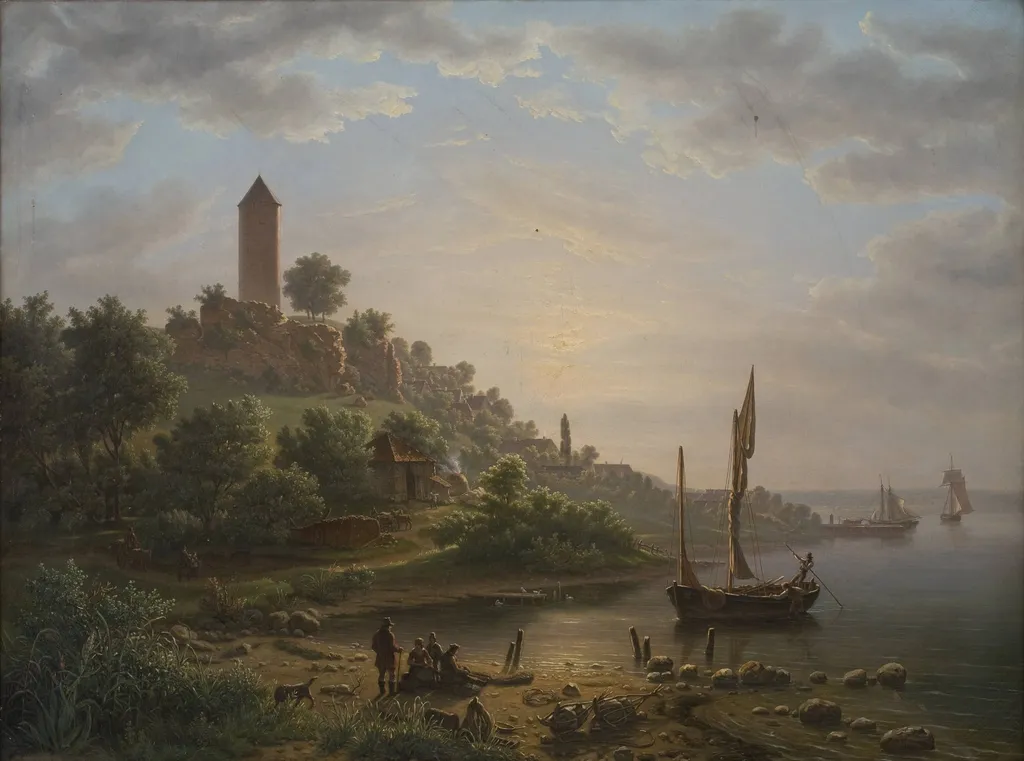
Kysten ved Vordingborg med Gåsetårnet en tidlig morgen is a photography by the Romanticist artist Unknown. It dates from 1848 and is held in the collection of the Statens Museum for Kunst. Painted in 1848, this landscape depicts the coastline near Vordingborg at dawn, capturing a quiet moment before the day fully begins.
About this work
Overview
Painted in 1848, this landscape depicts the coastline near Vordingborg at dawn, capturing a quiet moment before the day fully begins. The work is attributed to an artist associated with Danish Romanticism and is part of the Museum of Ethnography’s collection. It presents a serene coastal scene with subtle human presence and natural elements, emphasizing atmosphere over narrative.
Subject & Meaning
The lone tower atop the hill, likely the Goose Tower, anchors the composition as a relic of medieval defense.
The scene centers on a tranquil riverbank, where a moored boat and a distant sail suggest quiet activity. Figures on the shore observe the water, their small scale reinforcing the vastness of nature. The lone tower atop the hill, likely the Goose Tower, anchors the composition as a relic of medieval defense. The mood is contemplative, evoking solitude and the passage of time rather than action or drama.
Technique & Style
The artist employs soft, diffused light to create a hazy, early-morning atmosphere. Colors are muted and gradually fade into the distance, enhancing depth without sharp contrasts. Brushwork is restrained, favoring smooth transitions between sky, water, and land. The composition balances horizontal planes with the vertical tower, guiding the eye gently through the landscape.
History & Provenance
Created in 1848, the painting entered the collection of the Museum of Ethnography, where it remains today. While its early ownership is undocumented, its subject matter aligns with 19th-century Danish interest in local landscapes and historical monuments. The work reflects a period when artists increasingly turned to native scenery as a source of cultural identity.
Context
This painting emerged during a time when Danish artists were redefining national identity through depictions of rural and coastal life. The inclusion of the Goose Tower—a known medieval structure—connects the scene to Denmark’s historical past. The quiet, uneventful mood reflects Romantic ideals that valued introspection and nature’s quiet grandeur over theatricality.
Legacy
Though not widely exhibited outside Denmark, the work contributes to a broader tradition of Nordic landscape painting that prioritized mood and atmosphere. Its restrained palette and focus on everyday natural beauty influenced later generations of Scandinavian artists who sought to capture the emotional resonance of their homeland’s terrain.
Artist & collection

 Domestic Scene
 Giacomo and Cardinal Marco, investing Andrea, Abbot of San Zeno, with his Benefice
 The Nymph of Fontainebleau
 Portrait of a Woman
 Madonna and Child with Saints in the Enclosed Garden
 Venus and Minerva
 Family Group of Four on Sofa
 Wall painting from Room H of the Villa of P. Fannius Synistor at Boscoreale
 View of the Hill at Skanderborg Castle, Jutland, and the Memorial to frederik VI
 Gripsholmin linna
 Italiaans landschap met overzetveer
 View of the Hill at Skanderborg Castle, Jutland, and the Memorial to frederik VI
 Morning
 Landschaft mit Bergsee
 Gezicht op Civita Castellana
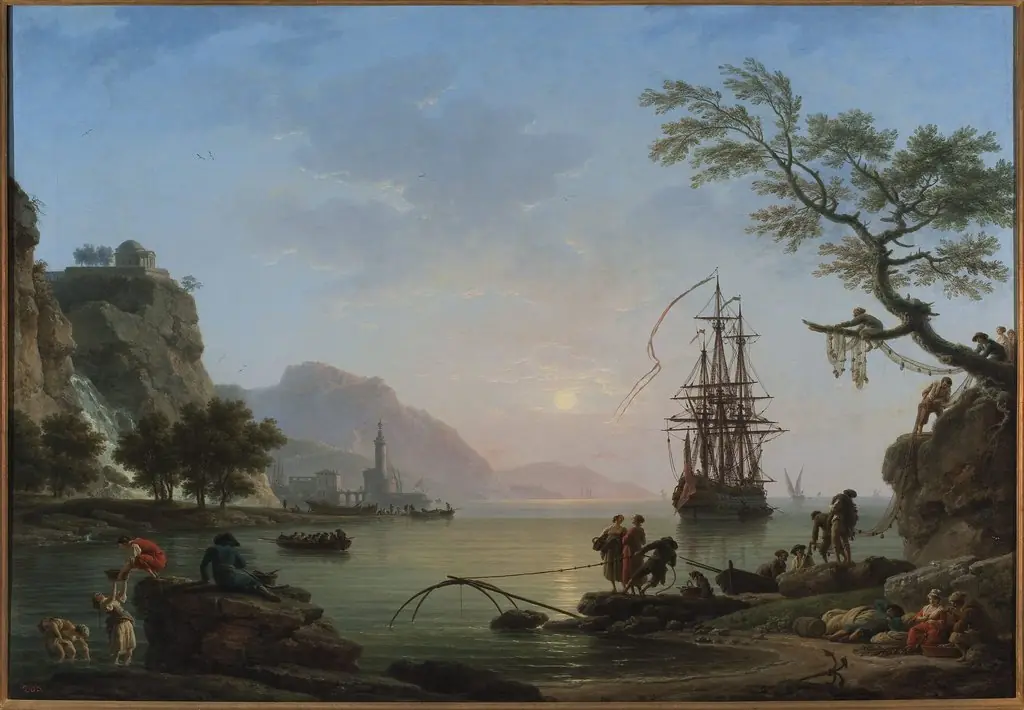 Fishing port at dawn (Morning)
 Sonnenuntergang über den Campi Flegrei gegen die Inseln Procida und Ischia
 Flusslandschaft mit Bauern