Artwork
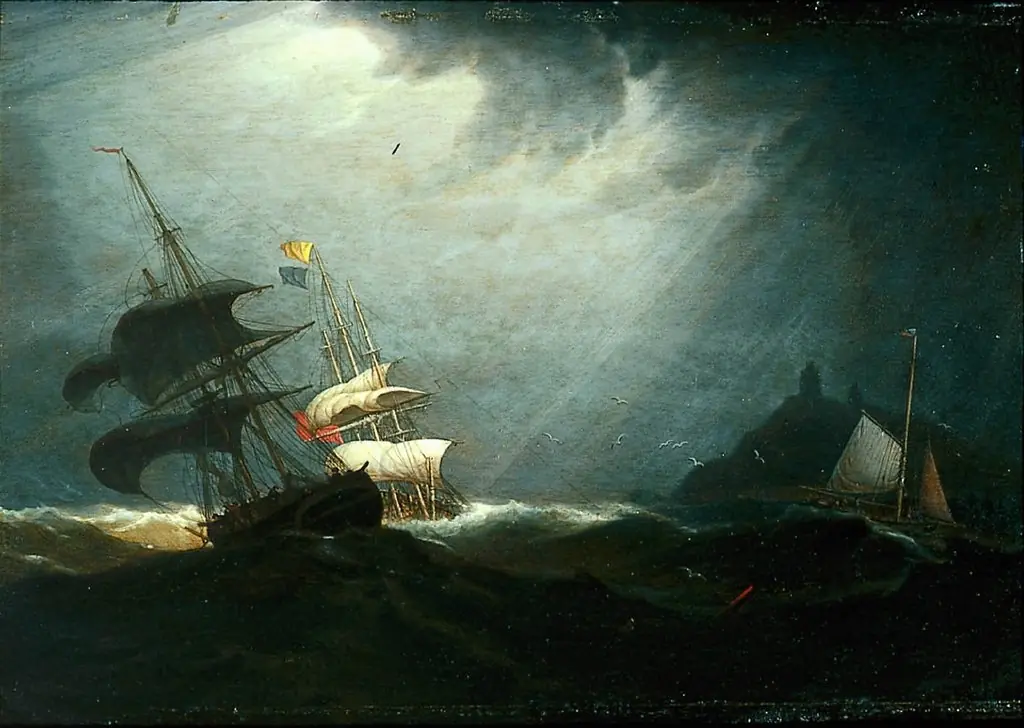
Et dampskib i en storm i Atlanterhavet
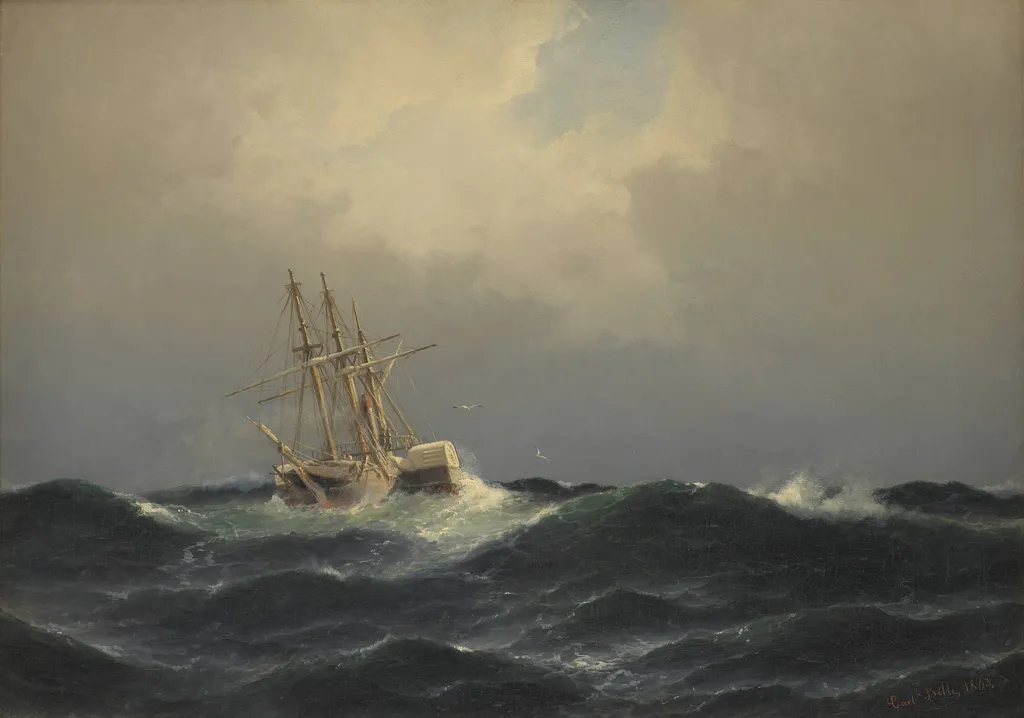
Et dampskib i en storm i Atlanterhavet is a photography by the Impressionist artist Unknown. It dates from 1863 and is held in the collection of the Statens Museum for Kunst. Painted in 1863, this seascape captures a steamship struggling against a violent North Atlantic storm.
About this work
Overview
The artist, known for maritime scenes, rendered this with a focus on atmospheric tension rather than narrative detail.
Painted in 1863, this seascape captures a steamship struggling against a violent North Atlantic storm. Executed in oil, the work conveys the raw power of nature through turbulent waves and a brooding sky. It resides in the Museum of Ethnography, though its subject is not tied to ethnographic themes. The artist, known for maritime scenes, rendered this with a focus on atmospheric tension rather than narrative detail.
Subject & Meaning
The vessel, caught mid-storm, symbolizes human vulnerability against elemental forces. Its damaged sails and tilted hull suggest imminent peril, while the absence of rescue or land emphasizes isolation. The painting avoids romanticizing the sea; instead, it presents nature as indifferent, overwhelming, and relentless. The ship becomes a silent witness to the sea’s uncontrollable energy.
Technique & Style
The artist employed thick, directional brushwork to simulate the churning motion of waves, using layered blues and greens with sharp white highlights for foam. The sky is rendered in dense, muted grays that press downward, enhancing the sense of enclosure. The ship, painted in subdued tones, contrasts with the vivid chaos around it, drawing the eye to its precarious balance amid the turmoil.
History & Provenance
Created in 1863, the painting entered the Museum of Ethnography’s collection shortly after its completion. Its presence there reflects 19th-century institutional practices that sometimes grouped maritime art with ethnographic materials, perhaps due to associations with seafaring cultures or global trade routes. No significant alterations or restorations are documented in its early history.
Context
This work emerged during a period when European artists increasingly turned to nature’s sublime forces as subjects, influenced by Romanticism and advances in marine science. While not part of a formal movement, the painting aligns with contemporaneous efforts to depict the sea not as a backdrop but as an active, dangerous agent. Industrial steamships, still novel, were often portrayed as fragile against natural power.
Legacy
Though not widely exhibited beyond its home institution, the painting remains a quiet example of 19th-century Nordic maritime realism. It contributes to a lesser-known strand of storm imagery that prioritizes emotional weight over dramatic spectacle. Its preservation in an ethnographic context invites ongoing reflection on how cultural institutions classify natural phenomena alongside human artifacts.
Artist & collection

 Domestic Scene
 Giacomo and Cardinal Marco, investing Andrea, Abbot of San Zeno, with his Benefice
 The Nymph of Fontainebleau
 Portrait of a Woman
 Madonna and Child with Saints in the Enclosed Garden
 Venus and Minerva
 Family Group of Four on Sofa
 Wall painting from Room H of the Villa of P. Fannius Synistor at Boscoreale
 Et skib i storm på Atlanterhavet
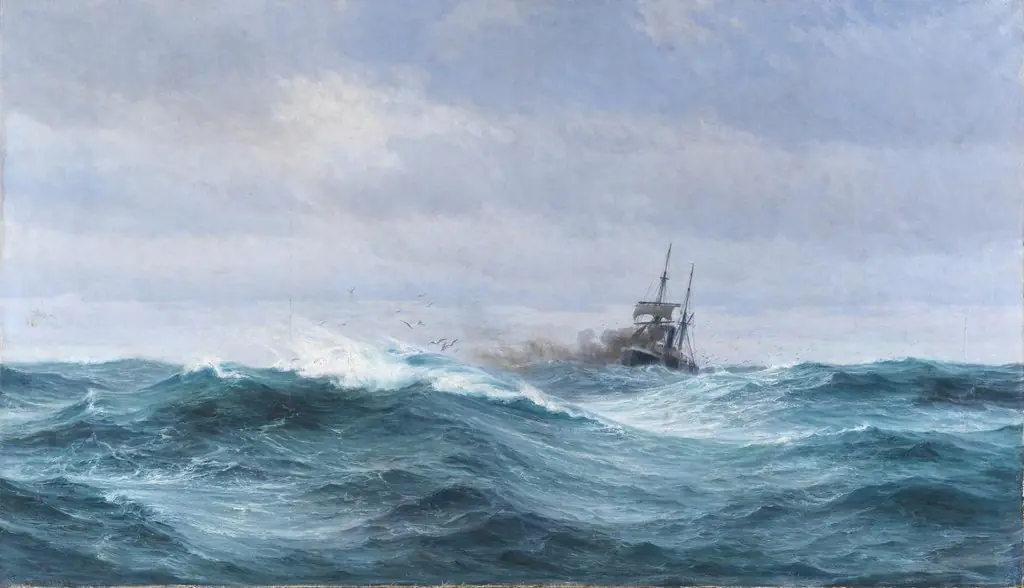 Et skib i storm på Atlanterhavet
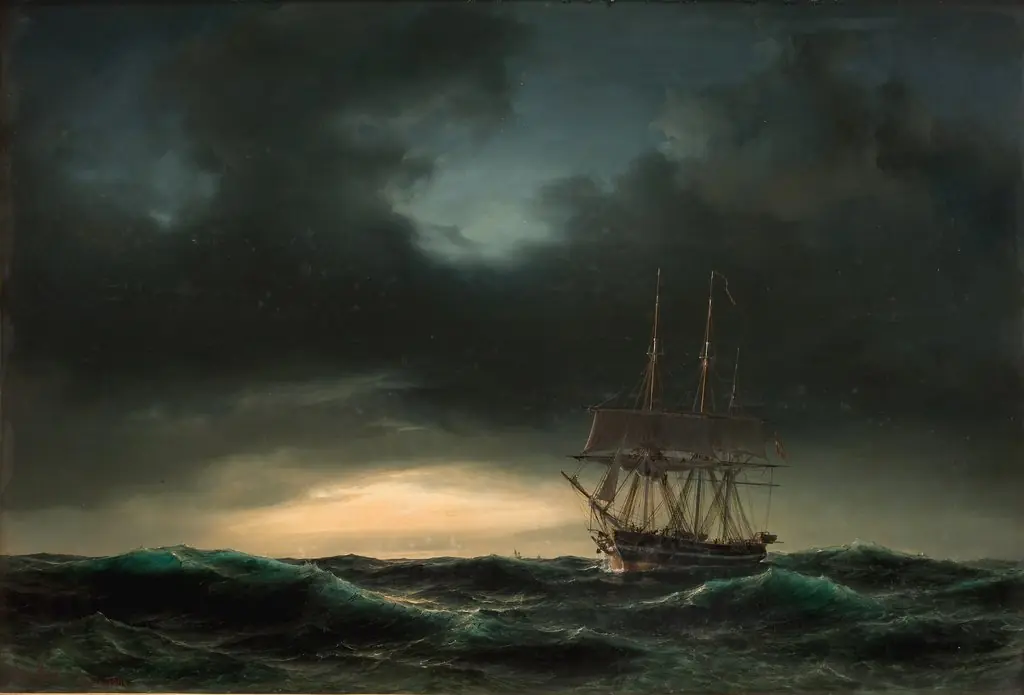 En dansk korvet i rum sø efter en storm
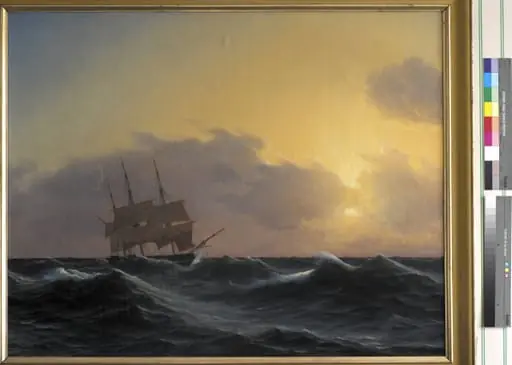 Fregat i en storm med rebede undersejl
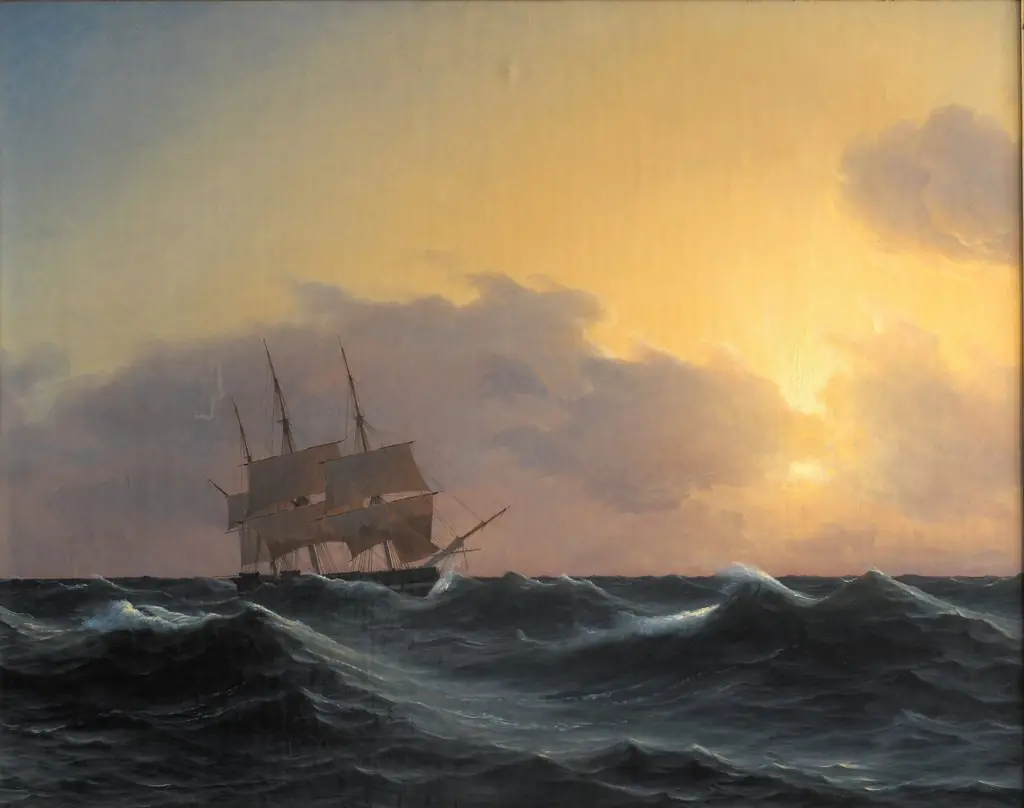 Fregat i en storm med rebede undersejl
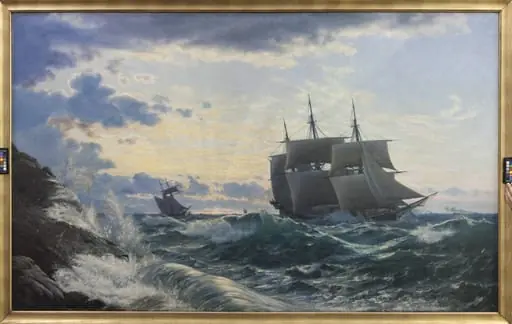 Skibe som morgenen efter en storm klarer landet for sig
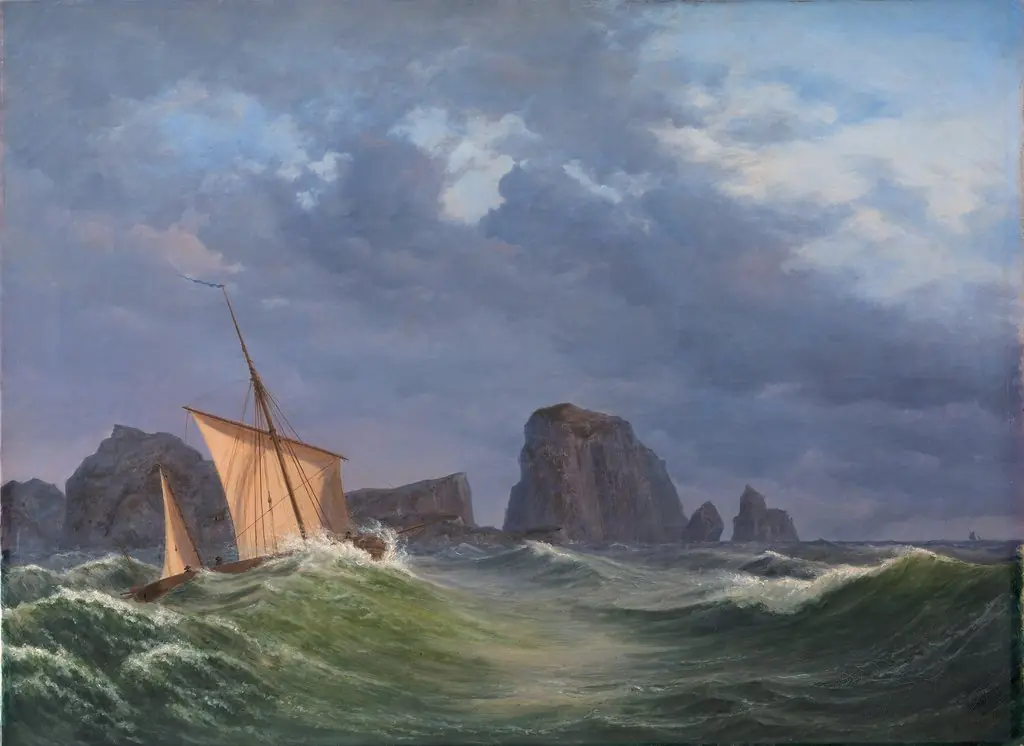 En shetlandsk fiskerbåd i stormfuldt vejr nord for Orkneyøerne
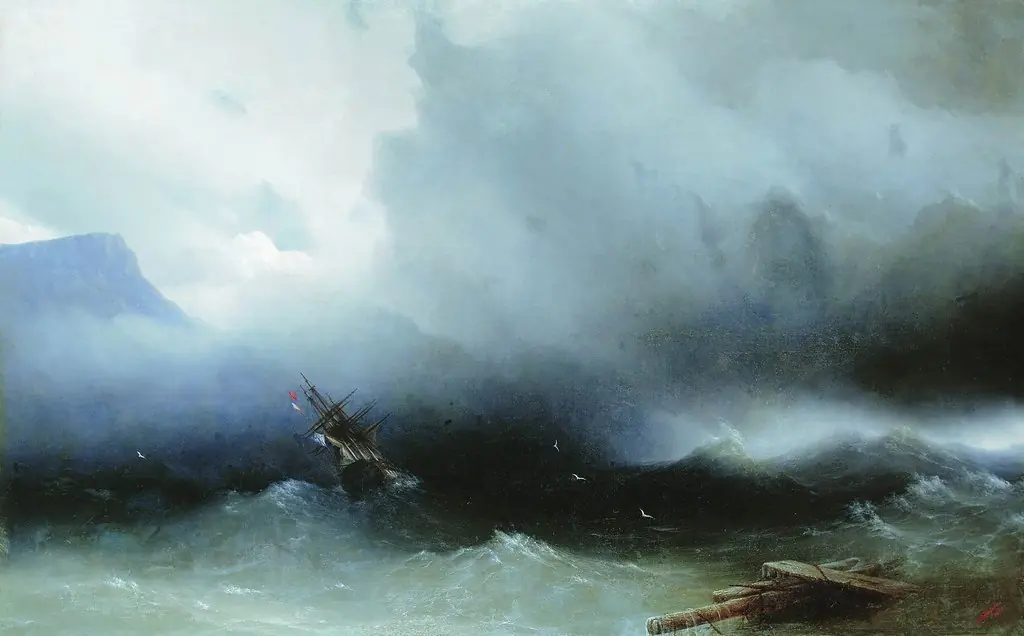 The storm at sea
 Storm at Sea