Artwork
Arcadian Landscape
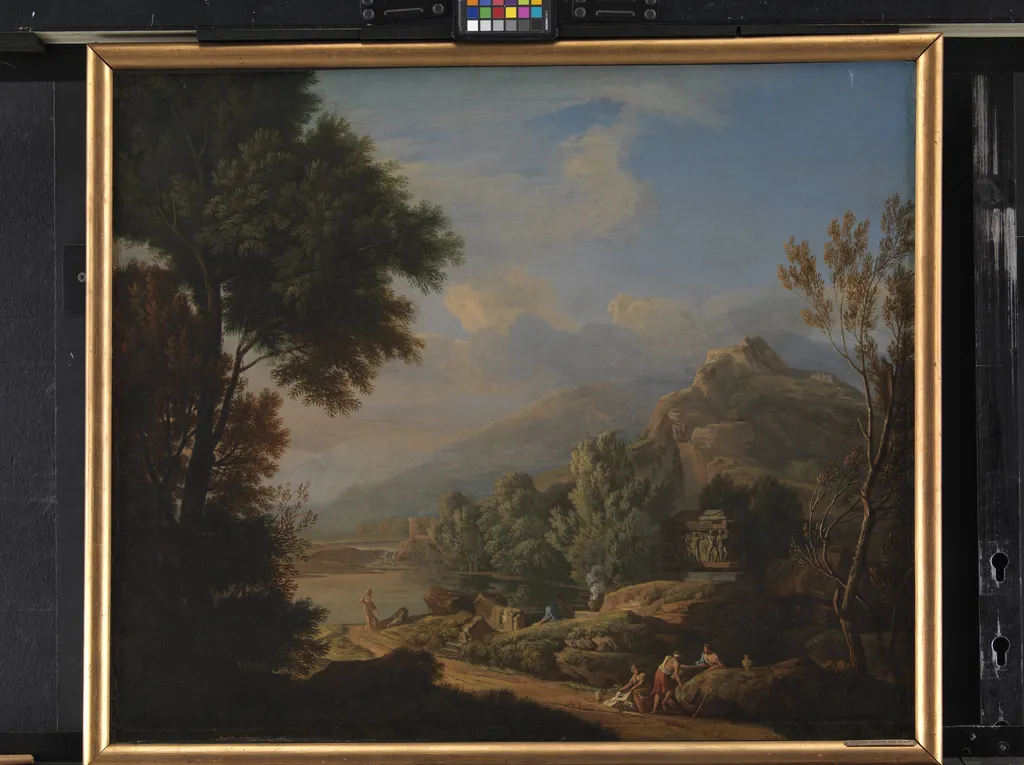
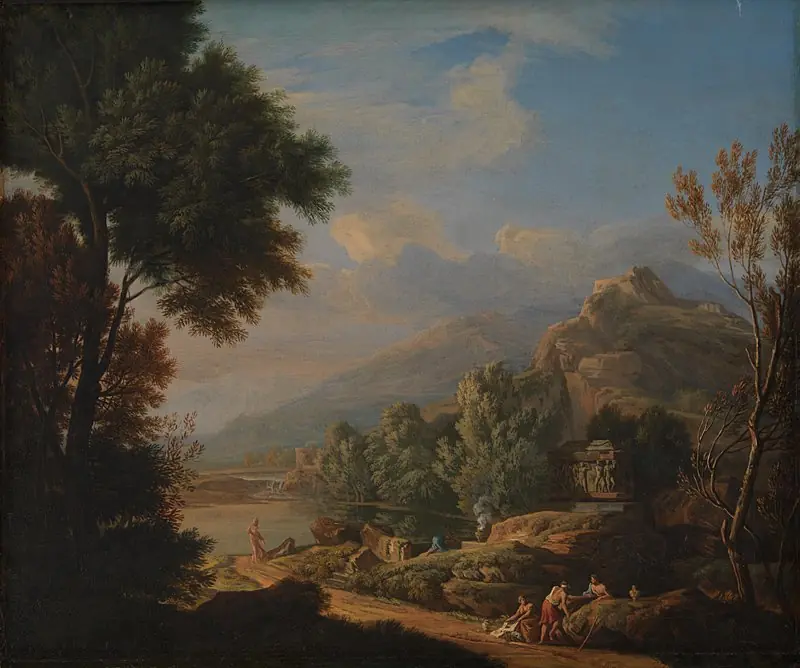
Arcadian Landscape is an unspecified painting by Unknown. It dates from 1724 and is held in the collection of the Statens Museum for Kunst.
About this work
Overview
It depicts a serene natural setting with rolling hills, dense foliage, and a calm body of water under a clear sky.
Painted around 1724, Arcadian Landscape is a pastoral scene rendered in oil on canvas. It depicts a serene natural setting with rolling hills, dense foliage, and a calm body of water under a clear sky. The composition centers on a group of figures near a fire, one of whom faces the viewer directly. The work is currently held in the collection of the Museum of Ethnography, where it is presented as an example of early 18th-century idealized landscape painting.
Subject & Meaning
The scene evokes a timeless, harmonious rural existence, drawing on classical ideals of the Arcadian idyll. Figures gathered around a fire suggest communal life, while the solitary figure gazing outward introduces a contemplative tone. The absence of overt narrative or conflict reinforces a vision of peace and balance with nature, reflecting Enlightenment-era fascination with simplicity and the natural world as moral refuge.
Technique & Style
The painting employs a restrained palette of greens, browns, and soft blues to unify the landscape. Light is gently modeled to suggest depth, with subtle contrasts between sunlit areas and shaded undergrowth. While not overtly dramatic, the handling of light and shadow shows awareness of chiaroscuro principles, used here to enhance spatial realism rather than emotional intensity.
History & Provenance
The painting’s early history is undocumented, but it entered the Museum of Ethnography’s collection in the late 19th century. Its attribution to the artist 34809_person remains tentative, based on stylistic comparison with other works from the period. The work was likely acquired during a period of increased interest in European pastoral imagery among ethnographic collectors seeking representations of 'primitive' or timeless life.
Context
Created during the early 1700s, the painting aligns with a broader European trend of idealizing rural life as a counterpoint to urbanization and industrial change. Though not tied to a specific region, its attire and setting reflect generalized notions of antiquity rather than accurate ethnographic detail. It was produced at a time when landscape painting increasingly served philosophical rather than topographical aims.
Legacy
Arcadian Landscape continues to be studied as an example of how 18th-century artists synthesized classical themes with naturalistic observation. While not widely exhibited, it contributes to scholarly discussions on the representation of non-urban life in European art. Its presence in an ethnographic museum underscores shifting interpretations of art as cultural artifact rather than purely aesthetic object.
Artist & collection

 Domestic Scene
 Giacomo and Cardinal Marco, investing Andrea, Abbot of San Zeno, with his Benefice
 The Nymph of Fontainebleau
 Portrait of a Woman
 Madonna and Child with Saints in the Enclosed Garden
 Venus and Minerva
 Family Group of Four on Sofa
 Wall painting from Room H of the Villa of P. Fannius Synistor at Boscoreale
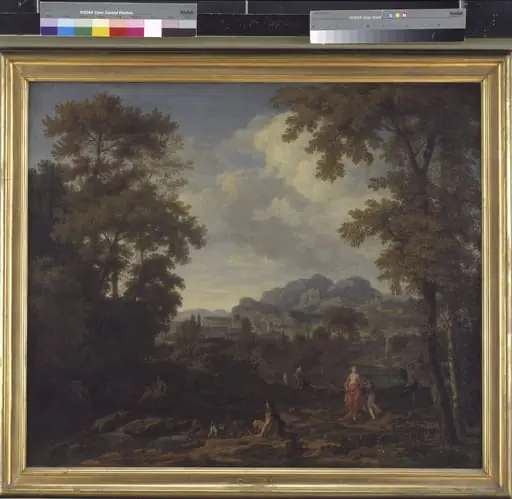 Classical Landscape with Diana (?) and her Nymphs
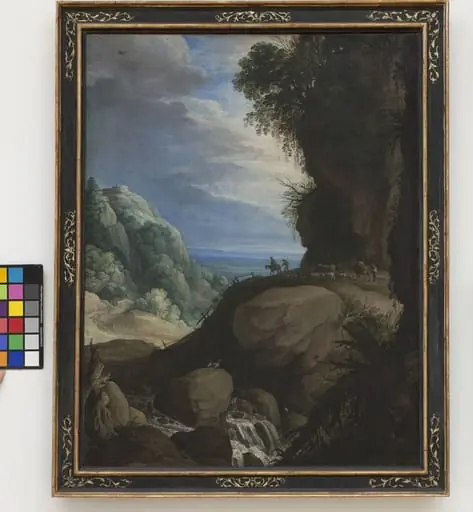 Italian Mountain Landscape with Shepherds
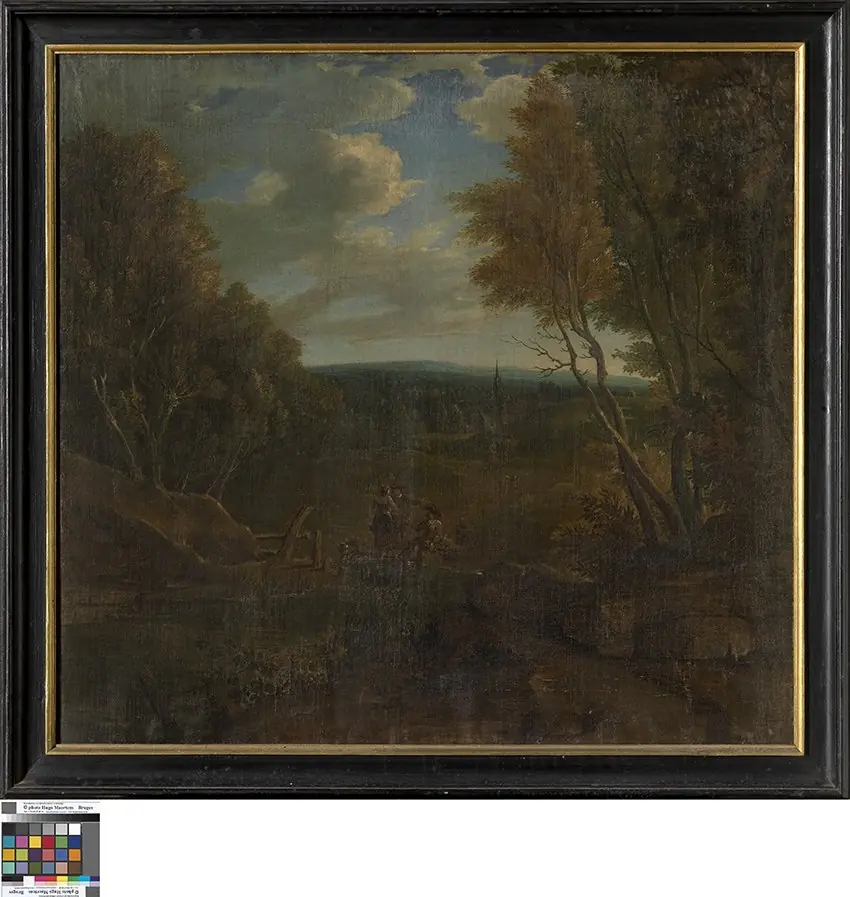 Dorp in een dal
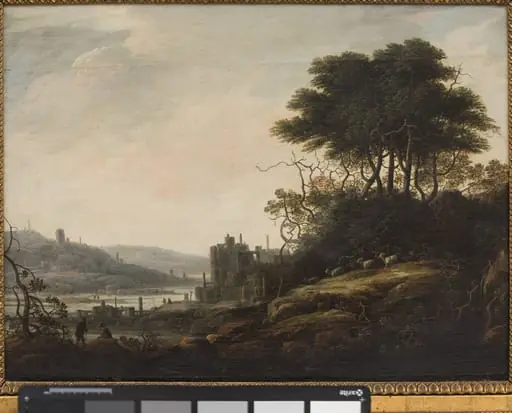 Landscape
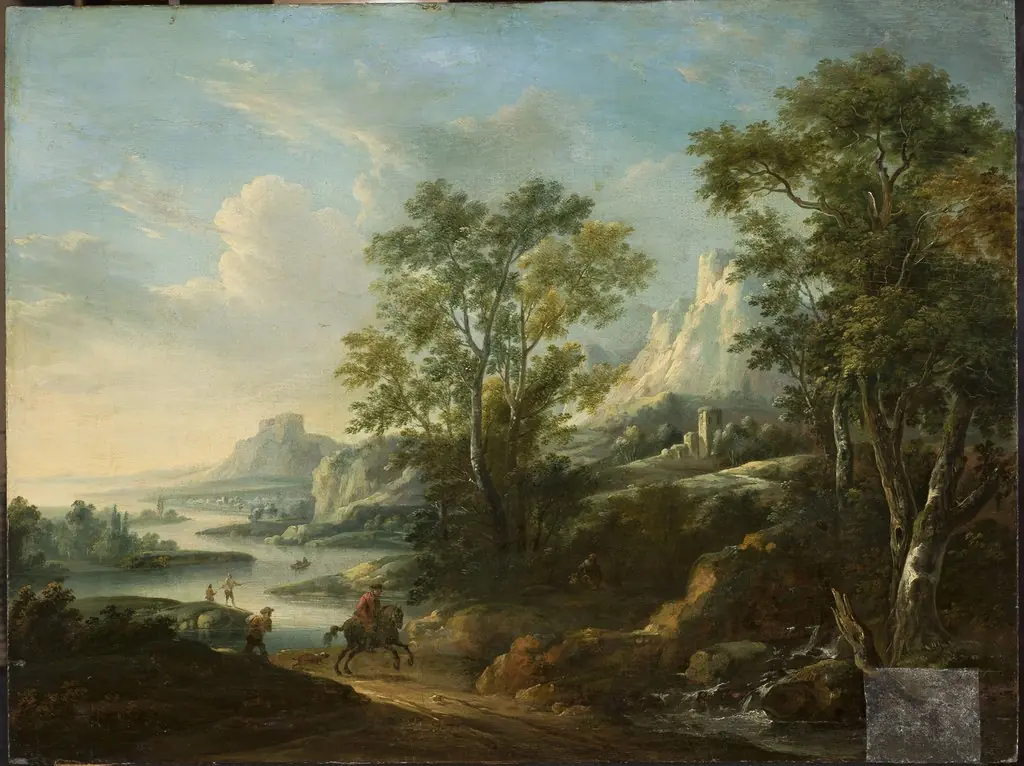 Mountain landscape with a river
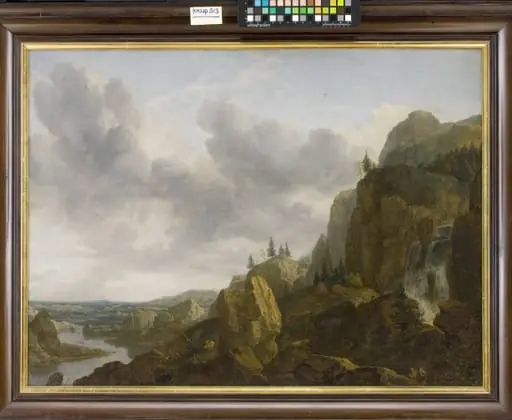 Northern Mountain Landscape with Waterfall
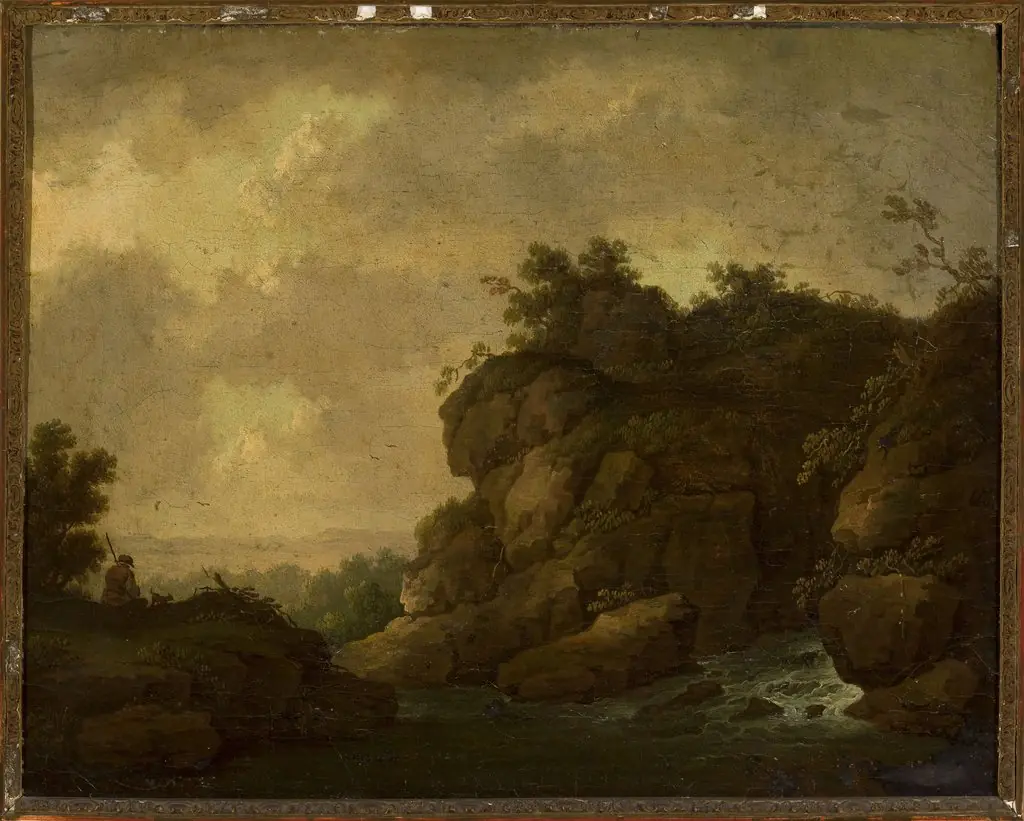 Romantic landscape with a shepherd
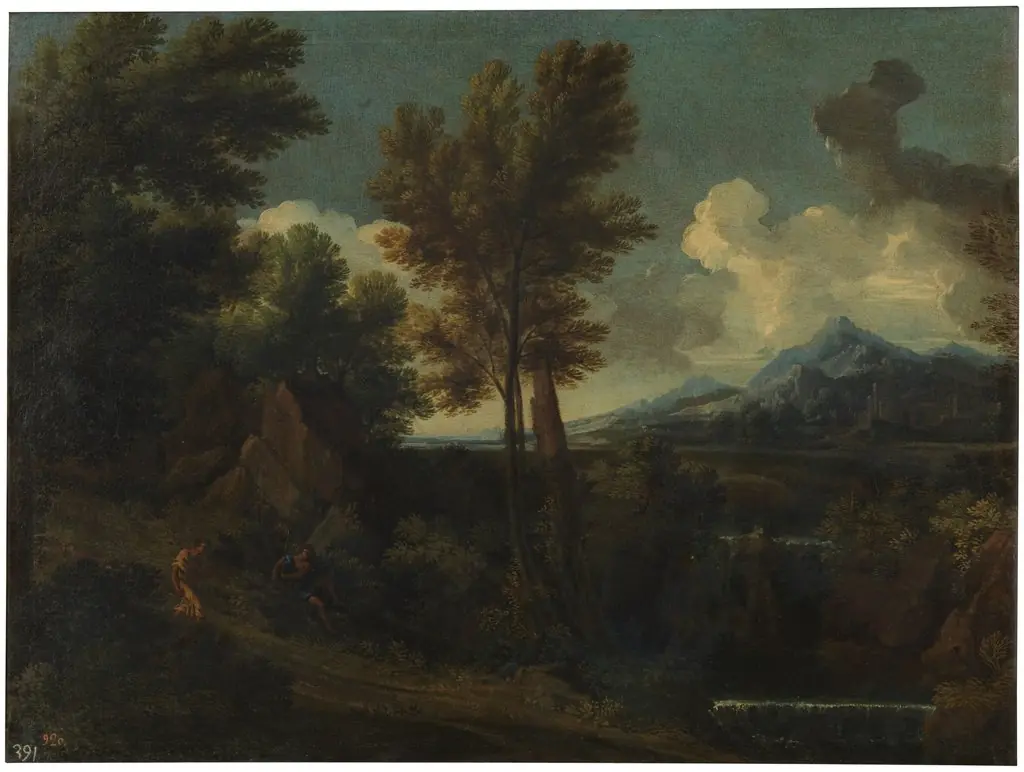 Paisaje con caminante
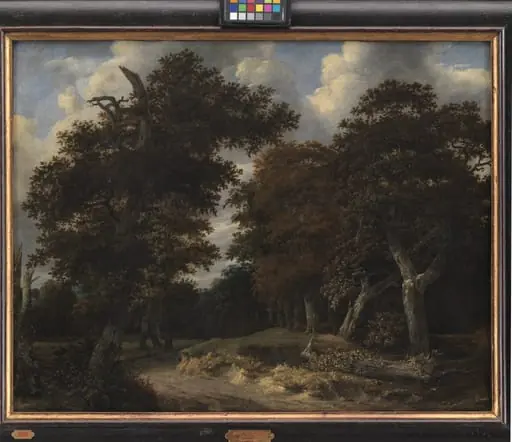 Road through an Oak Forest
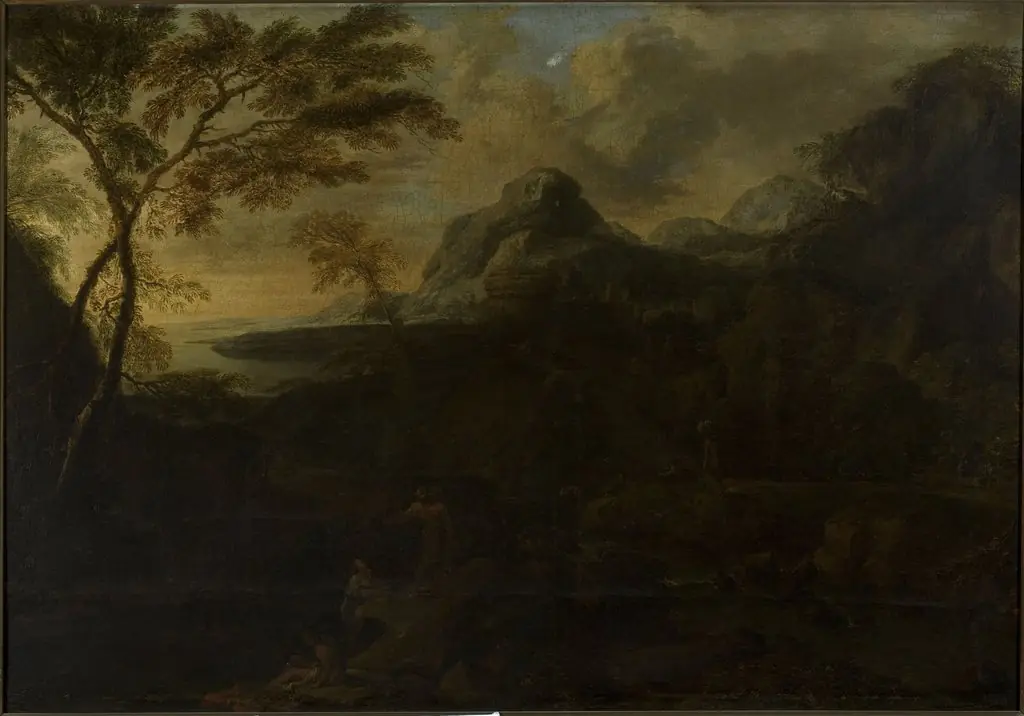 Landscape with figures at the lakeside
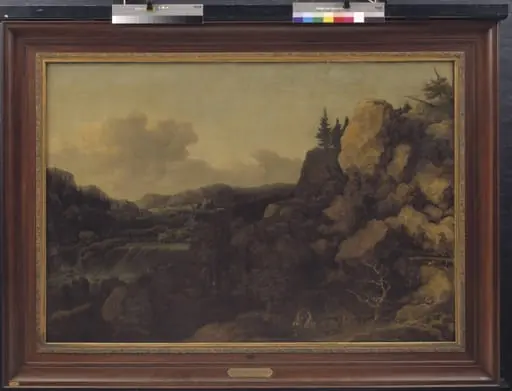 Mountain Landscape with a Couple of Horsemen in the Foreground
 Arcadian Landscape