Artwork
Daphne mezereum (peberbusk)
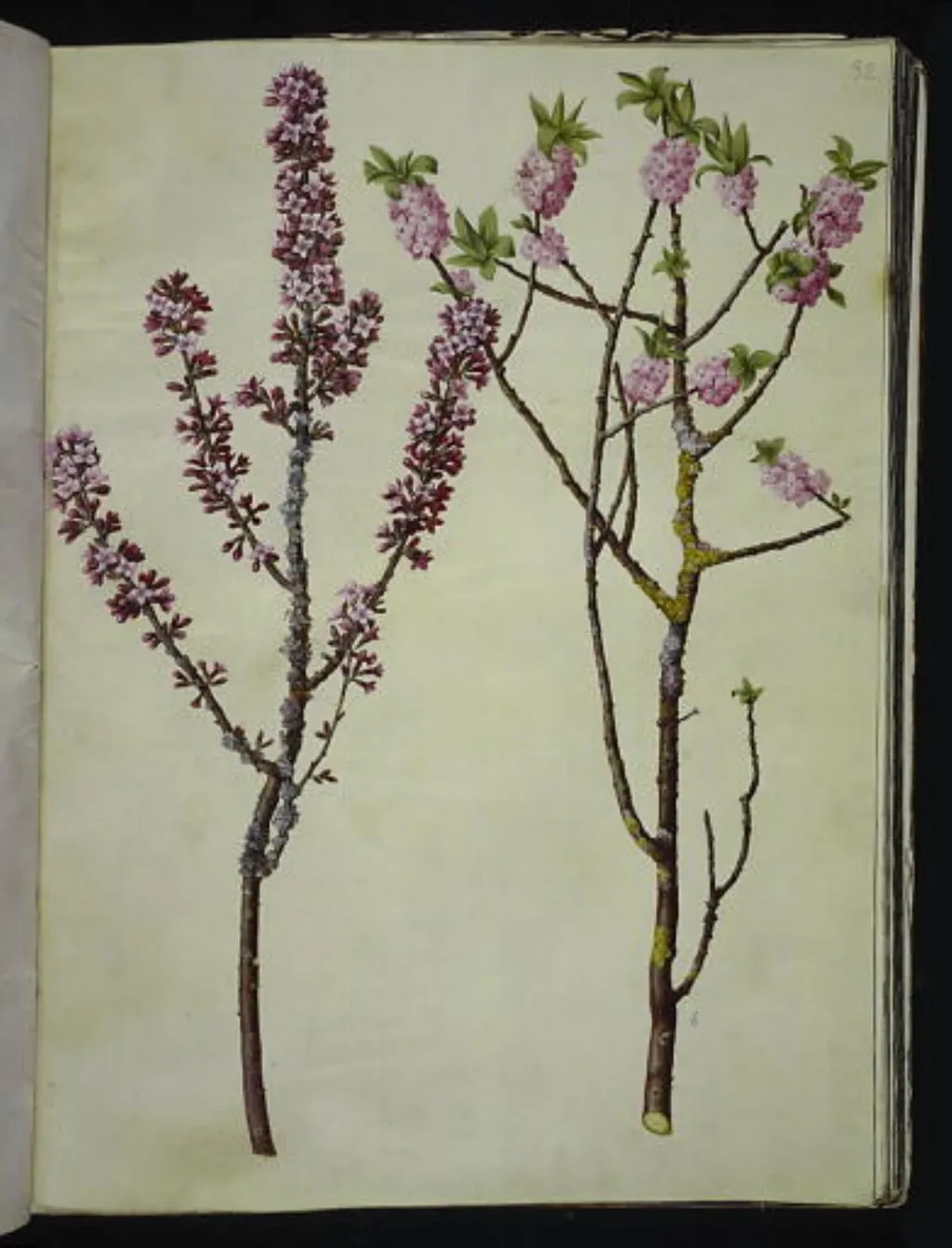
Daphne mezereum (peberbusk) is an unspecified work on paper by Unknown. It dates from 1654 and is held in the collection of the Statens Museum for Kunst. Created around 1654, this watercolor depicts Daphne mezereum, commonly known as peberbusk, a flowering shrub native to Europe.
About this work
Overview
Rendered with precision and restraint, the painting focuses solely on two botanical specimens, isolated against a neutral beige ground.
Created around 1654, this watercolor depicts Daphne mezereum, commonly known as peberbusk, a flowering shrub native to Europe. The work is held in the collection of the Museum of Ethnography. Rendered with precision and restraint, the painting focuses solely on two botanical specimens, isolated against a neutral beige ground. Its quiet composition reflects a tradition of natural observation common in early modern scientific illustration.
Subject & Meaning
The painting presents a botanical study of Daphne mezereum, highlighting its seasonal bloom. The left branch, heavy with pink blossoms, contrasts with the right, which emphasizes foliage and young stems. While not overtly symbolic, the choice of subject suggests an interest in local flora, possibly for educational or archival purposes. The plant’s toxicity was known historically, yet the image avoids moral or medicinal commentary, favoring visual documentation.
Technique & Style
Executed in watercolor, the work employs subtle gradations of pink to suggest the delicate transparency of petals. Brown ink outlines define the woody stems, with faint green washes indicating new growth. The background remains unadorned, directing focus to the plant’s form. Brushwork is controlled and precise, avoiding dramatic contrasts or decorative flourishes, aligning with the restrained aesthetic of 17th-century naturalist illustration.
History & Provenance
The artist is recorded as 35199_person, though no further biographical details are available. The painting entered the Museum of Ethnography’s collection in the 19th or early 20th century, likely as part of a broader assembly of Nordic or European botanical studies. Its origin may be tied to academic or amateur naturalist circles in Scandinavia, where such detailed plant renderings were valued for their observational accuracy.
Context
In mid-17th-century Europe, detailed plant illustrations were increasingly produced for scientific and medicinal use. This work aligns with a tradition of botanical recording that preceded formalized taxonomy, where accuracy was prized over artistic expression. Though not part of a published herbarium, its style suggests it was made for private study or institutional reference, reflecting the era’s growing emphasis on empirical observation.
Legacy
The painting endures as a quiet example of pre-modern botanical documentation. It contributes to a visual archive of regional flora, offering insight into how natural forms were perceived and recorded before photography. While not widely exhibited, its presence in the Museum of Ethnography underscores its role in preserving historical methods of natural observation within a cultural context.
Artist & collection

 Domestic Scene
 Giacomo and Cardinal Marco, investing Andrea, Abbot of San Zeno, with his Benefice
 The Nymph of Fontainebleau
 Portrait of a Woman
 Madonna and Child with Saints in the Enclosed Garden
 Venus and Minerva
 Family Group of Four on Sofa
 Wall painting from Room H of the Villa of P. Fannius Synistor at Boscoreale
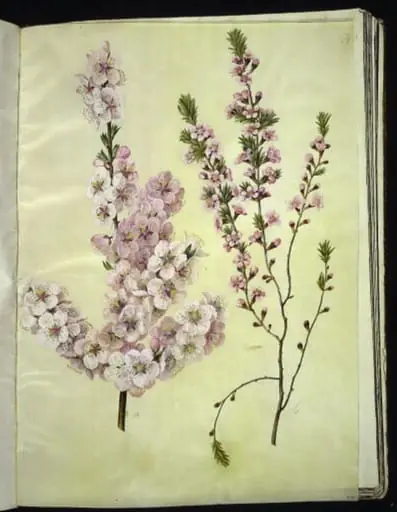 Prunus dulcis (mandel); Prunus tenella (dværg-mandel)
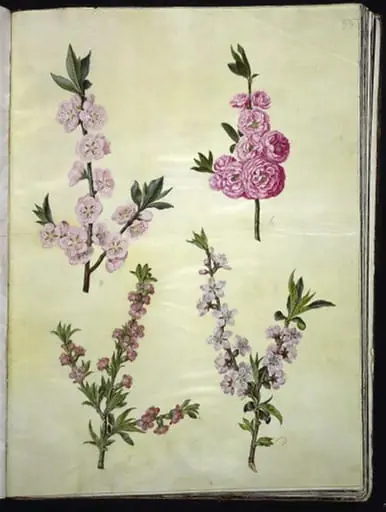 Prunus dulcis (mandel); Prunus persica (fersken)
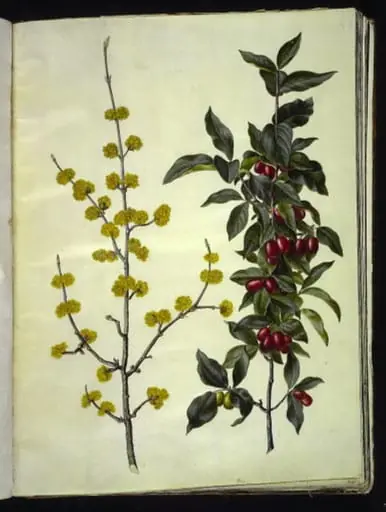 Cornus mas (kirsebær-kornel)
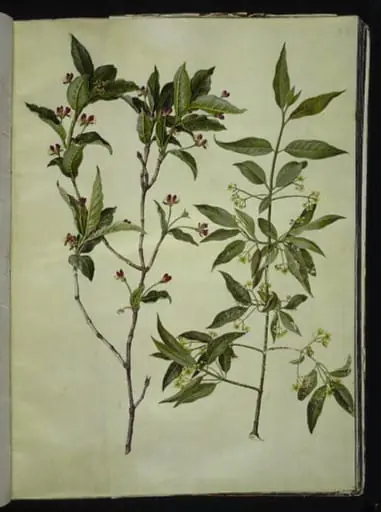 Lonicera alpigena (alpe-gedeblad); Euonymus europaeus (almindelig benved)
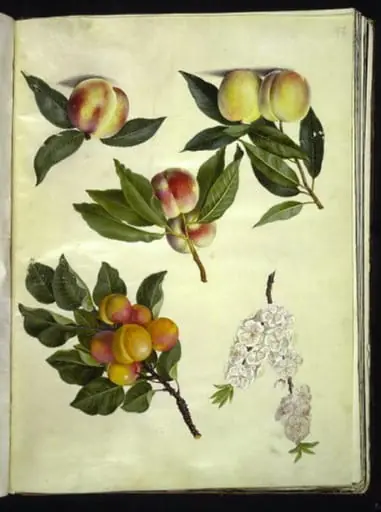 Prunus persica (fersken); Prunus armeniaca (almindelig abrikos)
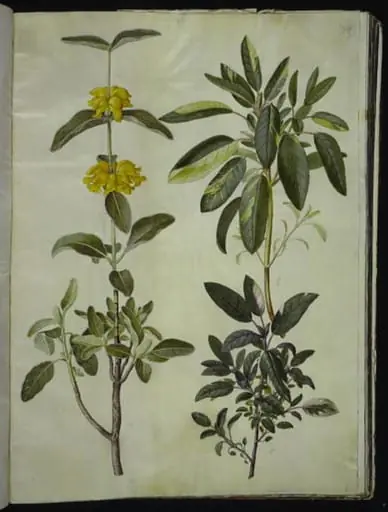 Phlomis fruticosa (almindelig løvehale); Salvia officinalis (læge-salvie)
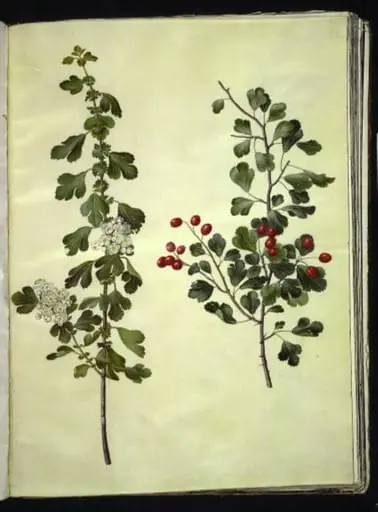 Crataegus laevigata (almindelig hvidtjørn)
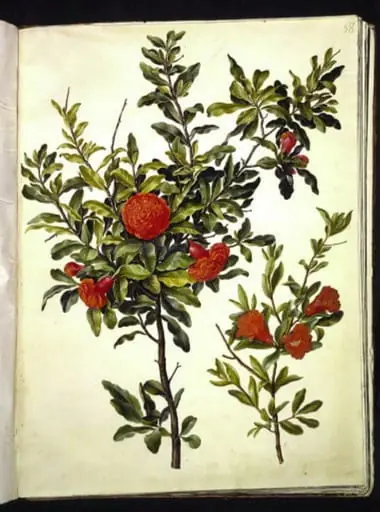 Punica granatum (granatæble)
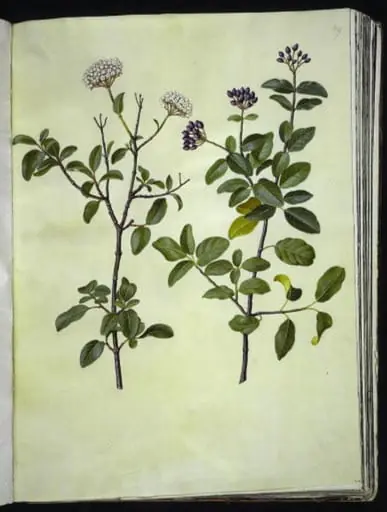 Viburnum tinus (vinter-snebolle)
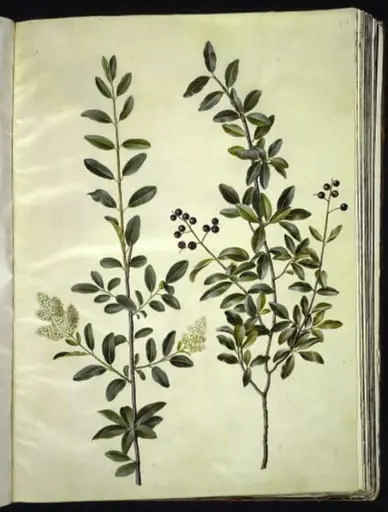 Ligustrum vulgare (almindelig liguster)
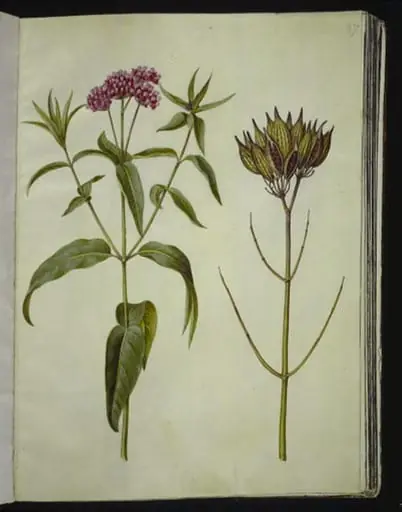 Asclepias incarnata (rosen-silkeplante)
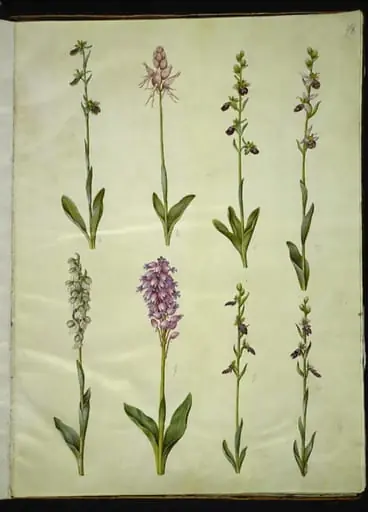 Ophrys apifera eller Ophrys sphegodes (bi-flueblomst eller tidlig flueblomst); "Orchis simia" (fantasiblomst); Ophrys apifera (bi-flueblomst); Orchis (gøgeurt); Orchis militaris (ridder-gøgeurt); Ophrys insectifera (almindelig flueblomst)