Artwork
Dictamnus albus (hvid diktam)
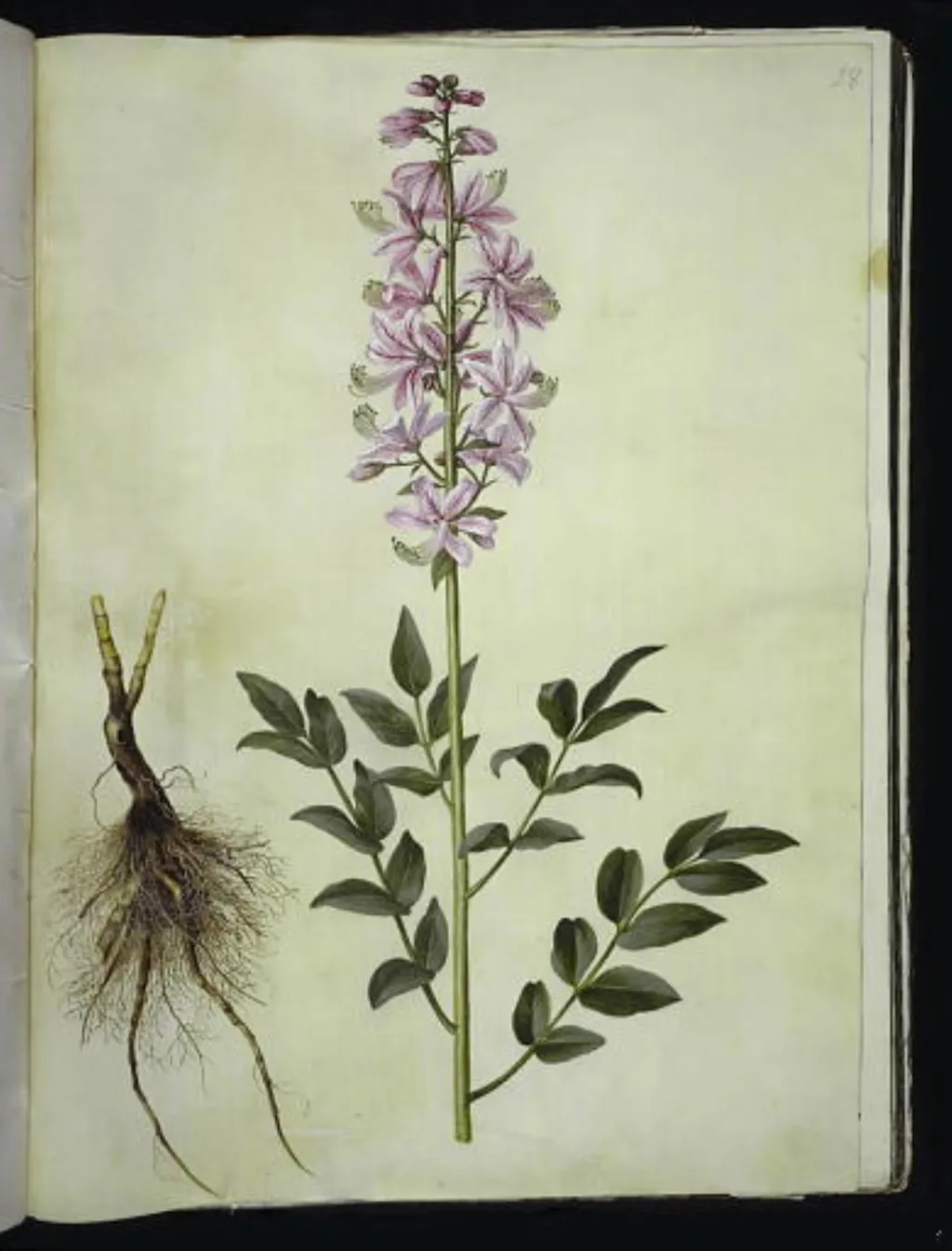
Dictamnus albus (hvid diktam) is an unspecified work on paper by Unknown. It dates from 1654 and is held in the collection of the Statens Museum for Kunst. Created around 1654, this watercolor depicts Dictamnus albus, commonly known as white dittany.
About this work
Overview
It presents the plant with scientific precision, emphasizing structural clarity over aesthetic flourish.
Created around 1654, this watercolor depicts Dictamnus albus, commonly known as white dittany. The work is part of the collection at the Museum of Ethnography. It presents the plant with scientific precision, emphasizing structural clarity over aesthetic flourish. The artist rendered each botanical component with attention to anatomical accuracy, reflecting a broader 17th-century interest in documenting flora for scholarly purposes.
Subject & Meaning
The subject is a single specimen of Dictamnus albus, a Mediterranean herb known for its aromatic properties and medicinal use in early modern Europe. The painting isolates the plant to highlight its full morphology—stem, leaves, flowers, and roots—suggesting an intent to catalog rather than decorate. Such depictions served as visual records for herbalists and naturalists, aiding identification and study in an era before photography.
Technique & Style
Executed in watercolor, the work employs fine brushwork to capture minute details: the delicate hairs along the roots, the texture of narrow leaves, and the clustered purple blooms. The artist avoided shading or atmospheric effects, favoring flat, even tones that enhance clarity. This restrained style aligns with botanical illustration traditions of the period, prioritizing diagnostic accuracy over artistic expression.
History & Provenance
The painting’s origin is tied to a network of early scientific collectors who amassed plant specimens and their images for study. Though the artist’s identity remains unconfirmed, the work likely emerged from a European academic or medical circle. It entered the Museum of Ethnography’s holdings through later acquisitions of natural history materials, possibly as part of a broader ethnobotanical collection.
Context
In mid-17th-century Europe, detailed plant illustrations were essential tools in the emerging field of botany. Scholars relied on such images to classify species, especially as global exploration expanded knowledge of foreign flora. This painting reflects a time when visual documentation was a primary method of scientific communication, bridging the gap between observation and published knowledge.
Legacy
Though not widely exhibited, the work contributes to a larger archive of pre-modern botanical records. Its preservation underscores the value placed on accurate visual representation in early scientific practice. Today, it serves as a reference for historians studying the evolution of botanical illustration and the material culture of natural history in early modern Europe.
Artist & collection

 Domestic Scene
 Giacomo and Cardinal Marco, investing Andrea, Abbot of San Zeno, with his Benefice
 The Nymph of Fontainebleau
 Portrait of a Woman
 Madonna and Child with Saints in the Enclosed Garden
 Venus and Minerva
 Family Group of Four on Sofa
 Wall painting from Room H of the Villa of P. Fannius Synistor at Boscoreale
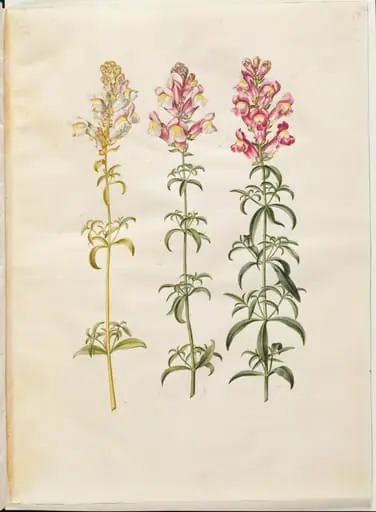 Antirrhinum majus (have-løvemund)
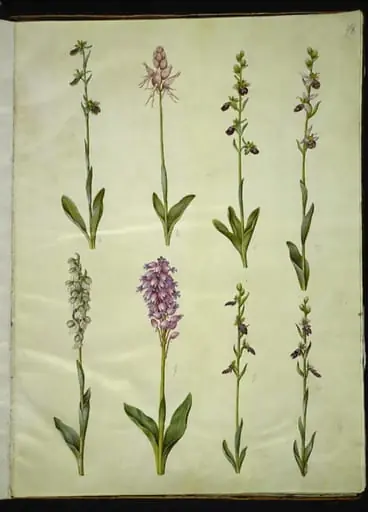 Ophrys apifera eller Ophrys sphegodes (bi-flueblomst eller tidlig flueblomst); "Orchis simia" (fantasiblomst); Ophrys apifera (bi-flueblomst); Orchis (gøgeurt); Orchis militaris (ridder-gøgeurt); Ophrys insectifera (almindelig flueblomst)
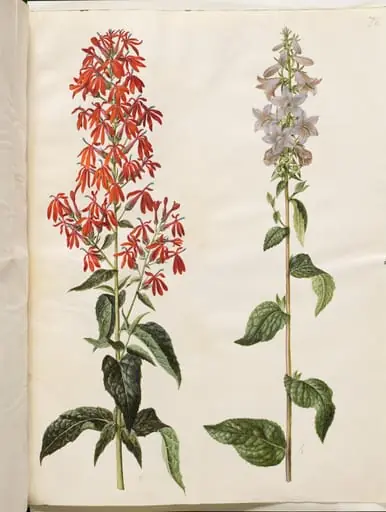 Lobelia cardinalis (kardinal-lobelie); Campanula latifolia (bredbladet klokke)
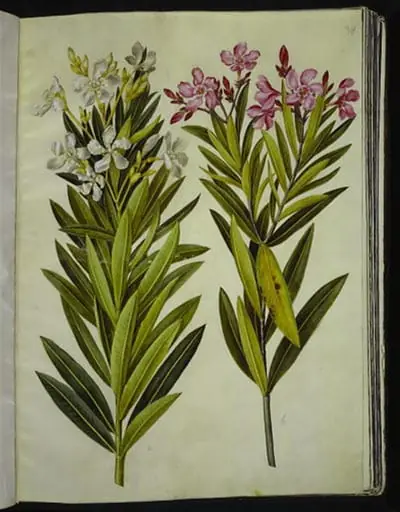 Nerium oleander (nerie)
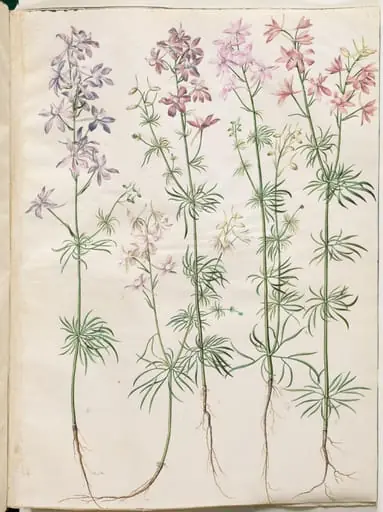 Consolida regalis (korn-ridderspore)
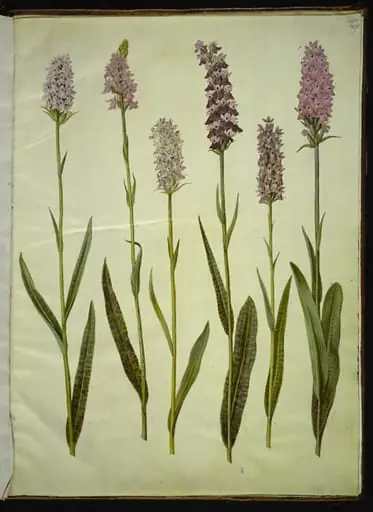 Dactylorhiza maculata (plettet gøgeurt)
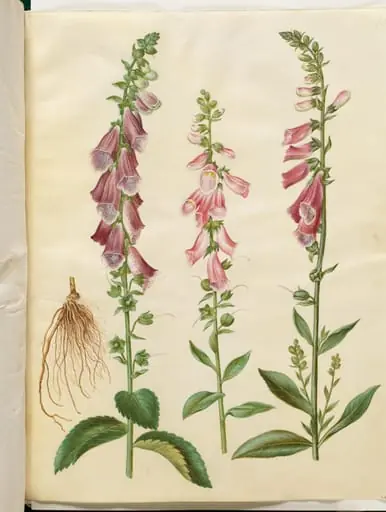 Digitalis purpurea (almindelig fingerbøl)