Artwork
Hyssopus officinalis (ægte isop)
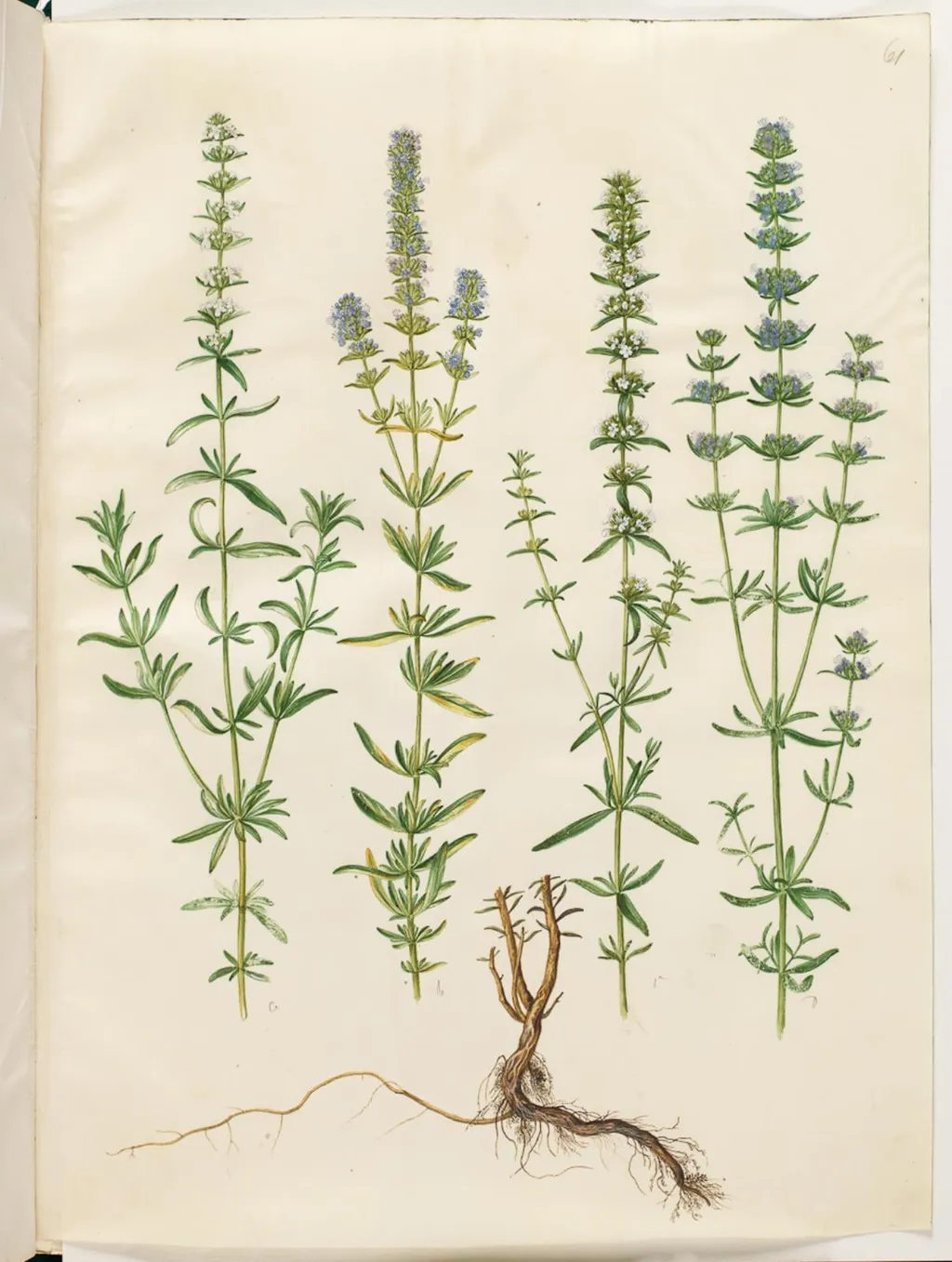
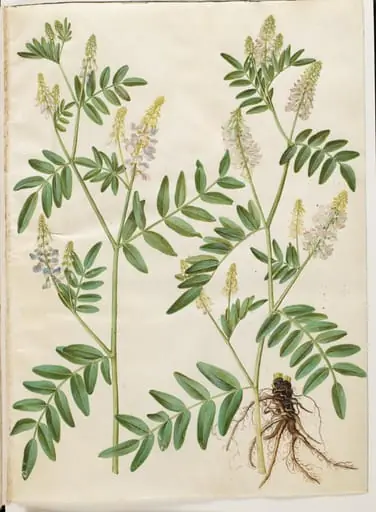
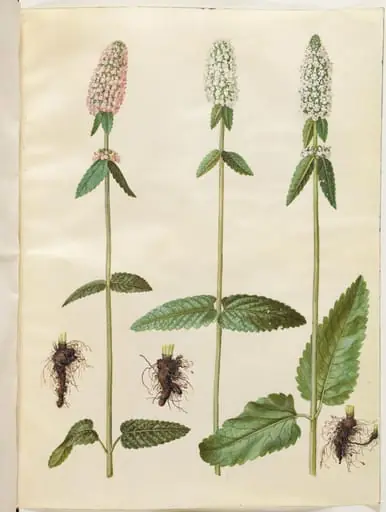
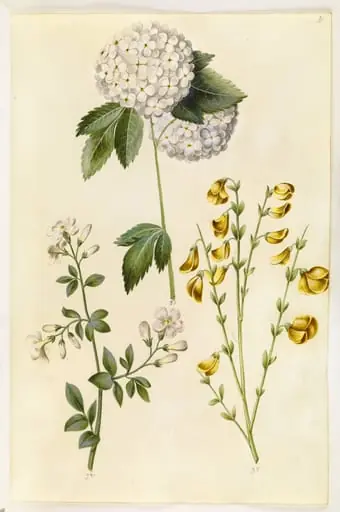
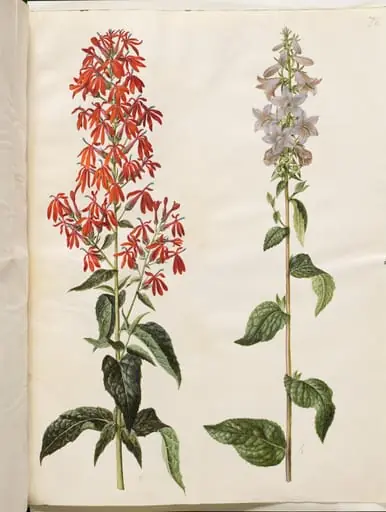
Hyssopus officinalis (ægte isop) is an unspecified work on paper by Unknown. It dates from 1654 and is held in the collection of the Statens Museum for Kunst. Created around 1654, this botanical illustration depicts Hyssopus officinalis, commonly known as common hyssop.
About this work
Overview
Created around 1654, this botanical illustration depicts Hyssopus officinalis, commonly known as common hyssop. Rendered in meticulous detail, the work belongs to a tradition of scientific plant documentation. It is preserved in the Museum of Ethnography, where it serves as a record of early modern botanical observation rather than decorative art.
Subject & Meaning
The painting presents five specimens of hyssop, showing their stems, leaves, and flowering heads in varying stages.
The painting presents five specimens of hyssop, showing their stems, leaves, and flowering heads in varying stages. Purple, white, and yellowish blooms appear alongside exposed root systems, emphasizing the plant’s full morphology. This comprehensive view suggests an intent to document the species for medicinal or agricultural study, reflecting the period’s growing interest in natural classification.
Technique & Style
The artist employed fine brushwork to capture individual leaves, petals, and root filaments with precision. Colors are applied in subtle washes, likely watercolor, to suggest natural variation without exaggeration. The composition is arranged for clarity, not aesthetic flourish, aligning with the conventions of botanical illustration used in scientific publications of the era.
History & Provenance
The work is attributed to an artist identified as 35199_person, though little is known about their identity. It entered the Museum of Ethnography’s collection as part of a broader archive of natural history materials, likely acquired during the 17th or 18th century. Its survival suggests it was valued for its accuracy rather than its artistic merit.
Context
In mid-17th century Europe, detailed plant illustrations were essential to the development of botany as a science. Artists often worked alongside physicians and naturalists to produce images for herbals and encyclopedias. This piece reflects that collaborative effort, where visual precision supported empirical knowledge over artistic expression.
Legacy
Though unsigned and unattributed to a major figure, the illustration remains a representative example of early scientific visual culture. It contributes to the historical record of how plants were studied and understood before modern taxonomy. Its preservation underscores the enduring value of careful observation in natural history.
Artist & collection

 Domestic Scene
 Giacomo and Cardinal Marco, investing Andrea, Abbot of San Zeno, with his Benefice
 The Nymph of Fontainebleau
 Portrait of a Woman
 Madonna and Child with Saints in the Enclosed Garden
 Venus and Minerva
 Family Group of Four on Sofa
 Wall painting from Room H of the Villa of P. Fannius Synistor at Boscoreale