Artwork
Rosa foetida (gul rose); Rosa foetida (tyrkisk rose)
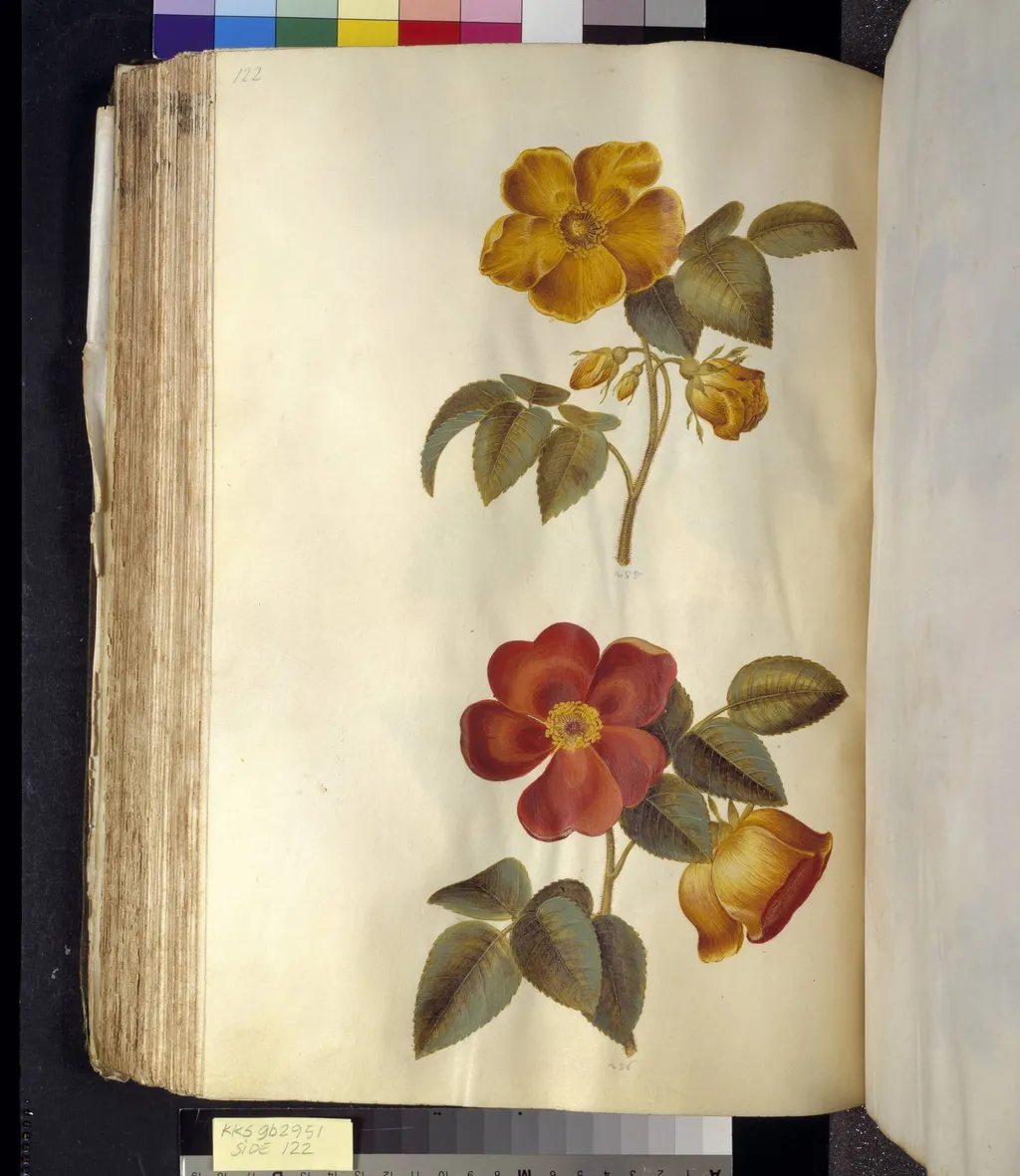
Rosa foetida (gul rose); Rosa foetida (tyrkisk rose) is an unspecified work on paper by Unknown. It dates from 1650 and is held in the collection of the Statens Museum for Kunst.
About this work
Overview
This botanical illustration depicts two specimens of Rosa foetida, commonly known as the Austrian briar or Persian rose, rendered around 1650.
This botanical illustration depicts two specimens of Rosa foetida, commonly known as the Austrian briar or Persian rose, rendered around 1650. Painted with careful attention to natural detail, the work presents a yellow and a red variant side by side on a neutral background. It was produced for scientific or curatorial purposes, reflecting the period’s growing interest in classifying plant species. The piece resides in the Museum of Ethnography, where it is preserved as part of a broader collection of natural history imagery.
Subject & Meaning
The painting documents two color forms of Rosa foetida, a species noted for its strong scent and variable petal tones. By presenting both yellow and red blooms together, the artist highlights natural variation within a single species, possibly to aid identification or classification. The absence of symbolic or decorative elements suggests a focus on empirical observation rather than aesthetic embellishment, aligning with early modern botanical practices that valued accuracy over ornament.
Technique & Style
The roses are rendered in a precise, lifelike manner, with delicate brushwork capturing the texture of petals, the sheen of leaves, and the subtle gradations of color from deep crimson to pale gold. Shadows and highlights are applied with restraint to suggest volume without dramatic contrast. The plain background eliminates distraction, directing focus entirely to the botanical forms. The technique reflects a tradition of scientific illustration where clarity and fidelity to nature were paramount.
History & Provenance
Created circa 1650, the painting likely originated in a European botanical circle, possibly linked to a collector, physician, or academic institution interested in exotic flora. Its presence in the Museum of Ethnography suggests it was later acquired as part of a broader ethnographic or colonial-era collection of natural specimens. The artist, identified only as 35199_person, remains otherwise undocumented, a common circumstance for illustrators working in service to scientific projects of the time.
Context
In the mid-17th century, European interest in global plant species surged due to expanding trade and exploration. Rosa foetida, native to the Caucasus and western Asia, was introduced to European gardens and became a subject of botanical study. Illustrations like this one served as visual records before photography, aiding in the identification and dissemination of knowledge about non-native plants. Such works were often compiled into herbaria or illustrated floras for scholarly use.
Legacy
Though unsigned and unattributed to a known artist, the painting contributes to a larger archive of early modern botanical documentation. Its preservation in a museum of ethnography underscores how natural history and cultural collecting were intertwined during the colonial era. Today, it stands as a quiet testament to the meticulous, often anonymous labor behind the scientific understanding of plant biodiversity in early Europe.
Artist & collection

 Domestic Scene
 Giacomo and Cardinal Marco, investing Andrea, Abbot of San Zeno, with his Benefice
 The Nymph of Fontainebleau
 Portrait of a Woman
 Madonna and Child with Saints in the Enclosed Garden
 Venus and Minerva
 Family Group of Four on Sofa
 Wall painting from Room H of the Villa of P. Fannius Synistor at Boscoreale
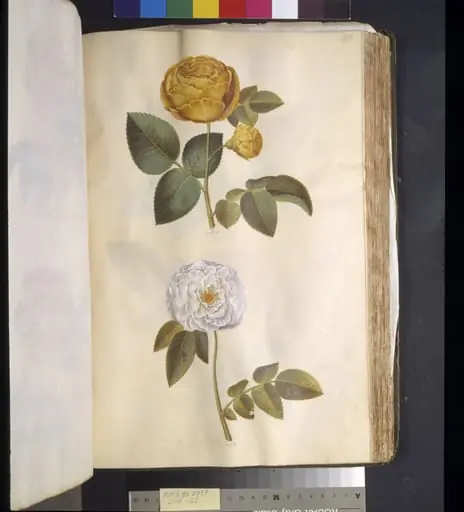 Rosa hemisphaerica (svovlgul rose); Rosa ×alba (hvid rose)
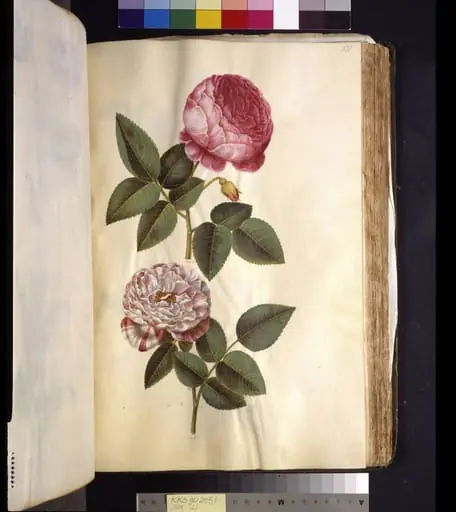 Rosa ×centifolia (centifolie-rose); Rosa gallica versicolor ('Rosa Mundi')
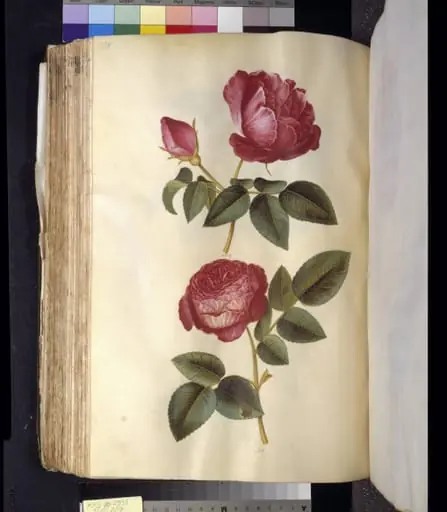 Rosa gallica (apoteker-rose); Rosa (?) (rose)
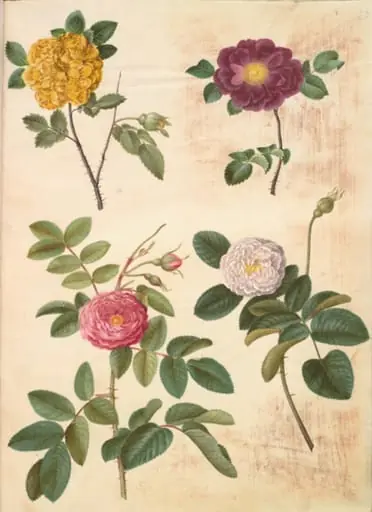 Rosa hemisphaerica (svovlgul rose); Rosa gallica (fløjls-rose); Rosa ×damascena (damascener-rose)
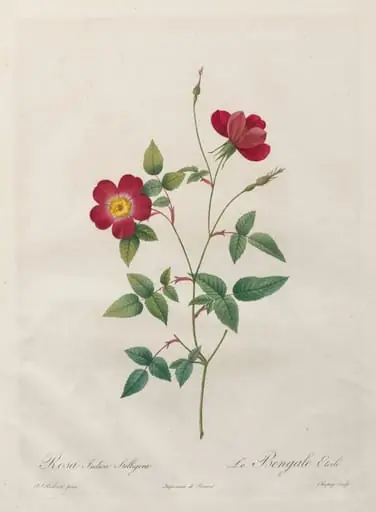 Rosa Indica Stelligera
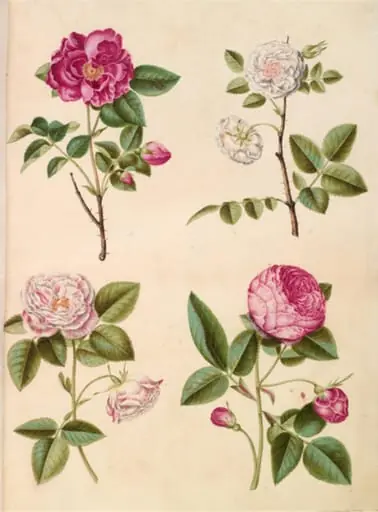 Rosa gallica (apoteker-rose); Rosa ×alba (hvid rose); Rosa gallica (Rosa Mundi); Rosa ×centifolia (centifolie-rose)