Artwork
Tradescantia virginiana eller Tradescantia ohiensis (blomsterjøde eller ohio-blomsterjøde)
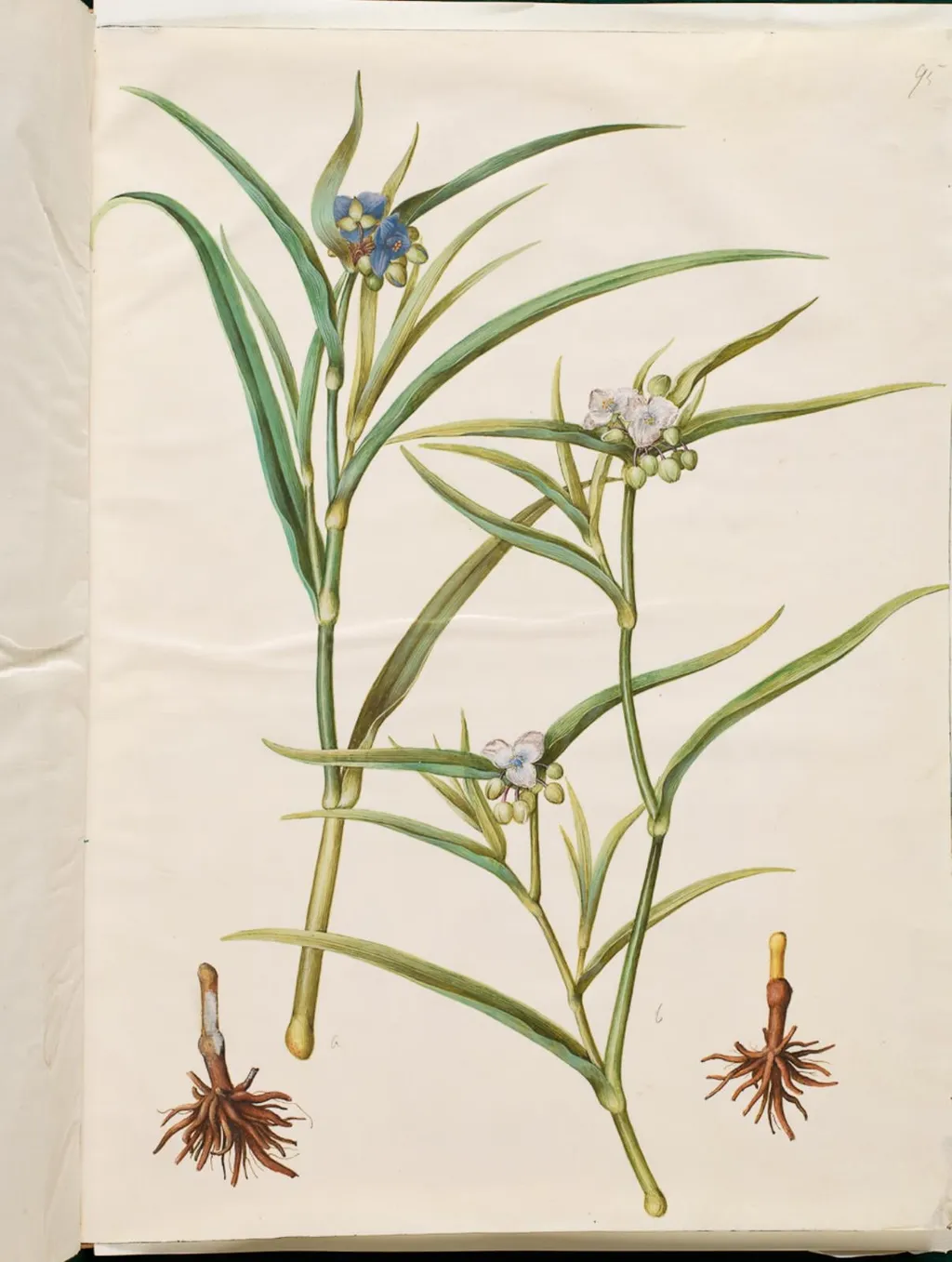
Tradescantia virginiana eller Tradescantia ohiensis (blomsterjøde eller ohio-blomsterjøde) is an unspecified work on paper by Unknown. It dates from 1654 and is held in the collection of the Statens Museum for Kunst.
About this work
Overview
Tradescantia virginiana or Tradescantia ohiensis is a botanical artwork created circa 1654 by an artist associated with the identifier 35199_person. It is currently part of the collection at the Museum of Ethnography.
Subject & Meaning
The artwork depicts either the Virginia spiderwort (Tradescantia virginiana) or the Ohio spiderwort (Tradescantia ohiensis), characterized by tall stems, long narrow leaves, and clusters of pale blue and white flowers. Detached bulbs with spiky roots are illustrated separately at the base, emphasizing botanical detail.
Technique & Style
Executed with meticulous attention to detail, the piece showcases a high level of observational skill, evident in the rendering of leaf hairs and root texture. The technique likely involves watercolor, utilizing layers of transparent paint to achieve depth and clarity, consistent with 17th-century botanical illustration practices.
History & Provenance
Created in the mid-17th century (c. 1654), the artwork's early history is not detailed here, but its current location is the Museum of Ethnography, suggesting a connection to ethnographic or natural history collections over time.
Context
This work reflects the scientific and artistic practices of the 17th century, where detailed botanical illustrations served both aesthetic and educational purposes, contributing to the period's burgeoning interest in natural history and classification.
Legacy
While specific influence or widespread recognition of this piece is not highlighted, it contributes to the broader legacy of 17th-century botanical art, which laid foundations for later scientific and artistic developments in natural history illustration.
Artist & collection

 Domestic Scene
 Giacomo and Cardinal Marco, investing Andrea, Abbot of San Zeno, with his Benefice
 The Nymph of Fontainebleau
 Portrait of a Woman
 Madonna and Child with Saints in the Enclosed Garden
 Venus and Minerva
 Family Group of Four on Sofa
 Wall painting from Room H of the Villa of P. Fannius Synistor at Boscoreale
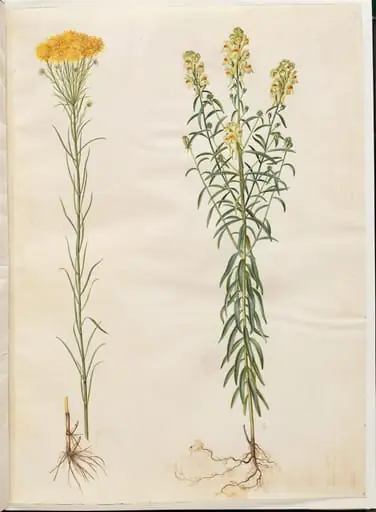 Aster linosyris (guldhår-asters); Linaria vulgaris (almindelig torskemund)
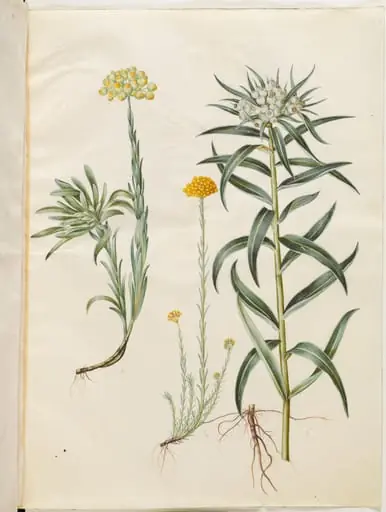 Helichrysum orientale (busk-evighedsblomst); Helichrysum Stoechas (stinkende evighedsblomst); Anaphalis margaritacea (almindelig perlekurv)
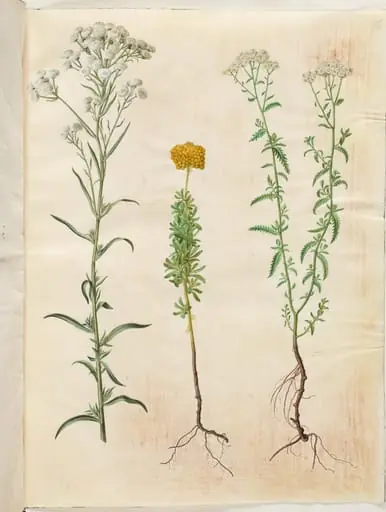 Achillea ptarmica (sølvknap-røllike); Achillea ageratum (balsam-røllike); Achillea millefolium (almindelig røllike)
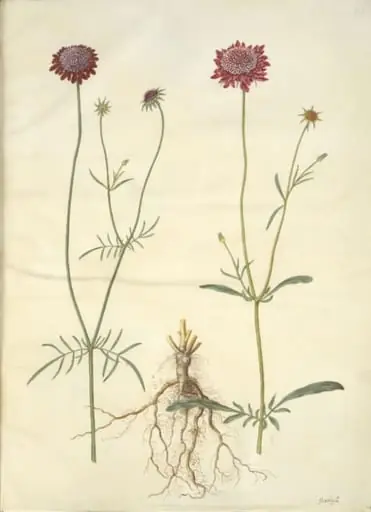 Scabiosa atropurpurea (enkeblomst)
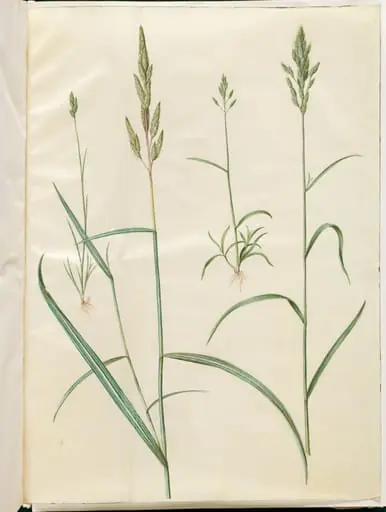 Bromus hordeaceus (blød hejre); Phalaris arundinacea (stribegræs)
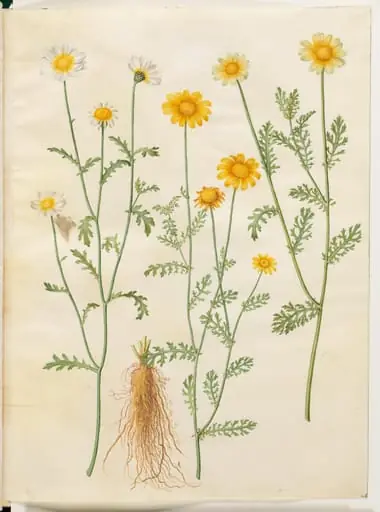 Glebionis coronaria (kron-okseøje)
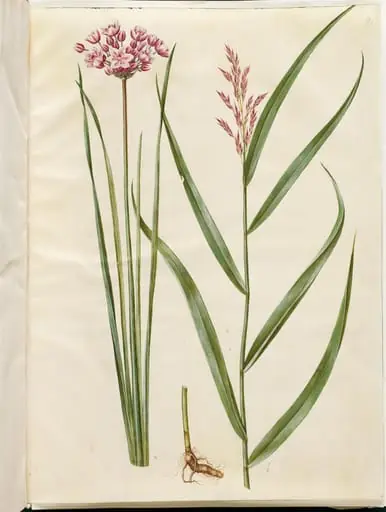 Butomus umbellatus (brudelys); Phragmites australis (almindelig tagrør)
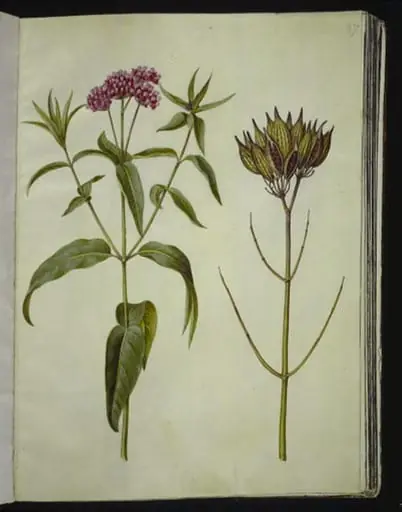 Asclepias incarnata (rosen-silkeplante)
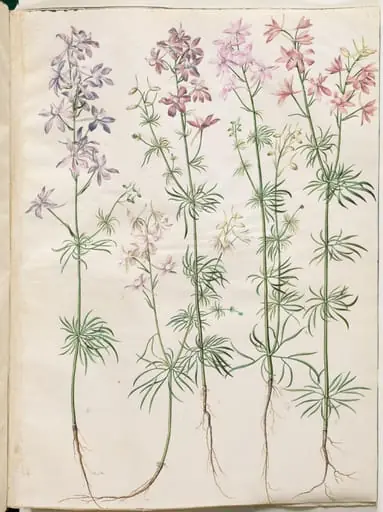 Consolida regalis (korn-ridderspore)
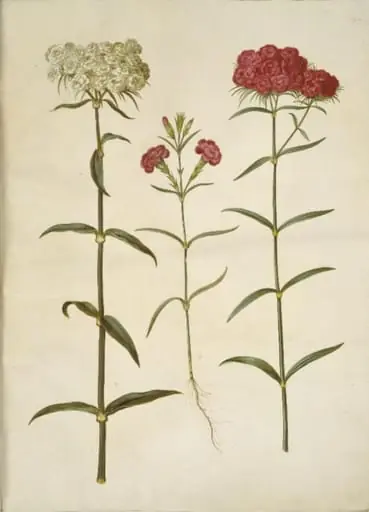 Dianthus barbatus (studenter-nellike); Dianthus (art af nellike)