Artwork
Garland with Flora
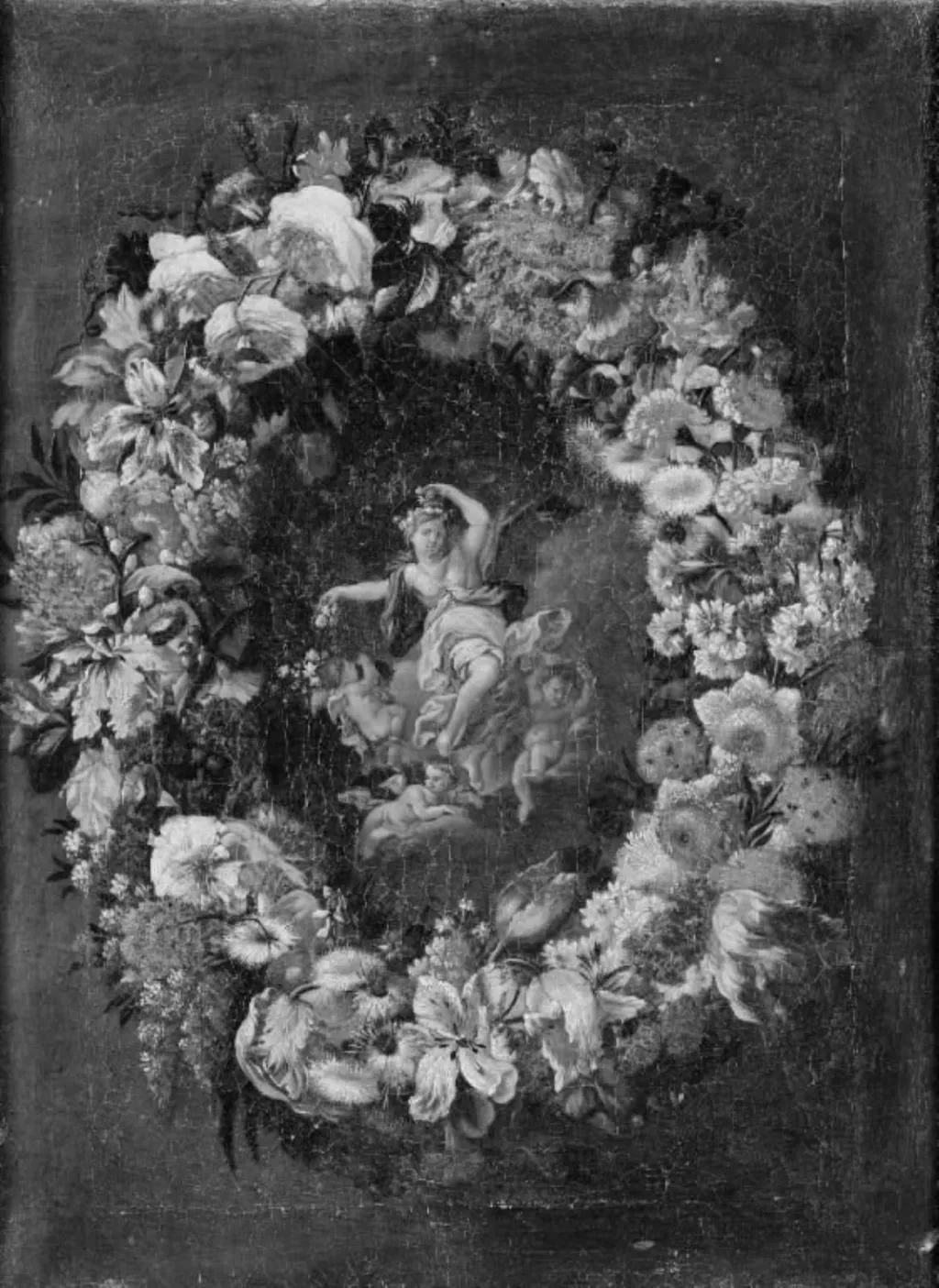
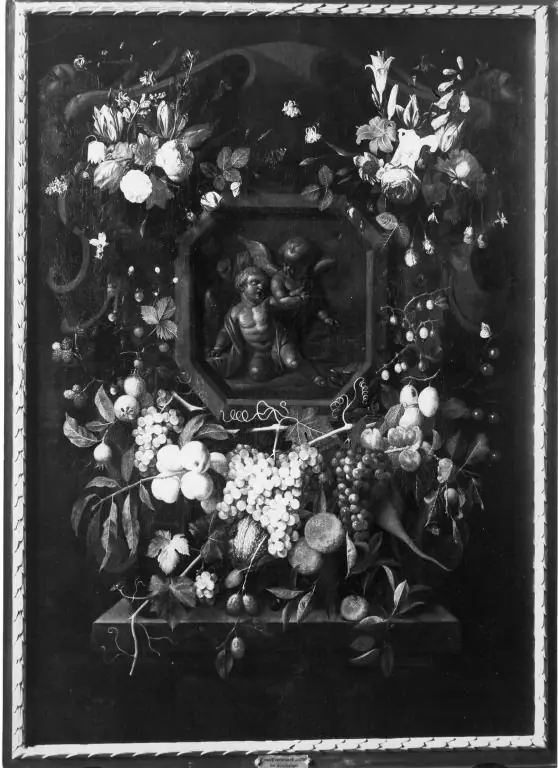
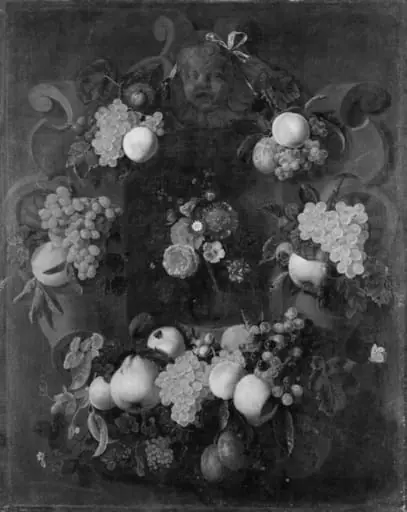
Garland with Flora is a photography by Unknown. It dates from 1650 and is held in the collection of the Statens Museum for Kunst. Created around 1650, this image depicts a floral garland centered on a winged, classical figure.
About this work
Overview
Created around 1650, this image depicts a floral garland centered on a winged, classical figure.
Created around 1650, this image depicts a floral garland centered on a winged, classical figure. Rendered against a deep, unbroken background, the composition emphasizes contrast and stillness. The work is held in the collection of the Museum of Ethnography, where it is cataloged as a visual study of natural forms and mythological symbolism, likely intended for private contemplation rather than public display.
Subject & Meaning
At the heart of the composition stands a female figure with wings and flowing hair, holding a cluster of grapes. Her form evokes classical deities associated with nature and abundance, such as Flora or Dionysus’s attendants. The surrounding garland of flowers and foliage suggests seasonal cycles and the fertility of the earth, blending pagan iconography with early modern European botanical fascination.
Technique & Style
The image employs strong chiaroscuro to isolate the central figure and floral elements against a near-black background. Subtle gradations in tone model the petals and leaves, while the palette remains restrained—predominantly white, gray, and muted green. The rendering is precise but not overly detailed, favoring atmospheric effect over realism, suggesting influence from Northern European still-life traditions.
History & Provenance
The work’s origin is undocumented prior to its inclusion in the Museum of Ethnography’s collection. Its style aligns with mid-17th-century Flemish or Dutch artistic circles, though the artist remains unidentified. It may have been produced as a preparatory study, devotional image, or decorative panel, but its exact function and early ownership are lost to history.
Context
In the mid-1600s, floral still lifes and allegorical figures were common in Northern Europe, reflecting both scientific interest in botany and enduring interest in classical mythology. This image fits within a broader trend of combining natural observation with symbolic representation, often used to convey themes of transience, beauty, and divine presence in the natural world.
Legacy
Though not widely exhibited or reproduced, the image contributes to scholarly understanding of how mythological themes were adapted in intimate, non-religious contexts during the Baroque period. Its quiet intensity and restrained palette distinguish it from more ornate floral compositions, offering insight into lesser-known artistic practices of the era.
Artist & collection

 Domestic Scene
 Giacomo and Cardinal Marco, investing Andrea, Abbot of San Zeno, with his Benefice
 The Nymph of Fontainebleau
 Portrait of a Woman
 Madonna and Child with Saints in the Enclosed Garden
 Venus and Minerva
 Family Group of Four on Sofa
 Wall painting from Room H of the Villa of P. Fannius Synistor at Boscoreale