Artwork
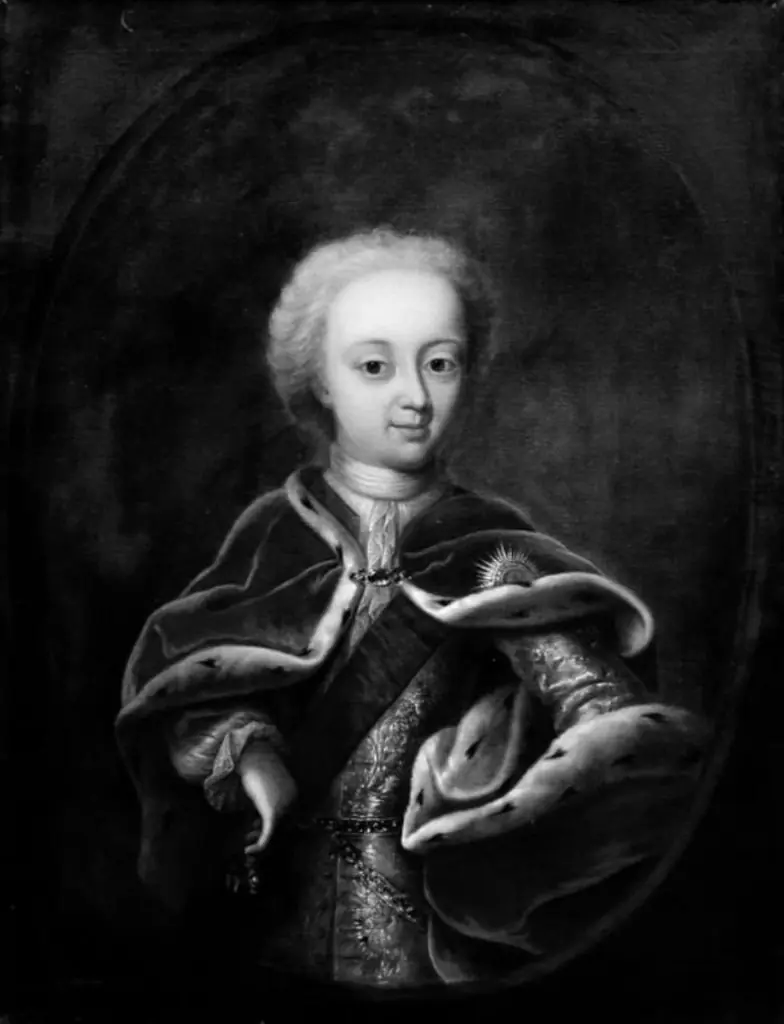
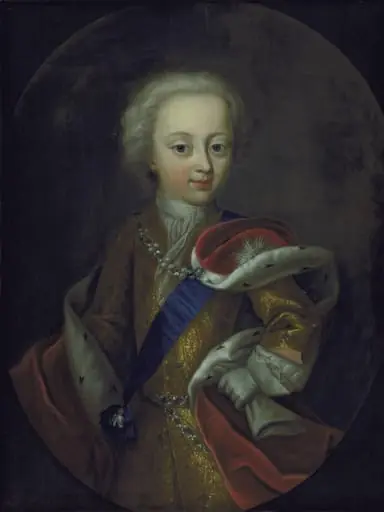
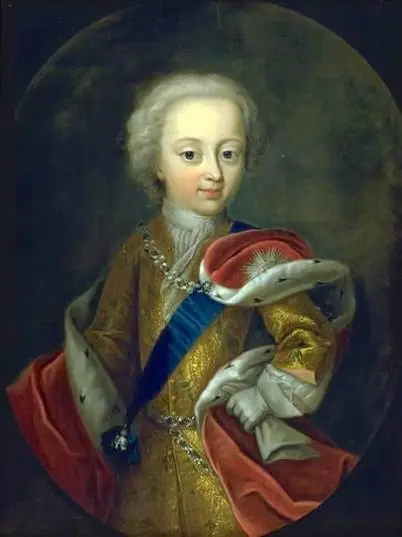
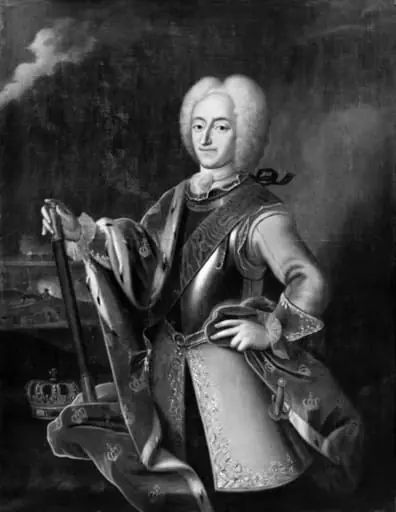
Kong Frederik V som barn
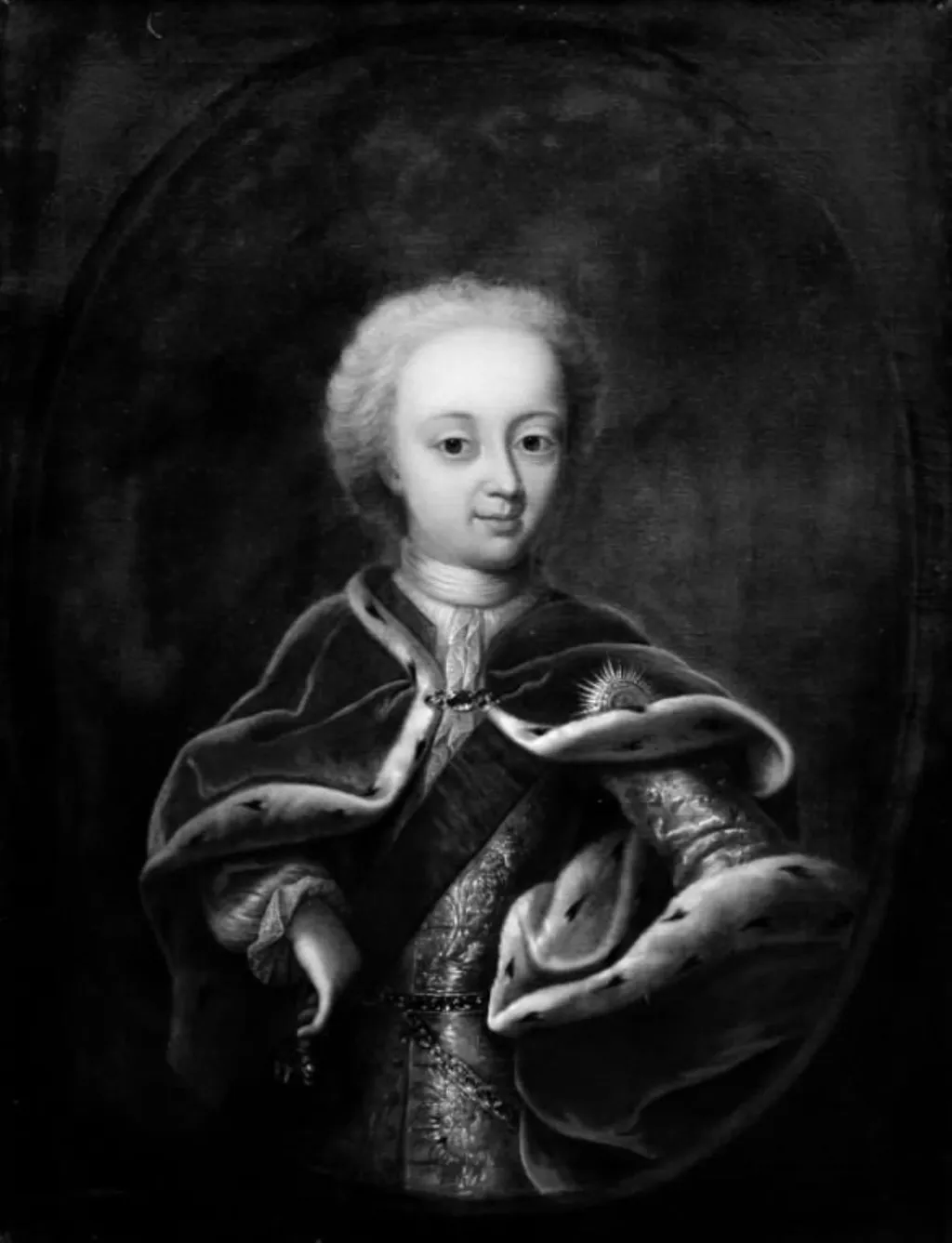
Kong Frederik V som barn is a photography by Unknown. It dates from 1750 and is held in the collection of the Statens Museum for Kunst.
About this work
Overview
This black-and-white photograph depicts a young boy, identified as Crown Prince Frederik V of Denmark, dressed in elaborate 18th-century attire.
This black-and-white photograph depicts a young boy, identified as Crown Prince Frederik V of Denmark, dressed in elaborate 18th-century attire. Created around 1750, the image was likely made to document royal lineage and status. It is preserved in the Museum of Ethnography, though its origin as a photographic work is unusual for the period, suggesting possible later reproduction or misattribution.
Subject & Meaning
The subject is a child heir to the Danish throne, portrayed with solemnity befitting his future role. His formal garments—dark coat, ornate buttons, and white cravat—signal aristocratic identity. The paper bearing a star-like emblem may reference royal symbolism or heraldry. The restrained expression and composed posture convey the weight of dynastic expectation rather than childhood playfulness.
Technique & Style
The image employs strong contrasts of light and shadow, characteristic of chiaroscuro, to emphasize texture and form. The lighting sculpts the fabric of the coat and defines the contours of the face, enhancing the sense of gravity. The composition is tightly framed, focusing attention on the subject’s attire and gesture, with minimal background detail to avoid distraction.
History & Provenance
Though dated to circa 1750, the medium of photography had not yet been developed in Denmark at this time, raising questions about the work’s original form. It may be a photographic reproduction of an earlier painted portrait, or a misattributed image. Its current location in the Museum of Ethnography suggests it was collected as a cultural artifact rather than a fine art piece.
Context
In mid-18th-century Europe, royal children were often depicted in formal dress to reinforce dynastic continuity. Portraits served political purposes, projecting stability and legitimacy. While painting was the norm, this image’s photographic appearance hints at later 19th-century reinterpretations, possibly made to align royal imagery with emerging visual technologies.
Legacy
The image endures as a visual record of royal childhood in a transitional era of representation. Its anachronistic medium invites scrutiny of how historical figures are reimagined through later technologies. It remains a point of reference for discussions on the intersection of power, image-making, and the evolution of photographic documentation.
Artist & collection

 Domestic Scene
 Giacomo and Cardinal Marco, investing Andrea, Abbot of San Zeno, with his Benefice
 The Nymph of Fontainebleau
 Portrait of a Woman
 Madonna and Child with Saints in the Enclosed Garden
 Venus and Minerva
 Family Group of Four on Sofa
 Wall painting from Room H of the Villa of P. Fannius Synistor at Boscoreale