Artwork
Maria med Kristusbarnet
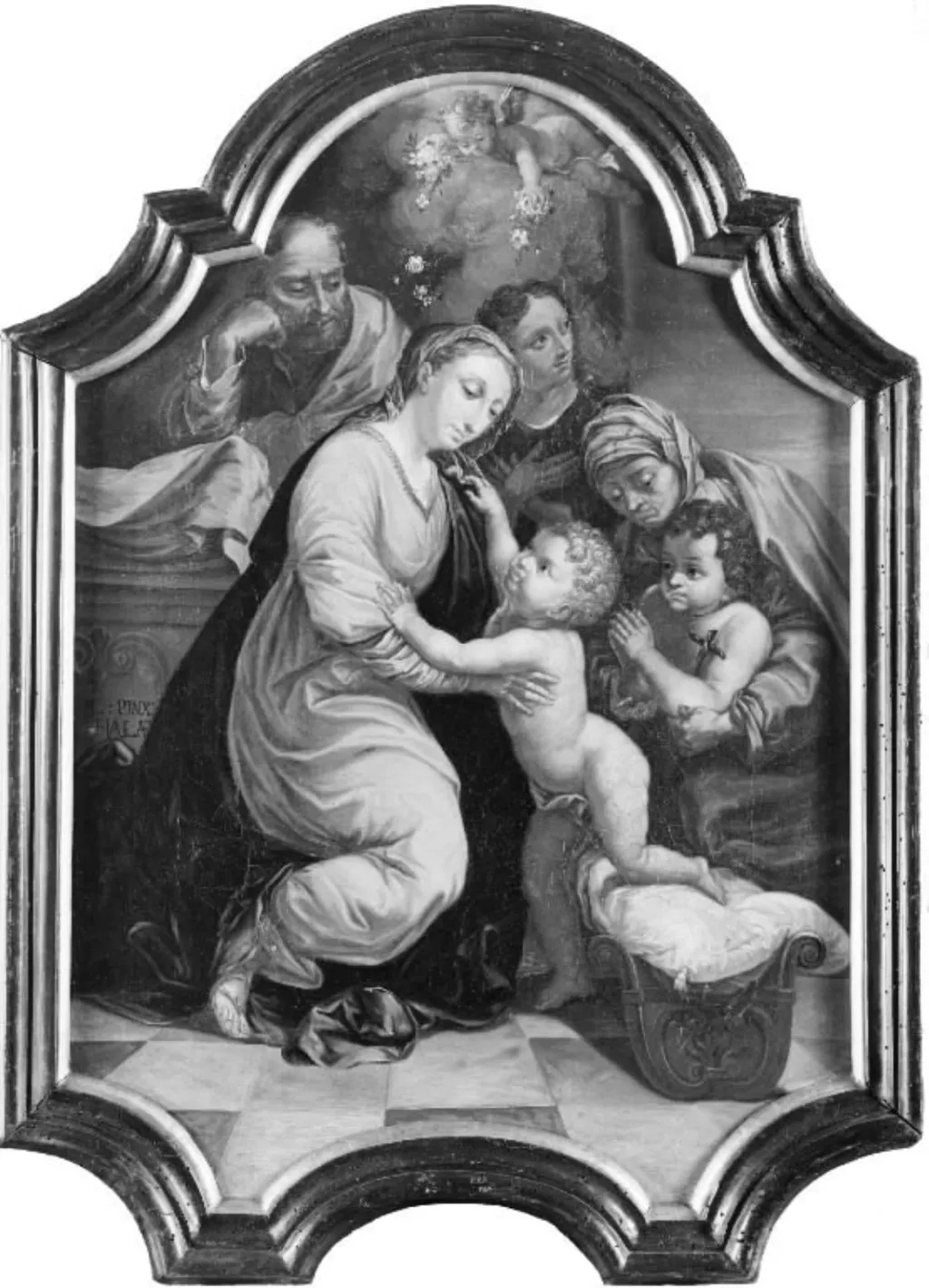
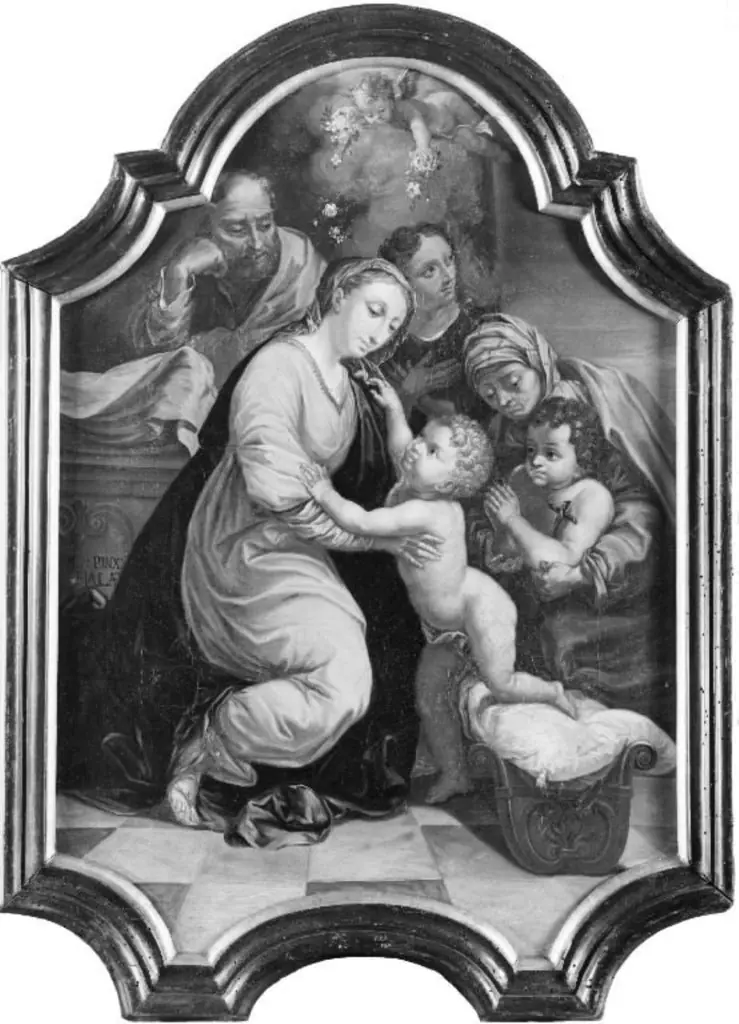
Maria med Kristusbarnet is a photography by Unknown. It dates from 1649 and is held in the collection of the Statens Museum for Kunst. This black-and-white photograph, dated around 1649, depicts a domestic religious scene featuring the Virgin Mary with the infant Christ.
About this work
Overview
This black-and-white photograph, dated around 1649, depicts a domestic religious scene featuring the Virgin Mary with the infant Christ.
This black-and-white photograph, dated around 1649, depicts a domestic religious scene featuring the Virgin Mary with the infant Christ. It is held in the collection of the Museum of Ethnography. Though presented as a photograph, the image mimics the composition and lighting of painted devotional works from the period, suggesting it may be a staged or copied representation rather than a candid record.
Subject & Meaning
The scene centers on Mary kneeling with the Christ child, who reaches toward an older child beside her. Two adults stand behind, while a third child sits on a bench. The arrangement evokes traditional Christian iconography of the Holy Family, adapted into a humble, intimate setting. The gesture of the infant suggests divine connection, while the surrounding figures imply familial and spiritual kinship within a domestic context.
Technique & Style
The image employs strong chiaroscuro, with light sharply illuminating Mary’s face and the infant, while the background recedes into deep shadow. This contrast enhances the three-dimensionality of the figures and directs attention to their interaction. The simple dress, tiled floor, and dark curtain suggest a modest interior, reinforcing the quiet solemnity of the moment through restrained visual elements.
History & Provenance
The photograph was likely produced in the mid-17th century, possibly as part of a devotional or educational collection. It entered the Museum of Ethnography’s holdings through documented acquisition, though its exact origin—whether a studio reproduction, a copied painting, or a staged tableau—remains unclear. Its preservation reflects an early interest in documenting religious imagery across cultures and media.
Context
In 17th-century Europe, devotional imagery was widely circulated in both painted and printed forms, often adapted for private worship. This image, though photographed, aligns with popular representations of the Virgin and Child in Northern European households. Its inclusion in an ethnographic collection suggests an interest in how religious symbols were embedded in everyday life beyond ecclesiastical settings.
Legacy
The photograph endures as a quiet example of how religious iconography was translated into domestic and photographic contexts. It offers insight into the persistence of traditional imagery in vernacular settings and the ways early photography engaged with established visual languages. Its presence in an ethnographic museum underscores its role as a cultural artifact rather than a purely artistic one.
Artist & collection

 Domestic Scene
 Giacomo and Cardinal Marco, investing Andrea, Abbot of San Zeno, with his Benefice
 The Nymph of Fontainebleau
 Portrait of a Woman
 Madonna and Child with Saints in the Enclosed Garden
 Venus and Minerva
 Family Group of Four on Sofa
 Wall painting from Room H of the Villa of P. Fannius Synistor at Boscoreale
 Hl. Sippe
 Mystic marriage of Saint Catherine of Alexandria
 Maria mit Kind
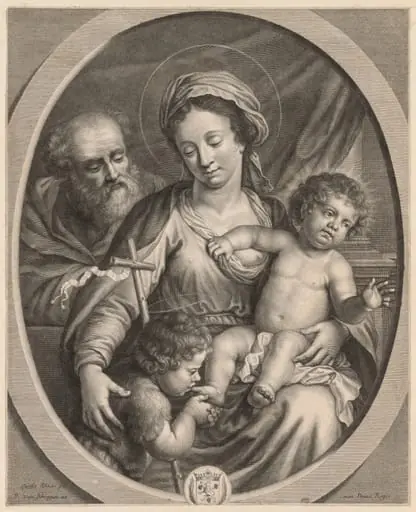 Holy Family and S. John
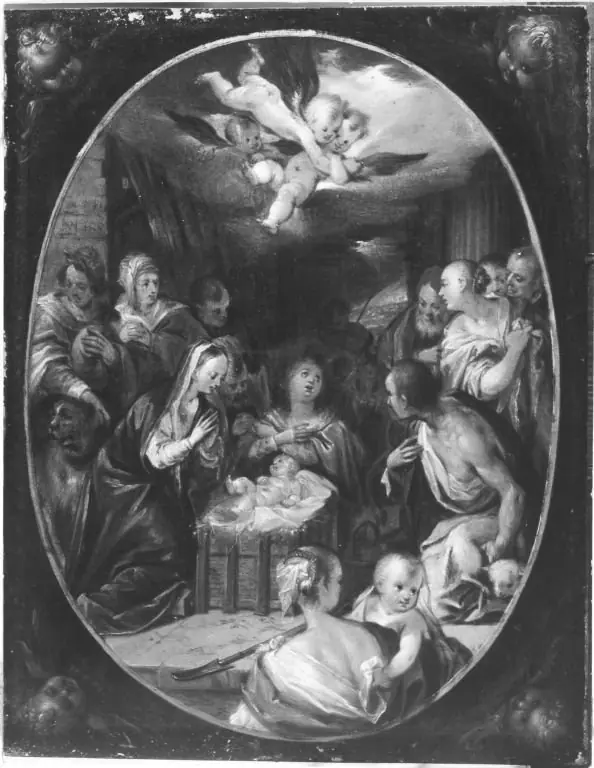 Anbetung der Hirten
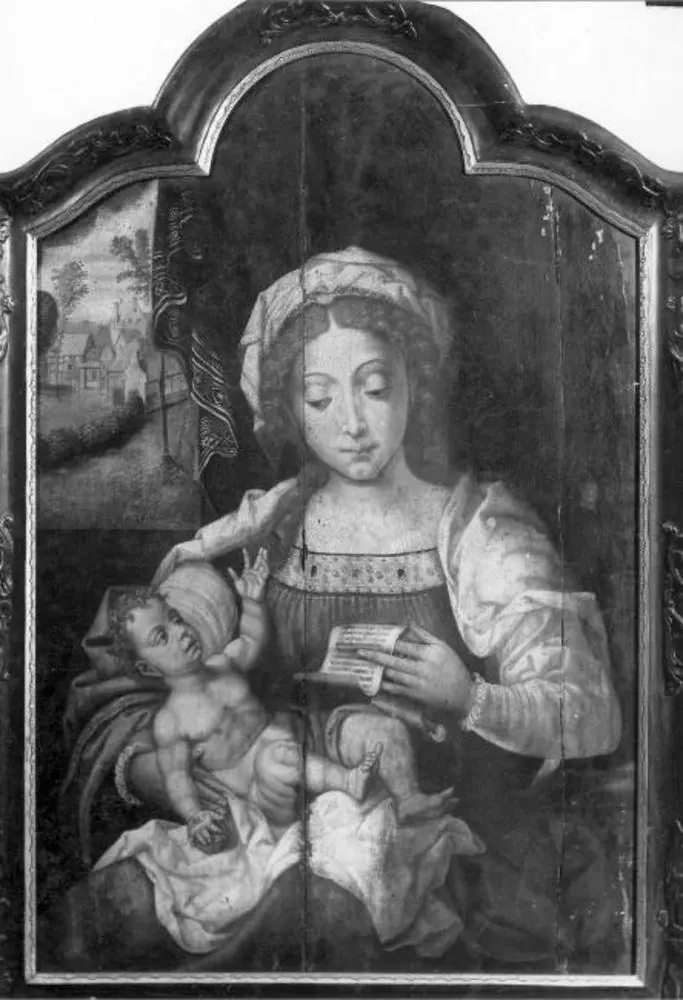 Virgin with child
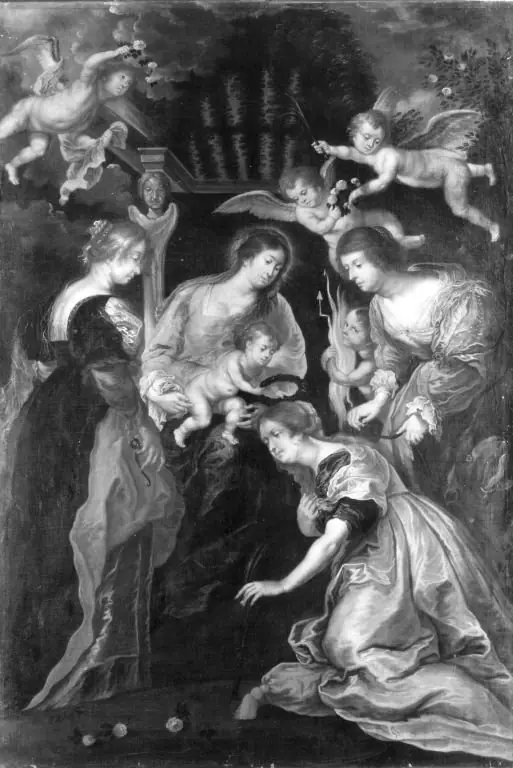 Vermählung der hl. Katharina (Kopie nach)
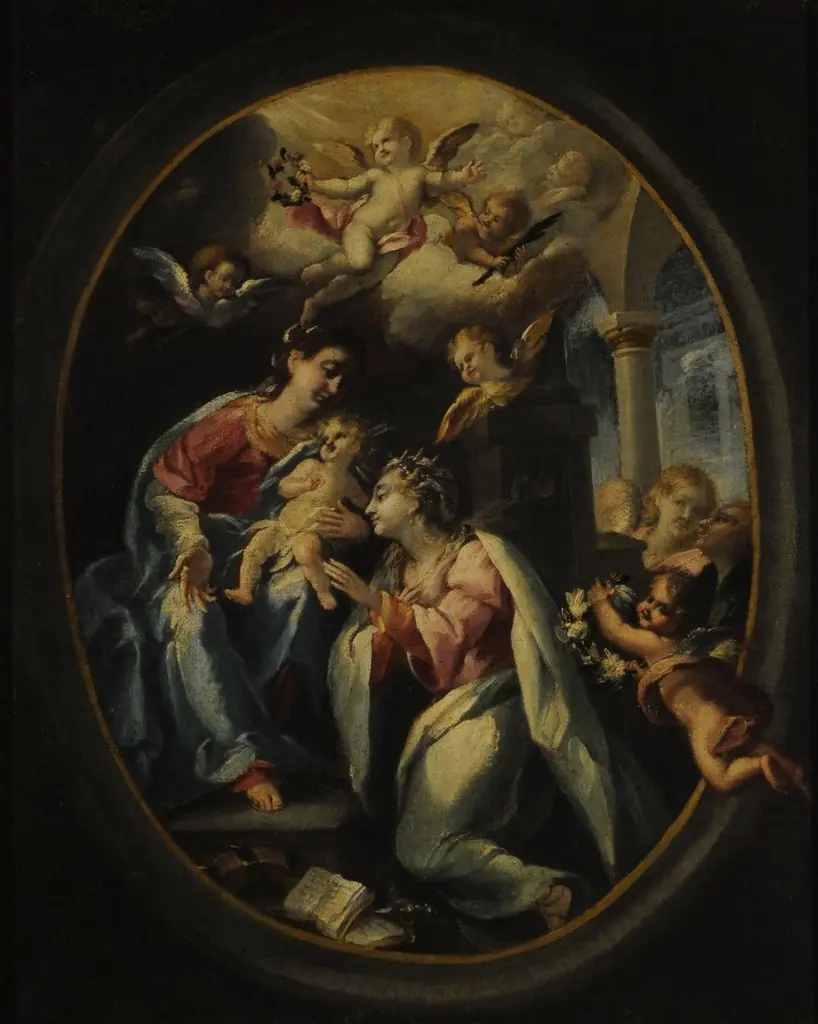 Mystical weddings of Santa Catalina
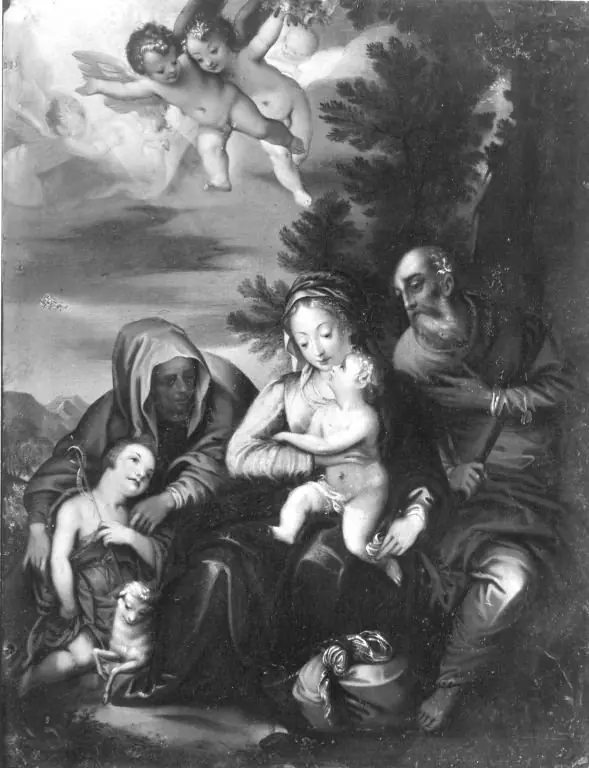 Heilige Familie
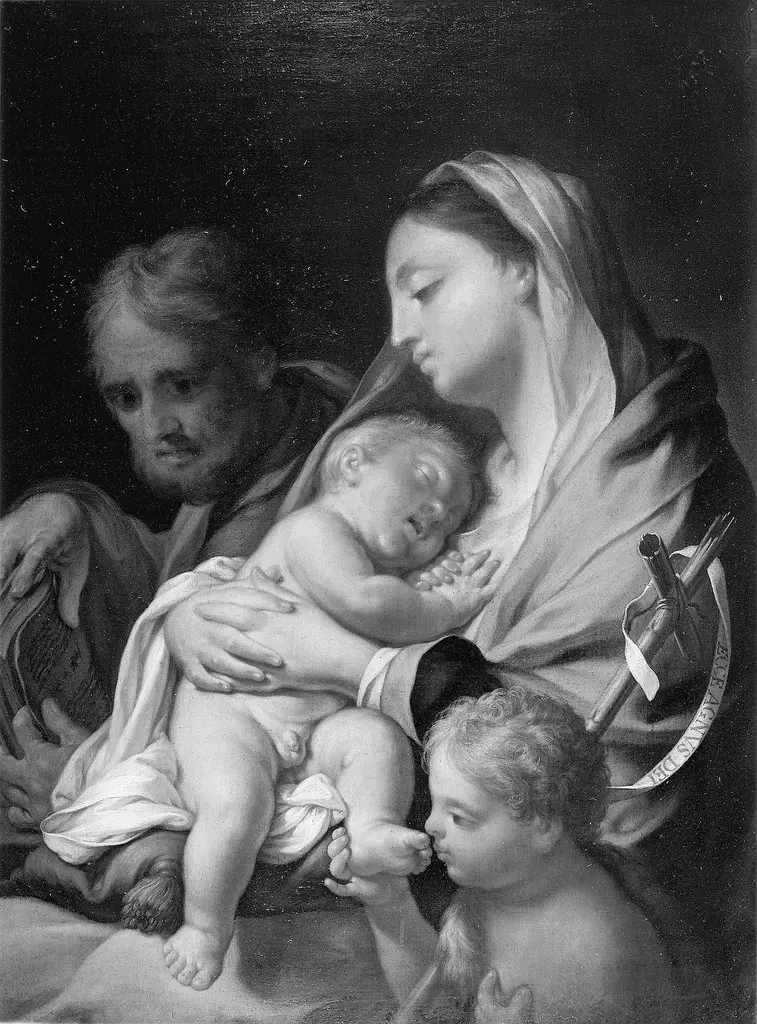 Holy Family with the Infant St. John
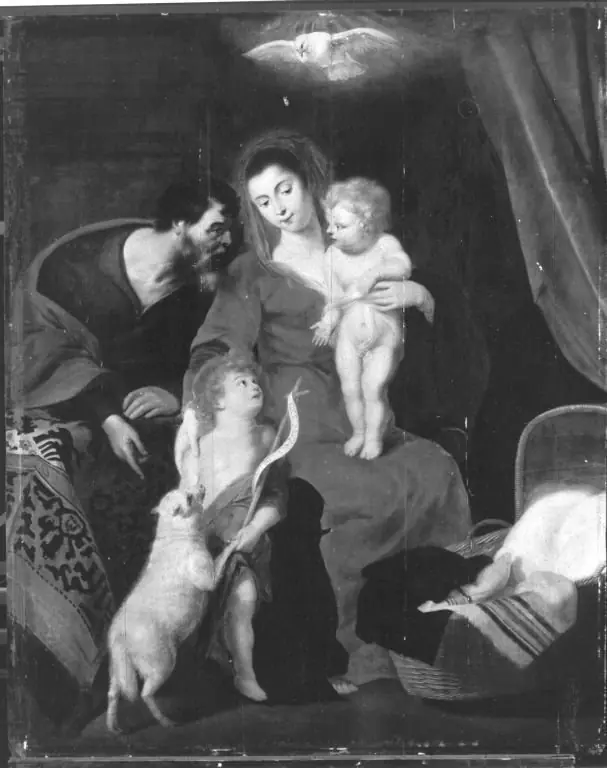 Holy Family with Saint John the Baptist as a Child
 Maria med Kristusbarnet