Artwork
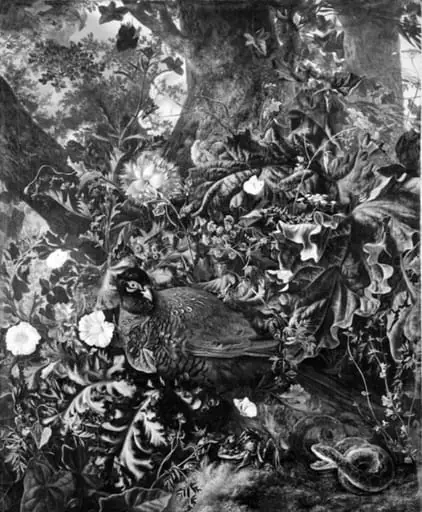
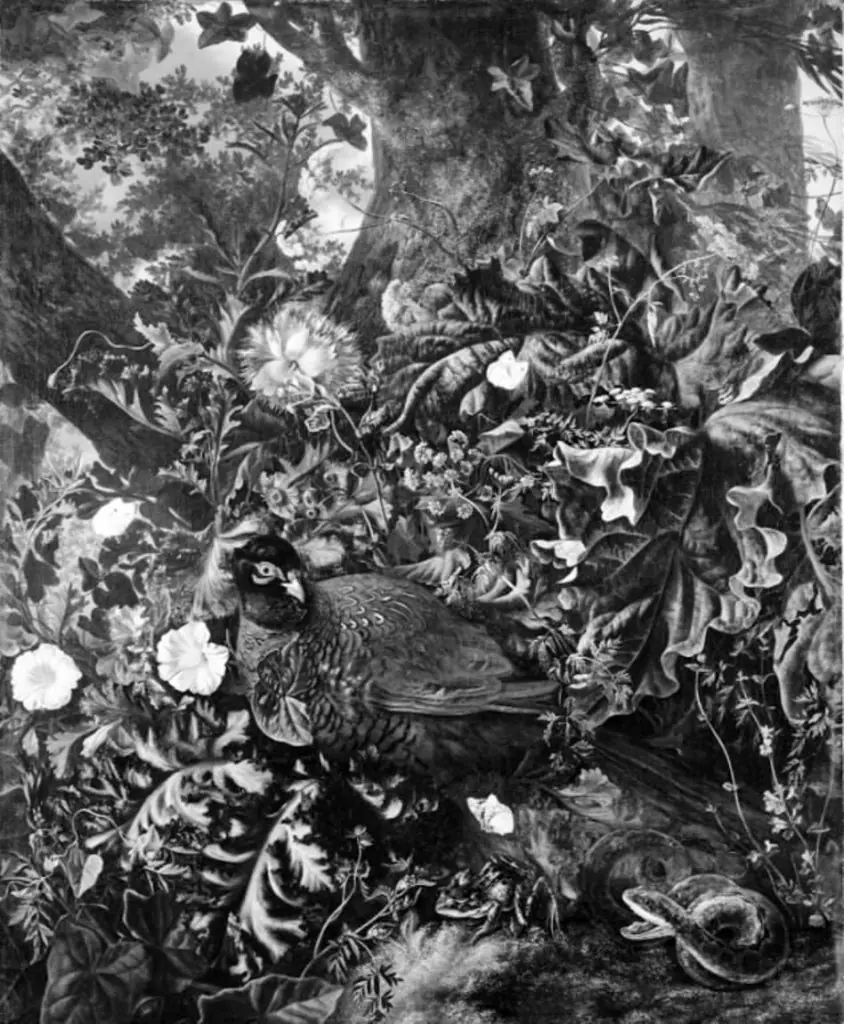
En fugl forsvarer sine unger i reden mod en snog og et firben
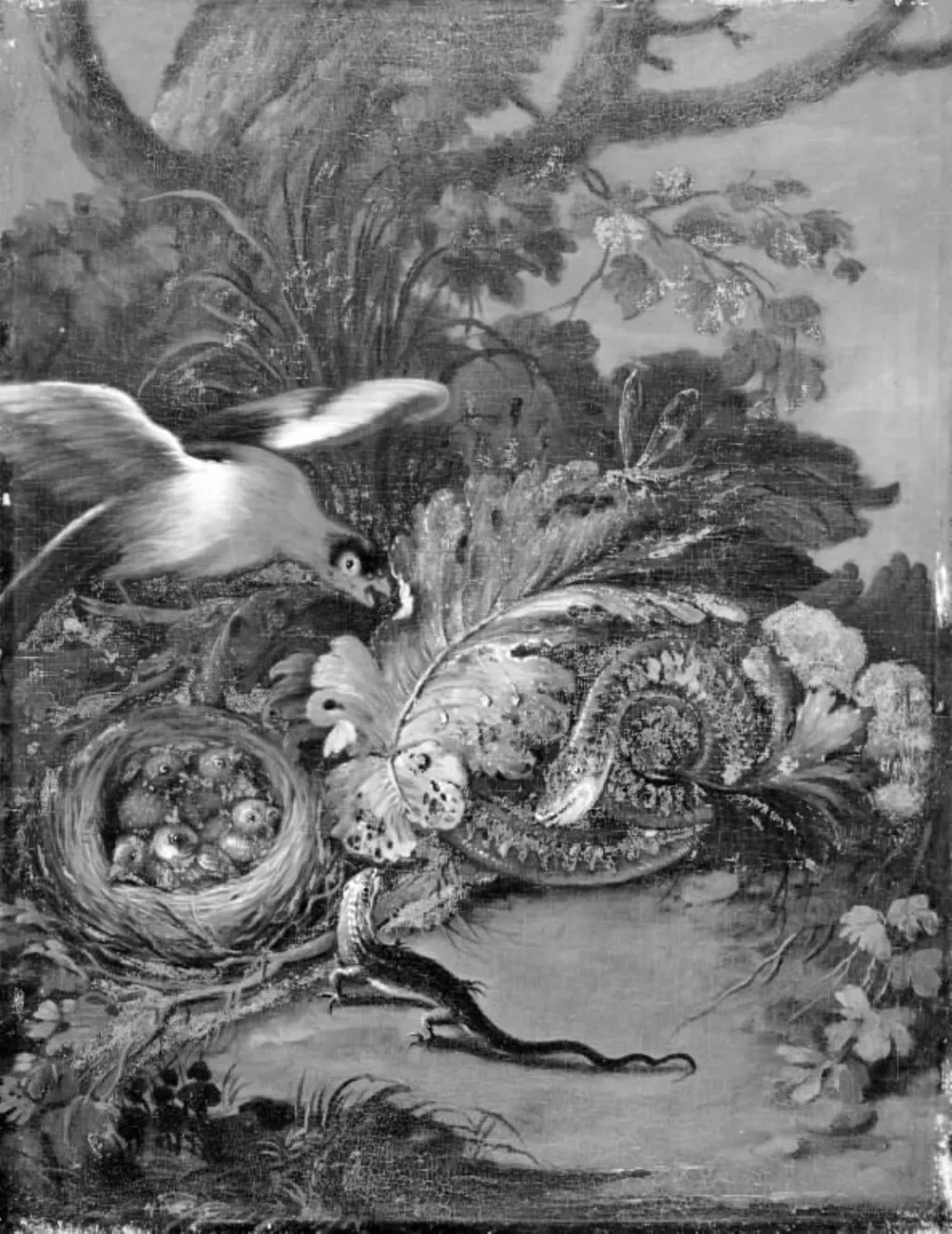
En fugl forsvarer sine unger i reden mod en snog og et firben is a photography by Unknown. It dates from 1750 and is held in the collection of the Statens Museum for Kunst. Created around 1750, this image depicts a bird defending its nest from a snake and a weasel.
About this work
Overview
Created around 1750, this image depicts a bird defending its nest from a snake and a weasel. Executed with heightened naturalism, it captures a moment of tension in the wild. The work is held in the collection of the Museum of Ethnography, where it is studied for its detailed observation of animal behavior and its use of light to emphasize vulnerability and defense.
Subject & Meaning
The scene portrays a parent bird in active defense of its young, confronting two predators: a snake and a weasel. The nest, filled with eggs and chicks, is rendered as a fragile sanctuary under threat. The composition suggests a universal theme of parental protection, rooted in direct observation rather than symbolic allegory, reflecting a growing interest in natural life during the 18th century.
Technique & Style
The artist employs thick, textured brushwork to render feathers and foliage, using impasto to create tactile depth. Strong contrasts between light and dark isolate the nest against a blurred, shadowed background, drawing focus to the action. Some elements are sharply defined, while others are softly blurred, enhancing the sense of movement and immediacy in the scene.
History & Provenance
The work entered the Museum of Ethnography’s collection in the late 19th or early 20th century, likely acquired as part of a broader effort to document natural history through visual art. Its origin as a standalone image, rather than part of a larger manuscript or scientific record, suggests it may have been created for private study or as an artistic exercise in realism.
Context
Made during a period when natural history illustration was gaining traction in Europe, the image aligns with emerging scientific curiosity about animal behavior. While not part of a formal expedition or publication, its attention to detail reflects the influence of Enlightenment-era observation, bridging artistic practice and early ecological awareness.
Legacy
The work remains a quiet example of 18th-century naturalistic painting, valued for its unembellished depiction of wildlife. It contributes to the museum’s collection of visual records that document human engagement with nature before the advent of photography, offering insight into how artists interpreted and preserved the dynamics of the natural world.
Artist & collection

 Domestic Scene
 Giacomo and Cardinal Marco, investing Andrea, Abbot of San Zeno, with his Benefice
 The Nymph of Fontainebleau
 Portrait of a Woman
 Madonna and Child with Saints in the Enclosed Garden
 Venus and Minerva
 Family Group of Four on Sofa
 Wall painting from Room H of the Villa of P. Fannius Synistor at Boscoreale