Artwork
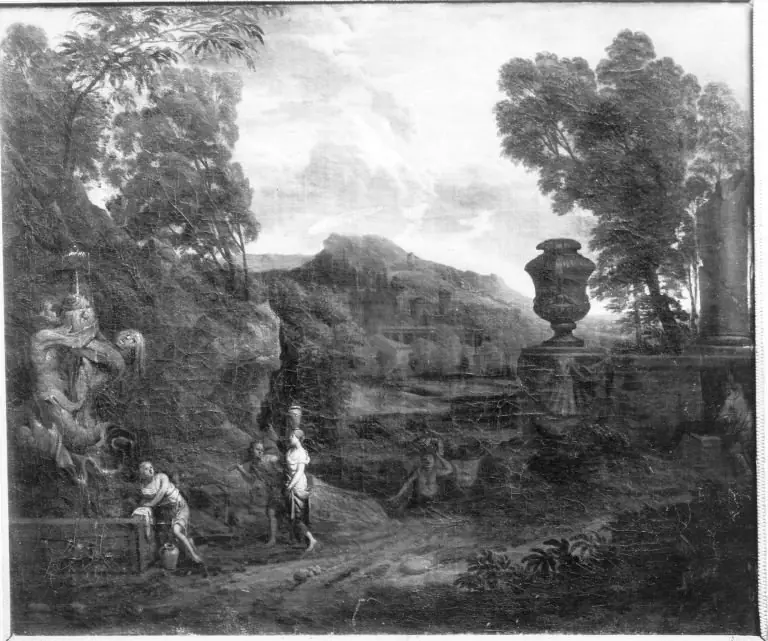
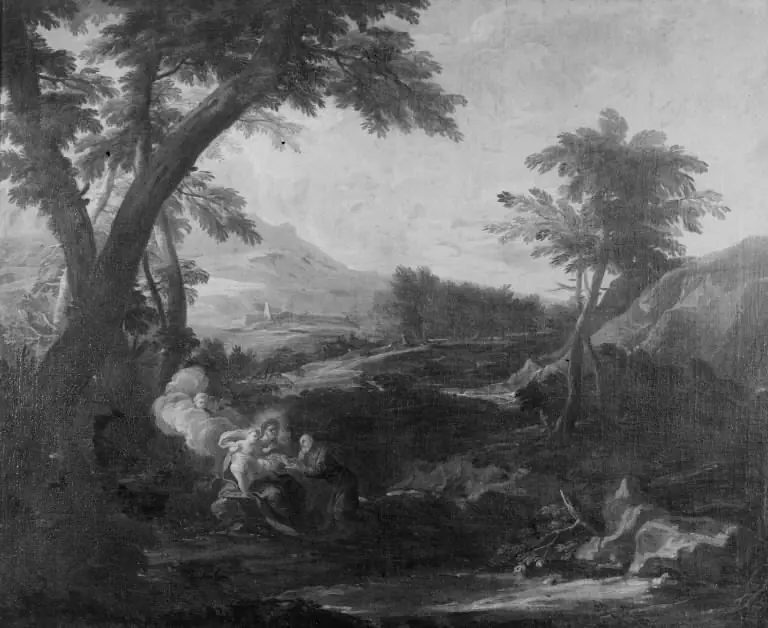
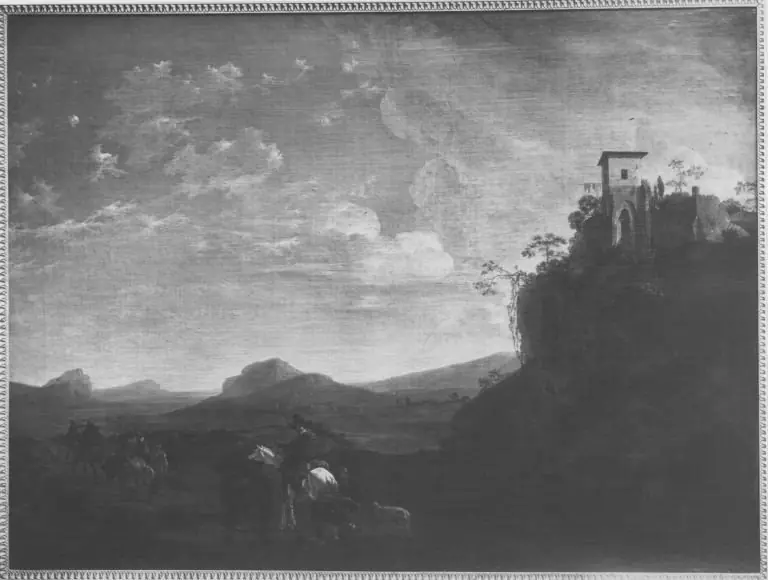
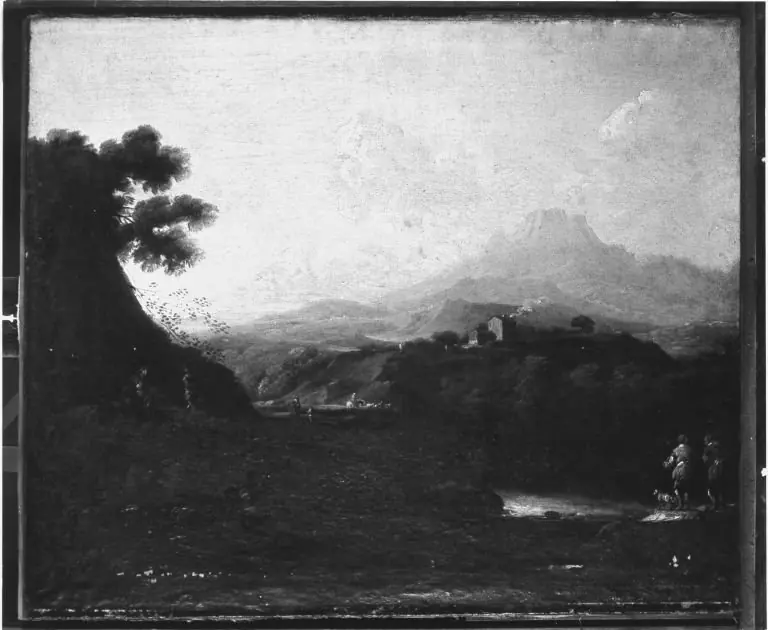
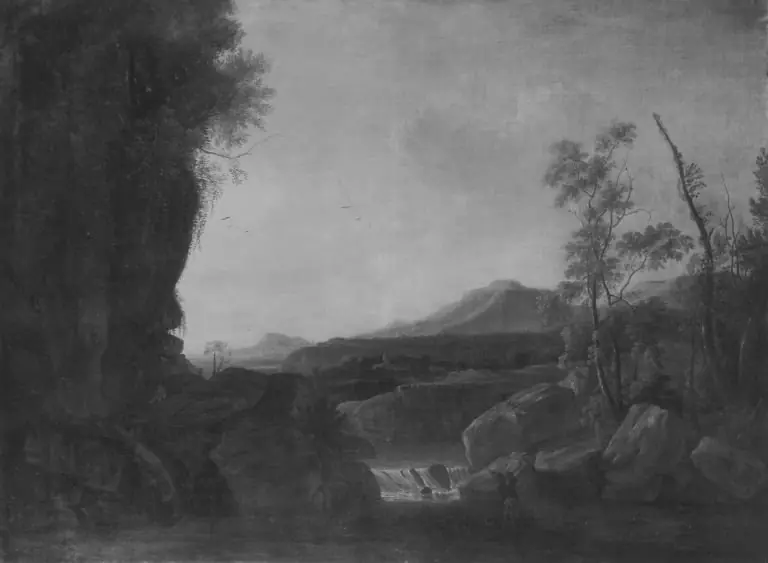
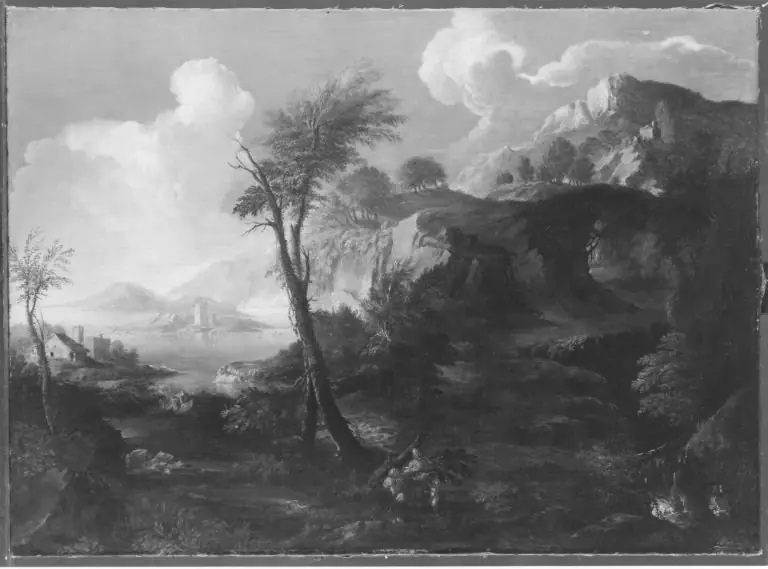
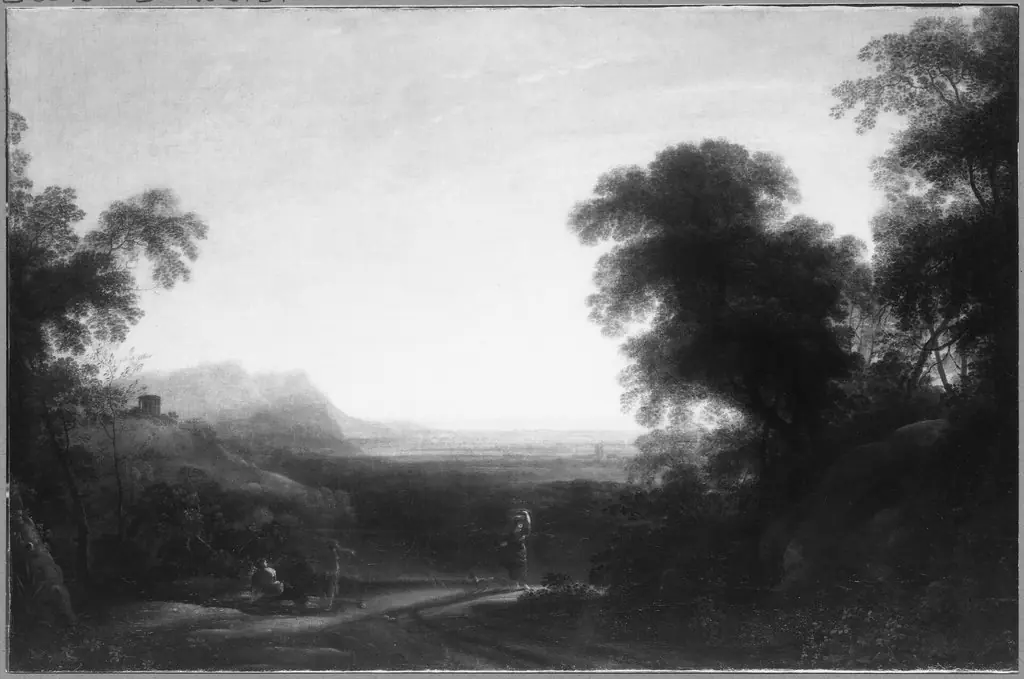
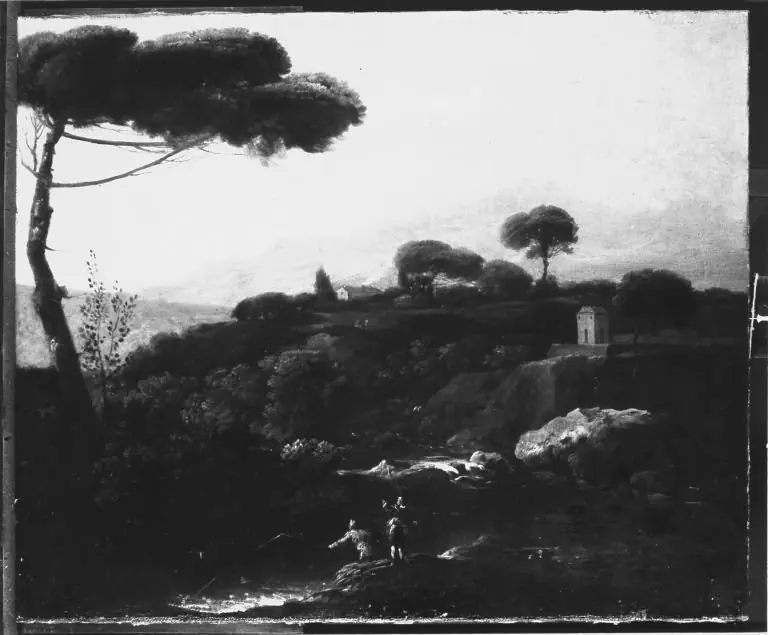
Et landskab med bjerge, en flod og et stort monument
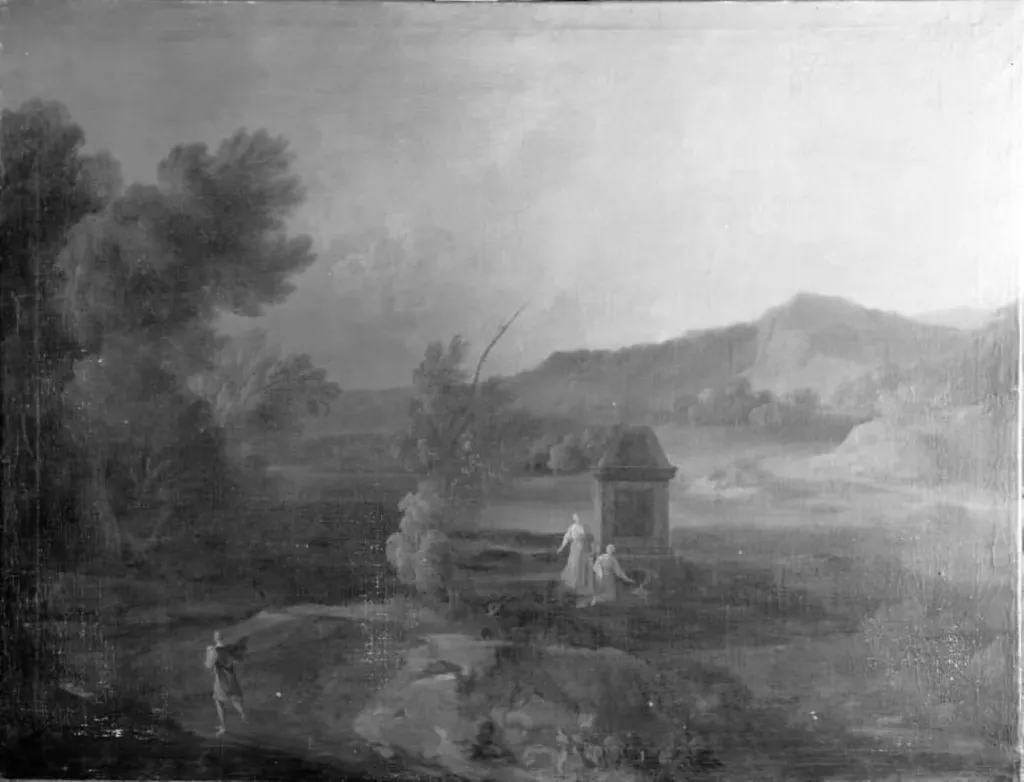
Et landskab med bjerge, en flod og et stort monument is a photography by Unknown. It dates from 1750 and is held in the collection of the Statens Museum for Kunst.
About this work
Overview
Attributed to 37690_person, the work is part of the Museum of Ethnography’s collection.
This black-and-white landscape, dated around 1750, presents a tranquil yet solemn natural setting dominated by rolling terrain, a winding river, and a central monumental structure. Attributed to 37690_person, the work is part of the Museum of Ethnography’s collection. Its monochromatic palette and careful arrangement of light and shadow suggest a deliberate emphasis on mood rather than color, aligning with contemporary European landscape traditions adapted to non-Western subjects.
Subject & Meaning
The large central structure, likely a tomb or memorial, is flanked by figures in white robes, suggesting ritual or mourning. A solitary figure in dark attire near the river may represent a watcher or outsider. The composition invites contemplation of mortality and remembrance, with the monument’s prominence implying cultural reverence for the dead. The quiet activity of the figures underscores a ceremonial atmosphere without overt narrative detail.
Technique & Style
The artist employs chiaroscuro to model form and space, using subtle gradations of gray to distinguish foreground from distant mountains. The monument stands out through its dense shadowing, contrasting with the lighter sky and water. Brushwork is controlled, with soft edges in the landscape and sharper definition around figures, enhancing their symbolic weight. The absence of color focuses attention on tonal relationships and spatial depth.
History & Provenance
The painting entered the Museum of Ethnography’s holdings at an unknown date, likely through colonial-era collections or missionary acquisitions. Its origin as a non-European scene rendered in a European visual language suggests it may have been produced for an audience unfamiliar with the actual site. The artist’s identity remains obscure, and no documentation of its creation or early ownership has been preserved.
Context
Created during a period when European artists increasingly depicted foreign landscapes, this work reflects a blend of local subject matter and imported stylistic conventions. Similar images were often made to satisfy curiosity about distant cultures, sometimes blending observation with imagination. The monument’s form and the figures’ attire hint at a specific regional tradition, though its exact cultural source remains unidentified.
Legacy
The painting contributes to a broader 18th-century corpus of ethnographic landscapes that sought to document the world through a European aesthetic lens. While not widely exhibited, it remains a quiet example of cross-cultural visual exchange. Its preservation in an ethnographic museum underscores its role as both artistic artifact and historical record, offering insight into how distant places were interpreted and represented at the time.
Artist & collection

 Domestic Scene
 Giacomo and Cardinal Marco, investing Andrea, Abbot of San Zeno, with his Benefice
 The Nymph of Fontainebleau
 Portrait of a Woman
 Madonna and Child with Saints in the Enclosed Garden
 Venus and Minerva
 Family Group of Four on Sofa
 Wall painting from Room H of the Villa of P. Fannius Synistor at Boscoreale