Artwork
A River Landscape with Turkeys and Poultry
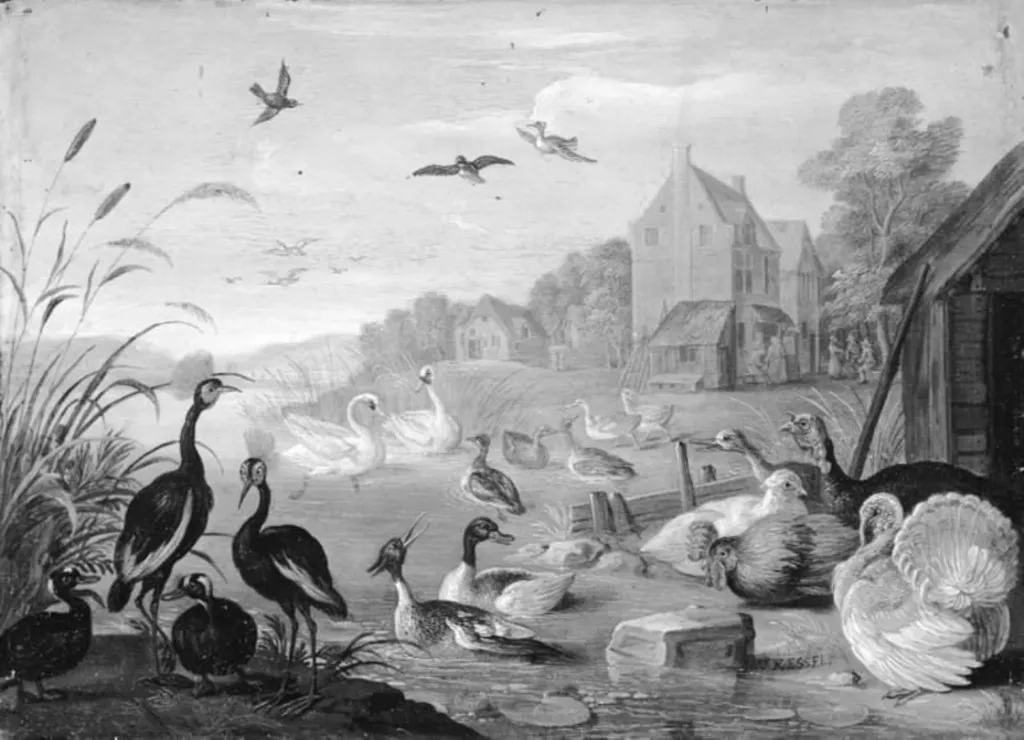
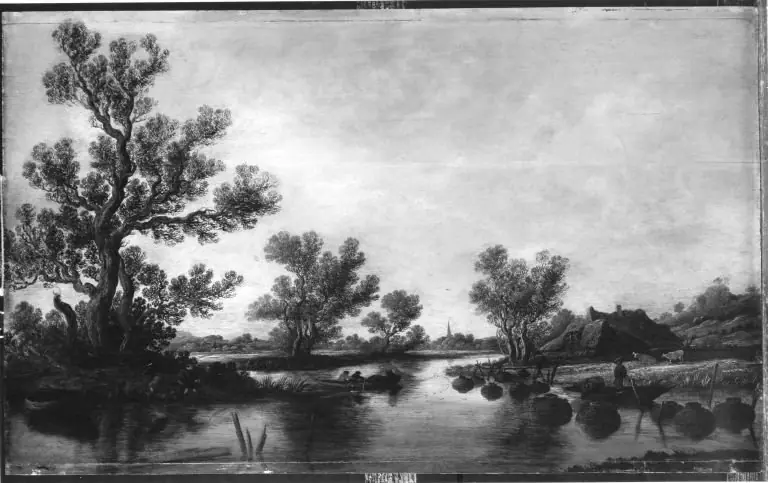
A River Landscape with Turkeys and Poultry is an unspecified painting by Unknown. It dates from 1660 and is held in the collection of the Statens Museum for Kunst. This landscape painting, dated around 1660, presents a quiet riverside scene populated by domestic and wild birds.
About this work
Overview
This landscape painting, dated around 1660, presents a quiet riverside scene populated by domestic and wild birds.
This landscape painting, dated around 1660, presents a quiet riverside scene populated by domestic and wild birds. It is attributed to an artist identified as 37826_person and is part of the Museum of Ethnography’s collection. The composition emphasizes harmony between nature and human habitation, with no overt narrative or dramatic action, instead favoring a contemplative mood through stillness and subtle detail.
Subject & Meaning
The painting centers on a group of turkeys and poultry gathered near the water’s edge, accompanied by ducks swimming in the river. These birds, likely domesticated, suggest rural life and agricultural abundance. The distant village and modest wooden structure imply human presence without intrusion, reinforcing a theme of coexistence between settlement and the natural world, common in Dutch landscape traditions of the period.
Technique & Style
The artist employs soft, muted tones and delicate brushwork to evoke a hazy, atmospheric quality. The sky blends gently into the landscape, and foliage is rendered with loose, fluid strokes rather than sharp definition. This approach creates a sense of calm and distance, drawing attention to the birds in the foreground while maintaining the overall serenity of the scene without theatrical emphasis.
History & Provenance
The painting has been held by the Museum of Ethnography since at least the early 20th century, though its earlier ownership history remains undocumented. Its attribution to 37826_person is based on stylistic analysis and archival records, though no signed or dated variants are known. It was likely acquired as part of a broader collection of Northern European genre scenes.
Context
Created during the Dutch Golden Age, the work reflects a broader interest in everyday rural life and natural observation. While not aligned with grand historical or religious themes, it aligns with the period’s growing appreciation for quiet, unidealized landscapes. The inclusion of poultry may reference economic or domestic concerns, common in regional art of the Low Countries.
Legacy
The painting contributes to the understanding of lesser-known Dutch landscape painters who focused on pastoral tranquility rather than dramatic vistas. Though not widely exhibited outside institutional collections, it remains a quiet example of how everyday scenes were elevated through careful observation and restrained technique during the 17th century.
Artist & collection

 Domestic Scene
 Giacomo and Cardinal Marco, investing Andrea, Abbot of San Zeno, with his Benefice
 The Nymph of Fontainebleau
 Portrait of a Woman
 Madonna and Child with Saints in the Enclosed Garden
 Venus and Minerva
 Family Group of Four on Sofa
 Wall painting from Room H of the Villa of P. Fannius Synistor at Boscoreale
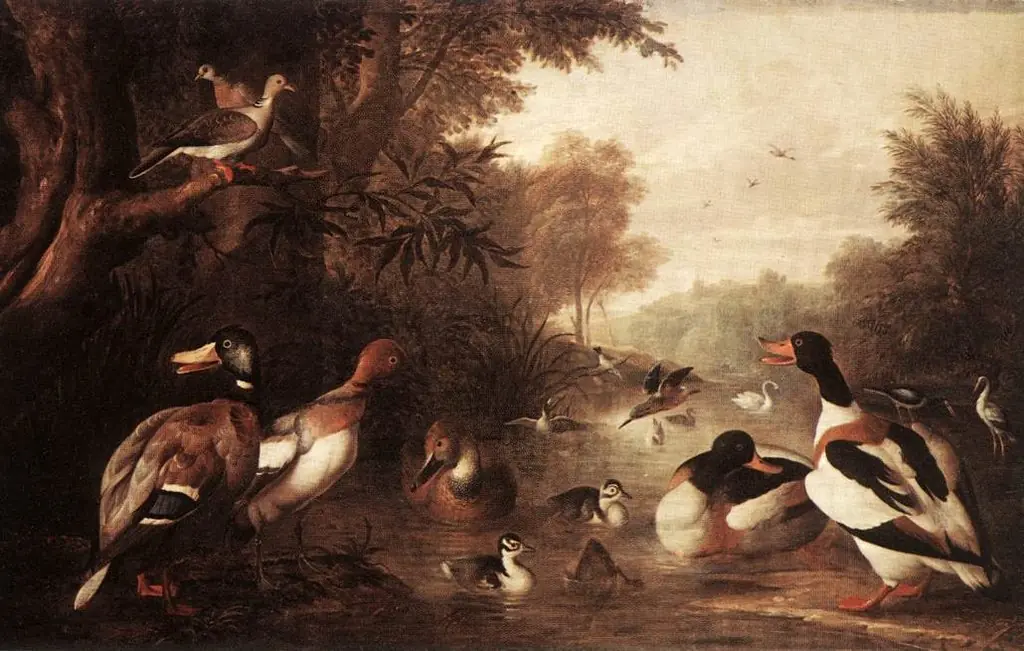 Landscape with Ducks
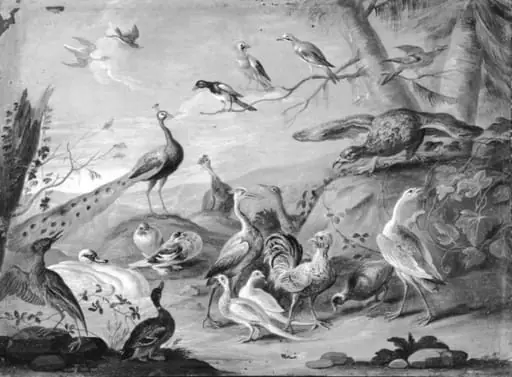 A Hilly Landscape with a Peacock, an Eagle and other Birds
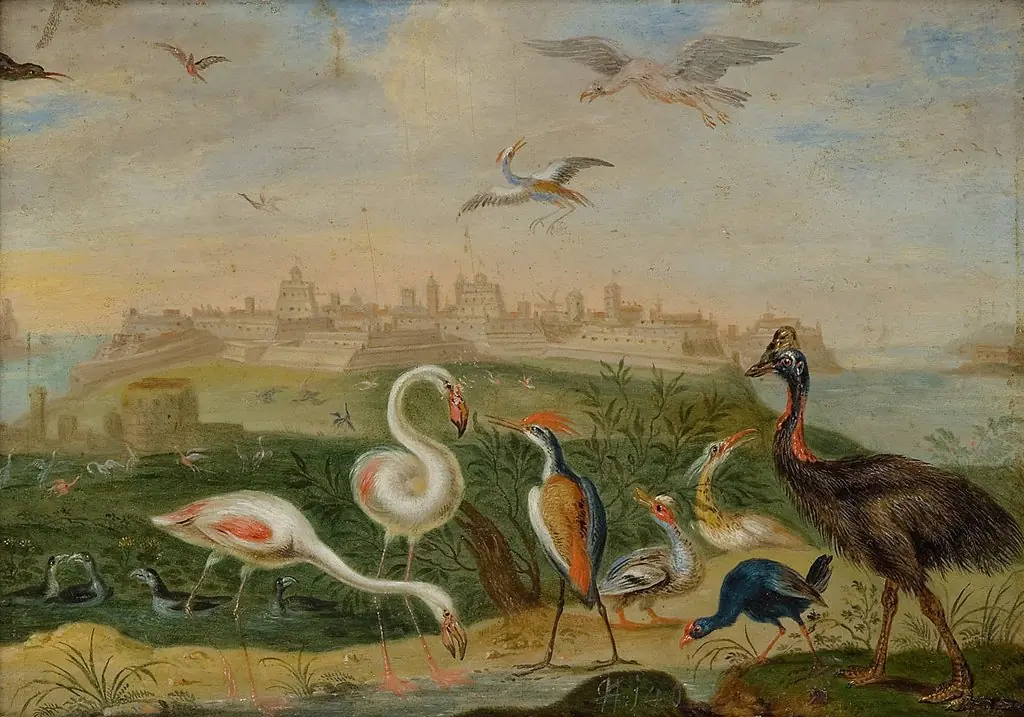 Ansichten aus den vier Weltteilen mit Szenen von Tieren: Malta
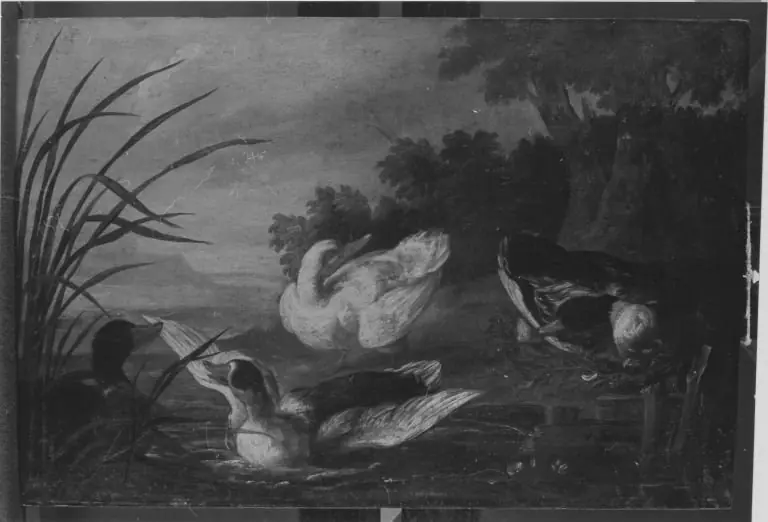 Enten am Gewässer
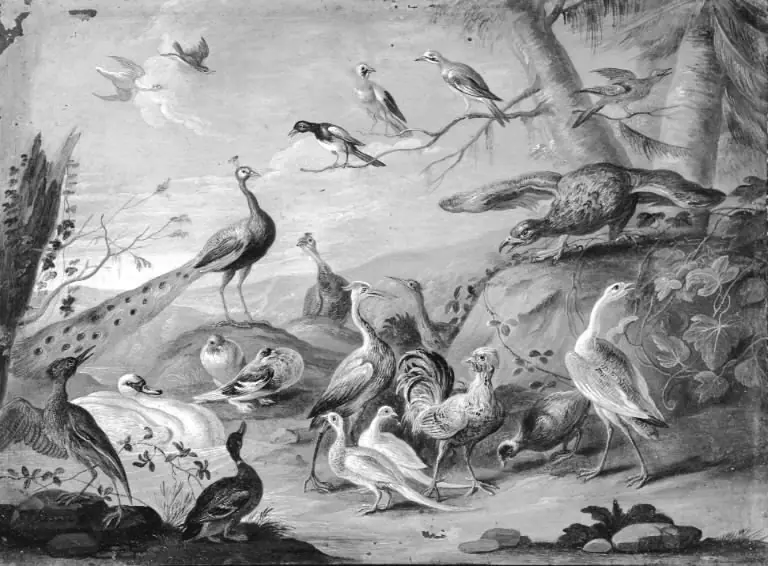 A Hilly Landscape with a Peacock, an Eagle and other Birds
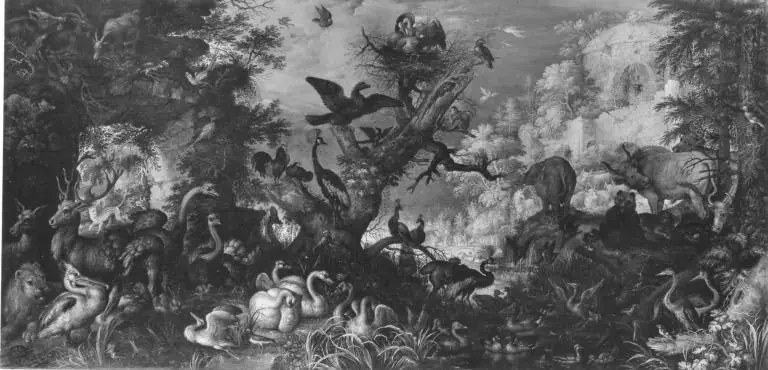 Vögel und Tiere in Felslandschaft
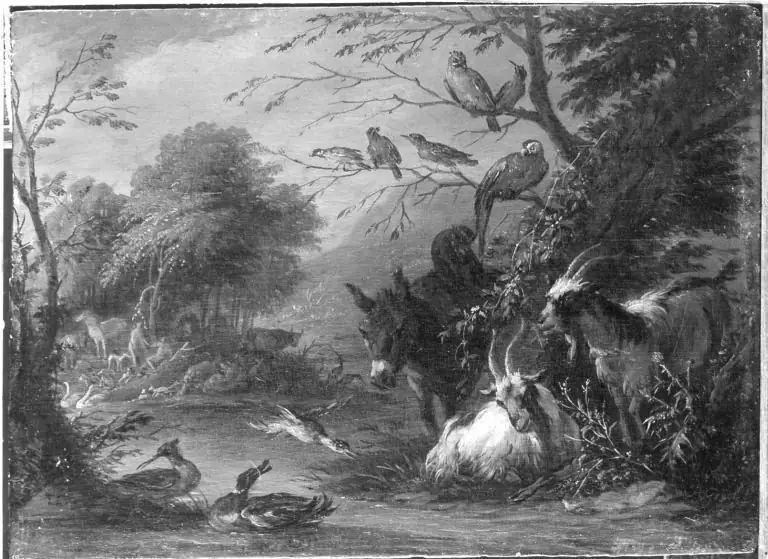 Earthly Paradise with in the background the Fall of Man (Genesis 3:6)
 Kanallandschaft
 Tangier
 Poultry