Artwork
Ships Sailing and Beating up against the Wind in the Sound
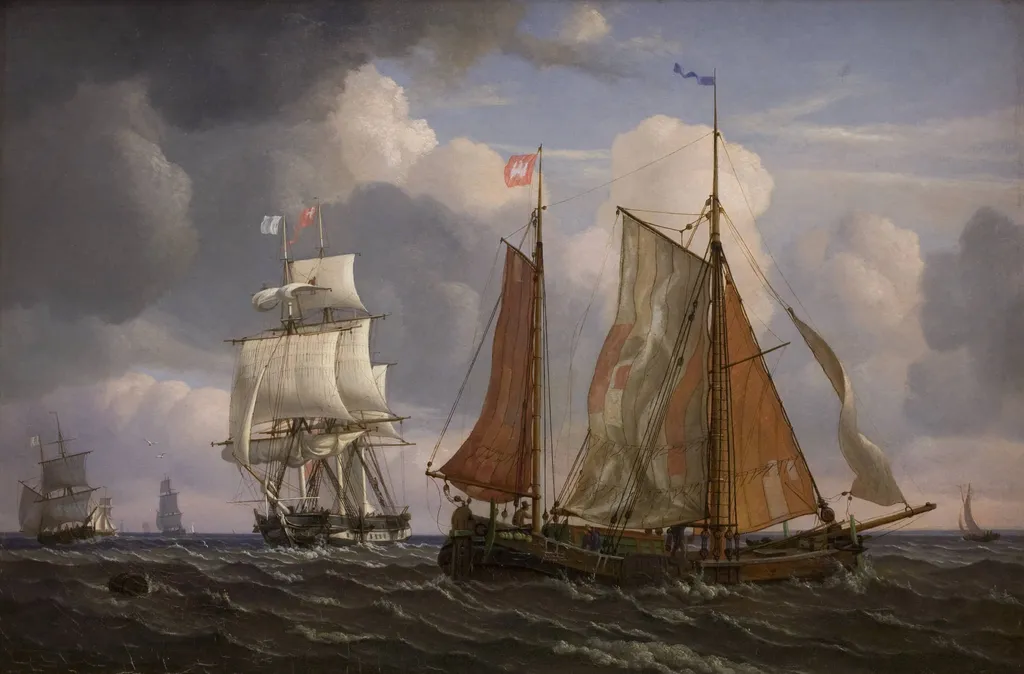
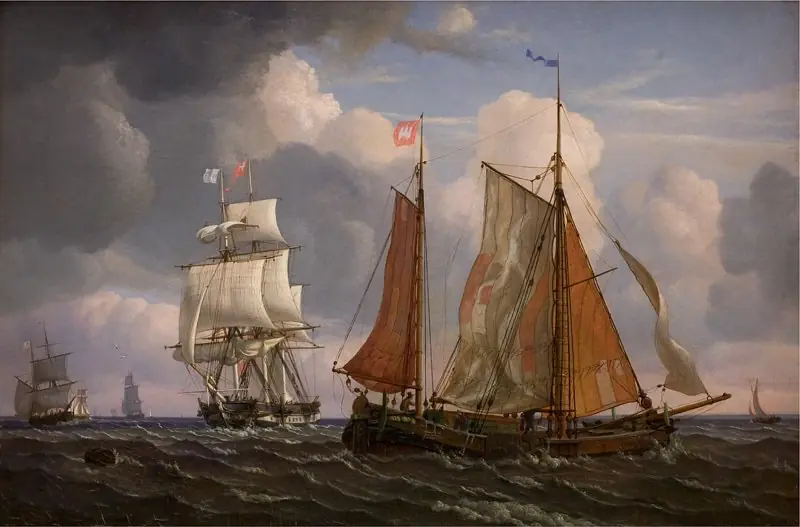
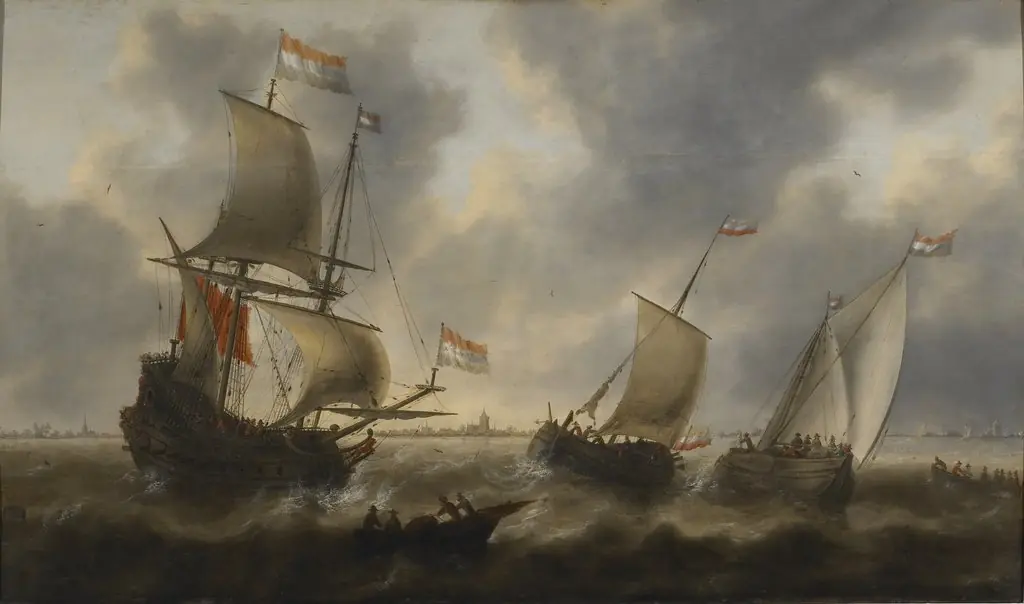
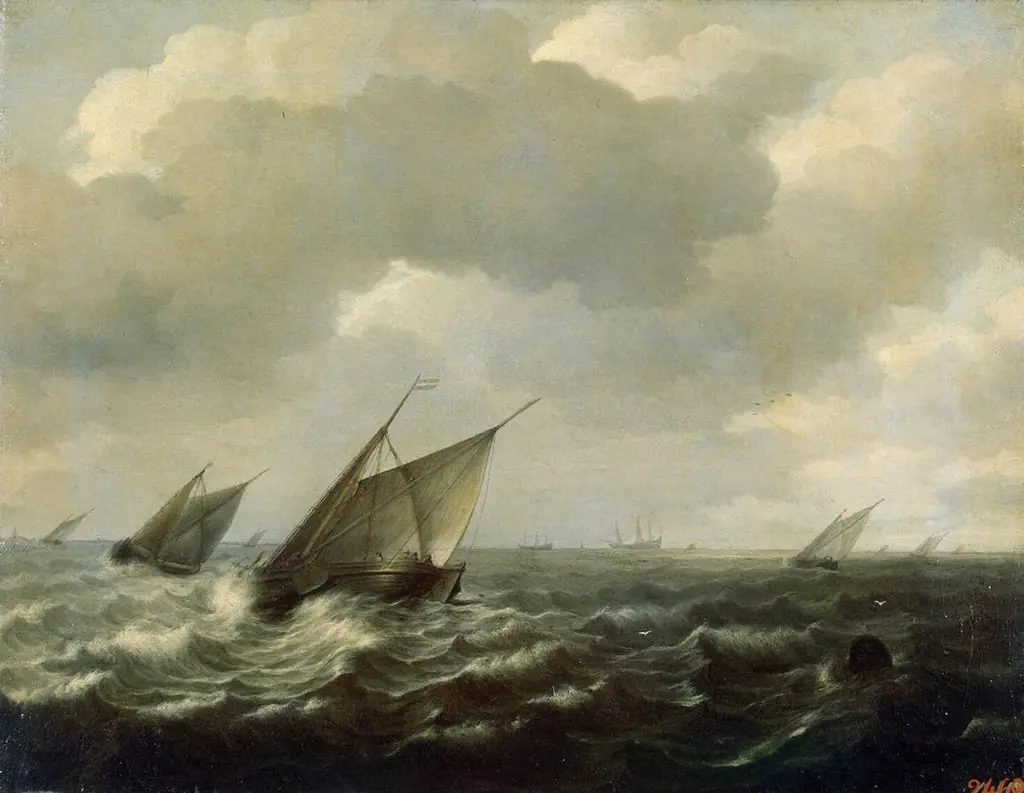
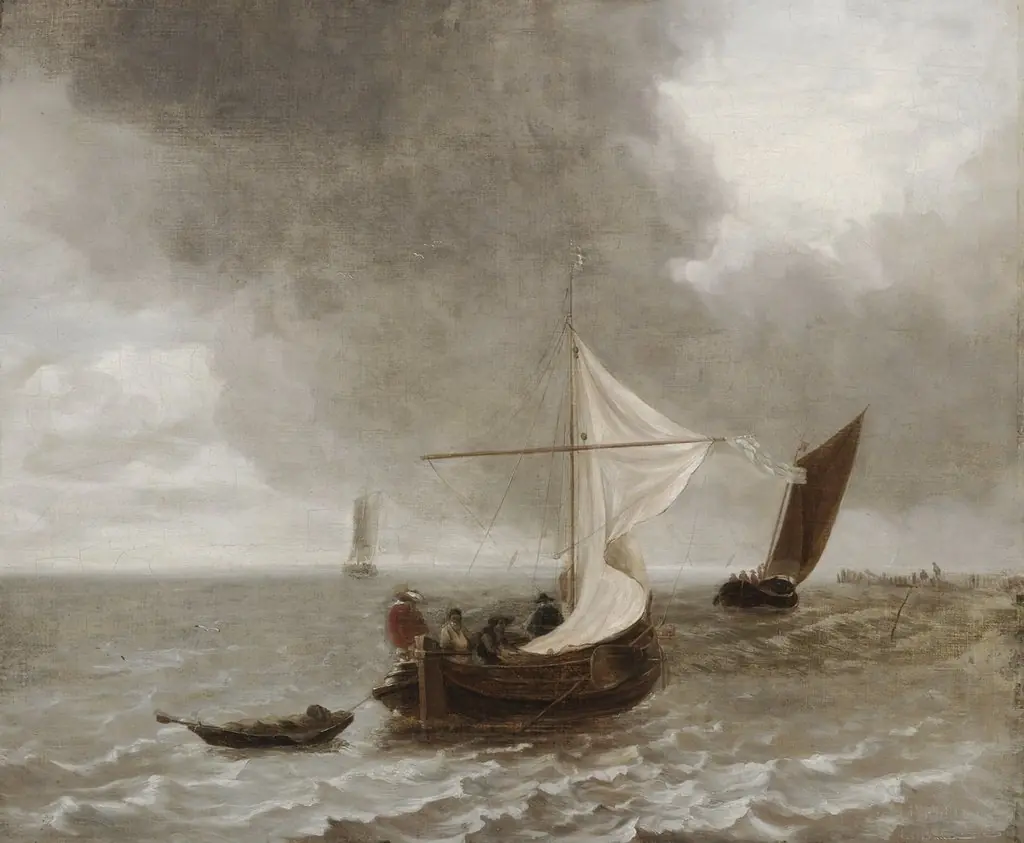
Ships Sailing and Beating up against the Wind in the Sound is a photography by the Romanticist artist Unknown. It dates from 1832 and is held in the collection of the Statens Museum for Kunst. Painted in 1832, this marine work depicts three vessels struggling against a fierce wind in a narrow sea passage.
About this work
Overview
Painted in 1832, this marine work depicts three vessels struggling against a fierce wind in a narrow sea passage. Executed in oil on canvas, the scene captures the raw energy of nature through turbulent waves and a brooding sky. The painting resides in the Museum of Ethnography, where it is cataloged as part of a collection emphasizing human interaction with natural forces.
Subject & Meaning
The three ships, their sails strained and flags whipping, convey a sense of resistance against overwhelming natural power. The composition avoids narrative detail, instead focusing on the physical tension between vessel and environment. The distant horizon ships suggest isolation and the vastness of the sea, reinforcing themes of human vulnerability amid elemental forces.
Technique & Style
The artist employs dynamic brushwork to render churning water and wind-swept sails, using layered glazes to deepen shadows and heighten contrast. Light breaks erratically through dark clouds, illuminating wave crests and rigging while leaving other areas in near-obscurity. This chiaroscuro approach heightens the emotional intensity, aligning with broader Romantic conventions of the era.
History & Provenance
The painting was completed in 1832 and entered the Museum of Ethnography’s collection in the late 19th century. Its origin as a standalone marine study, rather than part of a larger commission, suggests personal artistic interest. Documentation from the period confirms its attribution to the artist, though little is known about its early exhibition history.
Context
Created during the height of Romanticism, the work reflects a cultural fascination with nature’s sublime power and human endurance. Contemporary artists across Europe were turning away from idealized landscapes toward raw, emotional depictions of weather and sea. This painting aligns with that shift, prioritizing atmosphere and motion over precise topography or narrative.
Legacy
Though not widely reproduced or publicly celebrated, the painting remains a quiet example of 19th-century marine painting that prioritizes emotional resonance over spectacle. It contributes to the museum’s broader collection on maritime life and continues to be studied for its treatment of natural forces as an active, almost sentient presence.
Artist & collection

 Domestic Scene
 Giacomo and Cardinal Marco, investing Andrea, Abbot of San Zeno, with his Benefice
 The Nymph of Fontainebleau
 Portrait of a Woman
 Madonna and Child with Saints in the Enclosed Garden
 Venus and Minerva
 Family Group of Four on Sofa
 Wall painting from Room H of the Villa of P. Fannius Synistor at Boscoreale