Artwork
Landscape with Riders on a Sandy Road
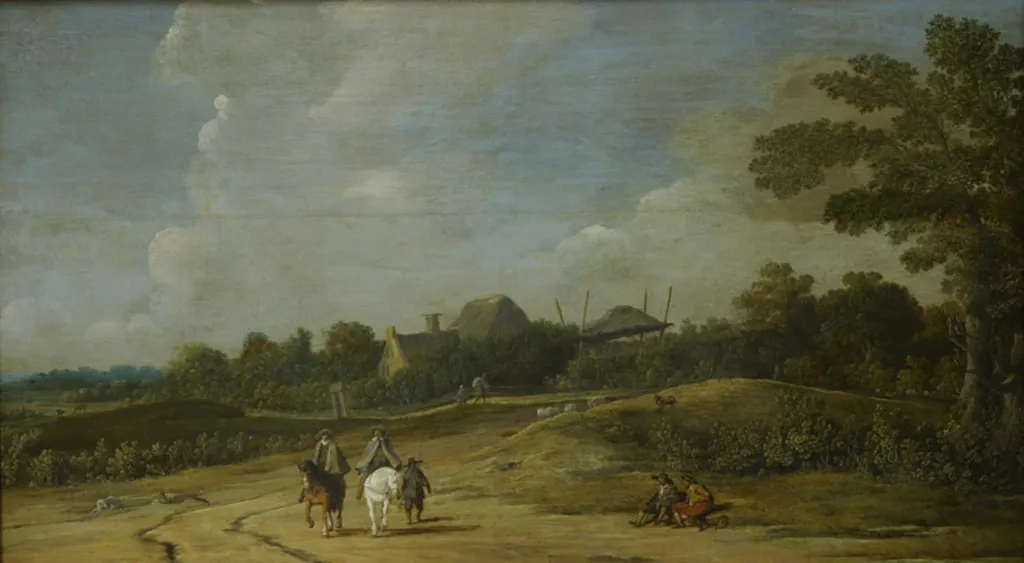
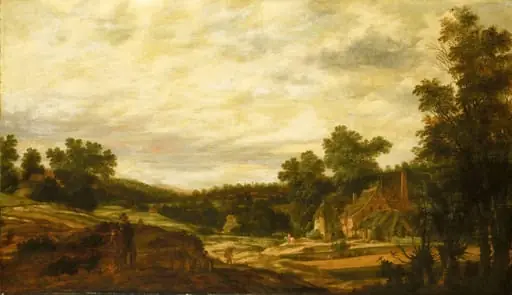
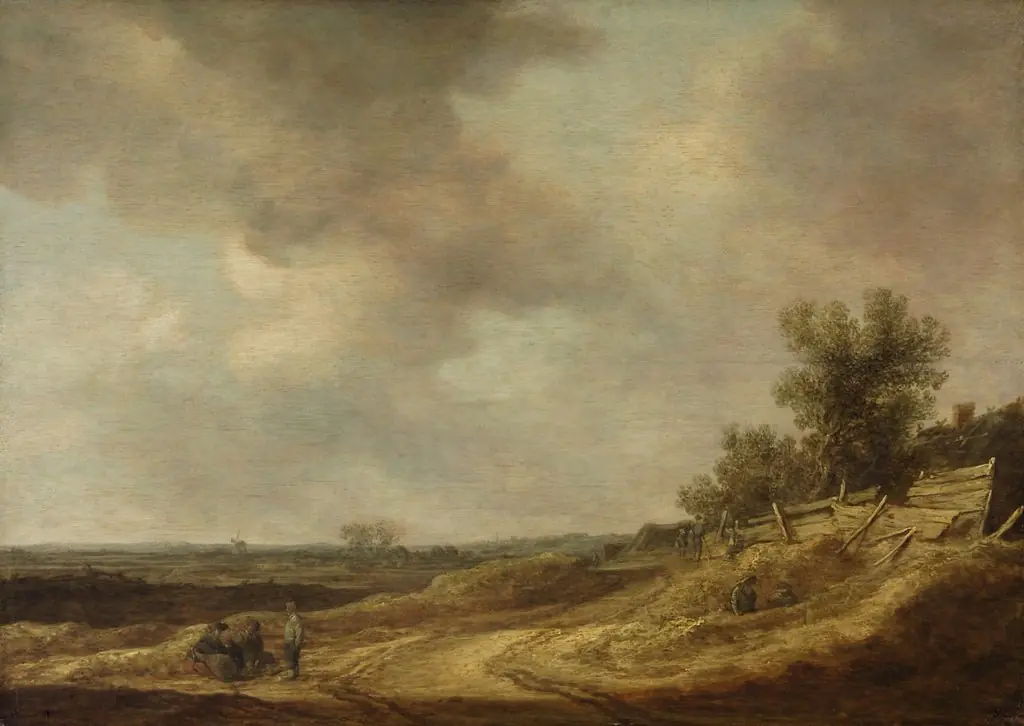
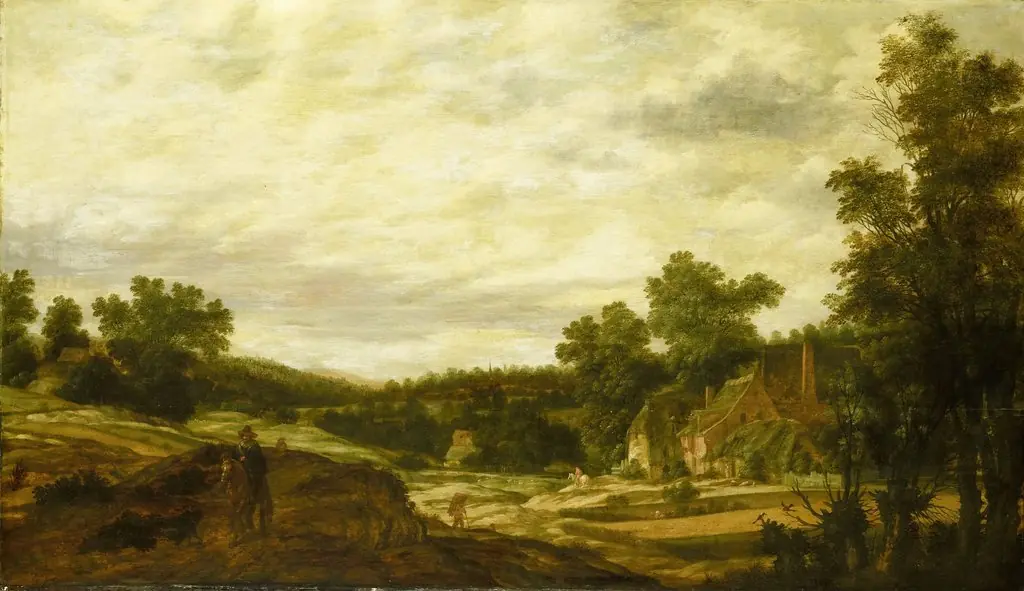
Landscape with Riders on a Sandy Road is an unspecified painting by Unknown. It dates from 1650 and is held in the collection of the Statens Museum for Kunst. Created around 1650, this landscape depicts a quiet rural path winding through open fields.
About this work
Overview
The composition emphasizes stillness and distance, with faint structures and trees barely rising above the horizon beneath a soft, cloud-dappled sky.
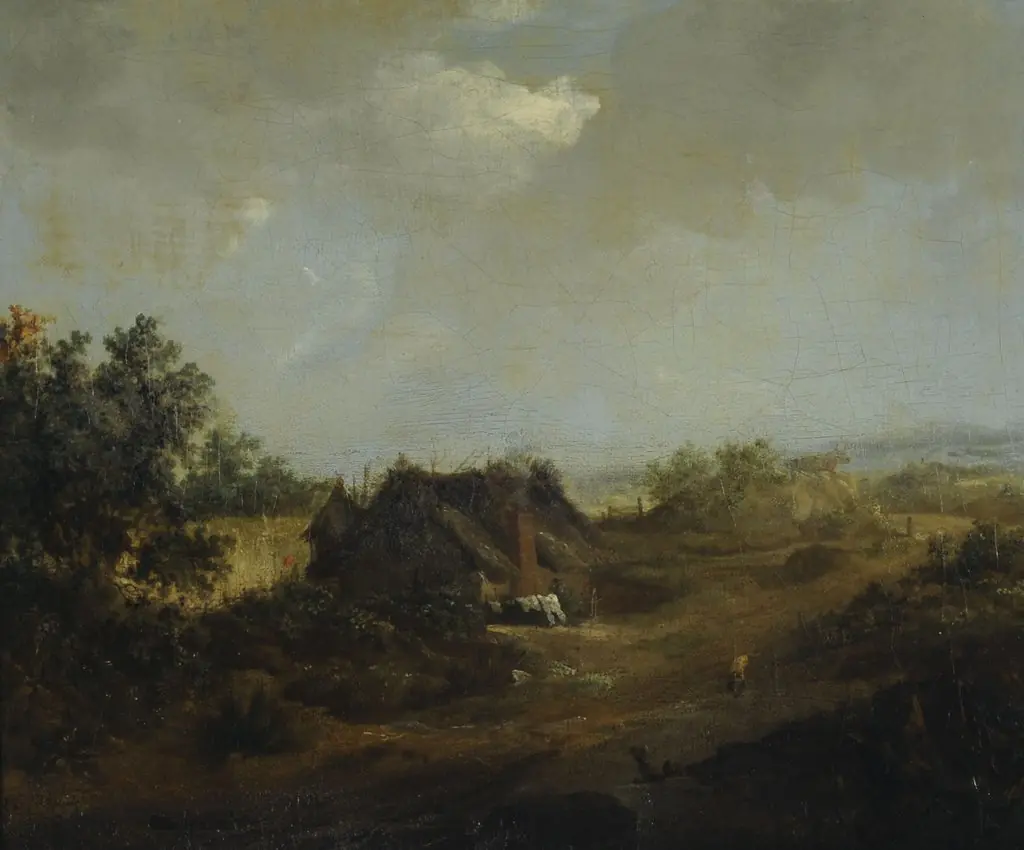
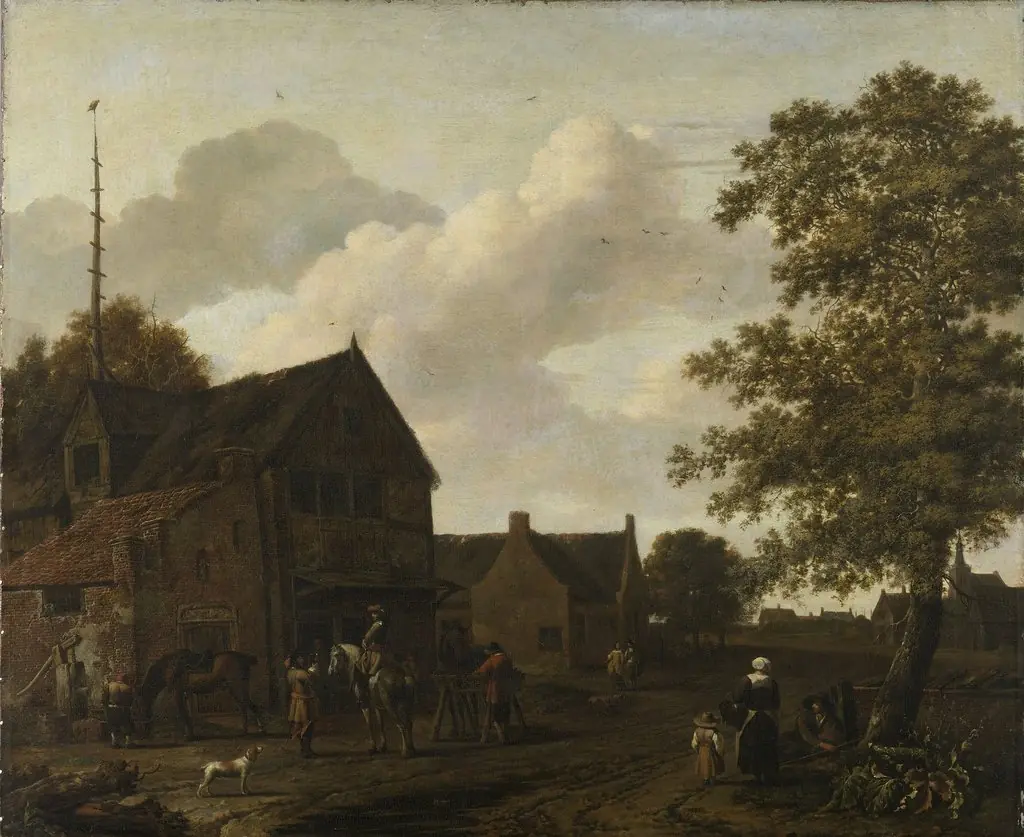
Created around 1650, this landscape depicts a quiet rural path winding through open fields. The scene is rendered in subdued tones of green, brown, and gray, with subtle highlights of red and white. Three figures—two mounted and one leading a horse—move slowly along a well-worn dirt road. The composition emphasizes stillness and distance, with faint structures and trees barely rising above the horizon beneath a soft, cloud-dappled sky.
Subject & Meaning
The painting presents an uneventful moment in rural life, free from drama or narrative urgency. The riders appear unhurried, suggesting routine travel rather than urgent purpose. The worn road implies regular use by locals, grounding the scene in everyday experience. There is no indication of social hierarchy or conflict; instead, the focus lies in the quiet rhythm of movement through a familiar landscape.
Technique & Style
The artist employs a restrained palette and soft brushwork to convey atmospheric depth. Distant elements are rendered with minimal detail, enhancing the sense of spatial recession. The sky, lightly modeled with pale washes, diffuses light evenly across the scene. Texture in the road and fields is suggested rather than defined, reinforcing the painting’s calm, observational tone.
History & Provenance
The work has been held since at least the early 20th century by the Museum of Ethnography, though its origins prior to that remain undocumented. It lacks a signature or documented commission, and its attribution to a specific artist has not been conclusively established. Its presence in an ethnographic collection suggests it was acquired for its depiction of vernacular life rather than its artistic pedigree.
Context
Painted during the Dutch Golden Age, this work aligns with the period’s growing interest in humble, everyday landscapes. Unlike grand historical or mythological scenes, it reflects a shift toward quiet observation of the natural world and rural labor. Similar compositions by contemporaries emphasize tranquility and the dignity of ordinary routines, often without overt symbolism.
Legacy
The painting contributes to a broader tradition of Northern European landscape art that values subtlety over spectacle. While not widely reproduced or studied, it remains a quiet example of how 17th-century artists captured the rhythms of rural life. Its preservation in an ethnographic context underscores its value as a record of material and social conditions rather than artistic innovation.
Artist & collection

 Domestic Scene
 Giacomo and Cardinal Marco, investing Andrea, Abbot of San Zeno, with his Benefice
 The Nymph of Fontainebleau
 Portrait of a Woman
 Madonna and Child with Saints in the Enclosed Garden
 Venus and Minerva
 Family Group of Four on Sofa
 Wall painting from Room H of the Villa of P. Fannius Synistor at Boscoreale