Artwork
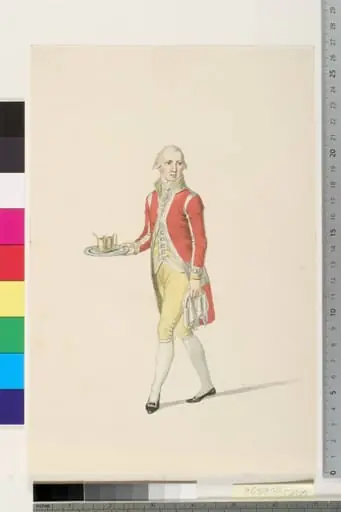
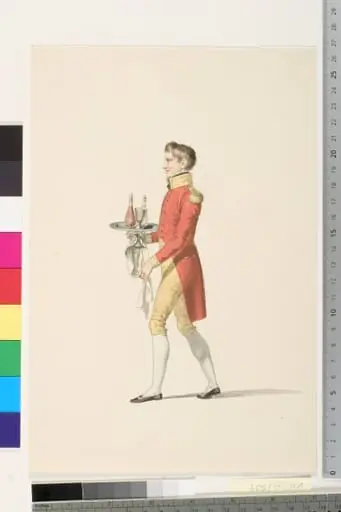
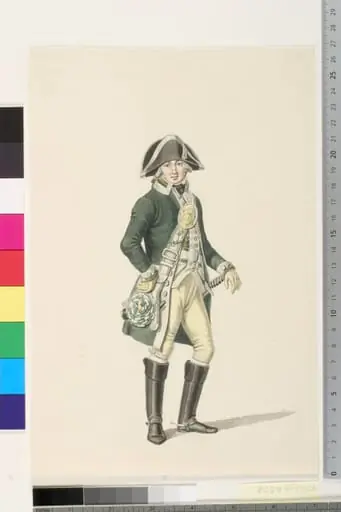
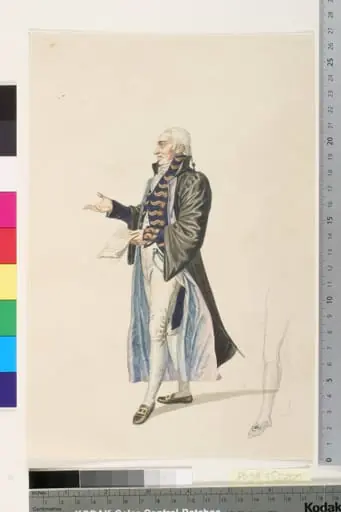
Kongelig lakaj med to tomme bakker
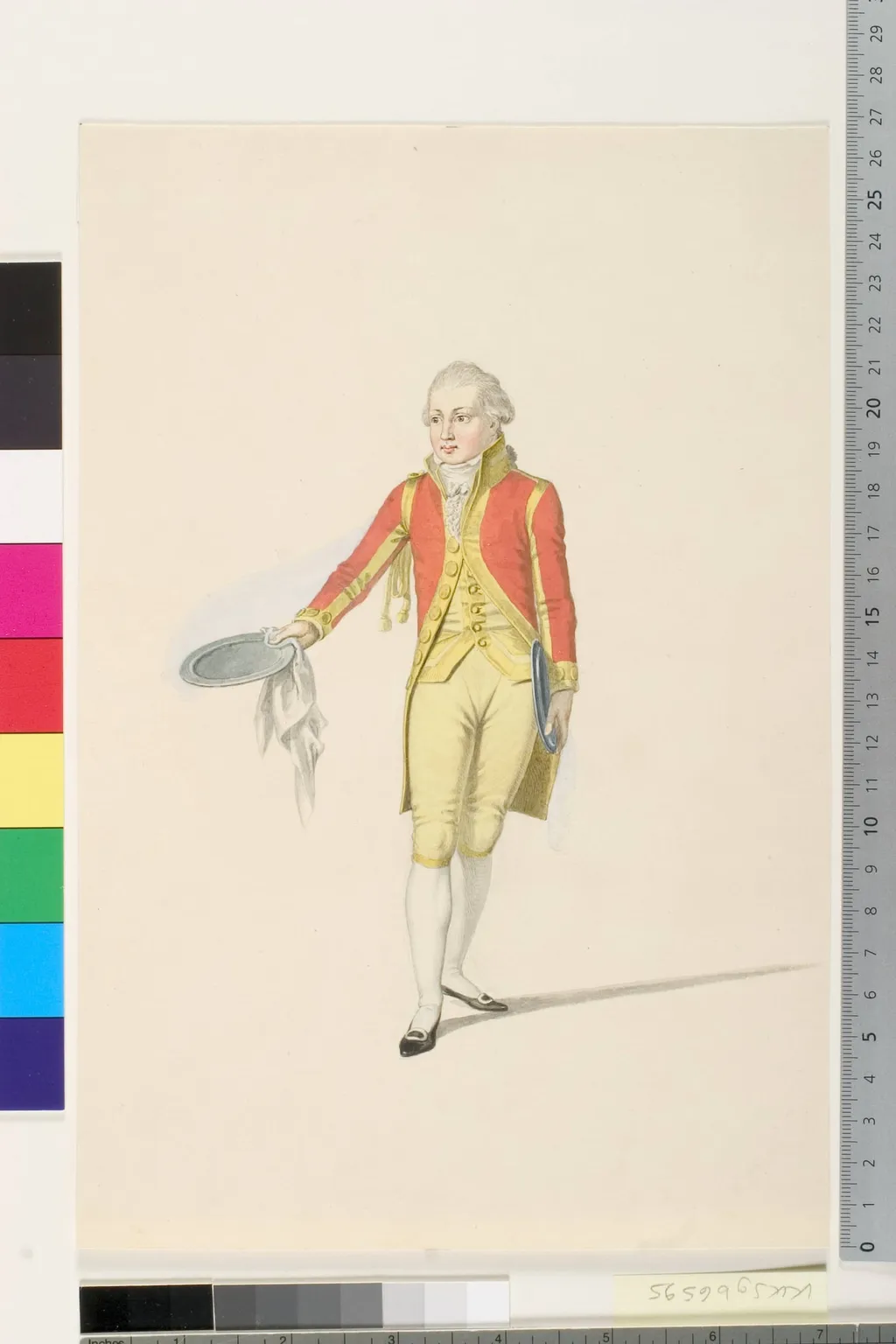
Kongelig lakaj med to tomme bakker is an unspecified painting by the Romanticist artist Unknown. It dates from 1807 and is held in the collection of the Statens Museum for Kunst. Created in 1807 by an artist identified as 3871_person, this image depicts a royal servant dressed in elaborate court attire.
About this work
Overview
Its composition focuses on the figure’s detailed costume against a neutral background, emphasizing social role over narrative context.
Created in 1807 by an artist identified as 3871_person, this image depicts a royal servant dressed in elaborate court attire. The work is part of the collection at the Museum of Ethnography. Its composition focuses on the figure’s detailed costume against a neutral background, emphasizing social role over narrative context. The painting’s formal presentation suggests it may have served as a record of courtly dress or personnel.
Subject & Meaning
The figure is a royal servant, identifiable by his ornate yellow coat with red shoulder pads and gold embroidery. He holds a tray and a folded cloth, indicating his function in ceremonial service. The neatness of his stockings and shoes, along with his restrained hairstyle, conveys discipline and propriety. The attire, though rich, is not that of nobility—its purpose is to signify status within a hierarchical system, not personal power.
Technique & Style
The artist employs precise brushwork to render the textures of fabric, metal trim, and skin. Color is used strategically: the vivid yellow and gold of the coat contrast sharply with the muted background, drawing attention to the figure’s uniform. Lighting is even and untheatrical, avoiding dramatic shadows. The style is observational rather than expressive, aligning with early 19th-century portraiture focused on documentation over emotion.
History & Provenance
The work entered the Museum of Ethnography’s collection as part of a broader effort to document European court culture. Its origin likely lies in a royal household’s visual archive, possibly commissioned to record staff attire. No record of public exhibition prior to its museum acquisition exists. The artist, identified only by a catalog number, remains otherwise undocumented in broader art historical records.
Context
In early 19th-century Europe, royal courts maintained strict visual codes for servants, whose uniforms reflected the prestige of their employers. This painting reflects a period when such roles were increasingly formalized and visually codified. While Romanticism emphasized emotion and individualism, this work belongs to a quieter tradition of institutional portraiture, valuing order and representation over narrative drama.
Legacy
The painting contributes to scholarly understanding of service class representation in European visual culture. It is not widely reproduced or studied outside specialized ethnographic circles, but it remains a useful artifact for examining how social hierarchy was visually communicated. Its preservation underscores the museum’s interest in everyday figures within elite environments, rather than rulers themselves.
Artist & collection

 Domestic Scene
 Giacomo and Cardinal Marco, investing Andrea, Abbot of San Zeno, with his Benefice
 The Nymph of Fontainebleau
 Portrait of a Woman
 Madonna and Child with Saints in the Enclosed Garden
 Venus and Minerva
 Family Group of Four on Sofa
 Wall painting from Room H of the Villa of P. Fannius Synistor at Boscoreale