Artwork
En bindingsværkslænge ved Krabbesholm
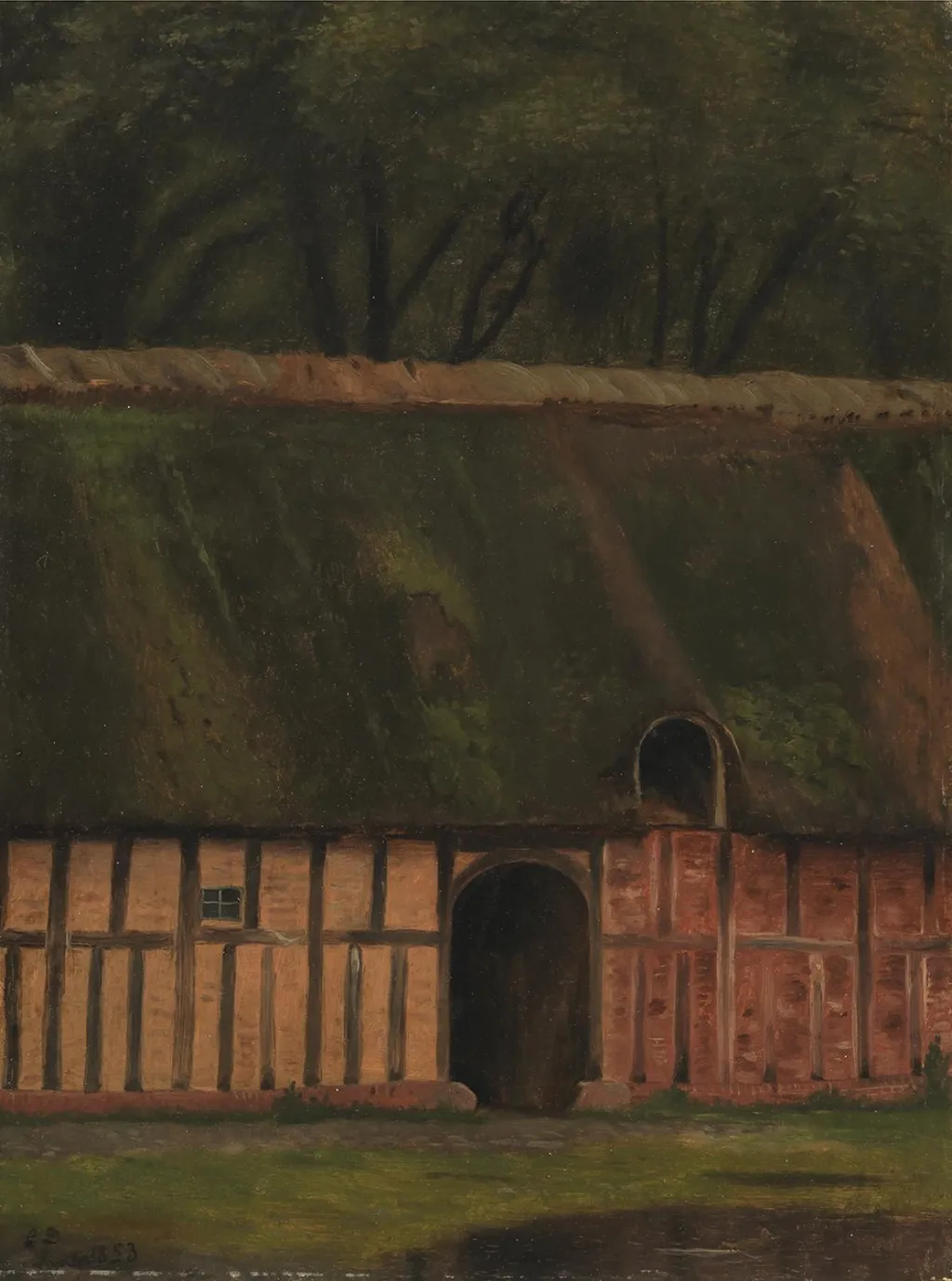
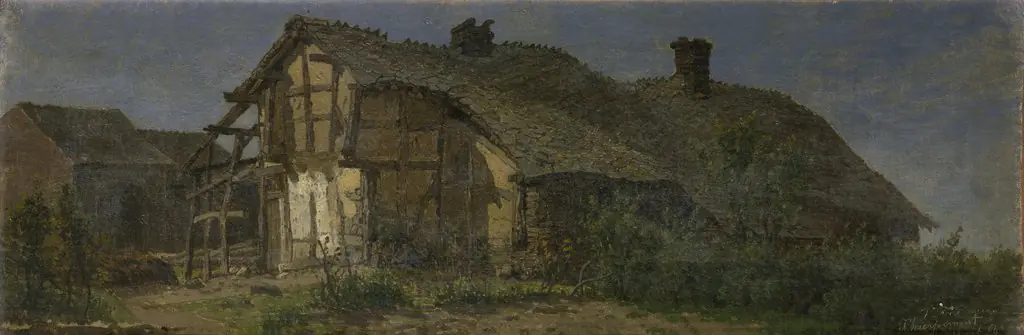
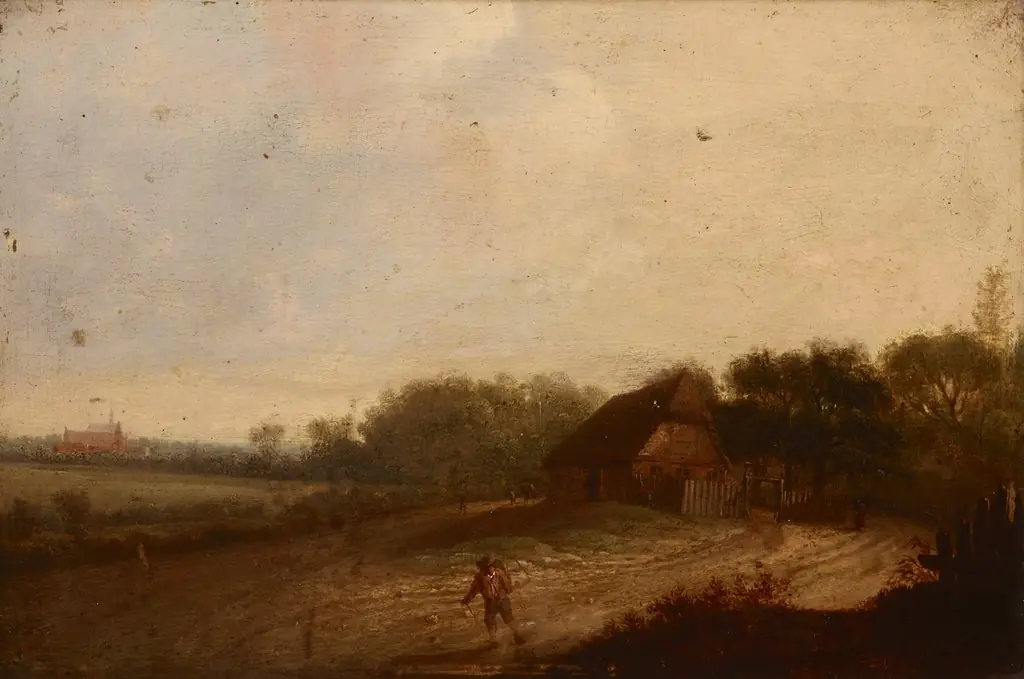
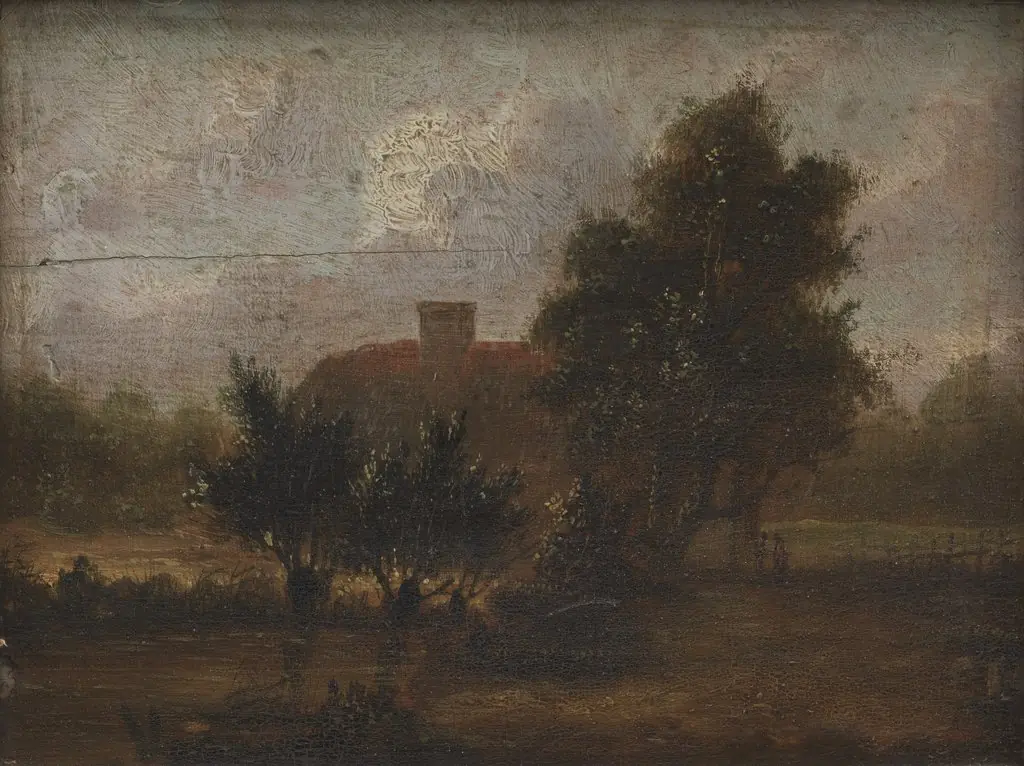
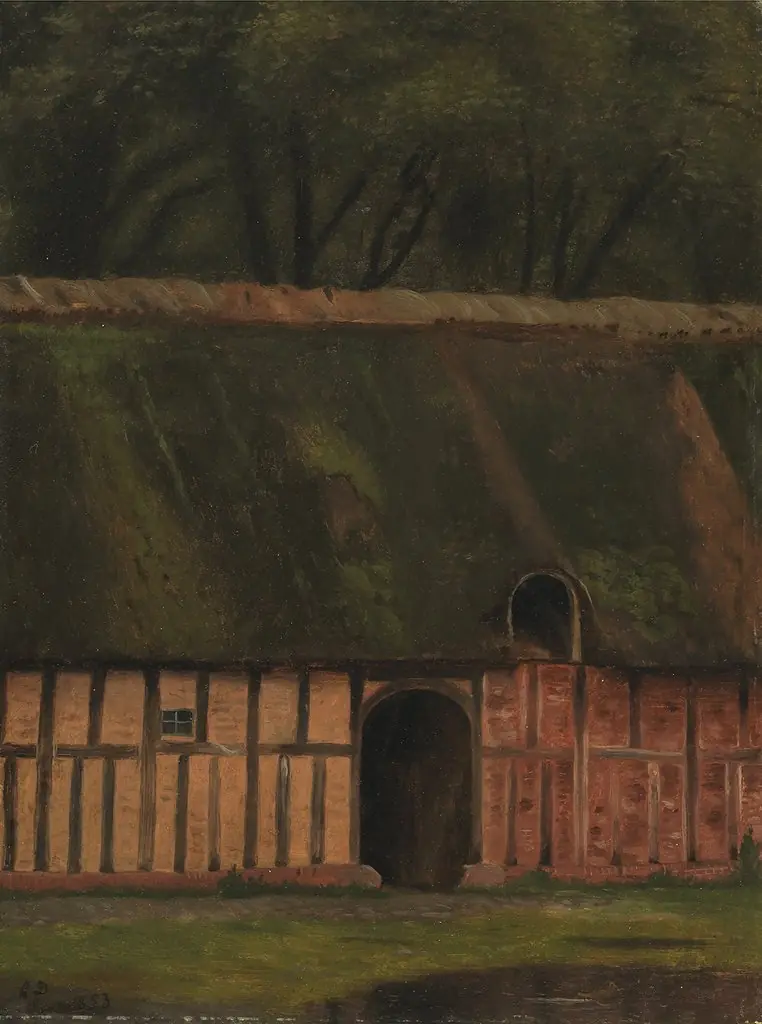
En bindingsværkslænge ved Krabbesholm is a photography by the Impressionist artist Unknown. It dates from 1853 and is held in the collection of the Statens Museum for Kunst. Painted in 1853, this work depicts a rural structure in Krabbesholm, Denmark, rendered in muted tones and subtle contrasts.
About this work
Overview
The artist captures a modest wooden building with vertical planking and a thick thatched roof, set against a dense, shadowed woodland.
Painted in 1853, this work depicts a rural structure in Krabbesholm, Denmark, rendered in muted tones and subtle contrasts. The artist captures a modest wooden building with vertical planking and a thick thatched roof, set against a dense, shadowed woodland. The composition emphasizes stillness and isolation, with minimal detail suggesting a quiet, unoccupied space. It resides in the Museum of Ethnography, where it contributes to records of vernacular architecture.
Subject & Meaning
The building, likely a storage shed or farmhouse outbuilding, reflects everyday rural life in mid-19th century Denmark. Its worn planks and closed windows suggest neglect or seasonal abandonment. The surrounding forest, looming and indistinct, frames the structure as a fragile human presence within nature. The absence of figures or activity invites contemplation of solitude and the passage of time in remote agricultural settings.
Technique & Style
The artist employs chiaroscuro to model form through soft gradations of light and shadow, avoiding sharp outlines. Vertical brushwork defines the weathered planks, while the roof merges into the forest through blurred edges and tonal harmony. The window’s faint glow implies interior darkness, reinforcing the scene’s quietude. Palette is restrained—ochres, grays, and deep greens—enhancing the somber, atmospheric mood without dramatic contrast.
History & Provenance
Created in 1853, the painting entered the collection of the Museum of Ethnography, where it was preserved as a record of regional building practices. Its origin as a study of vernacular architecture suggests it was not commissioned for public display but rather documented for scholarly or cultural purposes. No record of prior ownership or exhibition exists beyond its institutional acquisition.
Context
In mid-19th century Denmark, interest grew in documenting traditional rural life amid industrialization. Artists and ethnographers began recording vernacular structures before they disappeared. This painting aligns with that movement, offering a quiet, unidealized view of agricultural architecture. It reflects a broader European trend of observing the everyday as culturally significant, rather than merely picturesque.
Legacy
Though not widely exhibited, the work remains a quiet reference in studies of Danish rural architecture and 19th-century observational painting. Its restrained aesthetic influenced later ethnographic documentation, emphasizing accuracy over sentiment. It endures not as a celebrated image, but as a precise, unembellished record of a vanishing built environment.
Artist & collection

 Domestic Scene
 Giacomo and Cardinal Marco, investing Andrea, Abbot of San Zeno, with his Benefice
 The Nymph of Fontainebleau
 Portrait of a Woman
 Madonna and Child with Saints in the Enclosed Garden
 Venus and Minerva
 Family Group of Four on Sofa
 Wall painting from Room H of the Villa of P. Fannius Synistor at Boscoreale