Artwork
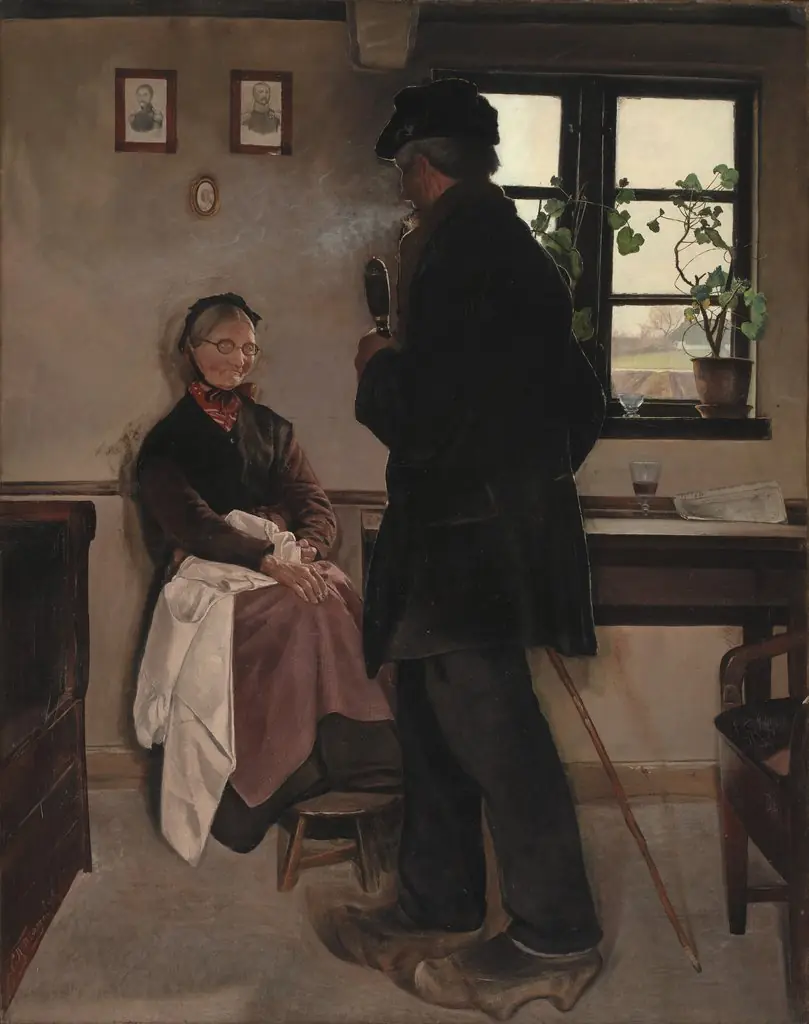
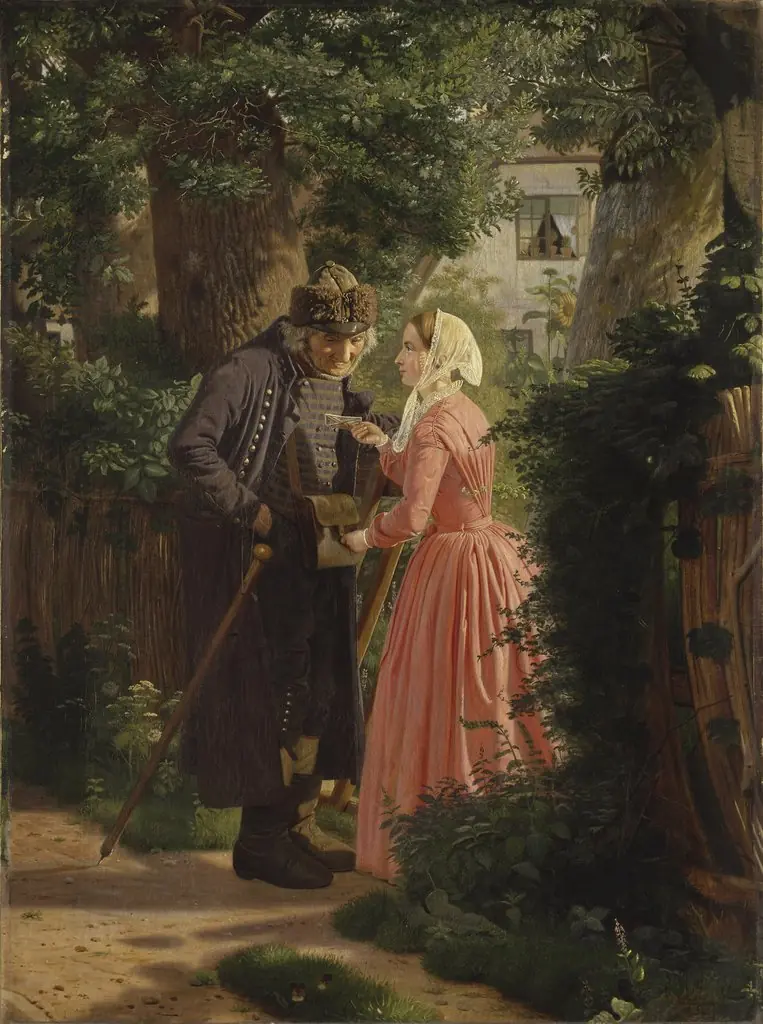
En ung pige beder landsbyens gamle postbud besørge et brev
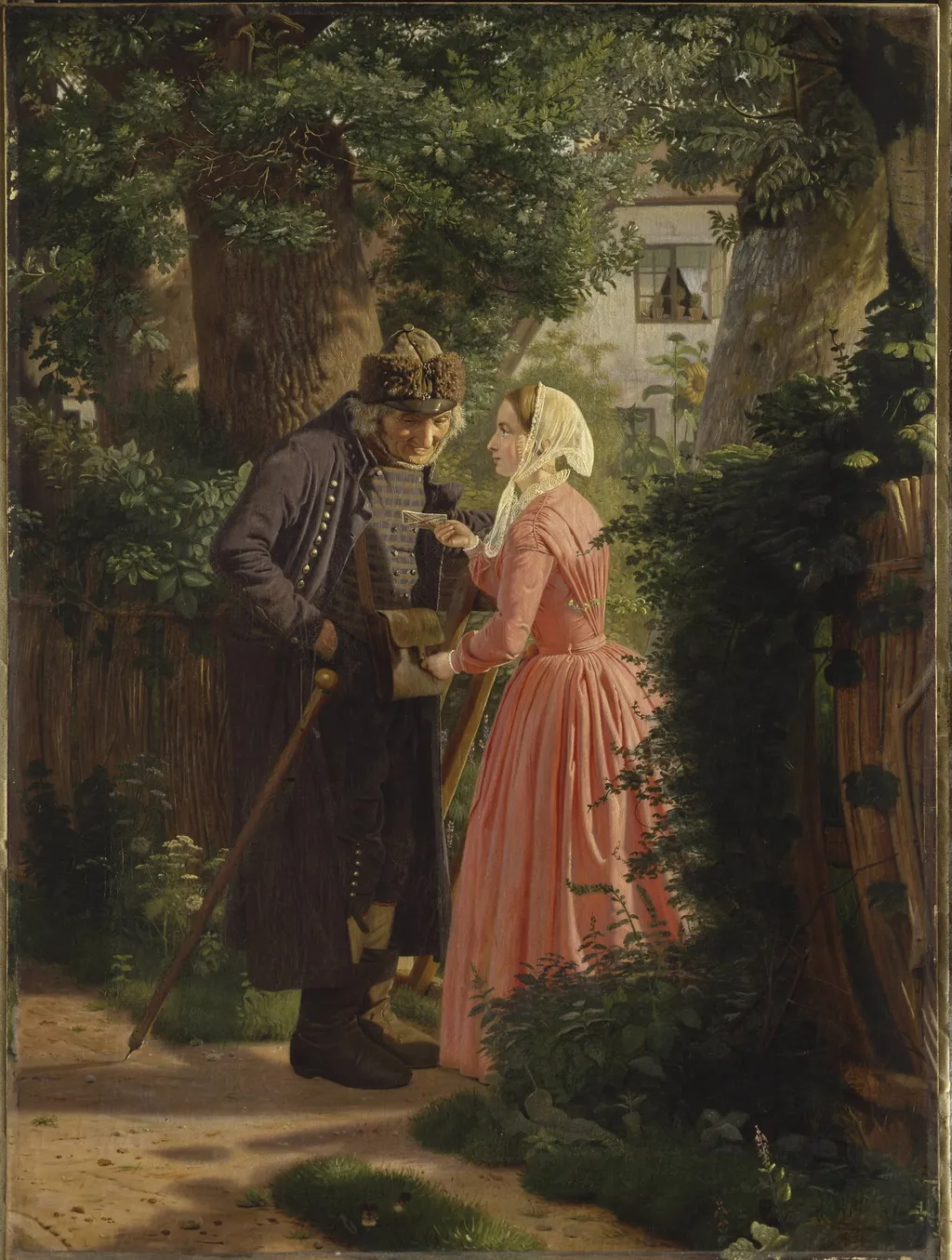
En ung pige beder landsbyens gamle postbud besørge et brev is a photography by the Impressionist artist Unknown. It dates from 1858 and is held in the collection of the Statens Museum for Kunst. Painted in 1858 by 427_person, this work depicts a quiet moment between a young woman and an elderly village postman.
About this work
Overview
Painted in 1858 by 427_person, this work depicts a quiet moment between a young woman and an elderly village postman. The scene unfolds in a shaded garden, capturing a simple, everyday interaction. It is held in the collection of the Museum of Ethnography, where it is valued for its unembellished portrayal of rural life in mid-19th-century Denmark.
Subject & Meaning
Her posture and the folded paper suggest urgency or intimacy, while the postman’s attentive stance implies quiet consent.
The painting portrays a young woman requesting the postman to deliver a letter. Her posture and the folded paper suggest urgency or intimacy, while the postman’s attentive stance implies quiet consent. The act of mailing a letter, a rare and deliberate gesture in rural communities, hints at personal connection beyond the village’s immediate circle, subtly underscoring themes of communication and isolation.
Technique & Style
The artist employs soft, naturalistic lighting to filter through dense foliage, creating a subdued, intimate atmosphere. Details in fabric—lace at the woman’s wrists and neck, the texture of the man’s fur hat and coat—are rendered with careful observation. The composition avoids theatricality, favoring stillness and spatial depth, aligning with the principles of Realism in its focus on ordinary life.
History & Provenance
Created in 1858, the work entered the Museum of Ethnography’s collection shortly after its completion. Its preservation suggests early recognition of its cultural significance. No major exhibitions or transfers are documented, and it has remained in the museum’s care since, reflecting its role as a quiet record of domestic and social customs rather than a public spectacle.
Context
In mid-19th-century Denmark, postal services were limited in rural areas, making the postman a vital link to the outside world. Letters often carried personal news, legal matters, or emotional weight. This scene reflects a time when such exchanges were infrequent and deliberate, revealing how communication shaped social bonds in isolated communities.
Legacy
The painting contributes to a broader 19th-century shift toward depicting everyday rural life with dignity and precision. Though not widely reproduced, it remains a reference point in studies of Danish Realism and ethnographic art, valued for its restraint and attention to the quiet rhythms of provincial existence.
Artist & collection

 Domestic Scene
 Giacomo and Cardinal Marco, investing Andrea, Abbot of San Zeno, with his Benefice
 The Nymph of Fontainebleau
 Portrait of a Woman
 Madonna and Child with Saints in the Enclosed Garden
 Venus and Minerva
 Family Group of Four on Sofa
 Wall painting from Room H of the Villa of P. Fannius Synistor at Boscoreale
 Pigen, der fanges i nettet
 Pigen, der fanges i nettet
 The Poultryman
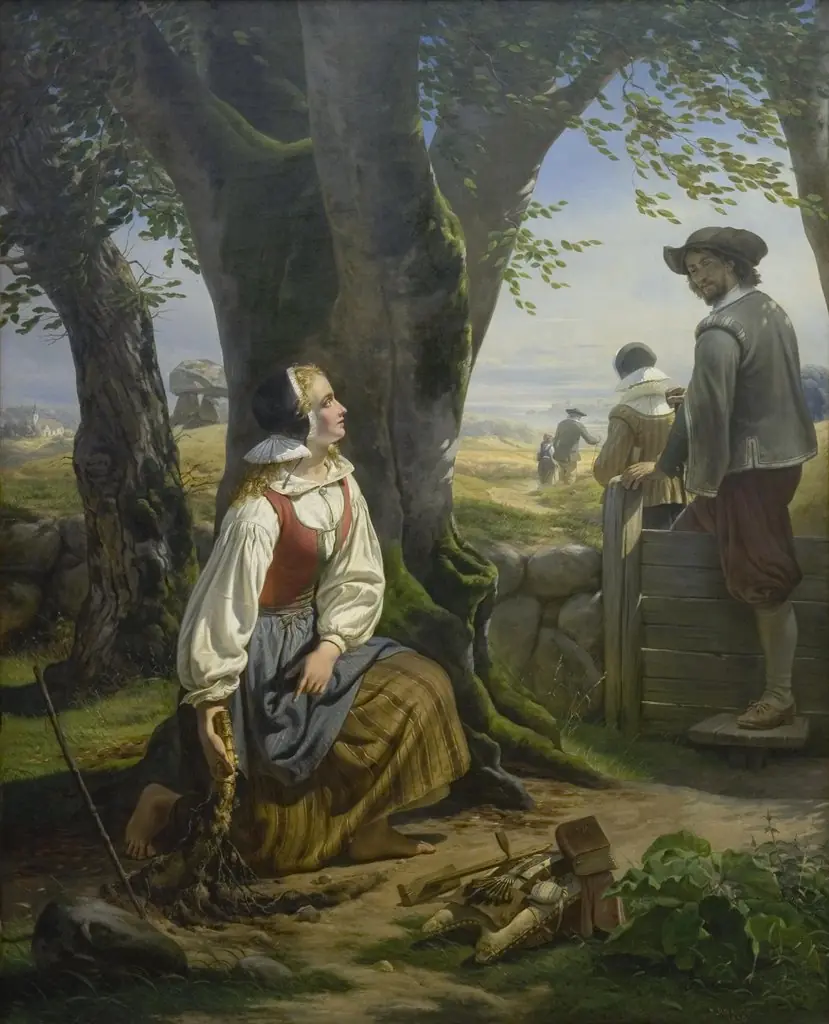 Kirsten Svendsdatter Finds the Gold Horn at Gallehus on 20 July 1639
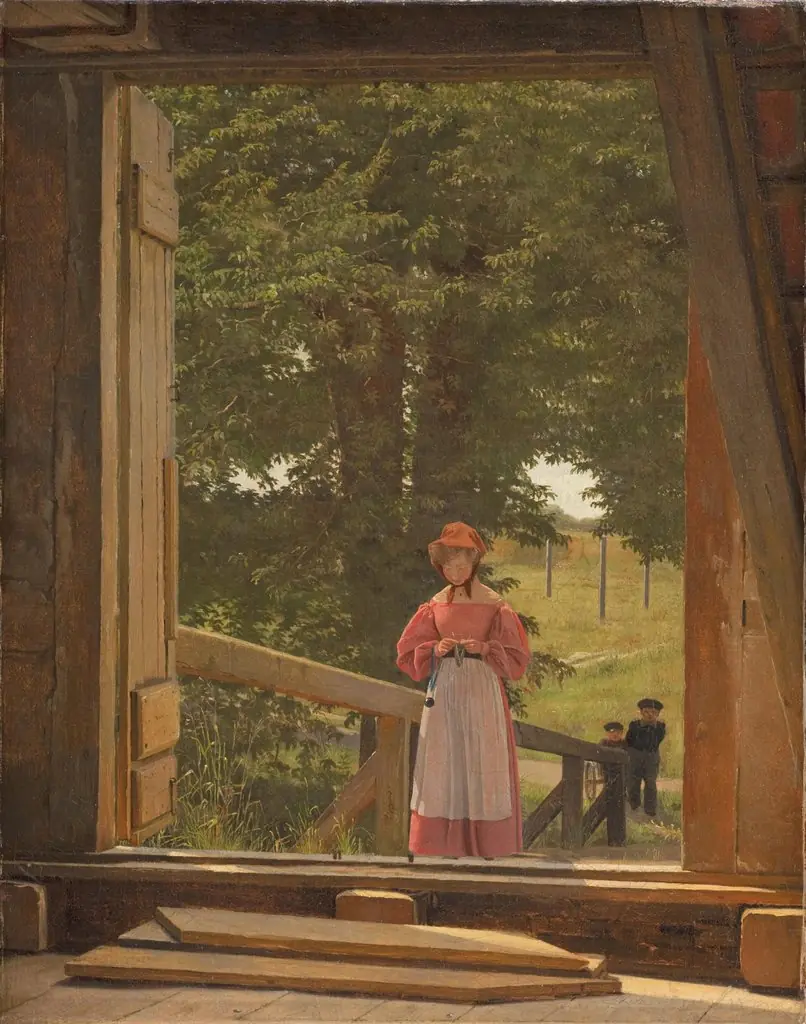 View from the Loft of the Grain Store at the Bakery in the Citadel of Copenhagen
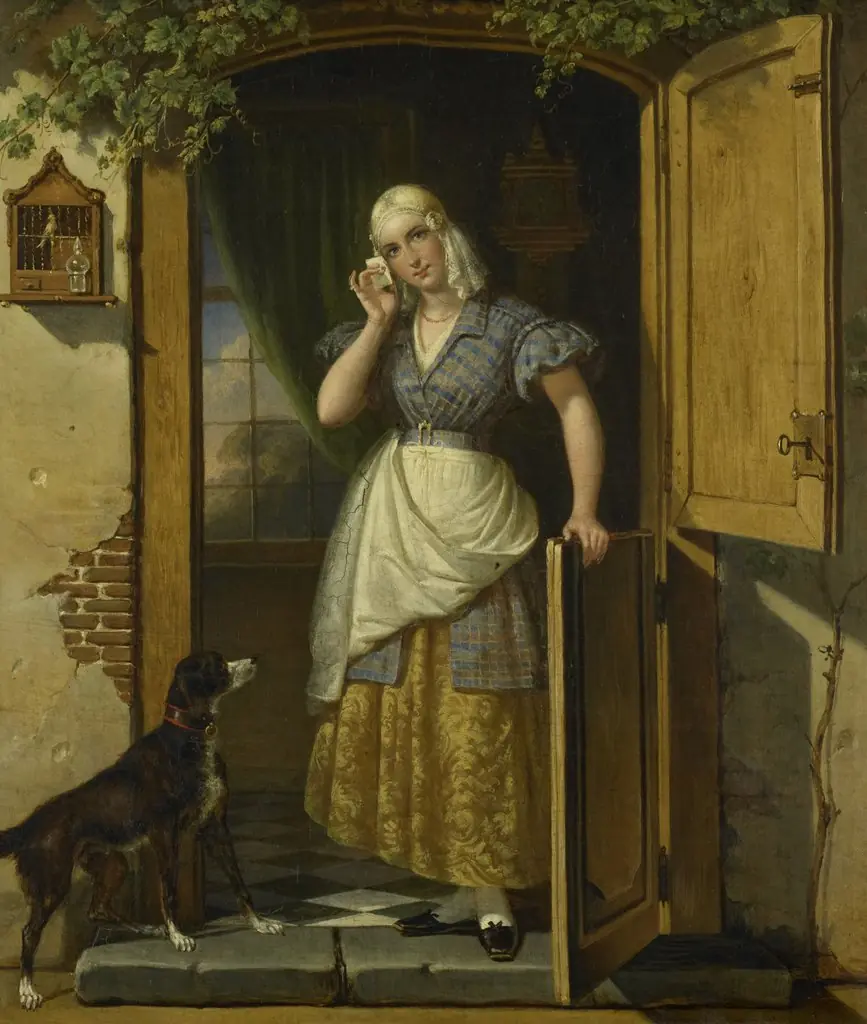 Love Note
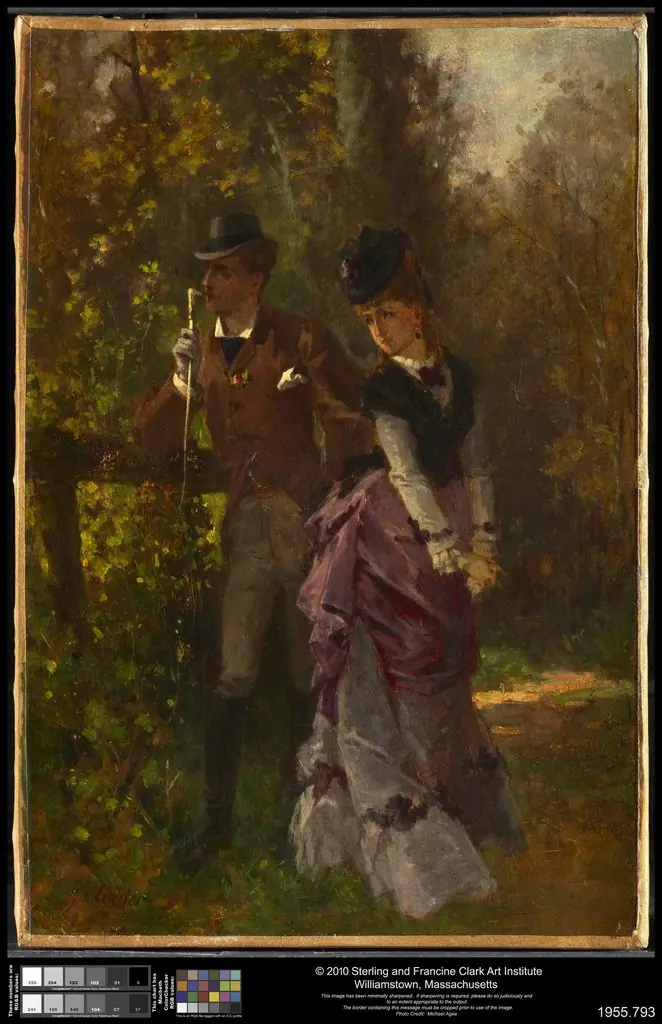 Autumn
 Love Note
 Small-Holders. Zealand
 Faust und Gretchen im 19. Jahrhundert
 Crossing the Border
 En ung pige beder landsbyens gamle postbud besørge et brev