Artwork
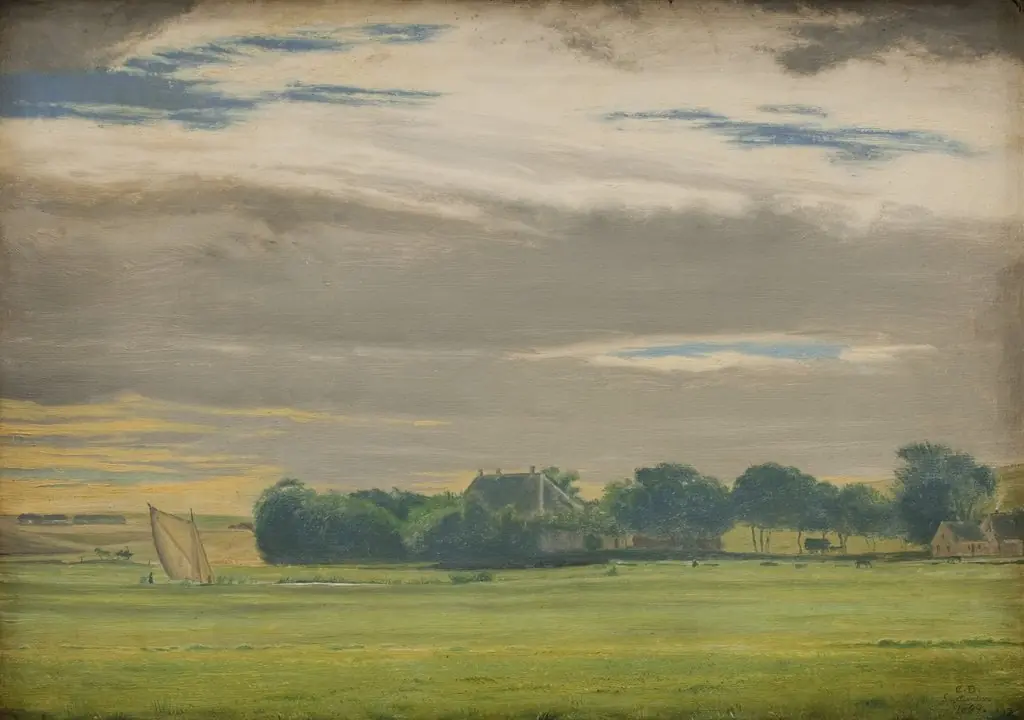
Landscape near the Town of Skive with Skivehus Manor, Jutland
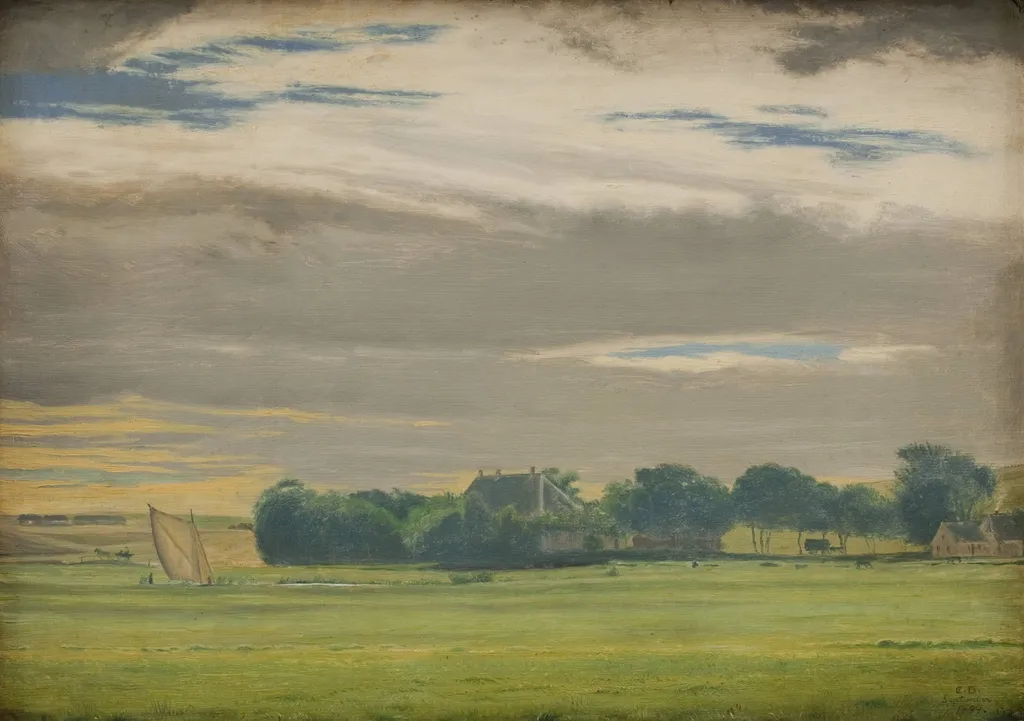
Landscape near the Town of Skive with Skivehus Manor, Jutland is an unspecified painting by the Barbizon school artist Unknown. It dates from 1849 and is held in the collection of the Statens Museum for Kunst. Painted in 1849, this landscape depicts the rural surroundings of Skive in Jutland, Denmark, with Skivehus Manor visible in the distance.
About this work
Overview
Painted in 1849, this landscape depicts the rural surroundings of Skive in Jutland, Denmark, with Skivehus Manor visible in the distance.
Painted in 1849, this landscape depicts the rural surroundings of Skive in Jutland, Denmark, with Skivehus Manor visible in the distance. The work is attributed to an artist identified as 427_person and is currently held in the collection of the Museum of Ethnography. Its quiet composition and subdued palette reflect a contemplative approach to the Danish countryside during the mid-nineteenth century.
Subject & Meaning
The scene presents an unassuming stretch of farmland, with a cluster of modest buildings and a sailboat resting near the water’s edge. There is no human activity depicted, emphasizing stillness and solitude. The inclusion of the manor suggests a connection to local landownership, yet the focus remains on the land itself—offering a quiet meditation on place rather than narrative or symbolism.
Technique & Style
The artist employed light, fluid brushwork to render the sky, creating a sense of atmospheric movement through soft gradients of blue and yellow. The foreground fields are rendered with gentle, textured strokes that suggest grass without detailed definition. The overall effect is one of delicacy and tranquility, avoiding sharp contours in favor of blended tones that evoke a hazy, contemplative mood.
History & Provenance
The painting entered the collection of the Museum of Ethnography shortly after its creation, though its early ownership history is not well documented. Its presence in an ethnographic institution, rather than a fine arts museum, may reflect contemporary interest in regional landscapes as cultural records rather than purely aesthetic objects.
Context
Created during a period when Danish artists were increasingly turning to local scenery, this work aligns with a broader national trend of documenting rural life and topography. While not overtly political, such landscapes contributed to a growing sense of regional identity, often influenced by Romantic ideals of nature as a source of quiet reverence.
Legacy
Though not widely exhibited outside Denmark, the painting remains a representative example of mid-nineteenth-century Danish landscape painting. Its restrained style and focus on everyday scenery offer insight into how local artists engaged with their environment, contributing to a quieter, more introspective strand of Nordic art history.
Artist & collection

 Domestic Scene
 Giacomo and Cardinal Marco, investing Andrea, Abbot of San Zeno, with his Benefice
 The Nymph of Fontainebleau
 Portrait of a Woman
 Madonna and Child with Saints in the Enclosed Garden
 Venus and Minerva
 Family Group of Four on Sofa
 Wall painting from Room H of the Villa of P. Fannius Synistor at Boscoreale
 Landscape with a Cottage beside a Pond
 Sommerdag ved Bisholt
 Engene ved Dortheaslyst
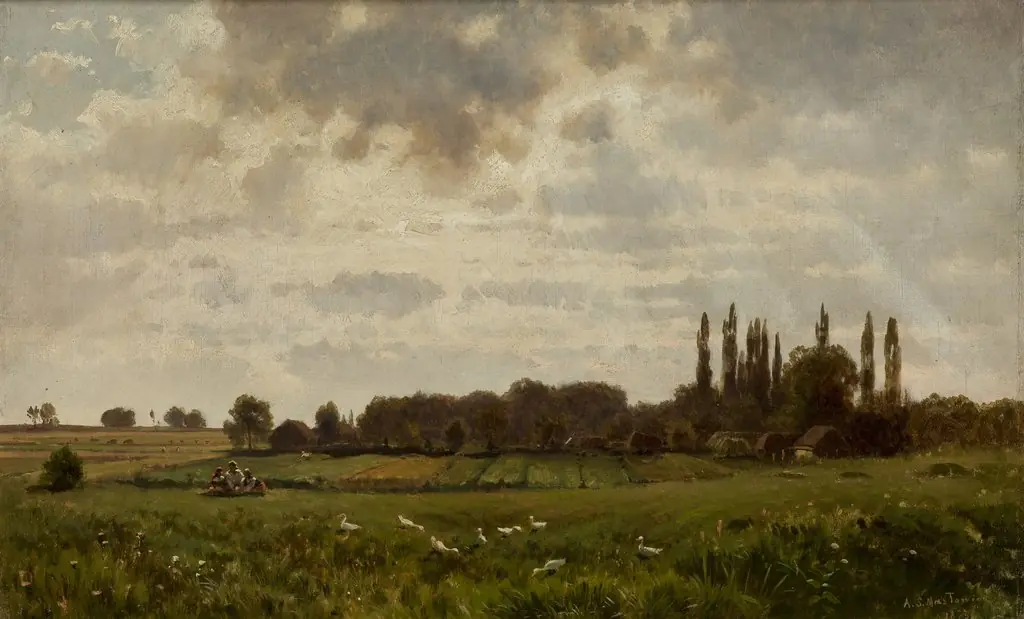 Village Masłowice
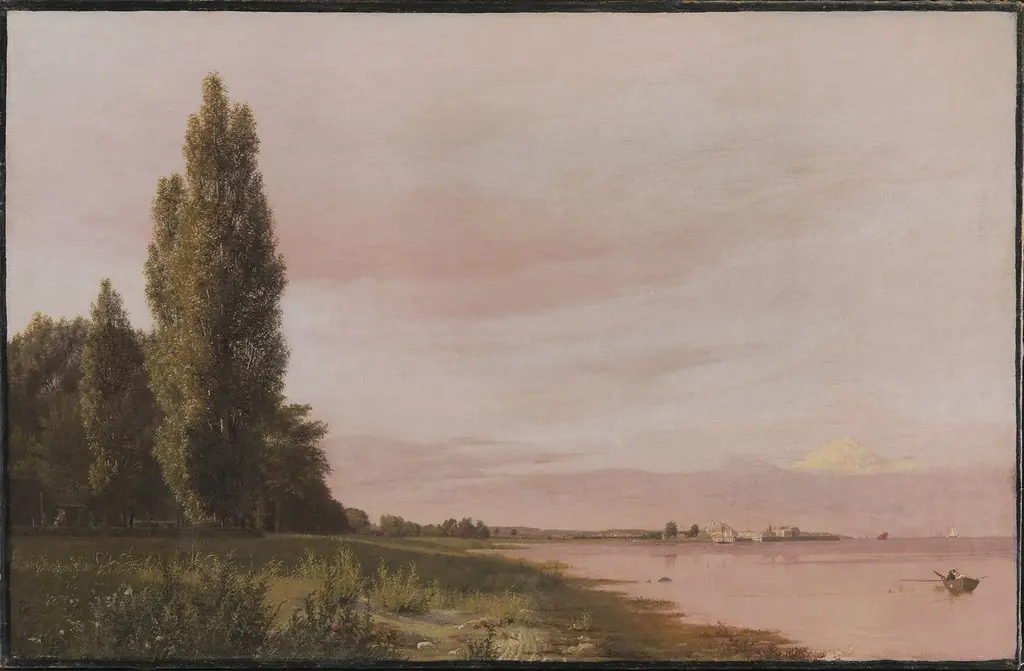 View of the Bay near the Copenhagen Limekiln Looking North. A Quiet Summer Afternoon
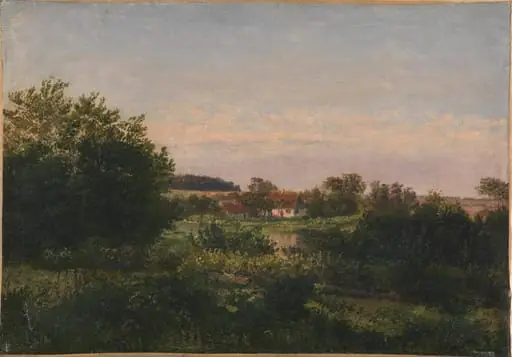 Landscape with a Cottage beside a Pond
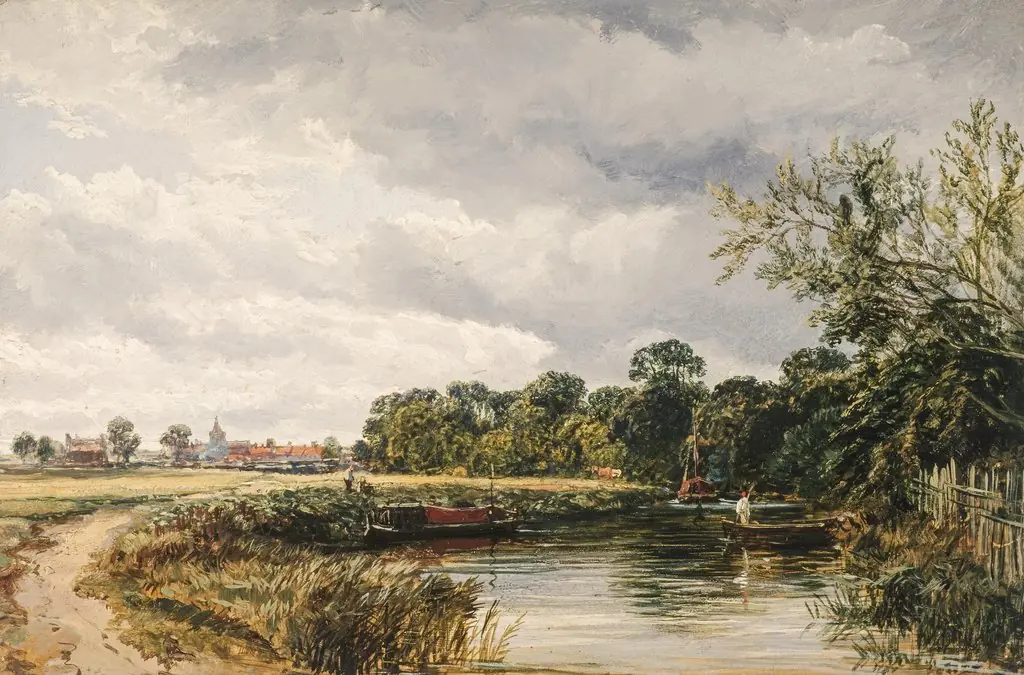 An English Canal Scene
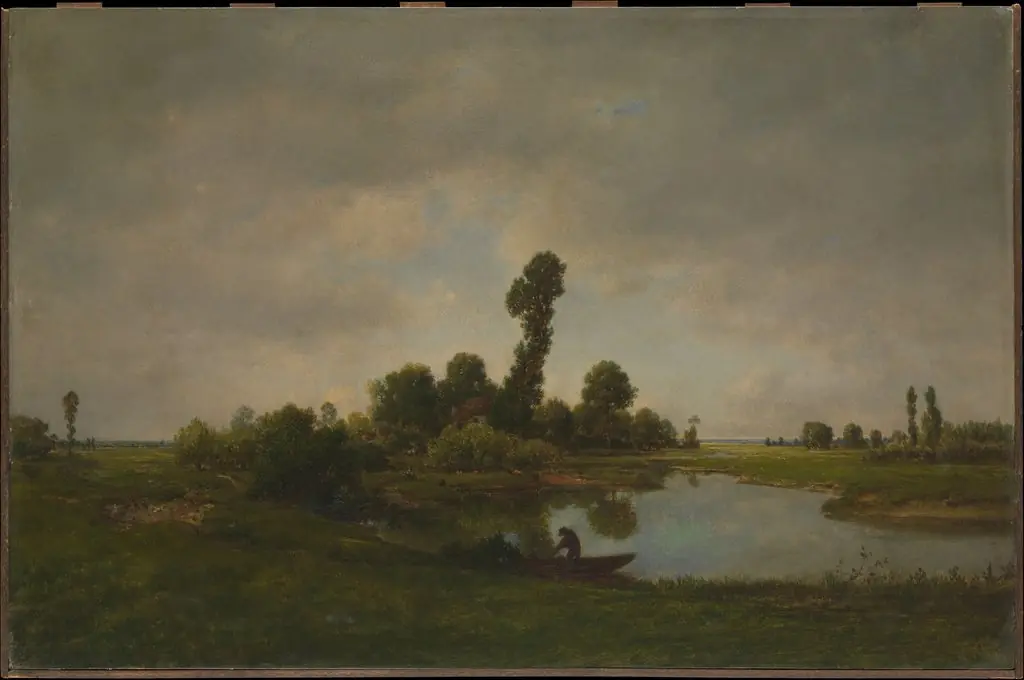 A River Landscape
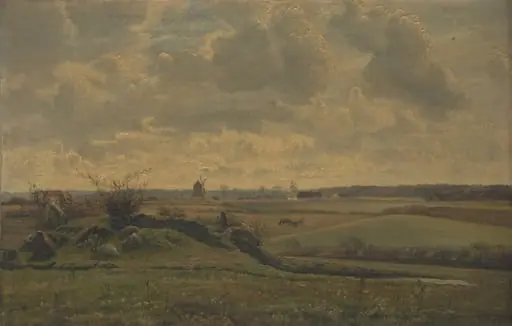 Landskab ved Gyrstinge
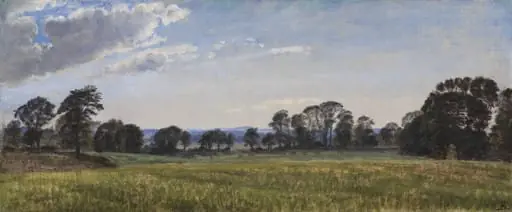 Engene ved Dortheaslyst
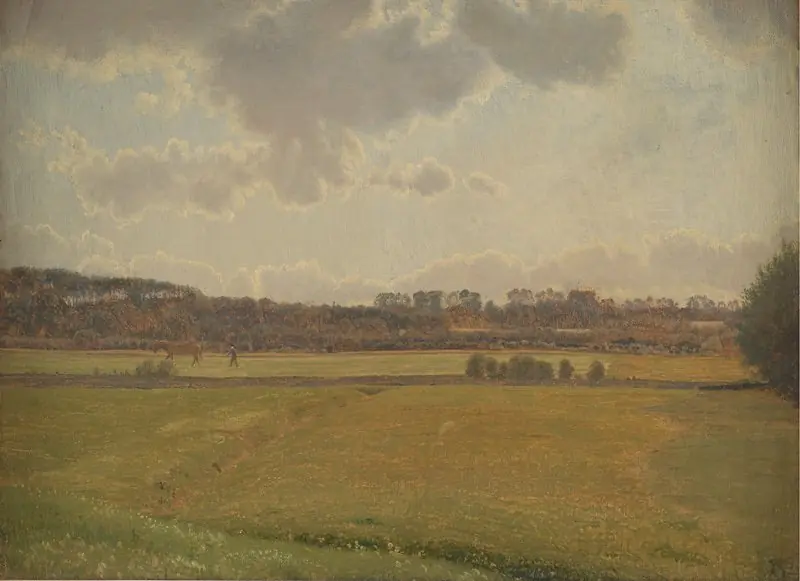 Sommerdag ved Bisholt
 Landscape near the Town of Skive with Skivehus Manor, Jutland