Artwork
Landscape (in the Barbizon district?)
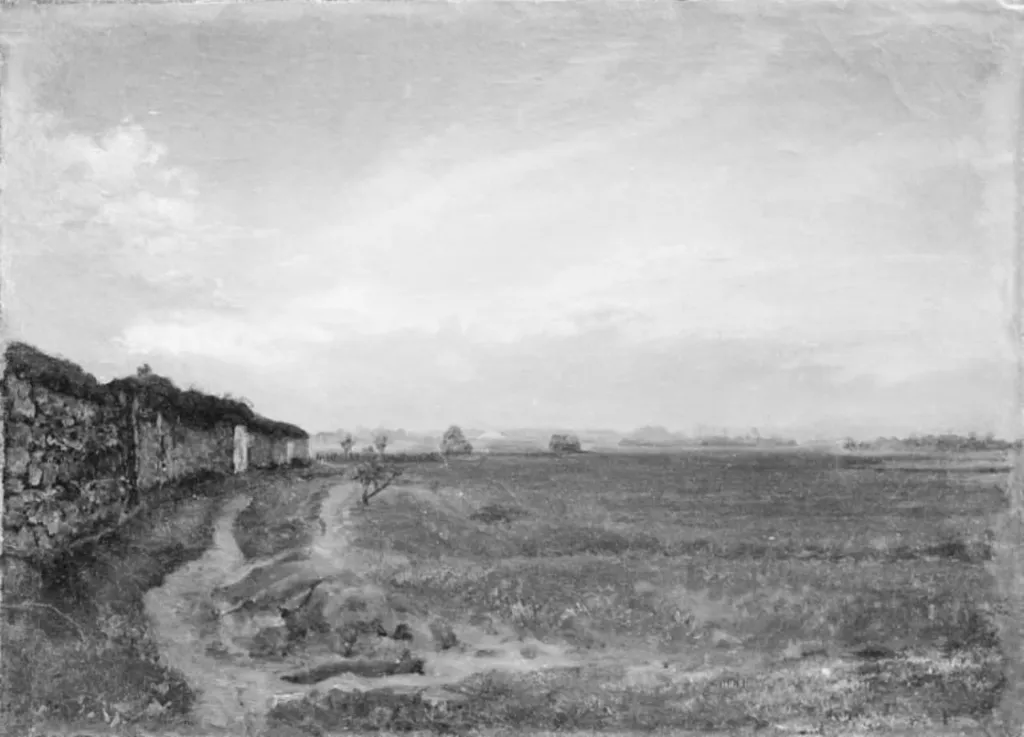
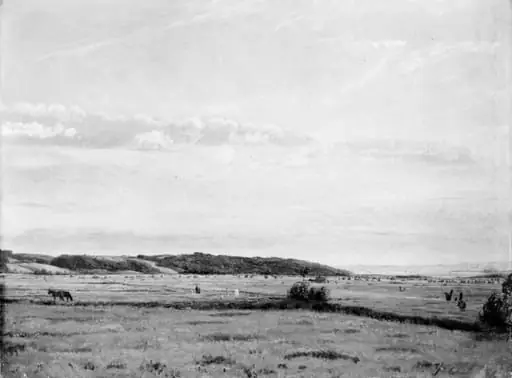
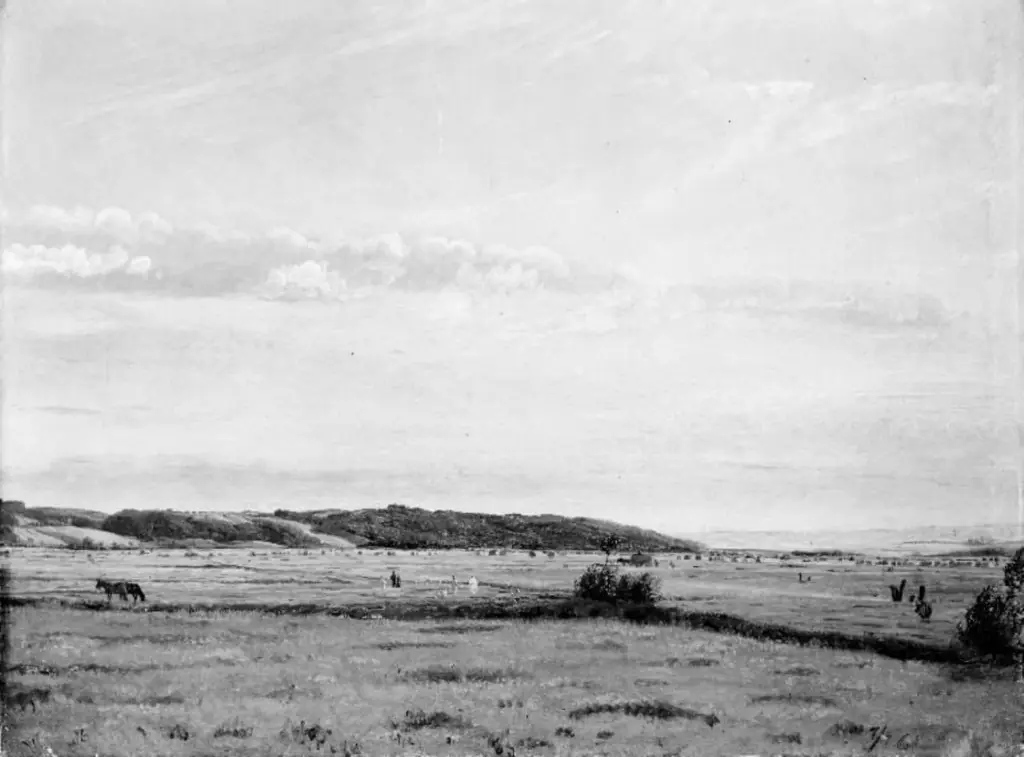
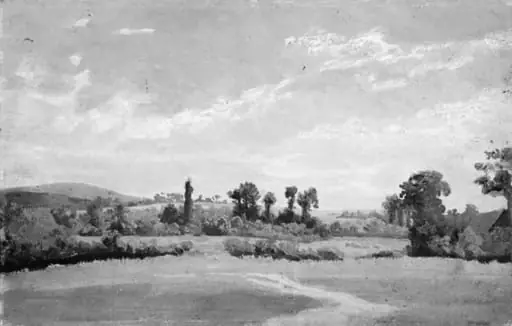
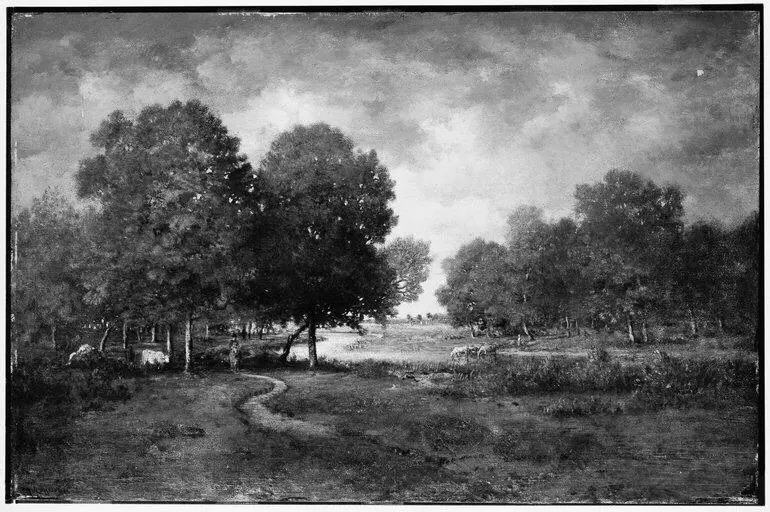
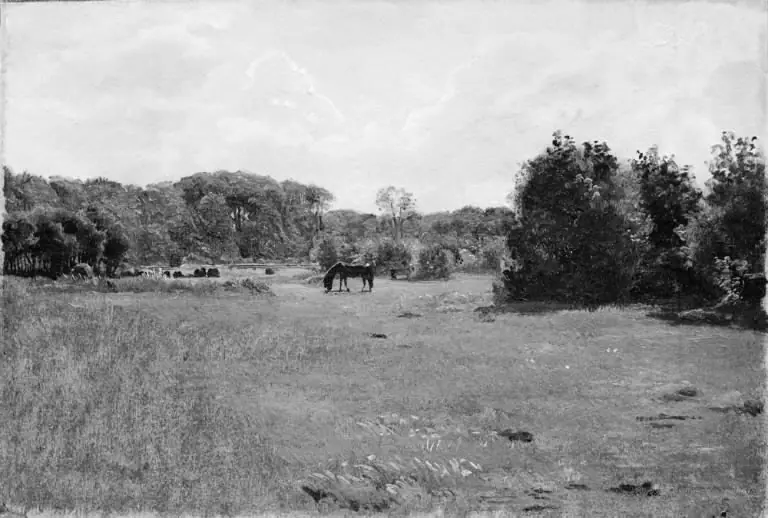
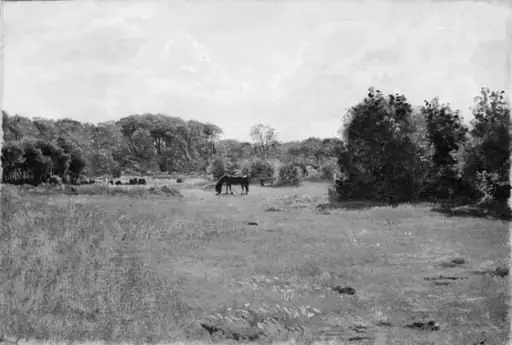
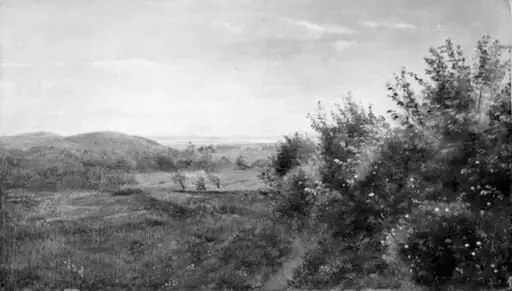
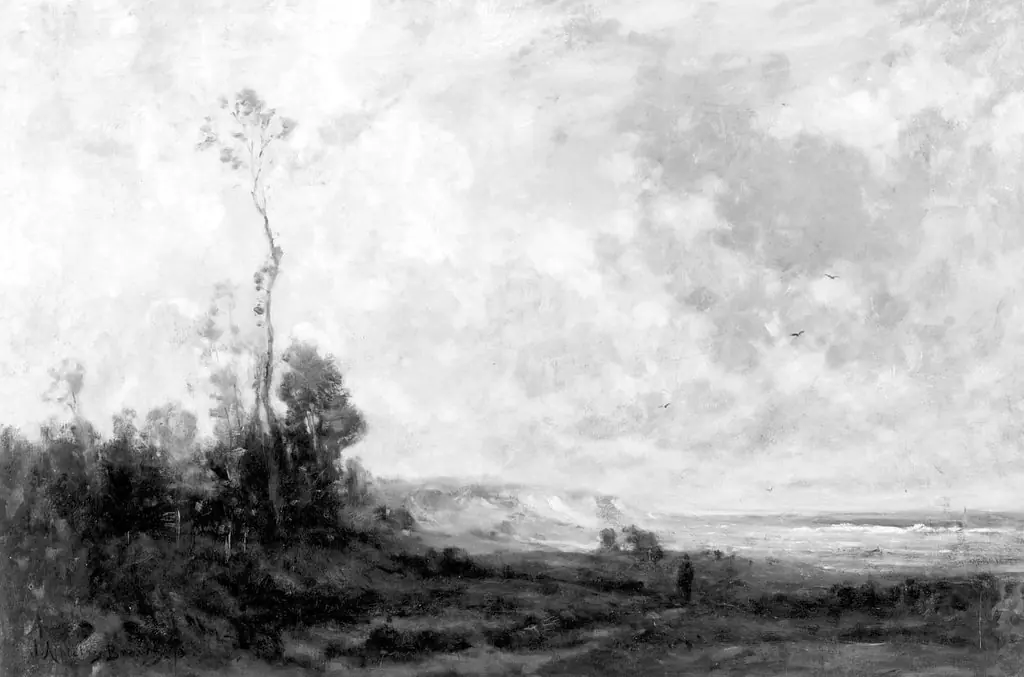
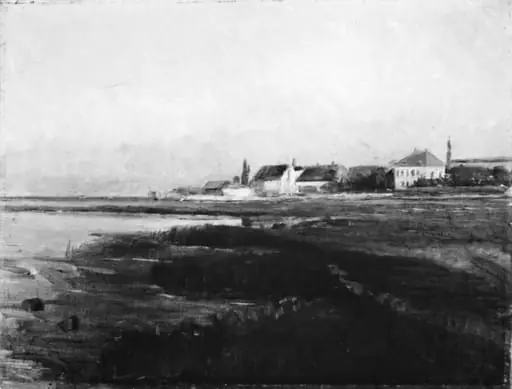
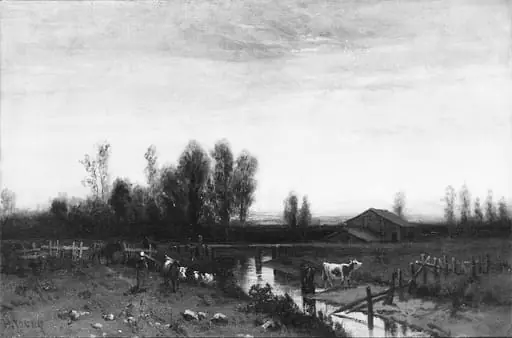
Landscape (in the Barbizon district?) is an unspecified painting by Unknown. It dates from 1850 and is held in the collection of the Statens Museum for Kunst. This landscape, dated around 1850, depicts a quiet rural scene in the Barbizon region.
About this work
Overview
Its subdued palette and tactile surface reflect a deliberate focus on natural quietude rather than scenic grandeur.
This landscape, dated around 1850, depicts a quiet rural scene in the Barbizon region. Executed in oil, it captures an unadorned stretch of countryside with minimal human presence. The work is part of the collection at the Museum of Ethnography, though its exact attribution remains uncertain. Its subdued palette and tactile surface reflect a deliberate focus on natural quietude rather than scenic grandeur.
Subject & Meaning
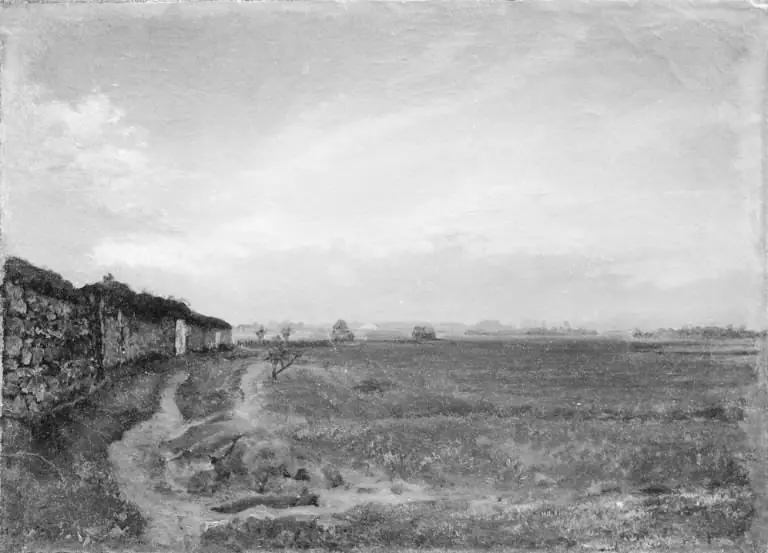
The painting presents an unidealized view of rural France: a narrow dirt path winds through an open field, flanked by a weathered stone wall and a small, dilapidated structure. Bare trees line the horizon, their skeletal forms blending into a pale, overcast sky. There is no narrative or symbolic flourish—only the quiet persistence of land and structure, suggesting a meditation on time, decay, and the rhythms of agricultural life.
Technique & Style
Thick, textured brushwork defines the grasses and path, employing impasto to convey the physicality of the earth. The sky and distant trees are rendered with soft, blended strokes, creating a hazy atmosphere. Colors are restrained—ochres, grays, and muted greens dominate—avoiding contrast or vibrancy. The composition favors horizontal stability, with no focal point, reinforcing the scene’s uneventful, contemplative tone.
History & Provenance
The painting’s origin is tied to the Barbizon school’s circle, though its authorship is not definitively recorded. It entered the Museum of Ethnography’s holdings in the early 20th century, likely as part of a broader collection of regional vernacular art. Its classification as an ethnographic object, rather than fine art, reflects early museum practices that valued cultural documentation over artistic prestige.
Context
Created during the mid-19th century, this work aligns with the Barbizon painters’ shift away from romanticized landscapes toward direct observation of rural life. Artists in this group rejected academic idealism, instead embracing the ordinary terrain around their village studios. This painting’s quiet realism resonates with broader European trends favoring authenticity over spectacle in the visual arts.
Legacy
Though not widely exhibited or studied, the painting contributes to the understanding of how rural scenes were recorded outside formal artistic institutions. Its inclusion in an ethnographic museum underscores how early collectors viewed such works as cultural artifacts rather than aesthetic achievements. It remains a quiet testament to the value placed on unembellished observation in 19th-century landscape practice.
Artist & collection

 Domestic Scene
 Giacomo and Cardinal Marco, investing Andrea, Abbot of San Zeno, with his Benefice
 The Nymph of Fontainebleau
 Portrait of a Woman
 Madonna and Child with Saints in the Enclosed Garden
 Venus and Minerva
 Family Group of Four on Sofa
 Wall painting from Room H of the Villa of P. Fannius Synistor at Boscoreale