Artwork
Landscape near Holmstrup, Zealand
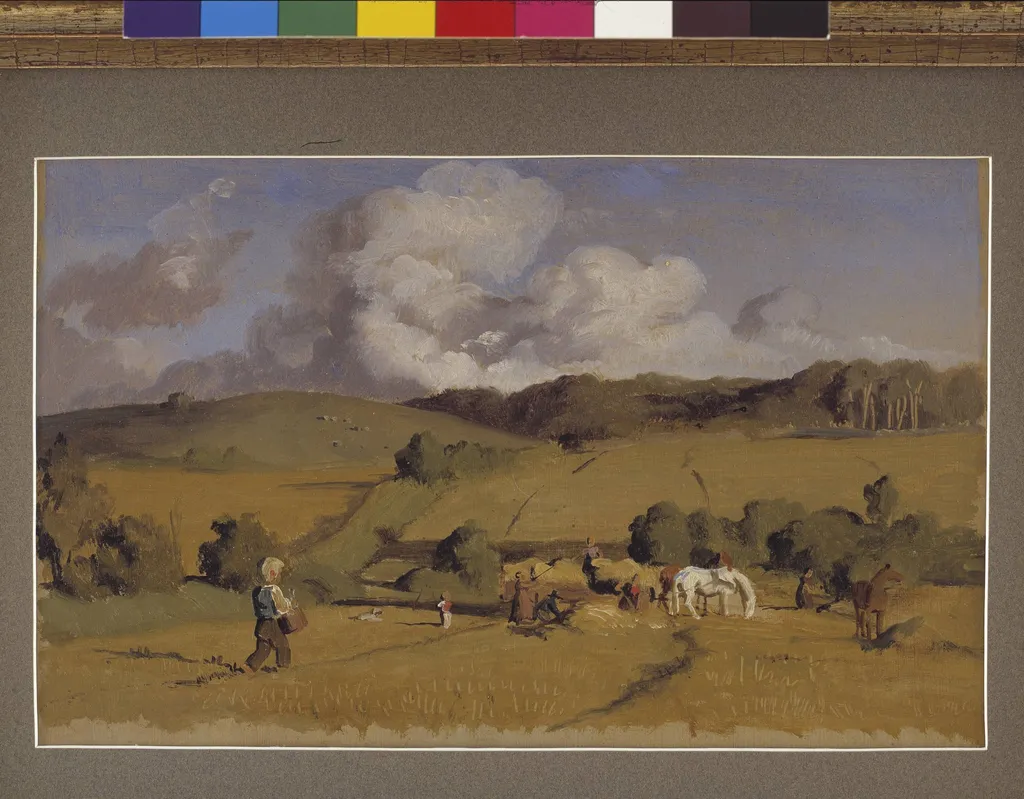
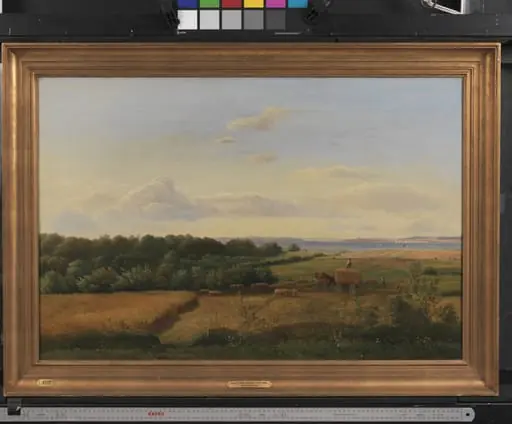
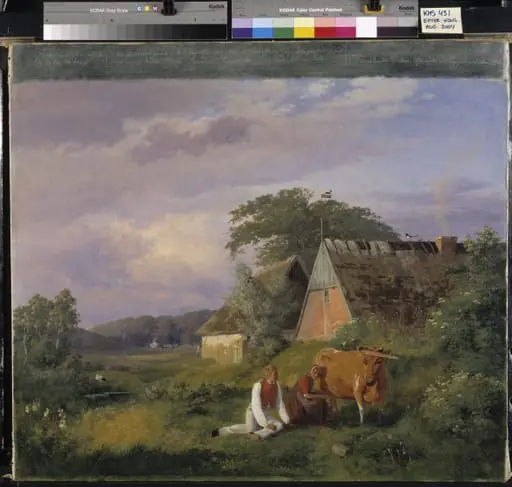
Landscape near Holmstrup, Zealand is an unspecified painting by the Barbizon school artist Unknown. It dates from 1845 and is held in the collection of the Statens Museum for Kunst. Painted in 1845, this landscape depicts a rural scene near Holmstrup on the Danish island of Zealand.
About this work
Overview
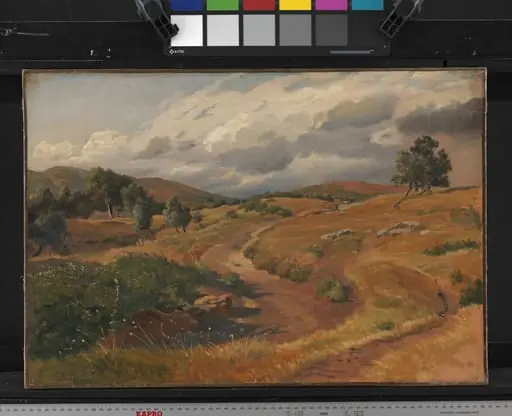
Painted in 1845, this landscape depicts a rural scene near Holmstrup on the Danish island of Zealand. The work captures a moment of quiet labor beneath an expansive, shifting sky. Though currently held by the Museum of Ethnography, its subject is secular and rooted in the Danish countryside, reflecting a broader 19th-century interest in everyday rural life rather than ethnographic documentation.
Subject & Meaning
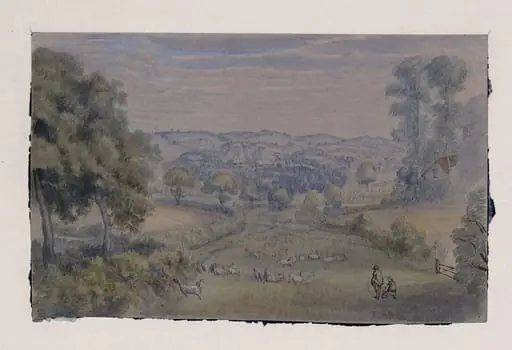
The painting portrays peasants gathering hay under a turbulent sky, their small figures emphasizing the scale of the land. A solitary figure near the fence suggests contemplation or pause amid labor. The scene conveys no overt narrative, but the interplay between human effort and the forces of nature implies a quiet reverence for the rhythms of agricultural life.
Technique & Style
Loose, rapid brushwork animates the golden grass and swirling clouds, suggesting movement and transient light. Thick applications of paint, particularly in the sky, create a tactile surface that enhances the sense of atmospheric tension. The artist prioritizes the effect of light over precise detail, favoring an impressionistic approach that captures the immediacy of the moment.
History & Provenance
Created in 1845, the painting entered the collection of the Museum of Ethnography, though its subject is not ethnographic in nature. Its placement there may reflect early institutional practices that grouped landscape and folk scenes under broader cultural categories. No documented ownership history prior to its museum acquisition is known.
Context
This work emerged during a period when Danish artists increasingly turned to local landscapes and rural life, moving away from idealized or historical themes. The emphasis on natural light and weather aligns with broader European trends, including early influences of Romanticism and the emerging interest in plein air observation, though it predates formal Impressionism.
Legacy
Though not widely exhibited outside Denmark, the painting exemplifies a quiet, observational mode in 19th-century Nordic art. Its focus on atmosphere and everyday labor influenced later generations of Danish painters who sought to capture the emotional resonance of the land. The work remains a modest but significant record of regional artistic priorities during a time of cultural self-definition.
Artist & collection

 Domestic Scene
 Giacomo and Cardinal Marco, investing Andrea, Abbot of San Zeno, with his Benefice
 The Nymph of Fontainebleau
 Portrait of a Woman
 Madonna and Child with Saints in the Enclosed Garden
 Venus and Minerva
 Family Group of Four on Sofa
 Wall painting from Room H of the Villa of P. Fannius Synistor at Boscoreale