Artwork
Winding Lane in a Wood
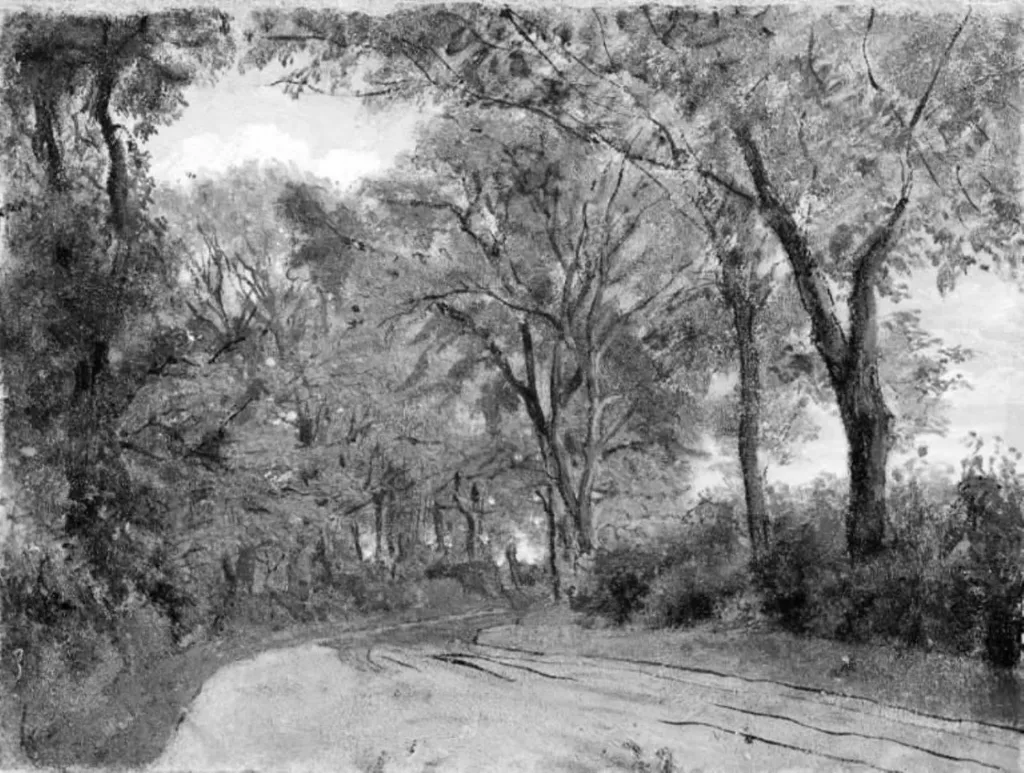
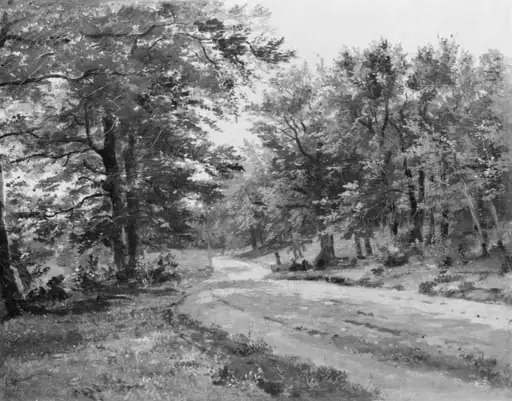
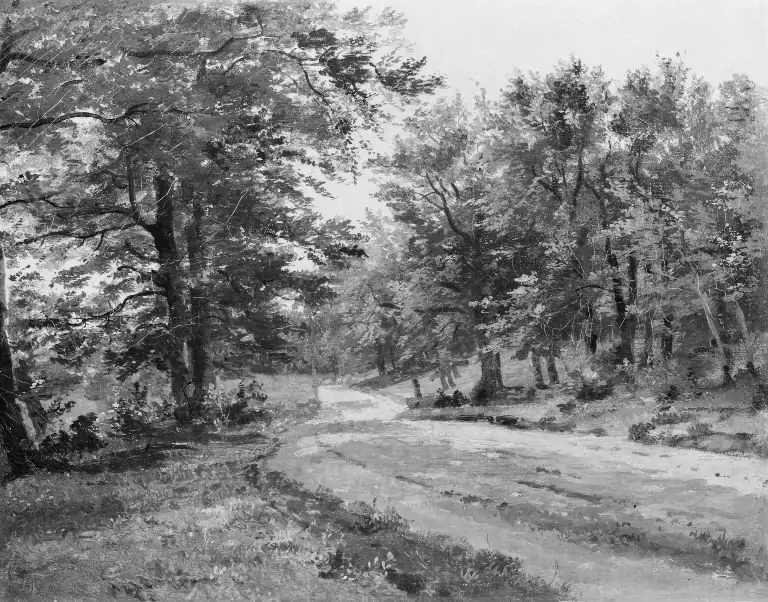
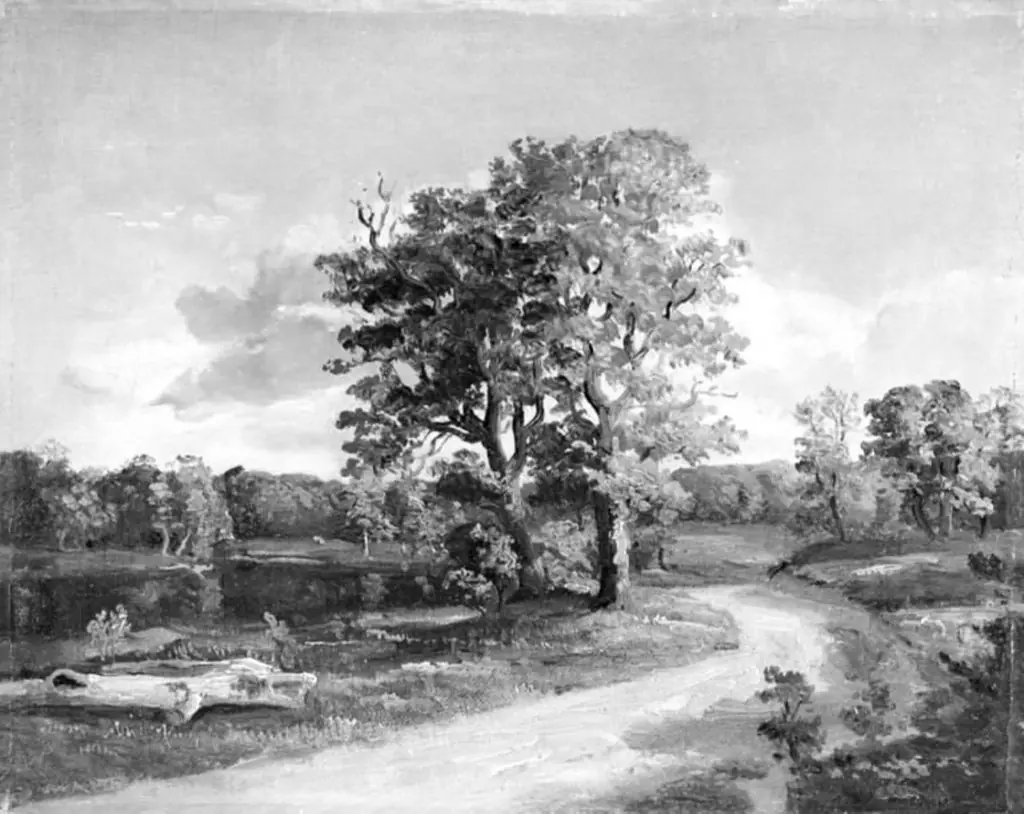
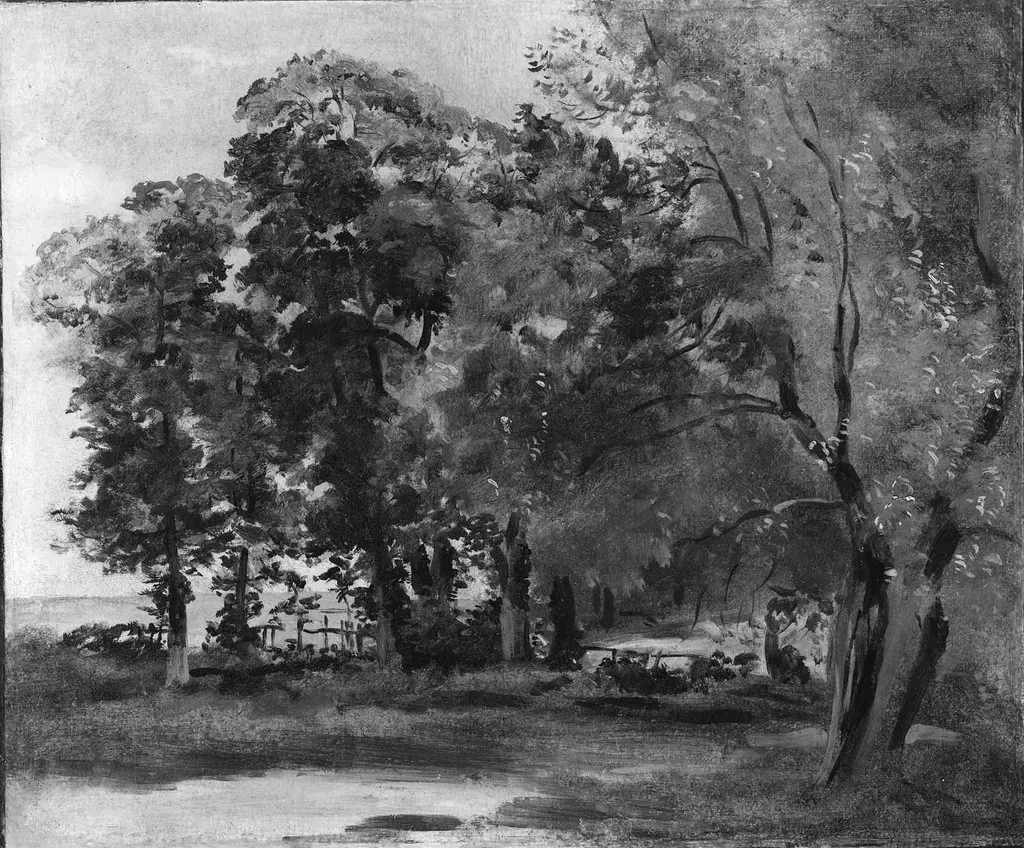
Winding Lane in a Wood is a photography by the Impressionist artist Unknown. It dates from 1854 and is held in the collection of the Statens Museum for Kunst. Created in 1854 by 536_person, this black-and-white photograph captures a quiet forest path winding through dense woodland.
About this work
Overview
Created in 1854 by 536_person, this black-and-white photograph captures a quiet forest path winding through dense woodland. The image is part of the Museum of Ethnography’s collection and stands as an early example of photographic landscape documentation. Its composition emphasizes natural depth and texture, achieved through careful attention to light and shadow rather than elaborate staging.
Subject & Meaning
The lane, unpaved and marked by ruts, suggests a modest rural thoroughfare, likely used by locals rather than travelers. The enclosed trees and filtered light evoke solitude and quiet immersion in nature. The scene holds no human figures, inviting contemplation of the relationship between path and wilderness, and the passage of time through seasonal change and erosion.
Technique & Style
This technique, borrowed from painting, enhances spatial depth and gives the flat image a tactile, three-dimensional quality uncommon in early photography.
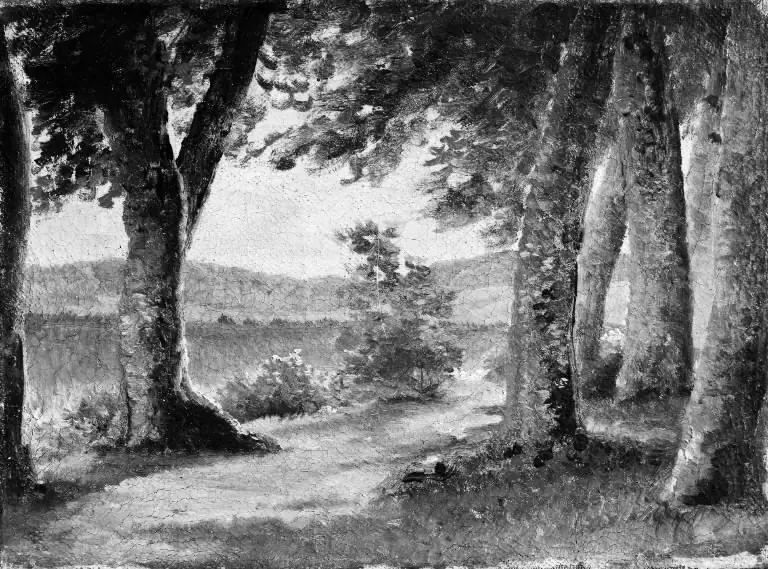
The photograph employs chiaroscuro to model form through stark contrasts between sunlight and shadow. Light filters through the canopy, creating dappled patterns on the ground and foliage, while deeper shadows define the trunks and undergrowth. This technique, borrowed from painting, enhances spatial depth and gives the flat image a tactile, three-dimensional quality uncommon in early photography.
History & Provenance
The work was produced in 1854, during a period when photography was transitioning from scientific curiosity to artistic practice. It entered the Museum of Ethnography’s holdings in the late 19th century, likely as part of a broader effort to document rural environments and vernacular landscapes. Its preservation suggests early recognition of its documentary and aesthetic value.
Context
In mid-19th-century Europe, photographers increasingly turned to natural settings to explore light and composition beyond portraiture or architecture. This image aligns with emerging interests in the sublime and the everyday, reflecting a cultural shift toward valuing unspoiled nature. It predates formal landscape photography movements but anticipates their concerns with atmosphere and place.
Legacy
Though not widely exhibited, the photograph remains a quiet reference in studies of early photographic technique and rural visual culture. Its restrained composition and mastery of natural light influenced later photographers seeking authenticity over theatricality. It endures as a modest but significant record of how light could be harnessed to convey mood without narrative.
Artist & collection

 Domestic Scene
 Giacomo and Cardinal Marco, investing Andrea, Abbot of San Zeno, with his Benefice
 The Nymph of Fontainebleau
 Portrait of a Woman
 Madonna and Child with Saints in the Enclosed Garden
 Venus and Minerva
 Family Group of Four on Sofa
 Wall painting from Room H of the Villa of P. Fannius Synistor at Boscoreale