Artwork
Strandvejen ved Vedbæk. Vintereftermiddag
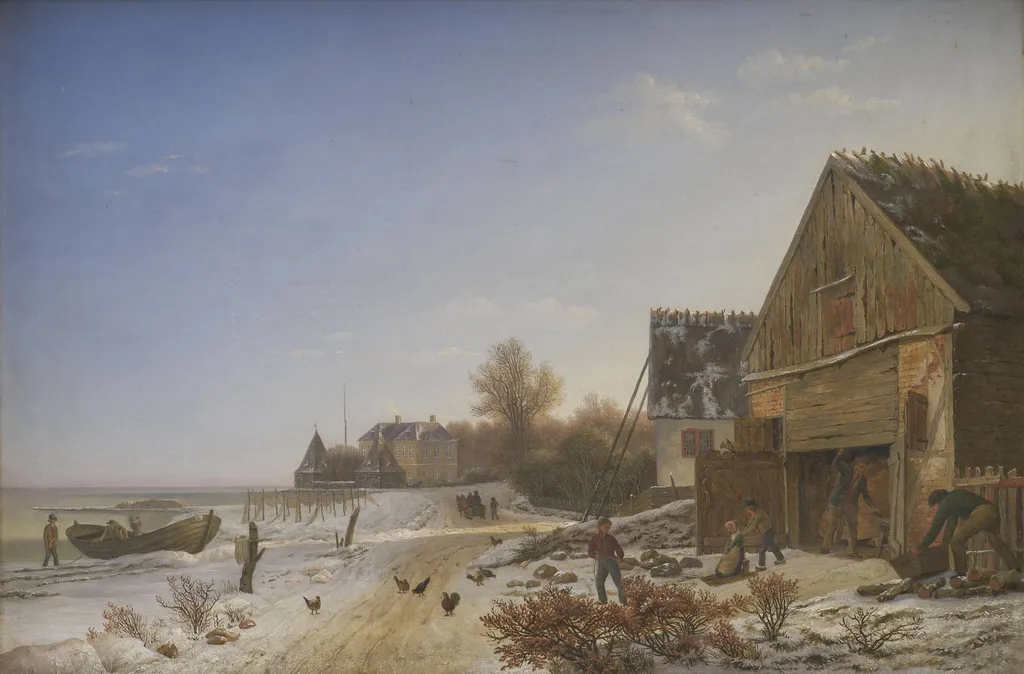
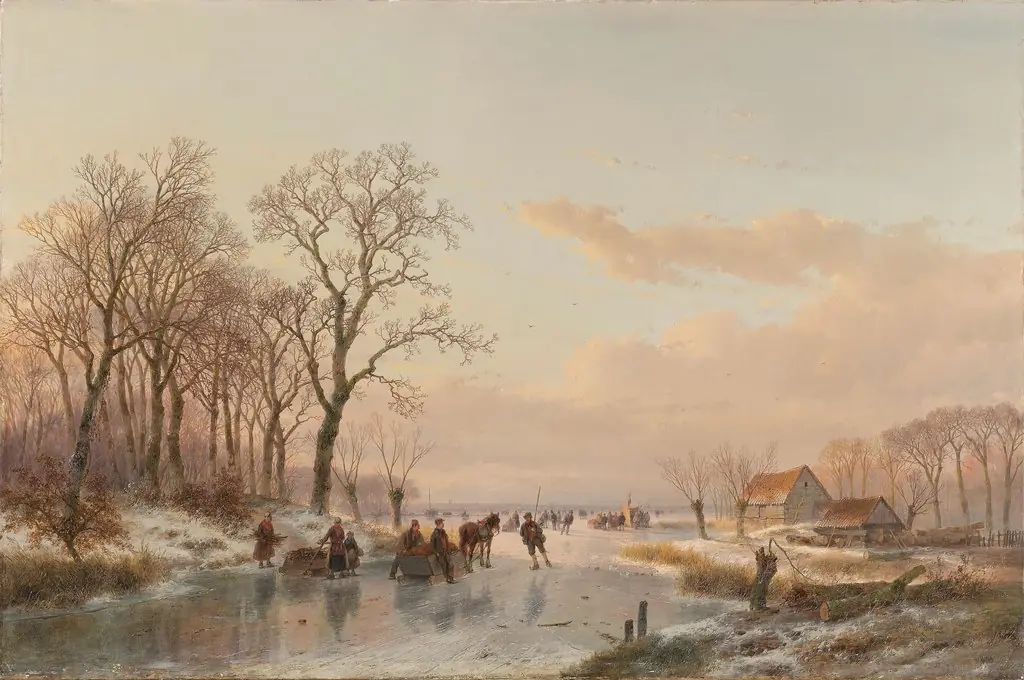
Strandvejen ved Vedbæk. Vintereftermiddag is a photography by Unknown. It dates from 1850 and is held in the collection of the Statens Museum for Kunst. Painted around 1850, this landscape captures a quiet winter afternoon along Strandvejen near Vedbæk.
About this work
Overview
The scene presents a modest coastal road lined with wooden structures, set against a muted winter sky and frozen ground.
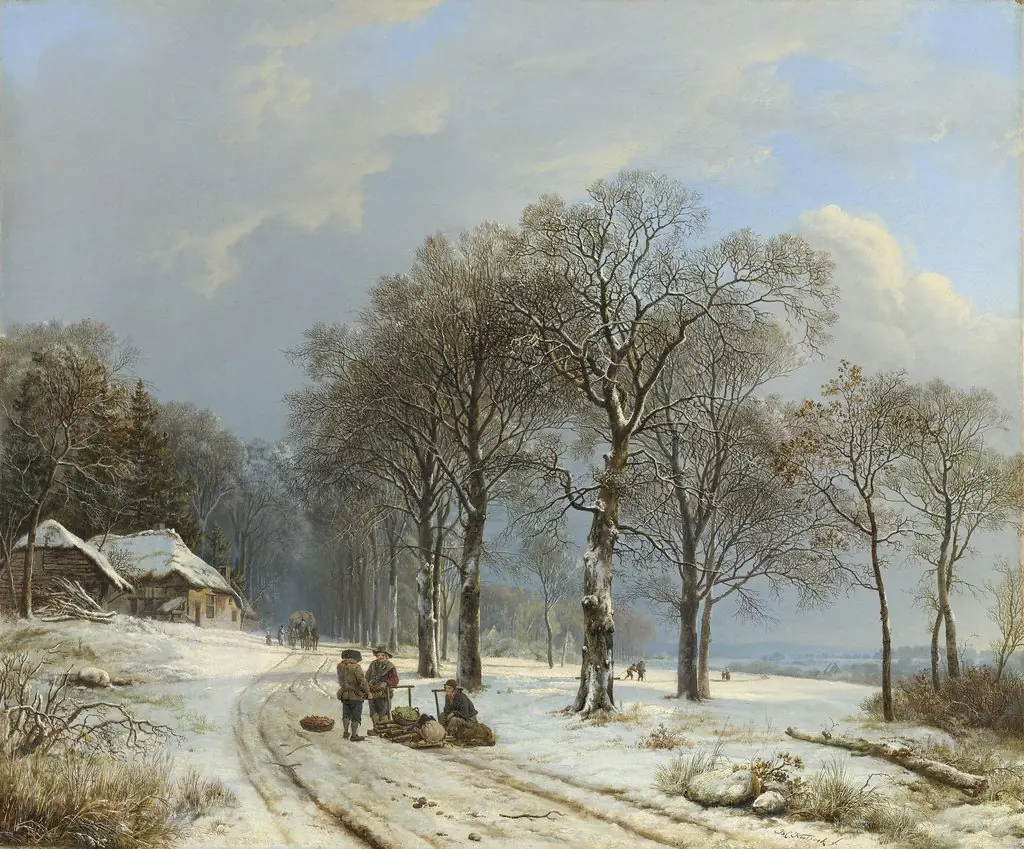
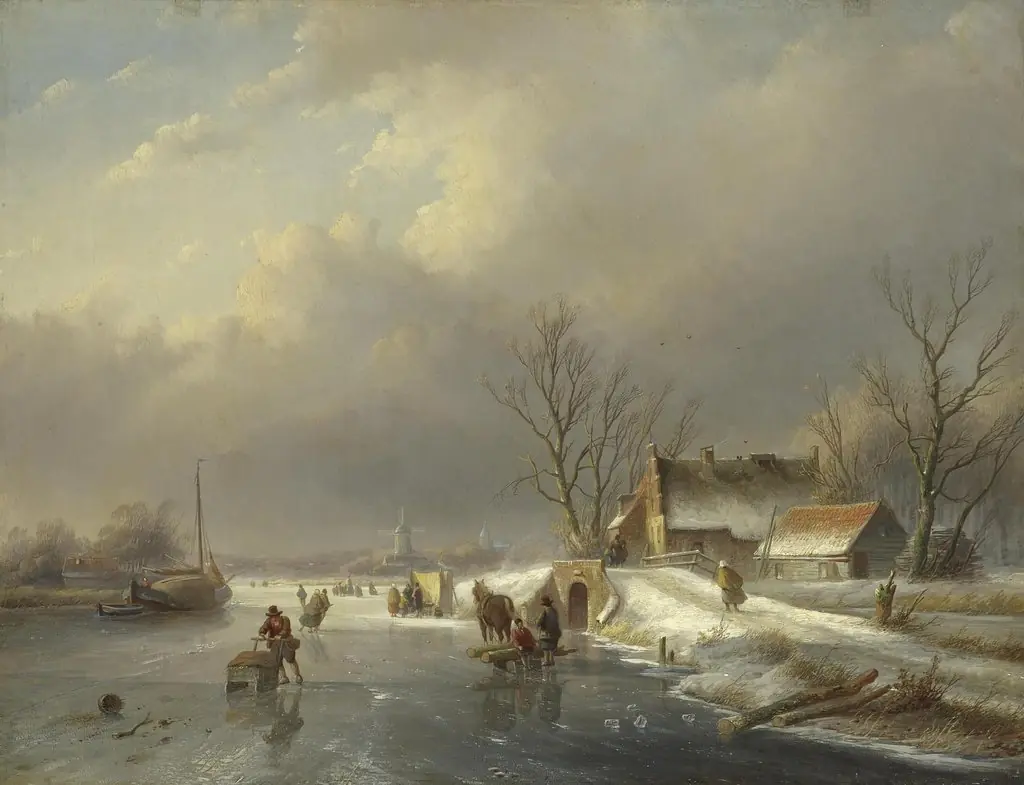
Painted around 1850, this landscape captures a quiet winter afternoon along Strandvejen near Vedbæk. The scene presents a modest coastal road lined with wooden structures, set against a muted winter sky and frozen ground. The composition emphasizes stillness and spatial depth, with figures moving subtly through the snow, suggesting daily life in a rural Danish coastal community during the colder months.
Subject & Meaning
The painting portrays ordinary winter activities along a coastal road, avoiding idealization. Figures are engaged in routine tasks—walking, perhaps hauling goods—grounding the scene in realism. The architecture, both large and small, reflects local building traditions. The absence of dramatic events or symbolic elements directs focus to the quiet rhythm of seasonal life, valuing observation over narrative.
Technique & Style
The artist employs a restrained palette, contrasting the warm ochres and browns of the buildings with the cool grays and blues of snow and water. Brushwork is precise yet unobtrusive, modeling forms through subtle tonal shifts rather than bold outlines. Light falls evenly across the scene, creating a soft, diffused atmosphere that enhances the sense of winter stillness without relying on strong chiaroscuro.
History & Provenance
The work entered the collection of the Museum of Ethnography in the late 19th or early 20th century, likely as part of a broader effort to document regional Danish life. Its attribution to the artist remains consistent in institutional records, though little documentation exists regarding its initial commission or exhibition history prior to museum acquisition.
Context
Created during a period when Danish artists increasingly turned to local landscapes and everyday subjects, this painting reflects a national interest in documenting vernacular environments. Coastal communities like Vedbæk were seen as emblematic of traditional Danish life, and such works contributed to a cultural project of preserving regional identity amid industrialization.
Legacy
Though not widely reproduced or publicly celebrated, the painting remains a quiet example of mid-19th-century Danish landscape realism. It contributes to a body of work that prioritizes observation over sentiment, offering insight into how ordinary spaces were recorded before the rise of modernist abstraction. Its preservation in an ethnographic context underscores its role as cultural documentation.
Artist & collection

 Domestic Scene
 Giacomo and Cardinal Marco, investing Andrea, Abbot of San Zeno, with his Benefice
 The Nymph of Fontainebleau
 Portrait of a Woman
 Madonna and Child with Saints in the Enclosed Garden
 Venus and Minerva
 Family Group of Four on Sofa
 Wall painting from Room H of the Villa of P. Fannius Synistor at Boscoreale