Artwork
The Queen Dowager Juliane Marie
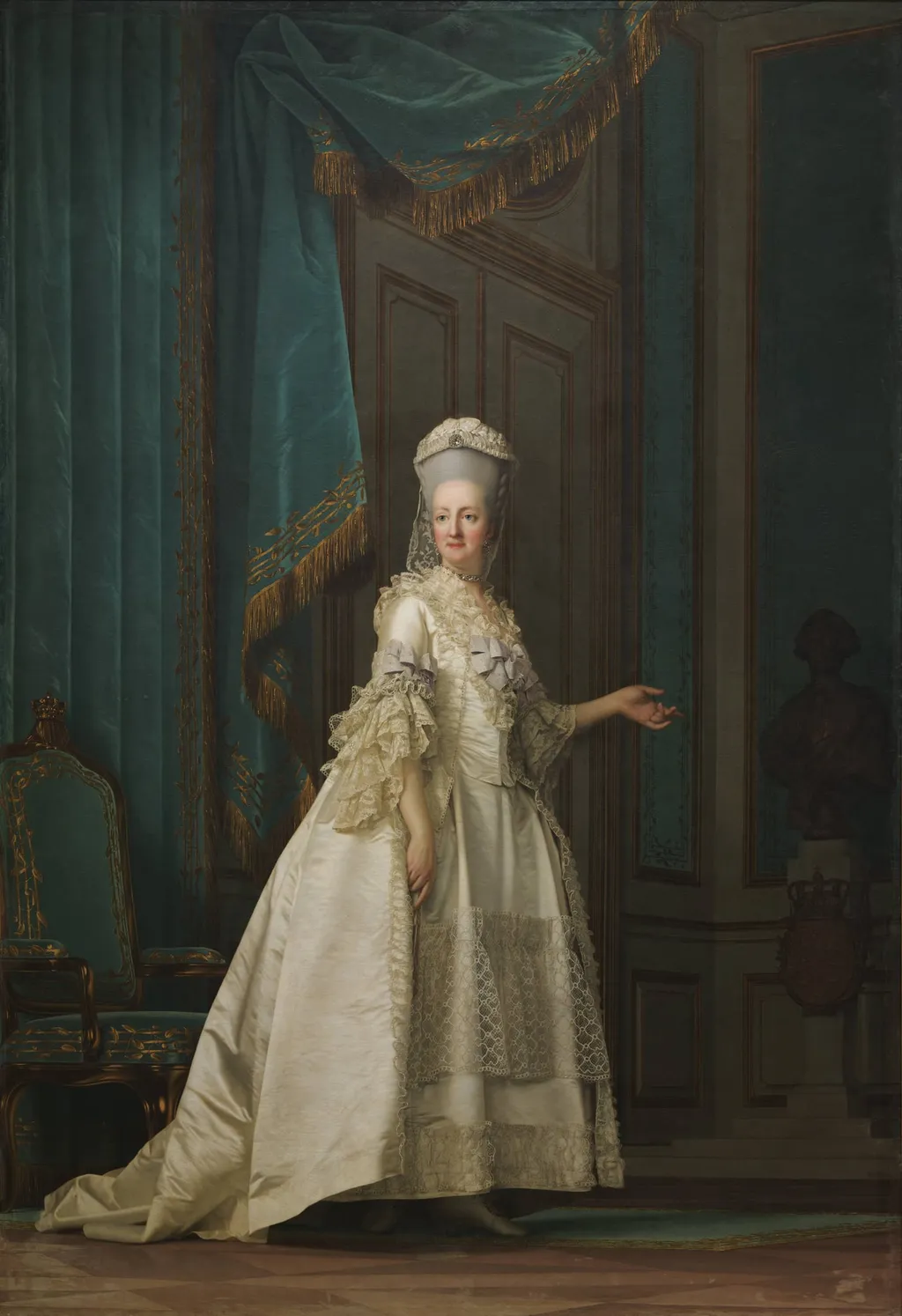
The Queen Dowager Juliane Marie is a photography by the Romanticist artist Unknown. It dates from 1776 and is held in the collection of the Statens Museum for Kunst. This portrait depicts Juliane Marie, Queen Dowager of Denmark, painted in 1776.
About this work
Overview
This portrait depicts Juliane Marie, Queen Dowager of Denmark, painted in 1776. It is part of the collection at the Museum of Ethnography. The image captures her in formal court attire, rendered with attention to texture and spatial depth. The composition follows conventions of 18th-century European portraiture, emphasizing status through dress and setting rather than narrative action.
Subject & Meaning
Juliane Marie, widow of King Frederick V, is portrayed not as a reigning monarch but as a dignified royal widow. Her composed posture and restrained expression reflect the expected decorum of her position. The elaborate dress and interior suggest continuity of royal identity after the loss of a spouse, conveying authority through elegance rather than power.
Technique & Style
The artist employs chiaroscuro to model the queen’s face and lace details, using soft contrasts between light and shadow. The dark wood paneling and deep blue curtains frame her figure, isolating her in a quiet, intimate space. The rendering of fabric is precise, with fine brushwork capturing the translucency of lace and the weight of silk.
History & Provenance
Commissioned during Juliane Marie’s years as dowager queen, the portrait likely served to reinforce her public presence after her husband’s death. It entered the Museum of Ethnography’s holdings in the late 19th or early 20th century, possibly as part of a broader collection of Danish royal artifacts. Its preservation reflects institutional interest in royal iconography.
Context
In late 18th-century Denmark, portraiture of royal women often emphasized virtue, mourning, and continuity. Juliane Marie’s image aligns with broader European trends where widowed queens were depicted in white or pale garments to signify purity and loss. The setting, though opulent, avoids overt symbolism, favoring understated grandeur.
Legacy
The portrait remains a documented example of Danish royal representation during a transitional period in monarchical culture. It contributes to scholarly understanding of how widowed queens maintained visibility without political power. Its placement in an ethnographic museum underscores its role as a cultural artifact rather than a purely artistic one.
Artist & collection

 Domestic Scene
 Giacomo and Cardinal Marco, investing Andrea, Abbot of San Zeno, with his Benefice
 The Nymph of Fontainebleau
 Portrait of a Woman
 Madonna and Child with Saints in the Enclosed Garden
 Venus and Minerva
 Family Group of Four on Sofa
 Wall painting from Room H of the Villa of P. Fannius Synistor at Boscoreale
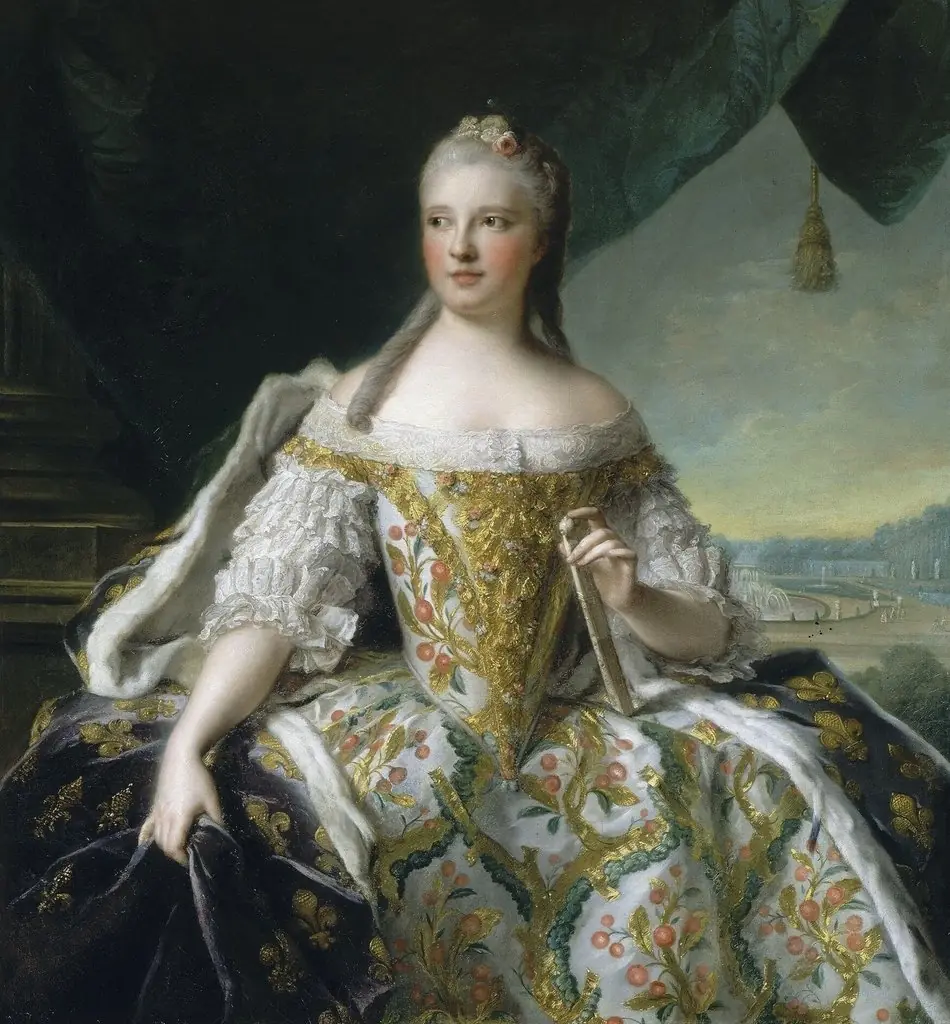 Marie Josèphe of Saxony
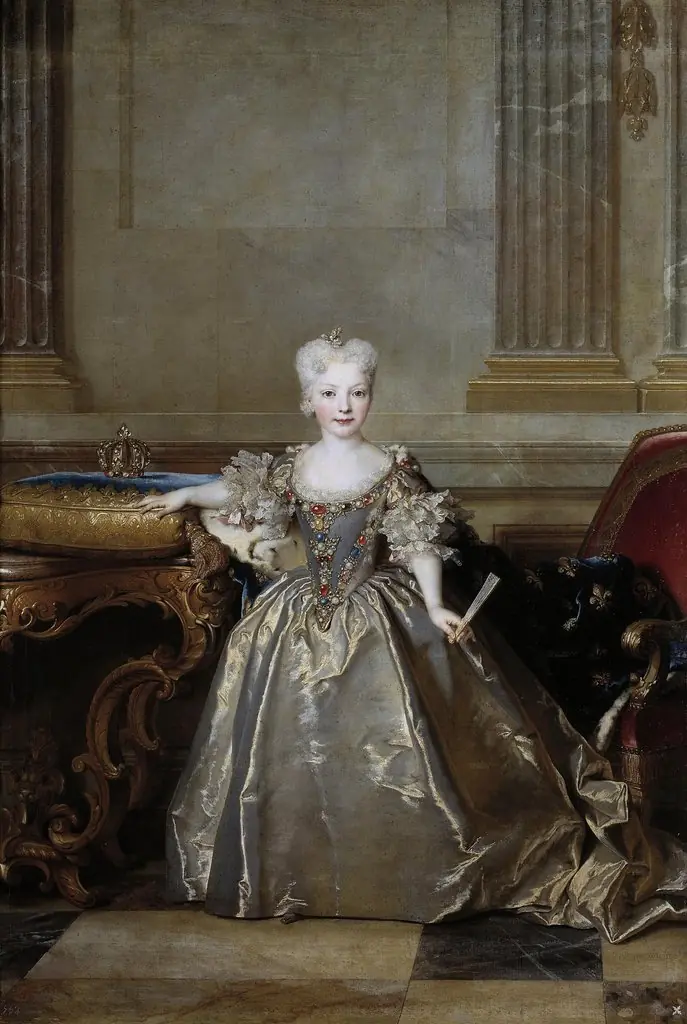 María Ana Victoria de Borbón y Farnesio
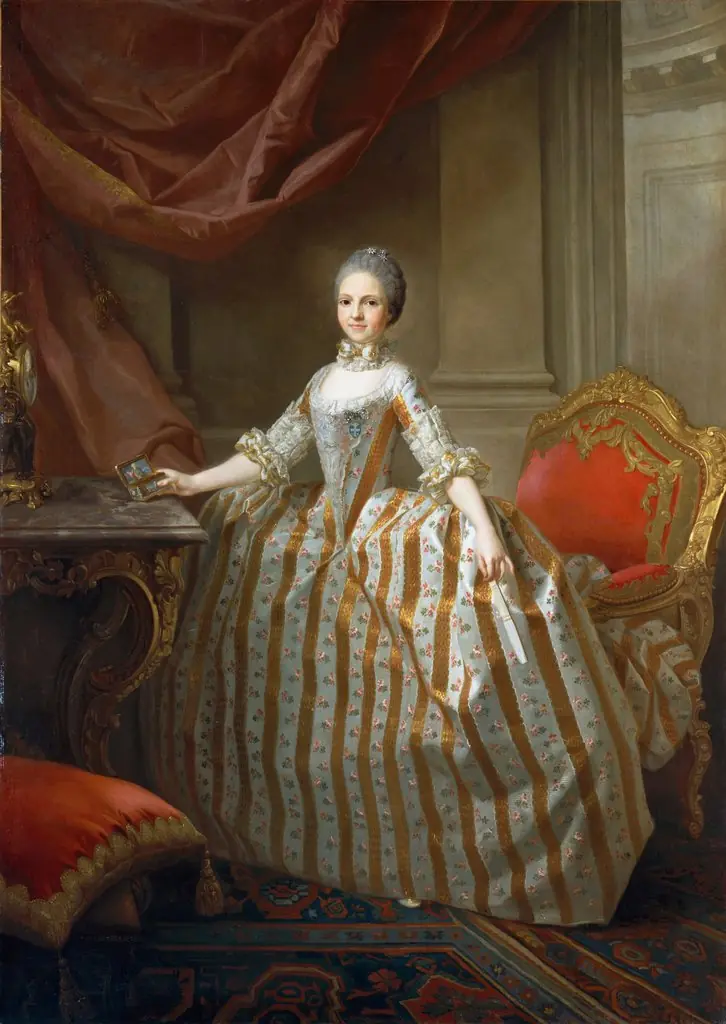 Maria Luisa of Parma (1751–1819), Later Queen of Spain
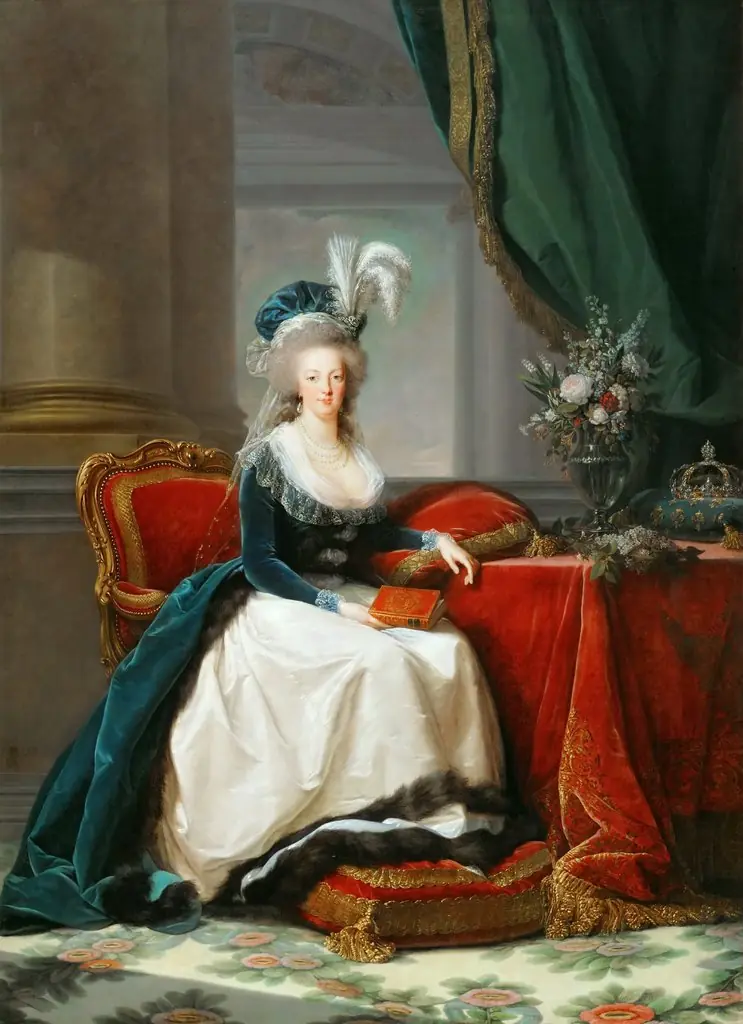 Marie-Antoinette seated, in blue coat and white dress, holding a book in her hand
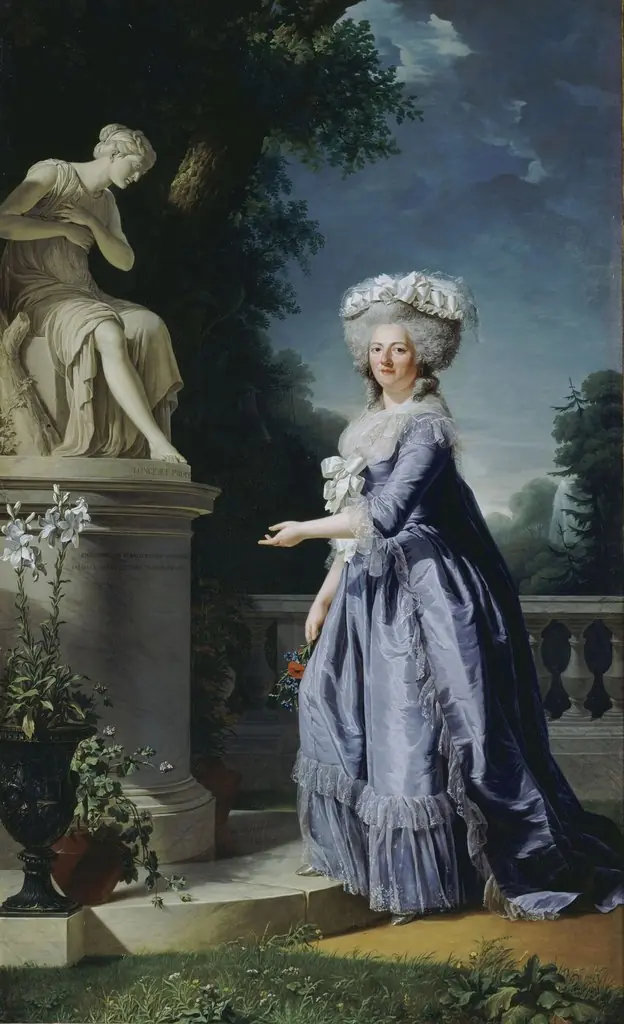 Madame Victoire of France
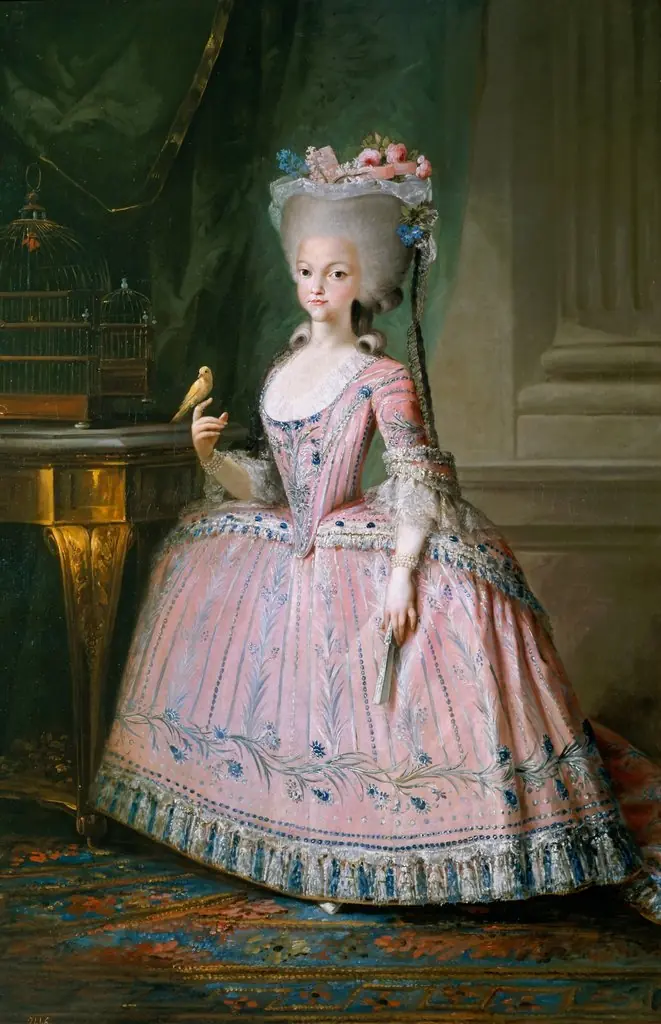 Carlota Joaquina, Infanta of Spain and Queen of Portugal
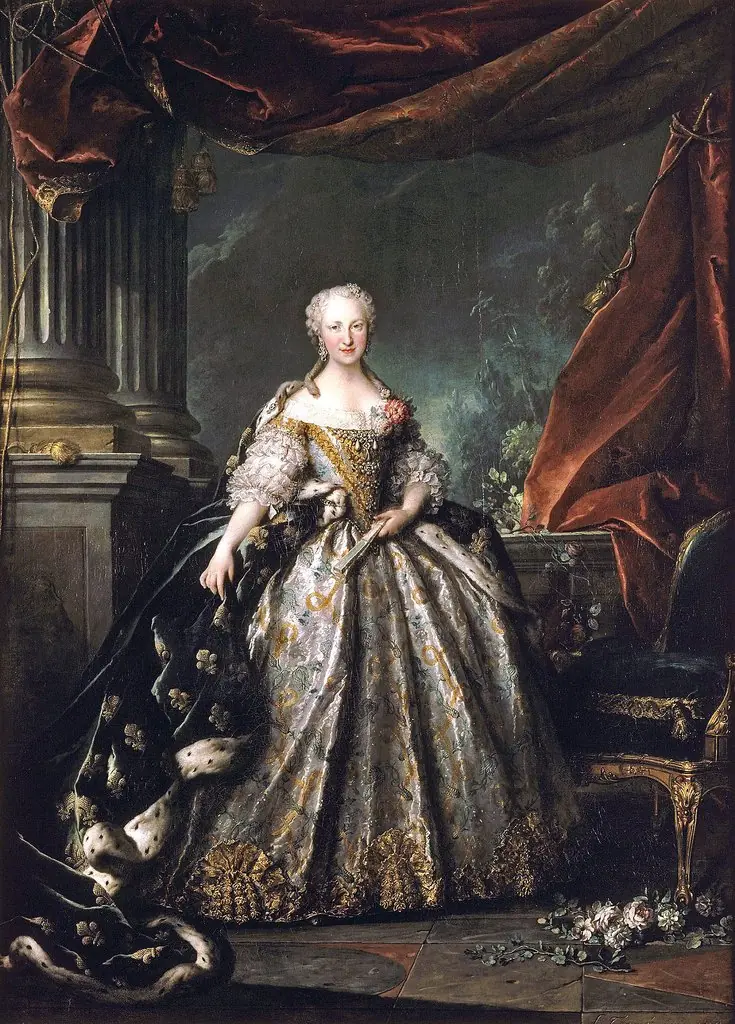 Marie-Thérèse-Raphaëlle, Infanta of Spain, Dauphine of France
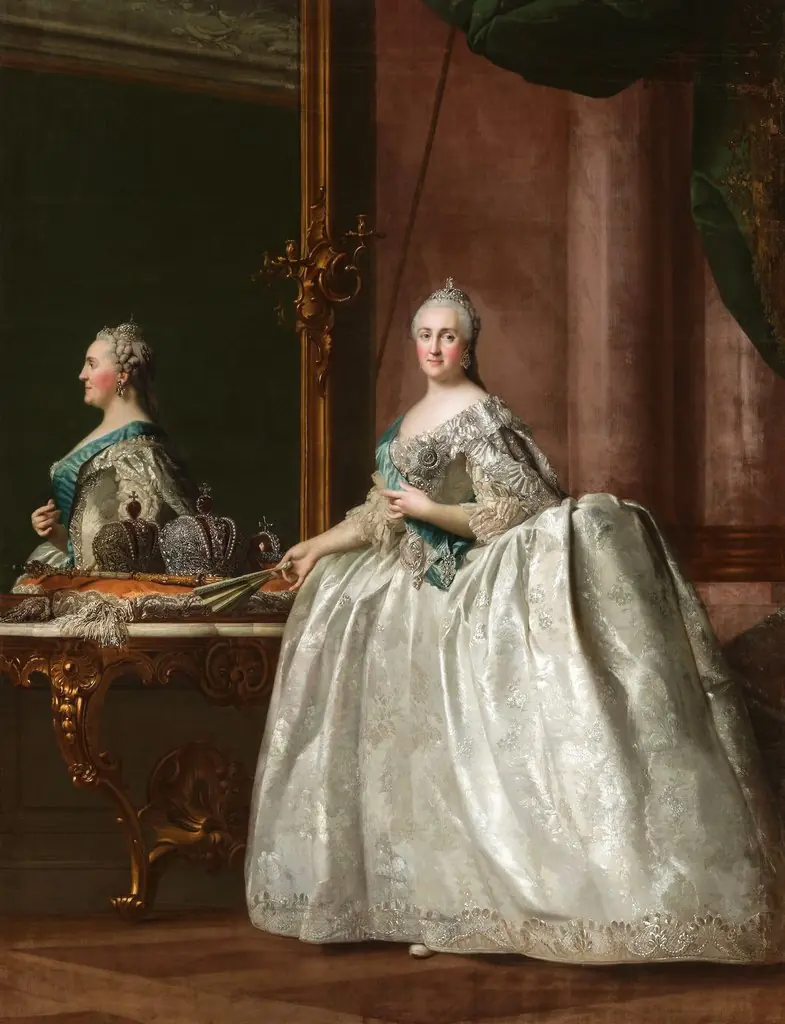 Portrait of Catherine II in front of a Mirror
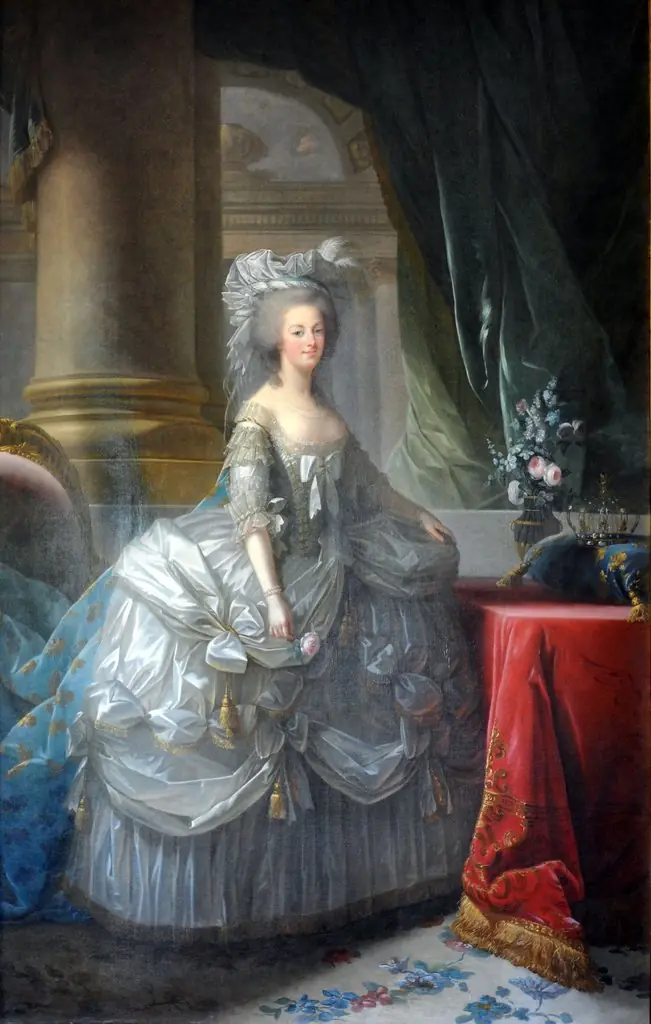 Marie Antoinette in Court Dress