Artwork
Stendysse i udkanten af skoven. Dyrnæs
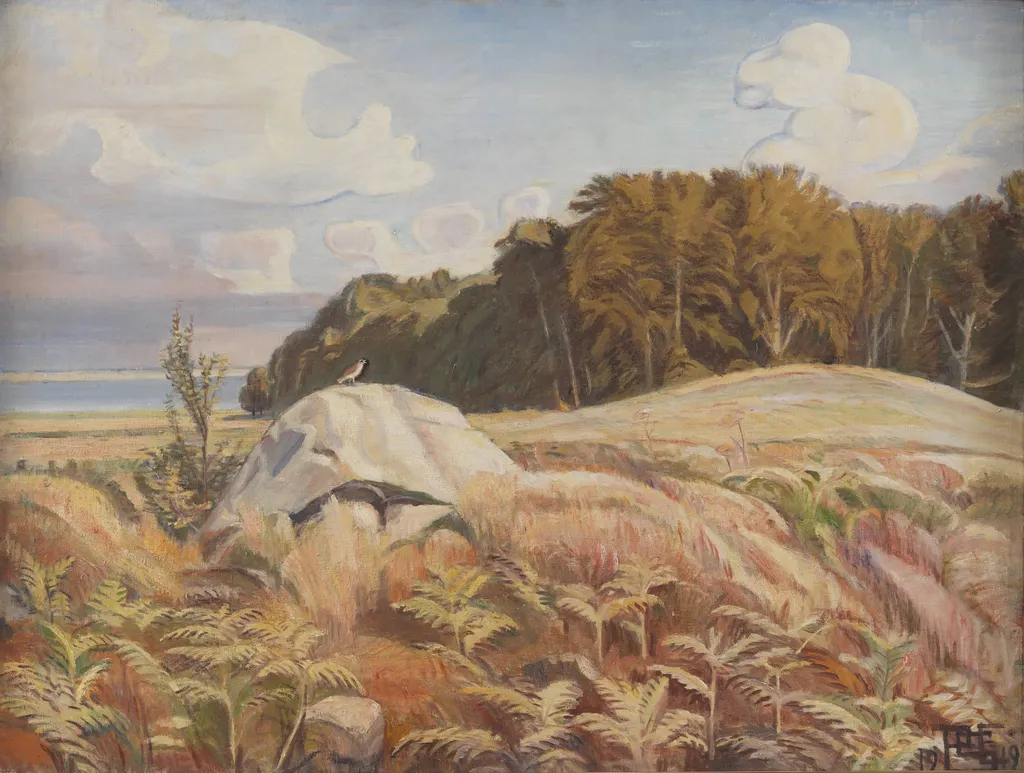
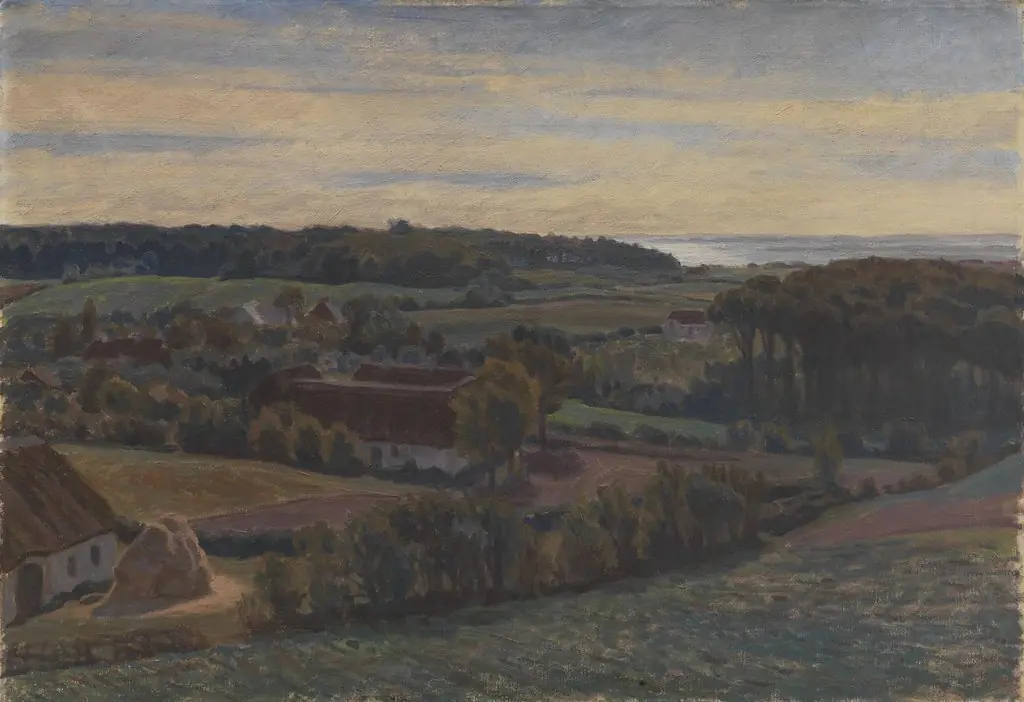
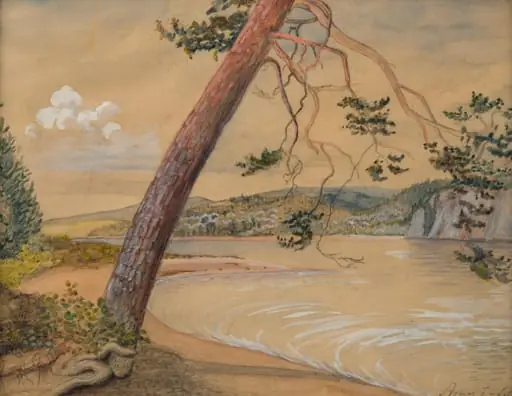
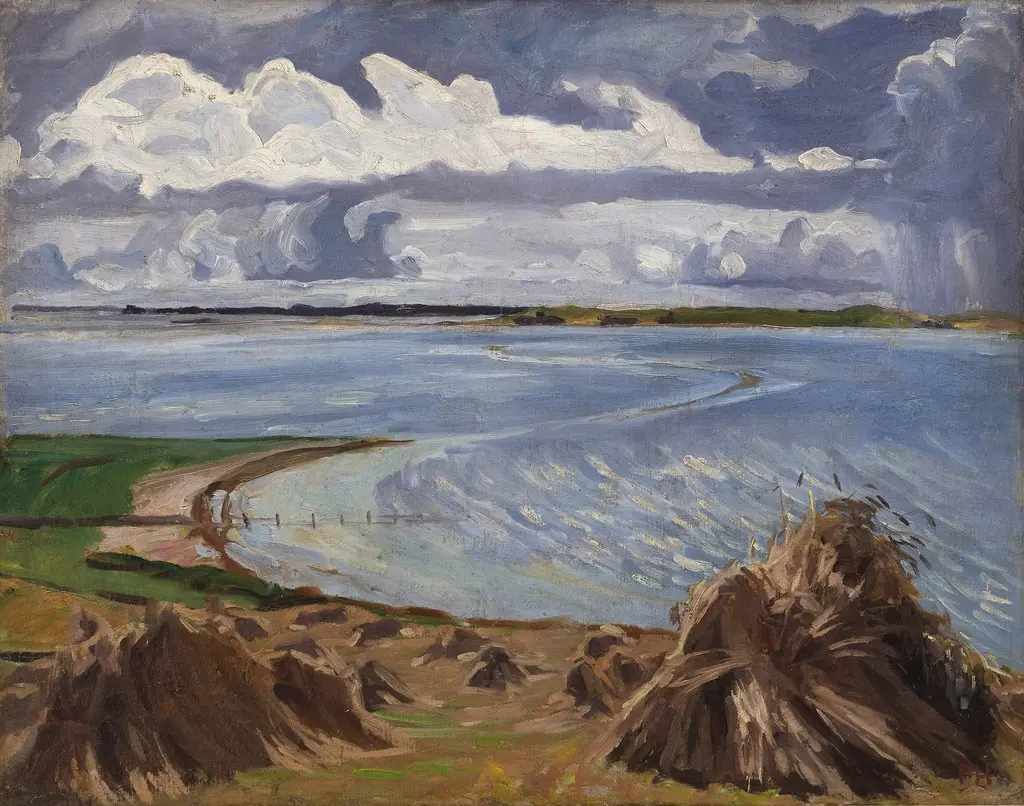
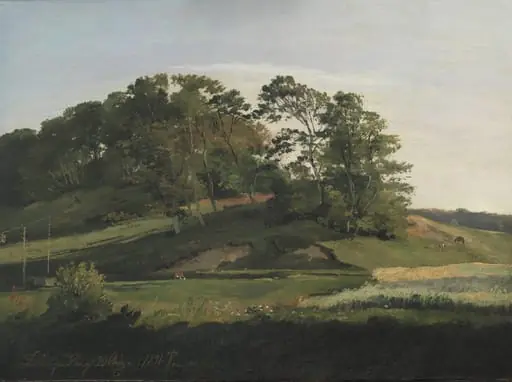
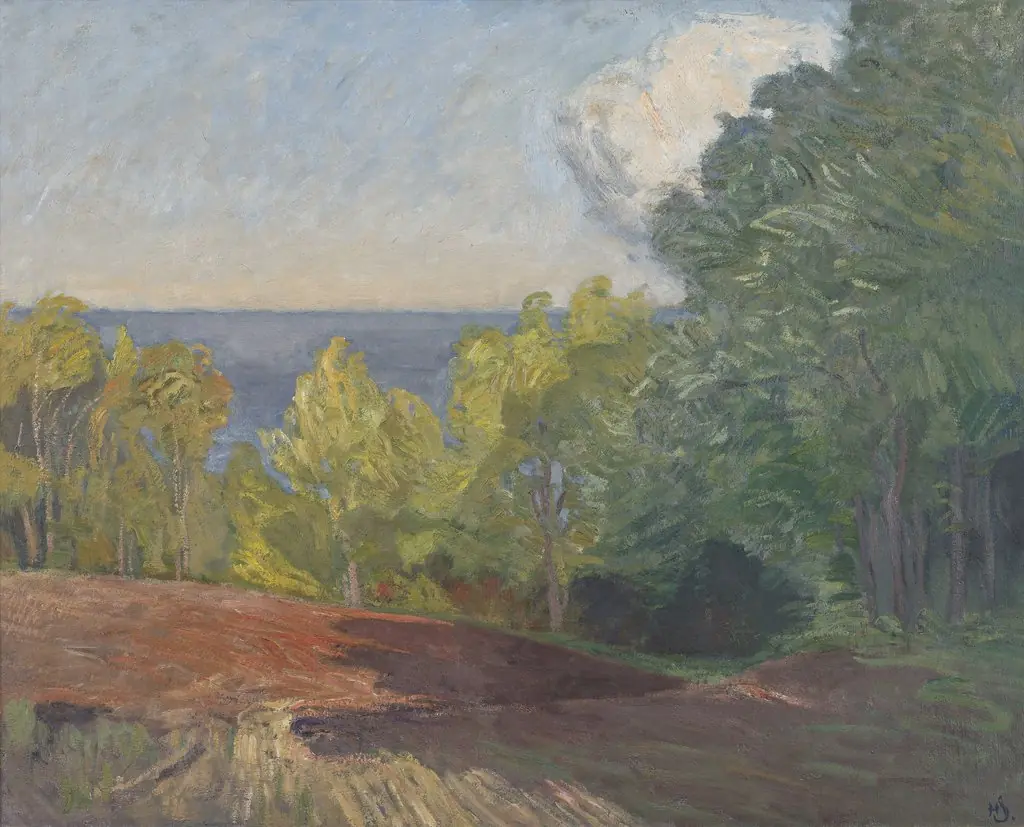
Stendysse i udkanten af skoven. Dyrnæs is a photography by Unknown. It dates from 1919 and is held in the collection of the Statens Museum for Kunst. Painted in 1919 by 6338_person, this landscape depicts a quiet edge of woodland near Dyrnæs.
About this work
Overview
It resides in the collection of the Museum of Ethnography, where it is noted for its quiet observation of natural form rather than narrative content.
Painted in 1919 by 6338_person, this landscape depicts a quiet edge of woodland near Dyrnæs. Rendered in oil, the work captures a sunlit slope of rocky terrain with sparse vegetation. It resides in the collection of the Museum of Ethnography, where it is noted for its quiet observation of natural form rather than narrative content. The composition avoids human presence, focusing instead on the quiet persistence of the land.
Subject & Meaning
The scene portrays a transitional zone between open hillside and forest, where dry grasses, ferns, and scattered shrubs cling to uneven ground. Large boulders anchor the foreground, suggesting geological time and resilience. The absence of figures or signs of human activity invites contemplation of nature’s quiet rhythms. The work reflects an interest in the unembellished character of the Danish countryside during a period of growing regional artistic identity.
Technique & Style
Thick, textured brushwork applies pigment in a manner that emphasizes the tactile qualities of rock and foliage. The artist uses impasto to build up surfaces, particularly on the boulders and clumps of grass, creating a sense of physical presence. Warm ochres, muted greens, and soft browns dominate the palette, while the sky’s pale clouds contrast gently with the earth tones. Light falls evenly, enhancing the three-dimensionality of forms without dramatic shadows.
History & Provenance
Created in 1919, the painting entered the Museum of Ethnography’s collection shortly after its completion. Its acquisition aligns with the museum’s early 20th-century focus on documenting regional life and natural environments through visual art. There is no record of public exhibition prior to its institutional acquisition, suggesting it was initially a personal or local study rather than a commissioned work.
Context
This work emerged during a time when Danish artists increasingly turned to rural landscapes as subjects of quiet reverence, moving away from urban or historical themes. The emphasis on texture and natural detail reflects broader Nordic trends in landscape painting, influenced by both realism and early modernist interests in materiality. It stands apart from romanticized depictions, favoring a restrained, observational approach.
Legacy
Though not widely reproduced, the painting contributes to a lesser-known strand of Danish interwar landscape art that valued direct observation over idealization. Its presence in an ethnographic museum underscores its role as a document of place and material culture. Contemporary viewers recognize it as a quiet testament to the artist’s sensitivity to the subtle rhythms of the Danish terrain.
Artist & collection

 Domestic Scene
 Giacomo and Cardinal Marco, investing Andrea, Abbot of San Zeno, with his Benefice
 The Nymph of Fontainebleau
 Portrait of a Woman
 Madonna and Child with Saints in the Enclosed Garden
 Venus and Minerva
 Family Group of Four on Sofa
 Wall painting from Room H of the Villa of P. Fannius Synistor at Boscoreale