Artwork
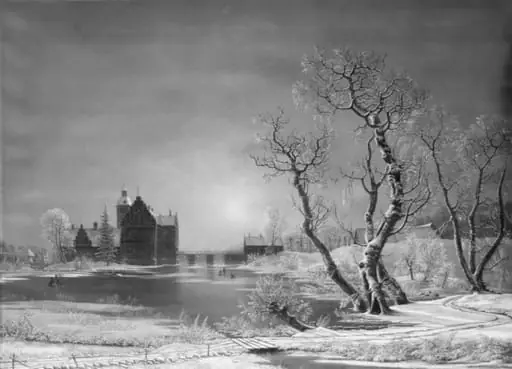
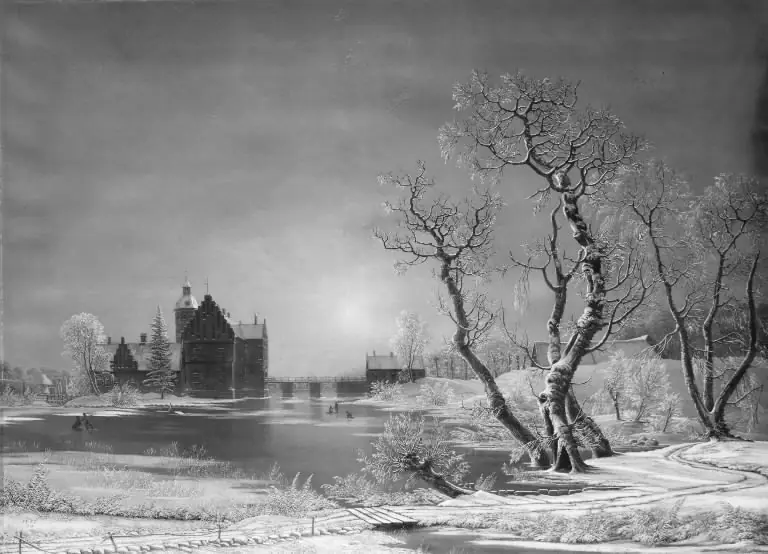
Prospekt af hovedgården Lykkesholm på Fyn. Vinter
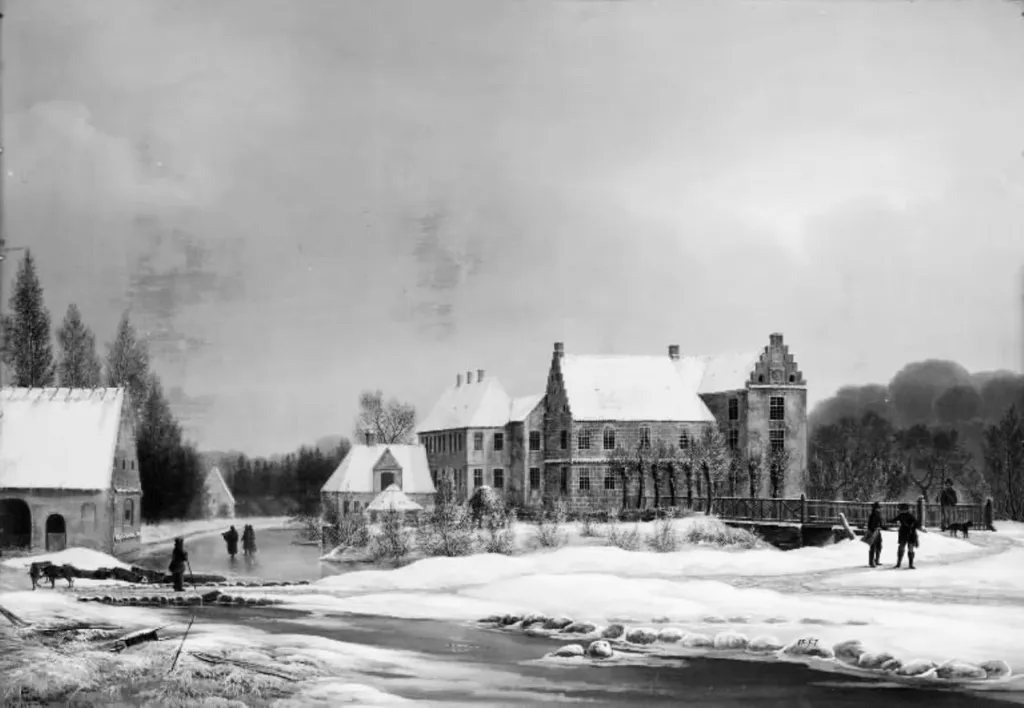
Prospekt af hovedgården Lykkesholm på Fyn. Vinter is a photography by the Romanticist artist Unknown. It dates from 1834 and is held in the collection of the Statens Museum for Kunst. Created in 1834, this black-and-white landscape depicts Lykkesholm Manor on the Danish island of Fyn during winter.
About this work
Overview
The central structure, a substantial manor house with steep roofs and tall chimneys, dominates the composition, flanked by modest outbuildings.
Created in 1834, this black-and-white landscape depicts Lykkesholm Manor on the Danish island of Fyn during winter. The scene captures a quiet, snow-covered village with a frozen river winding through it. The central structure, a substantial manor house with steep roofs and tall chimneys, dominates the composition, flanked by modest outbuildings. The image conveys stillness and solitude, rendered without color but with careful attention to light and texture.
Subject & Meaning
The painting presents Lykkesholm as a symbol of rural aristocratic life in early 19th-century Denmark. The manor’s imposing form contrasts with the humble dwellings around it, suggesting social hierarchy. The absence of vigorous activity and the quiet movement of a few figures reinforce a sense of hibernation and introspection, reflecting the seasonal pause of agrarian existence rather than celebrating grandeur.
Technique & Style
The artist employs subtle tonal gradations to simulate the soft glow of winter light on snow, avoiding harsh contrasts. Shadows are muted, allowing the snow to appear luminous despite the monochrome palette. Brushwork is restrained, emphasizing texture over detail—rooftops, tree branches, and frozen water are suggested with delicate strokes, enhancing the scene’s tranquil atmosphere.
History & Provenance
The work entered the collection of the Museum of Ethnography, an institution more commonly associated with non-European cultural artifacts, suggesting its value as a document of Danish rural life rather than fine art. Its preservation there may reflect 19th-century interests in ethnographic recording of domestic environments, aligning the manor with broader cultural studies of the period.
Context
In 1834, Denmark was undergoing social and economic shifts, with rural estates like Lykkesholm representing enduring aristocratic structures amid emerging modernization. Winter landscapes were not yet popular as independent subjects in Danish art; this work stands as an early example of quiet, observational realism, focusing on place and season rather than narrative or drama.
Legacy
Though not widely exhibited or reproduced, the image contributes to a lesser-known strand of Danish topographical art that prioritized atmospheric precision over romanticism. Its presence in an ethnographic museum underscores its role as a visual record of domestic architecture and seasonal life, influencing later documentary approaches to rural Danish heritage.
Artist & collection

 Domestic Scene
 Giacomo and Cardinal Marco, investing Andrea, Abbot of San Zeno, with his Benefice
 The Nymph of Fontainebleau
 Portrait of a Woman
 Madonna and Child with Saints in the Enclosed Garden
 Venus and Minerva
 Family Group of Four on Sofa
 Wall painting from Room H of the Villa of P. Fannius Synistor at Boscoreale