Artwork
Andromache in Despair at the Sight of Hector's Body
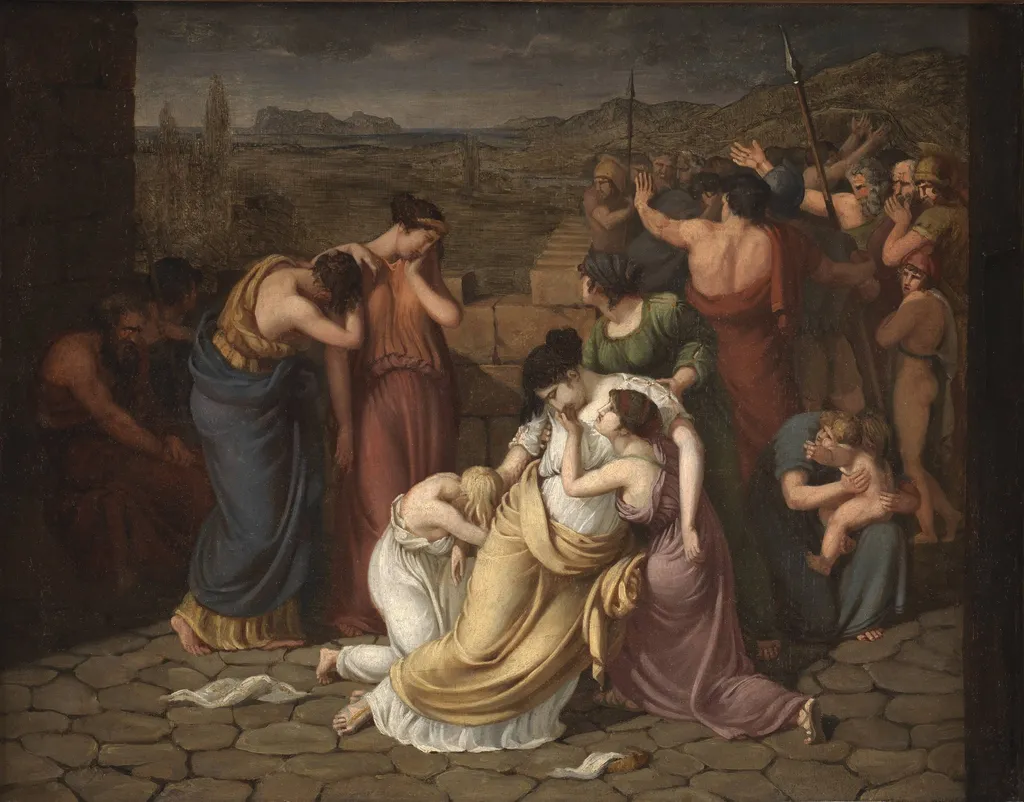
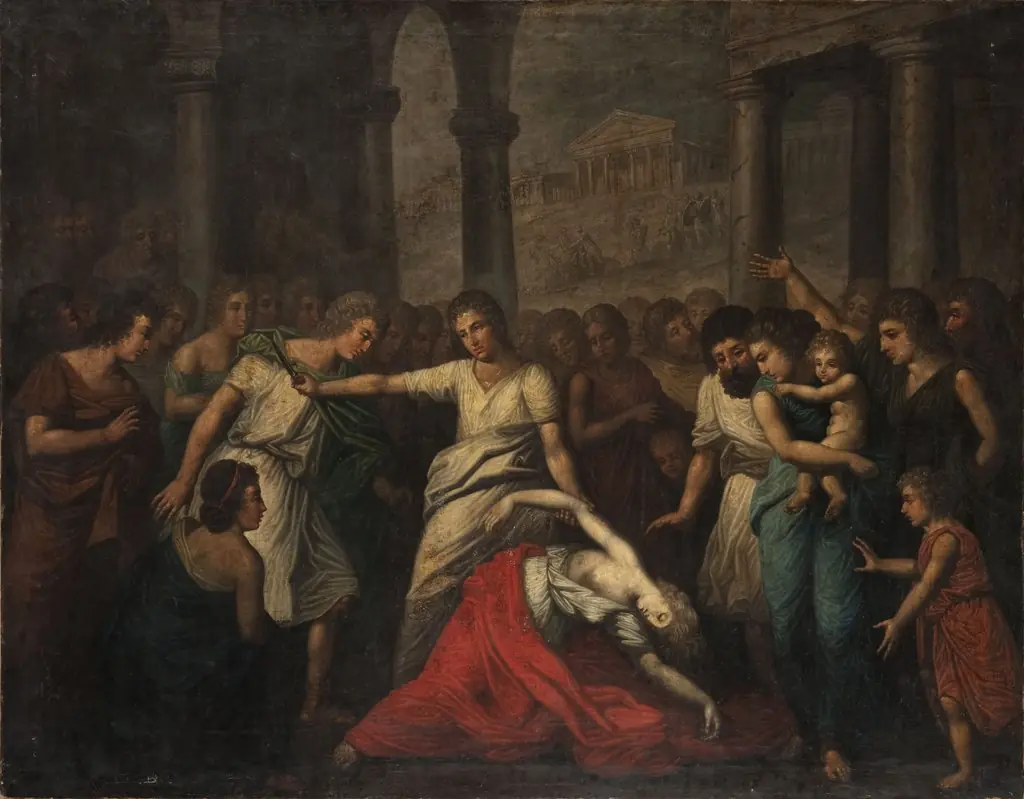
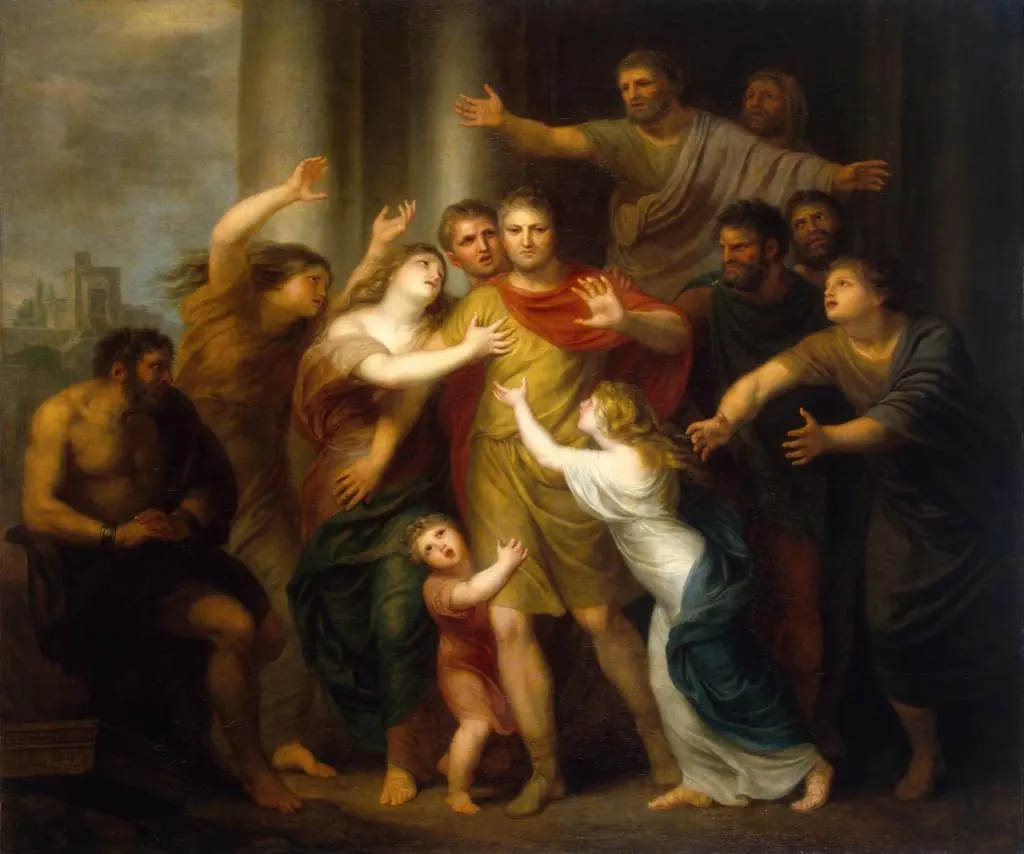
Andromache in Despair at the Sight of Hector's Body is a photography by Unknown. It dates from 1850 and is held in the collection of the Statens Museum for Kunst. Painted around 1850, this work depicts a moment of grief following the death of Hector, a Trojan hero from Homeric legend.
About this work
Overview
The painting is held in the collection of the Museum of Ethnography, where it is presented as a narrative interpretation of classical tragedy.
Painted around 1850, this work depicts a moment of grief following the death of Hector, a Trojan hero from Homeric legend. The scene is set in a crowded urban space, with figures gathered in agitation around a central figure. The artist employs dramatic lighting and warm, earthy tones to heighten emotional intensity. The painting is held in the collection of the Museum of Ethnography, where it is presented as a narrative interpretation of classical tragedy.
Subject & Meaning
The central figure, Andromache, kneels in mourning beside the body of her husband, Hector. Surrounding her, a group of onlookers react with anguish and confusion, their gestures and postures amplifying the sense of communal loss. The scene draws from the Iliad, capturing the human cost of war through intimate sorrow rather than battle. The focus on Andromache underscores the vulnerability of women and families in the wake of heroic death.
Technique & Style
The artist uses chiaroscuro to isolate the grieving figures against a dimmer background, drawing attention to their expressions and gestures. Strong contrasts between light and shadow define the forms, while the palette blends golden yellows, deep reds, and muted browns to evoke both warmth and dread. Brushwork is expressive but controlled, emphasizing movement in the crowd while keeping the central figures sharply defined.
History & Provenance
The painting was created in the mid-nineteenth century, during a period of renewed interest in classical themes among European artists. It entered the Museum of Ethnography’s collection shortly after its completion, likely acquired as part of a broader effort to document cultural narratives through visual art. Its provenance remains tied to the museum since its acquisition, with no documented private ownership.
Context
This work emerged during a time when historical and mythological subjects were frequently used to explore contemporary themes of loss and heroism. While many artists focused on grand battle scenes, this piece narrows its lens to personal grief, aligning with Romantic-era sensibilities that valued emotional authenticity over idealized form. The setting’s urban texture suggests a blending of ancient myth with modern visual language.
Legacy
Though not widely reproduced, the painting remains a notable example of 19th-century reinterpretations of Homeric epic. Its emphasis on collective mourning and the quiet dignity of grief distinguishes it from more theatrical depictions of classical subjects. Within the Museum of Ethnography, it continues to serve as a bridge between ancient literature and 19th-century visual storytelling.
Artist & collection

 Domestic Scene
 Giacomo and Cardinal Marco, investing Andrea, Abbot of San Zeno, with his Benefice
 The Nymph of Fontainebleau
 Portrait of a Woman
 Madonna and Child with Saints in the Enclosed Garden
 Venus and Minerva
 Family Group of Four on Sofa
 Wall painting from Room H of the Villa of P. Fannius Synistor at Boscoreale
 Cassandra in the Temple of Minerva
 Lictors bring to Brutus the bodies of his sons
 Hecabe mit den Leichnamen ihrer Kinder Polyxena und Polydoros am Grab des Achill
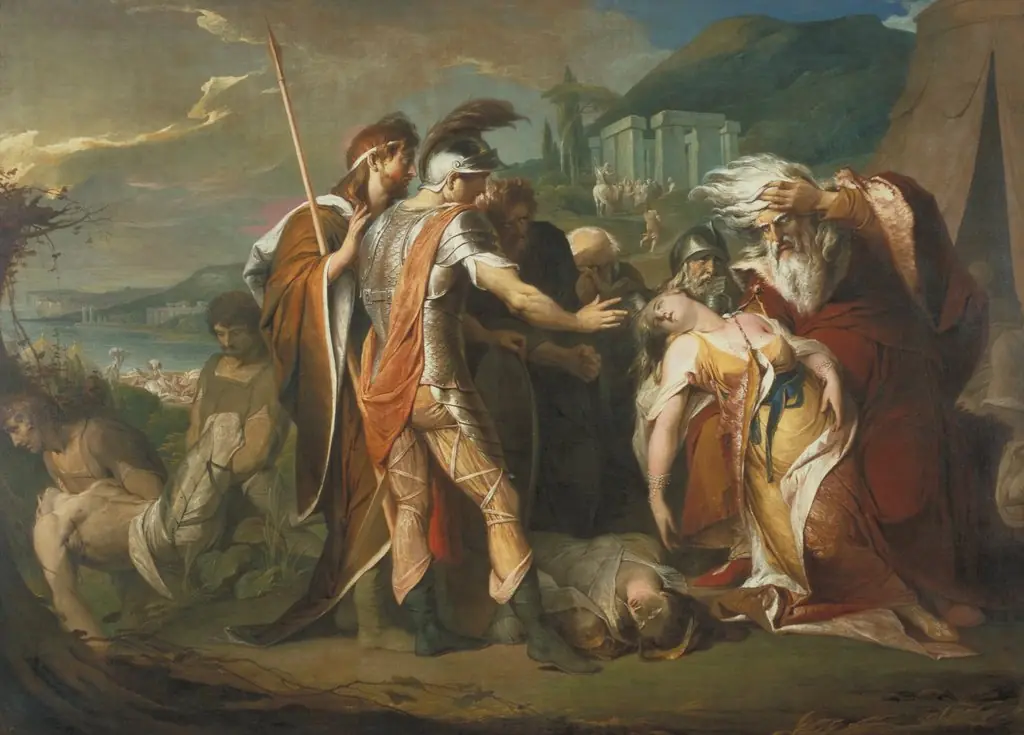 King Lear Weeping over the Dead Body of Cordelia
 Death of Virginia
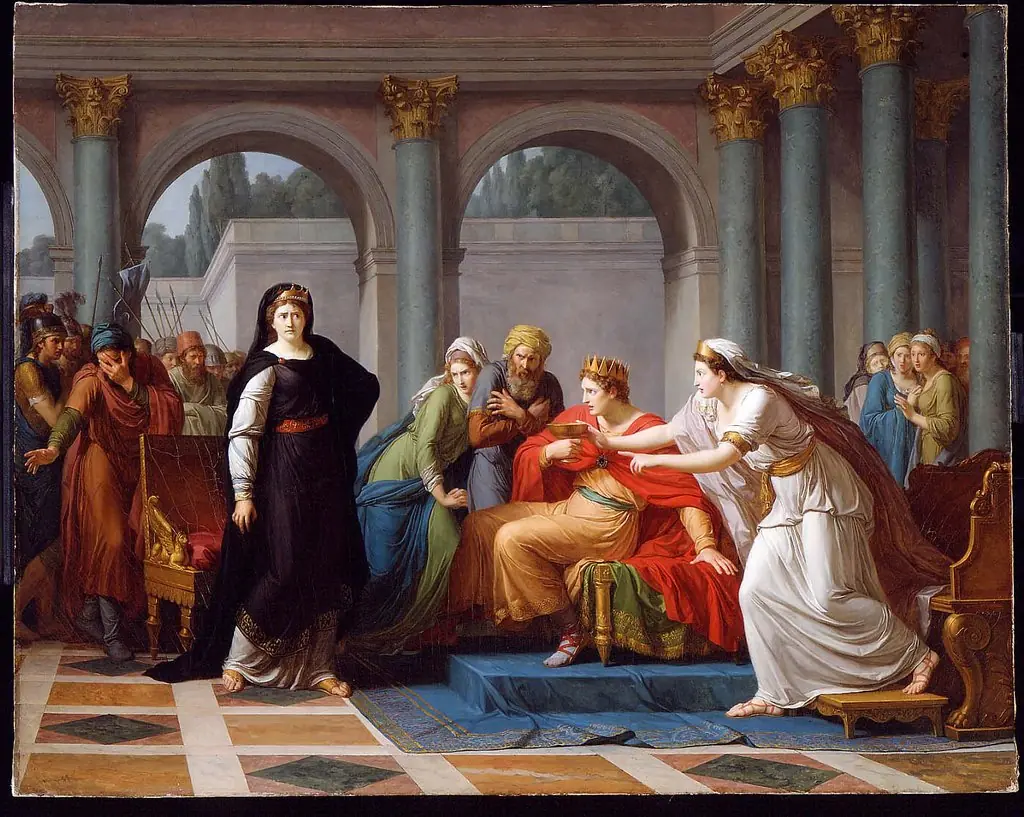 "Seigneur! Voyez ces yeux" (Cleopatra Discovered by Rodogune to Have Poisoned the Nuptial Cup)
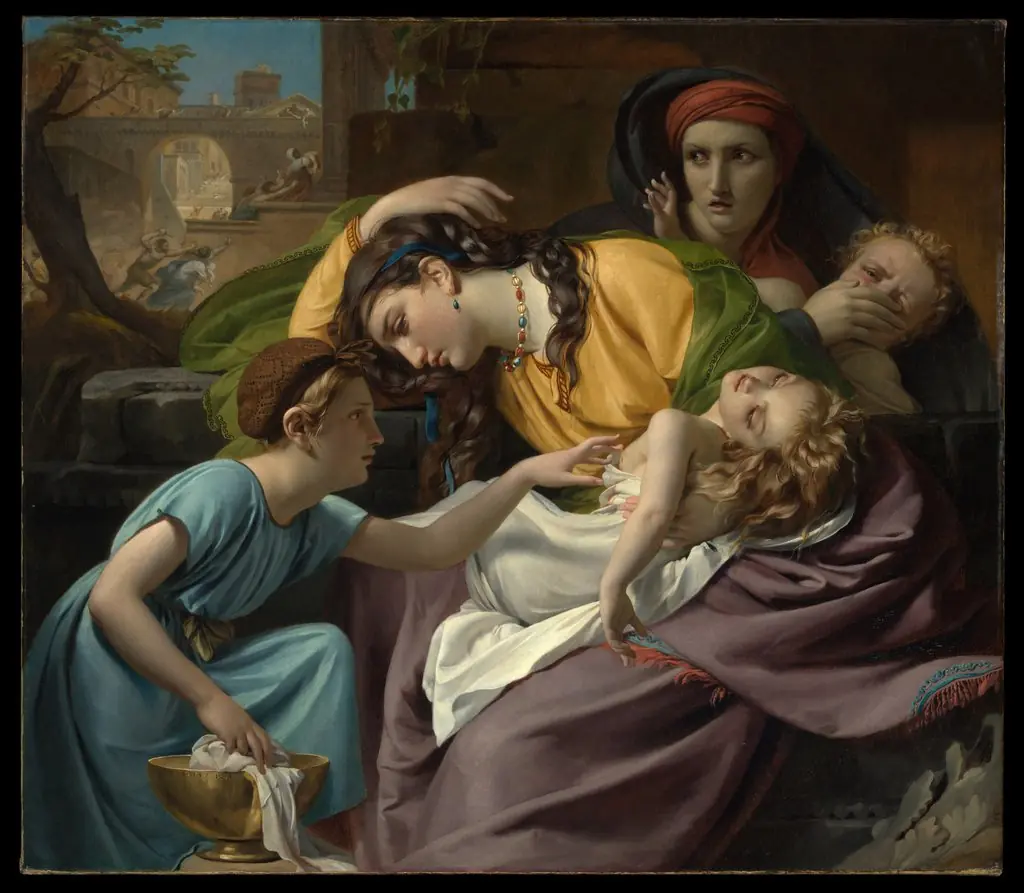 The Massacre of the Innocents
 Regulus Returning to Carthage