Artwork
Hjorte i en skov
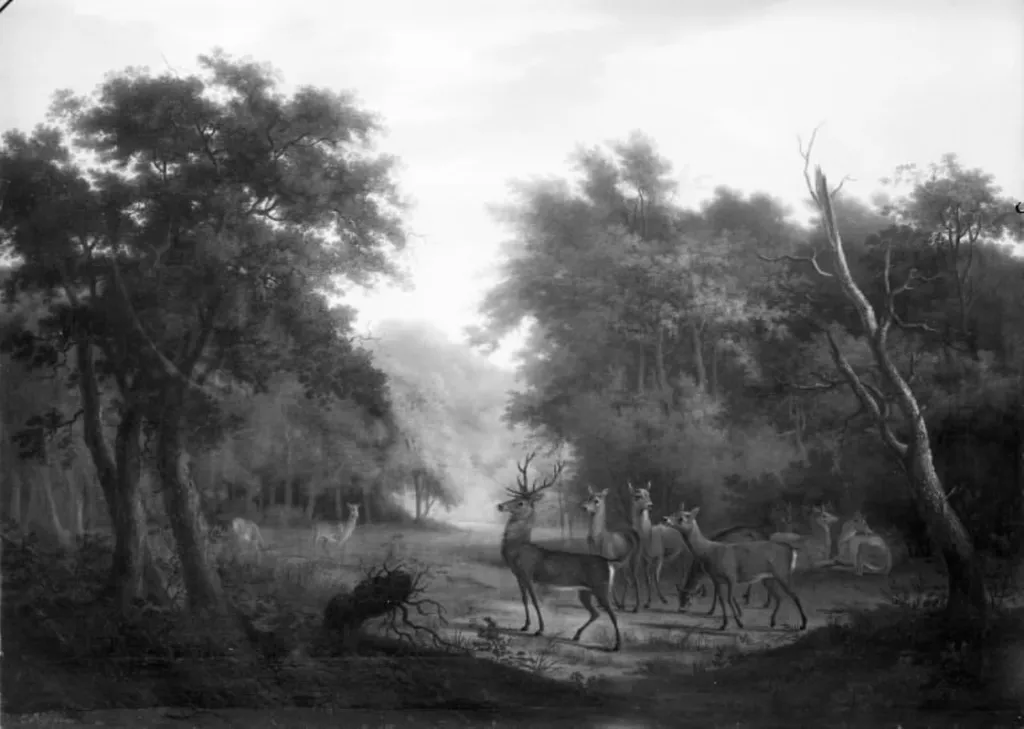
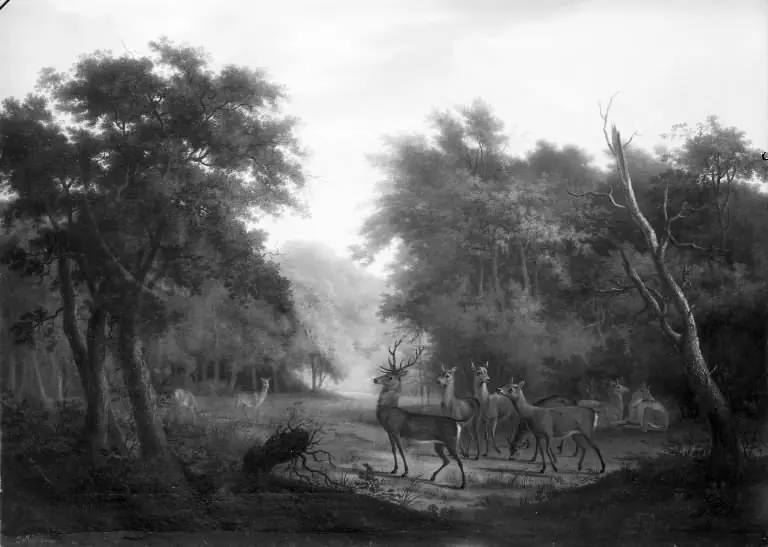
Hjorte i en skov is a photography by the Romanticist artist Unknown. It dates from 1807 and is held in the collection of the Statens Museum for Kunst. Created in 1807 by 709_person, this black-and-white image depicts a group of deer within a dense, mist-laden forest.
About this work
Overview
Its quiet composition and subdued tonality reflect early 19th-century sensibilities toward nature, emphasizing atmosphere over narrative.
Created in 1807 by 709_person, this black-and-white image depicts a group of deer within a dense, mist-laden forest. The work is part of the collection at the Museum of Ethnography. Its quiet composition and subdued tonality reflect early 19th-century sensibilities toward nature, emphasizing atmosphere over narrative. The scene avoids dramatic action, instead inviting contemplation through stillness and soft focus.
Subject & Meaning
The deer, scattered and loosely grouped, appear unaware of the viewer, engaged in quiet behaviors—grazing, turning, or standing still. Their presence in the forest suggests a harmony between animal and environment, free from human intrusion. The path winding through the scene implies a human trace, yet remains unused, reinforcing a sense of solitude and untouched wilderness.
Technique & Style
The artist employs a muted tonal range and blurred contours to evoke a hazy, dreamlike atmosphere. Light filters diffusely through the canopy, softening the edges of tree trunks and branches. The lack of sharp detail and the absence of strong contrasts contribute to a meditative mood. These choices align with emerging Romantic tendencies to prioritize emotional resonance over precise representation.
History & Provenance
The work has been held since its creation by the Museum of Ethnography, though its original commission or exhibition history remains undocumented. Its preservation in this institution suggests an early interest in nature imagery as cultural artifact rather than fine art. No significant alterations or restorations are recorded, and the image survives in its original state.
Context
Produced during the height of Romanticism, the piece reflects a broader European shift toward nature as a vessel for introspection and spiritual feeling. While not overtly symbolic, its quiet forest scene aligns with contemporaneous works that valued solitude and the sublime in natural landscapes. It stands apart from theatrical depictions of nature, favoring restraint and quiet observation.
Legacy
Though not widely reproduced or studied, the image contributes to a lesser-known strand of early 19th-century Nordic nature imagery. Its preservation in an ethnographic context rather than an art museum underscores its perceived role as a document of natural life. It remains a quiet example of how artists of the period used landscape to convey mood without overt narrative.
Artist & collection

 Domestic Scene
 Giacomo and Cardinal Marco, investing Andrea, Abbot of San Zeno, with his Benefice
 The Nymph of Fontainebleau
 Portrait of a Woman
 Madonna and Child with Saints in the Enclosed Garden
 Venus and Minerva
 Family Group of Four on Sofa
 Wall painting from Room H of the Villa of P. Fannius Synistor at Boscoreale