Artwork
To damer sidder ved et vindue og syr
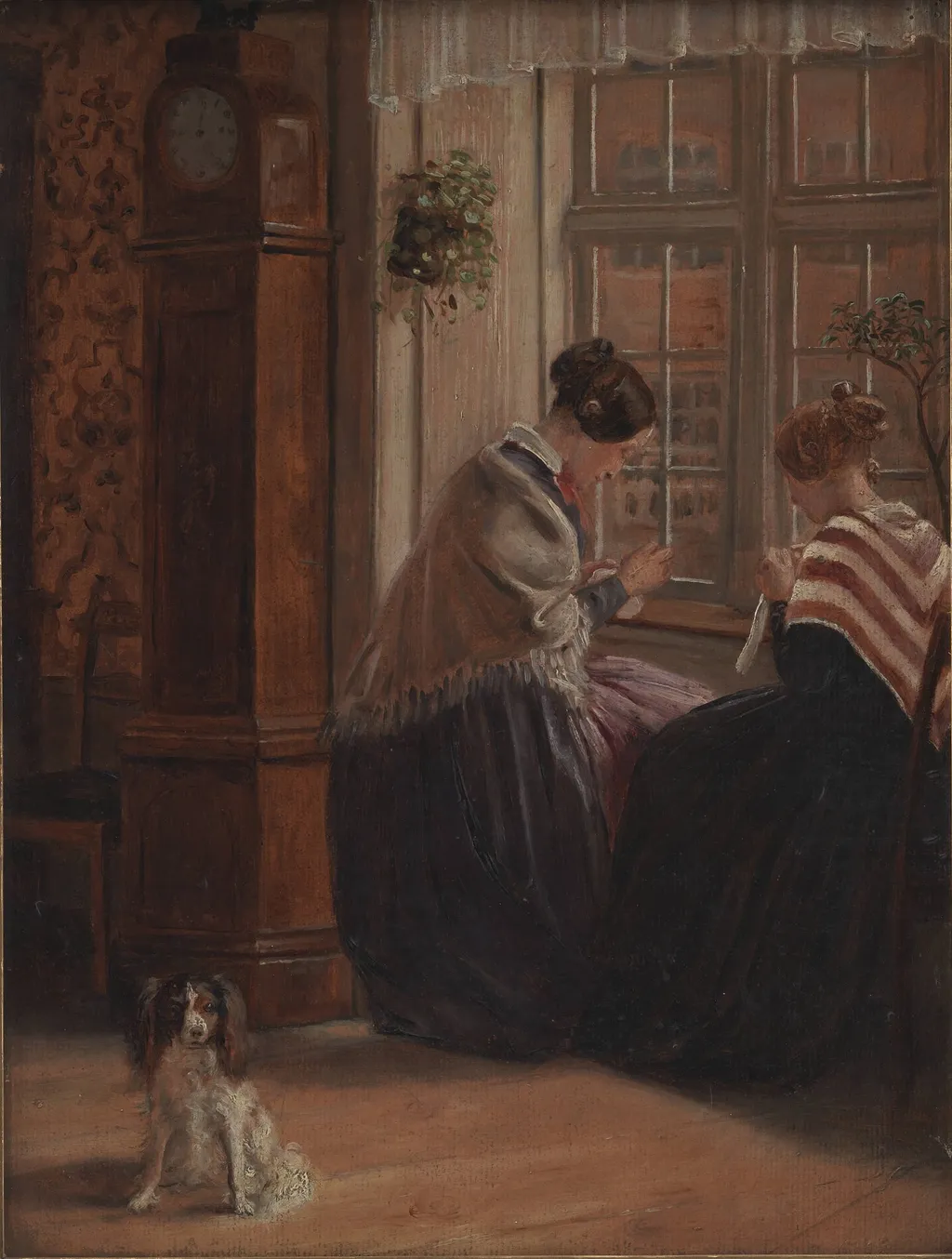
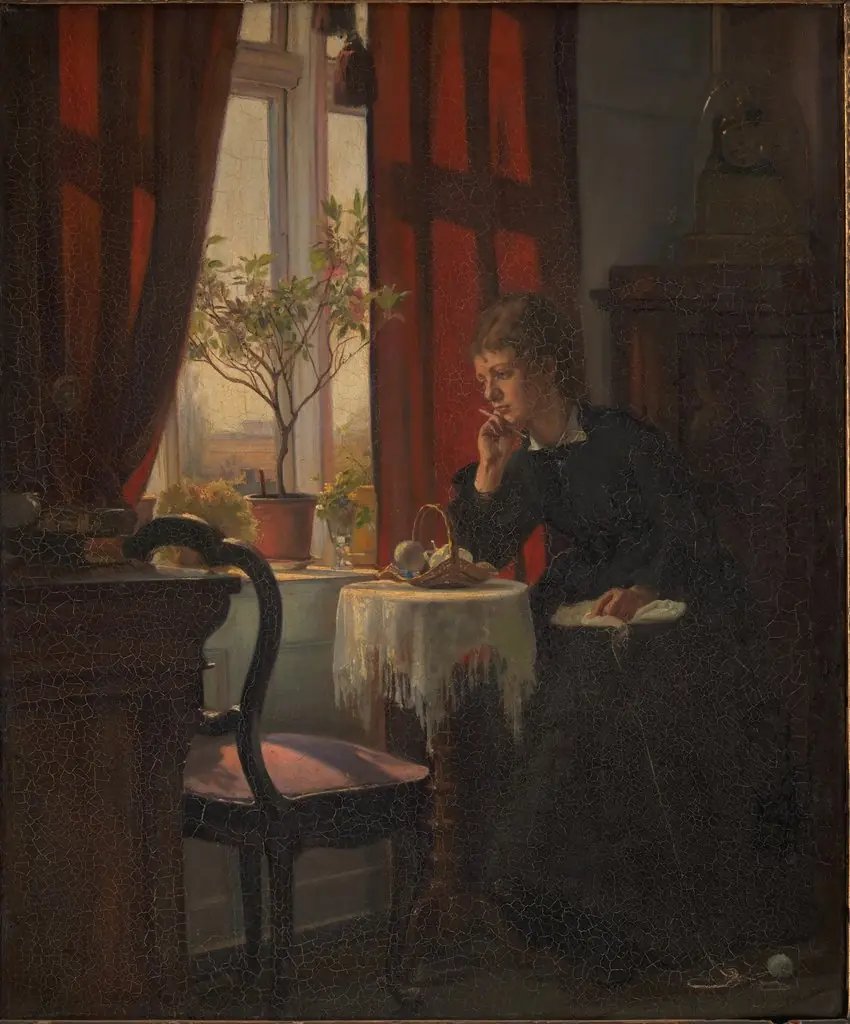
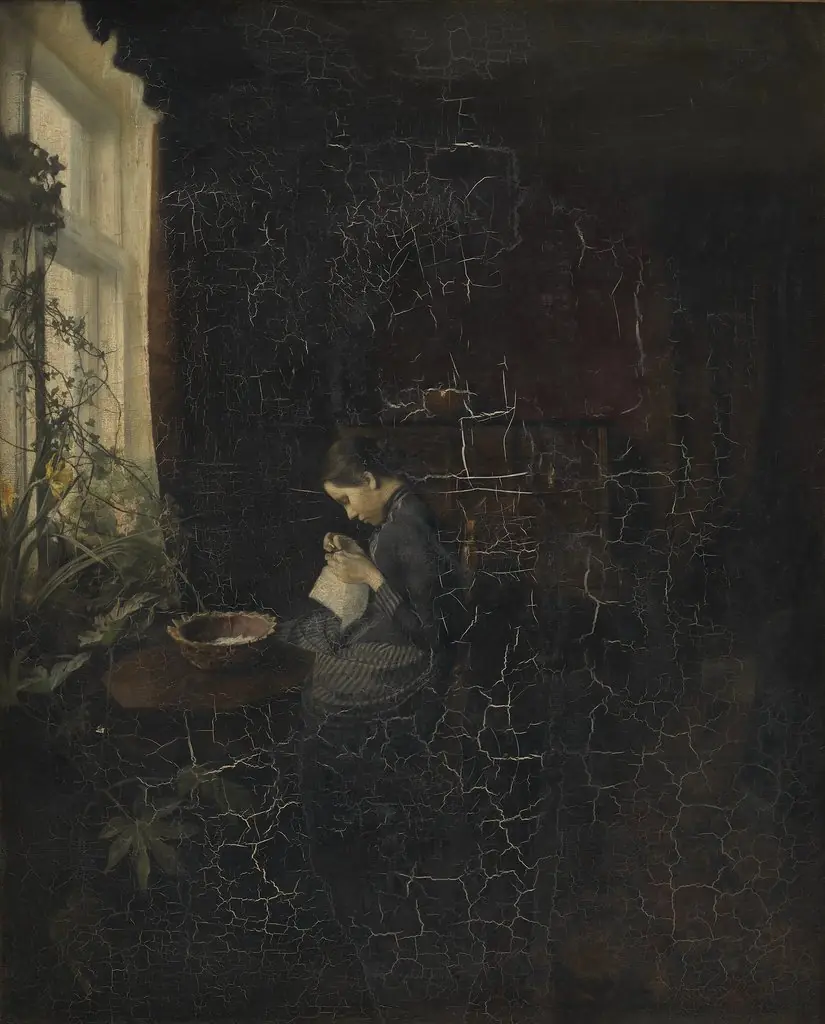
To damer sidder ved et vindue og syr is a photography by Unknown. It dates from 1875 and is held in the collection of the Statens Museum for Kunst. Painted around 1875, this work depicts two women engaged in quiet domestic activity near a window.
About this work
Overview
The composition emphasizes stillness and intimacy, with attention to subtle interactions between figures and their environment.
Painted around 1875, this work depicts two women engaged in quiet domestic activity near a window. Executed in oil, it belongs to the collection of the Museum of Ethnography. The composition emphasizes stillness and intimacy, with attention to subtle interactions between figures and their environment. The artist’s handling of light and texture suggests a focus on everyday moments rather than grand narrative.
Subject & Meaning
The two women, dressed in dark garments with pale collars, are shown in a moment of shared domestic labor—one sewing, the other observing. The presence of a small dog at their feet adds a quiet companionable element. The scene conveys no overt drama, instead suggesting routine, patience, and the unspoken rhythms of women’s lives in the late 19th century. The setting implies privacy and domestic order.
Technique & Style
The brushwork is loose and fluid, with visible strokes that suggest immediacy rather than polished finish. Light falls warmly from the window, illuminating the figures and the dog while the surrounding room recedes into shadow. This selective illumination draws focus to the central group without harsh contrast. The background elements—furniture, clock, plants—are rendered with minimal detail, reinforcing the intimacy of the foreground.
History & Provenance
The painting entered the Museum of Ethnography’s collection in the late 19th or early 20th century, likely through acquisition or donation. Its attribution to the artist remains consistent in institutional records. While little is documented about its early ownership, its preservation within a museum focused on cultural artifacts suggests an interest in representing everyday life across social contexts.
Context
Created during a period when domestic interiors became a common subject in Nordic and European art, the painting reflects broader trends in genre painting that valued quiet realism. Unlike theatrical scenes, it avoids narrative climax, aligning with a growing interest in the dignity of ordinary routines. Similar works by contemporaries often featured women in private spaces, emphasizing stillness over action.
Legacy
The work contributes to a visual record of late 19th-century domestic life, particularly in Nordic regions. Its unembellished approach and emphasis on light and texture influenced later artists interested in intimate realism. Though not widely exhibited outside its home institution, it remains a quiet example of how everyday moments were rendered with sensitivity and restraint in the period.
Artist & collection

 Domestic Scene
 Giacomo and Cardinal Marco, investing Andrea, Abbot of San Zeno, with his Benefice
 The Nymph of Fontainebleau
 Portrait of a Woman
 Madonna and Child with Saints in the Enclosed Garden
 Venus and Minerva
 Family Group of Four on Sofa
 Wall painting from Room H of the Villa of P. Fannius Synistor at Boscoreale