Artwork
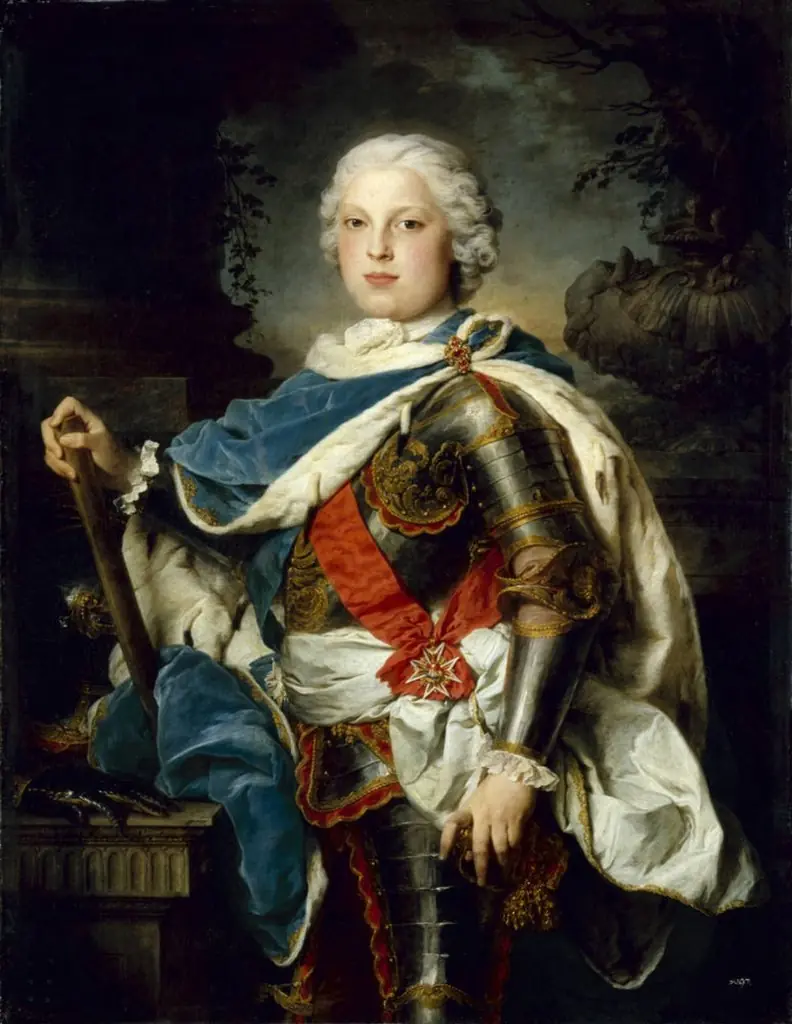
Portrait of Frederik V in Anointment Robe
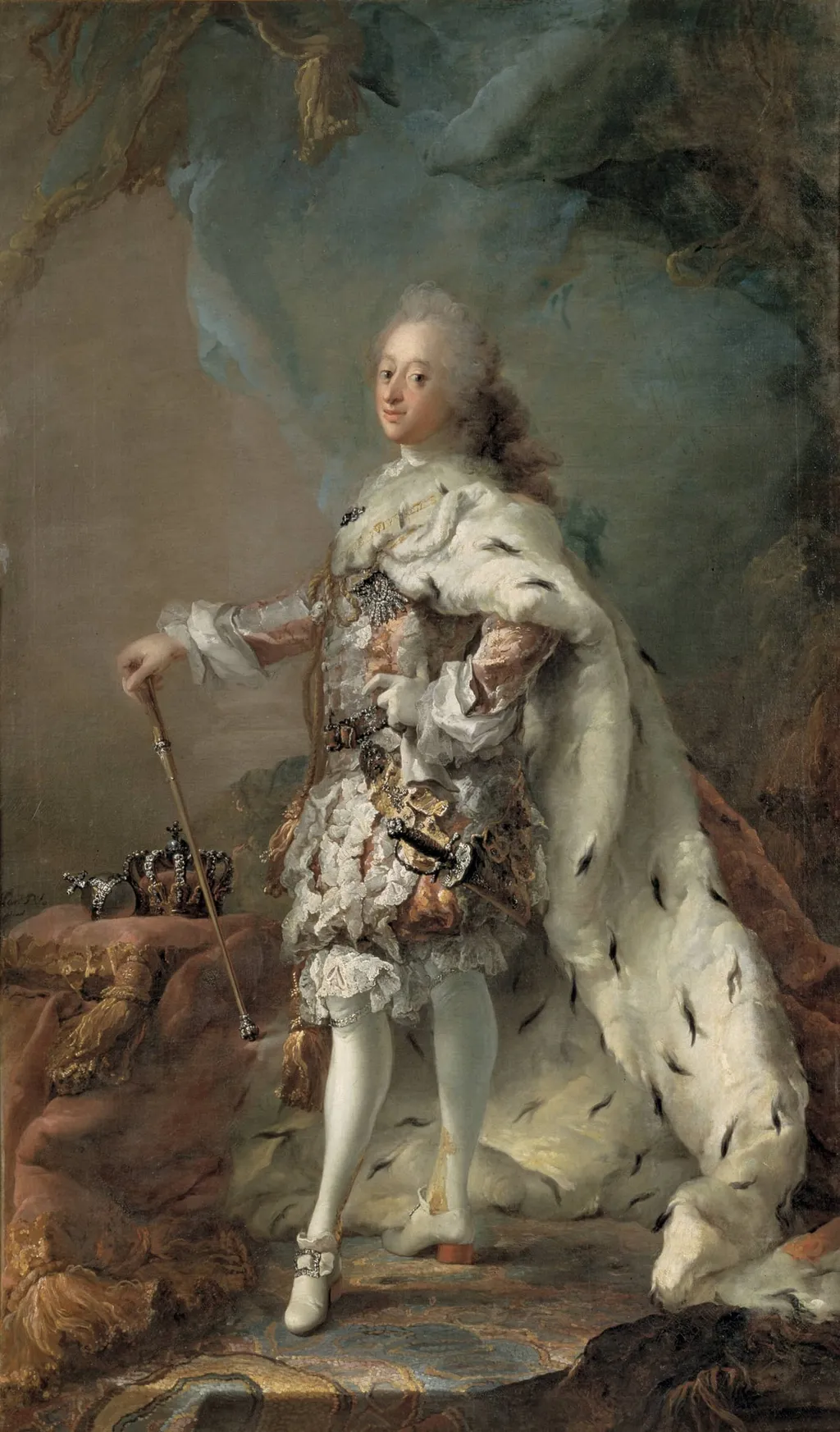
Portrait of Frederik V in Anointment Robe is an unspecified painting by Unknown. It dates from 1750 and is held in the collection of the Statens Museum for Kunst.
About this work
Overview
It is currently held in the collection of the Museum of Ethnography, though its origins lie in royal portraiture rather than ethnographic documentation.
This portrait depicts King Frederik V of Denmark-Norway, painted around 1750, likely by a court artist associated with the Danish royal court. The image captures him in ceremonial attire worn during his anointment, emphasizing his sovereign status. It is currently held in the collection of the Museum of Ethnography, though its origins lie in royal portraiture rather than ethnographic documentation.
Subject & Meaning
Frederik V is shown in the ceremonial robe of his coronation, a garment symbolizing divine authority and monarchical continuity. The positioning—standing on a rocky outcrop, staff in hand—evokes stability and dominion over nature. The elaborate costume, rich in fur and gold, reinforces his elevated status, while the austere landscape behind him contrasts with the opulence of his attire, focusing attention on the monarch as the central figure of order.
Technique & Style
The artist employs chiaroscuro to model the heavy fabric of the robe, using sharp contrasts between light and shadow to suggest volume and texture. Gold embroidery catches the light with precision, enhancing the garment’s luxury. The wig and stockings are rendered with fine detail, while the background remains loosely painted, creating a sense of depth without distraction. The composition is formal, prioritizing symbolic presence over naturalistic setting.
History & Provenance
Painted shortly after Frederik V’s coronation in 1750, the portrait was likely commissioned for royal use, possibly to affirm legitimacy during a period of political consolidation. It entered the Museum of Ethnography’s collection in the late 19th or early 20th century, possibly through a transfer from royal holdings or a donation tied to colonial-era acquisitions, though its original context as royal iconography was later reclassified.
Context
In mid-18th-century Europe, royal portraiture served as political theater, reinforcing the monarch’s role as divinely sanctioned ruler. Denmark-Norway, though not a major power, maintained elaborate court rituals to project continuity and authority. This portrait aligns with broader trends in Northern European royal imagery, where costume, posture, and symbolic objects were carefully chosen to communicate legitimacy and tradition.
Legacy
The portrait remains a key visual record of Frederik V’s reign and the visual language of Danish monarchy in the Enlightenment era. While not widely exhibited outside specialized collections, it contributes to scholarly understanding of how Scandinavian courts adapted European courtly aesthetics. Its presence in an ethnographic museum reflects shifting institutional priorities in the 20th century, rather than its original function.
Artist & collection

 Domestic Scene
 Giacomo and Cardinal Marco, investing Andrea, Abbot of San Zeno, with his Benefice
 The Nymph of Fontainebleau
 Portrait of a Woman
 Madonna and Child with Saints in the Enclosed Garden
 Venus and Minerva
 Family Group of Four on Sofa
 Wall painting from Room H of the Villa of P. Fannius Synistor at Boscoreale
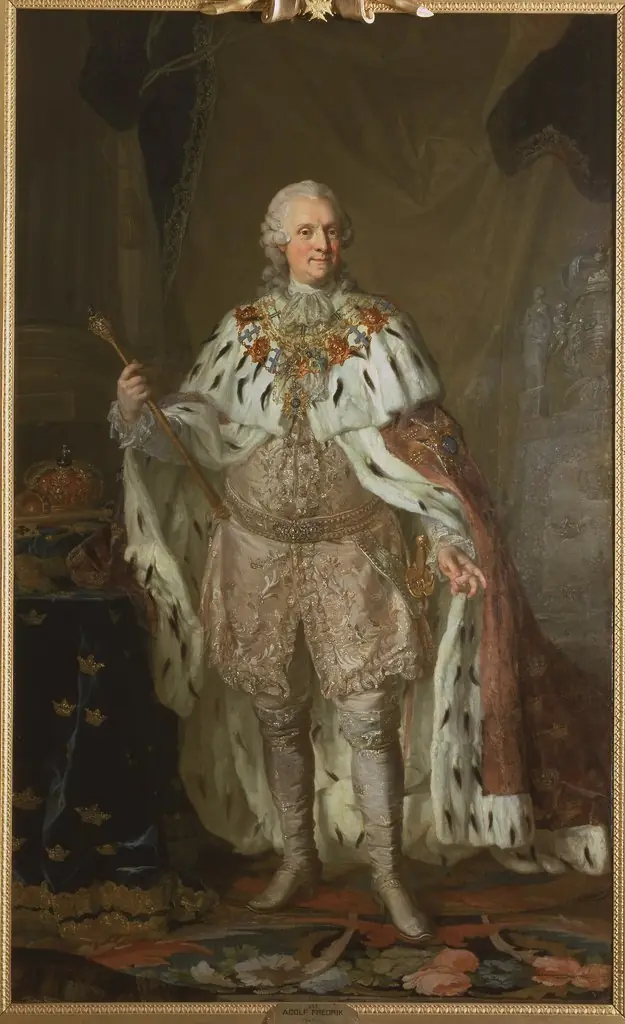 Adolf Fredrik, 1710-1771, konung av Sverige hertig av Holstein-Gottorp
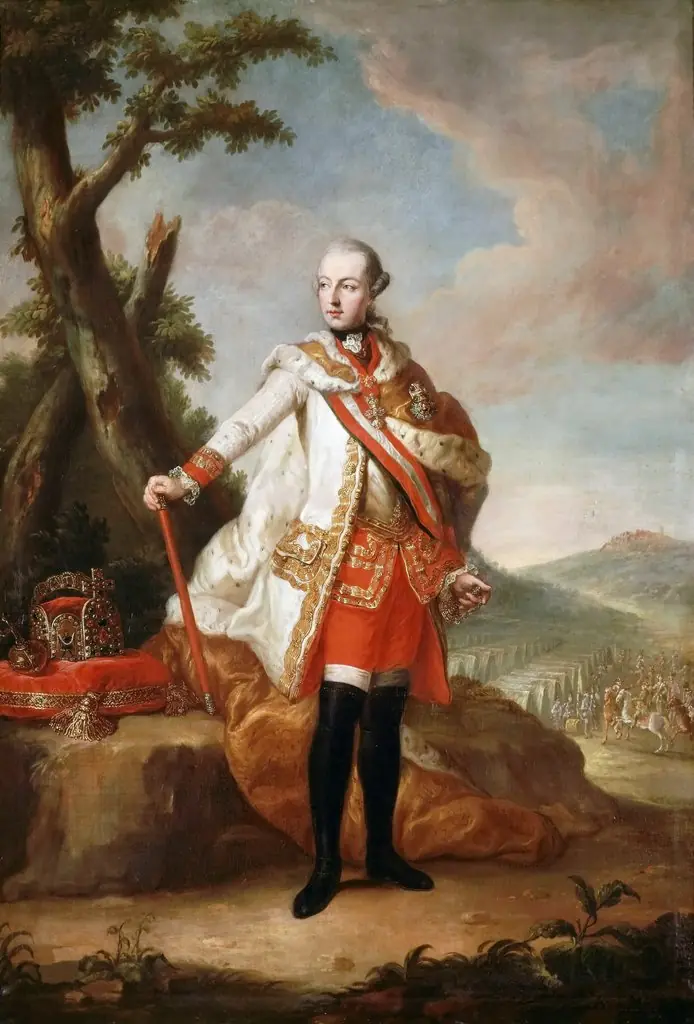 Joseph II, Emperor of Germany (1741-1790)
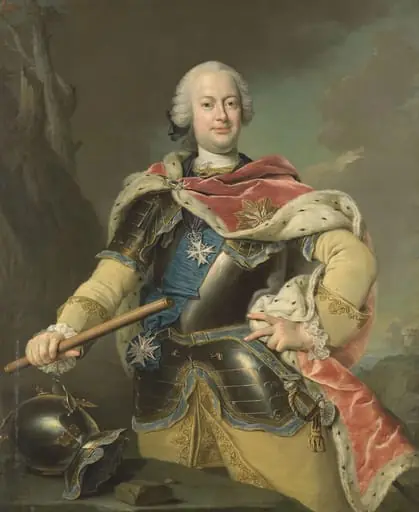 Friedrich Christian, Prince-Elector of Saxony, Prince of Poland
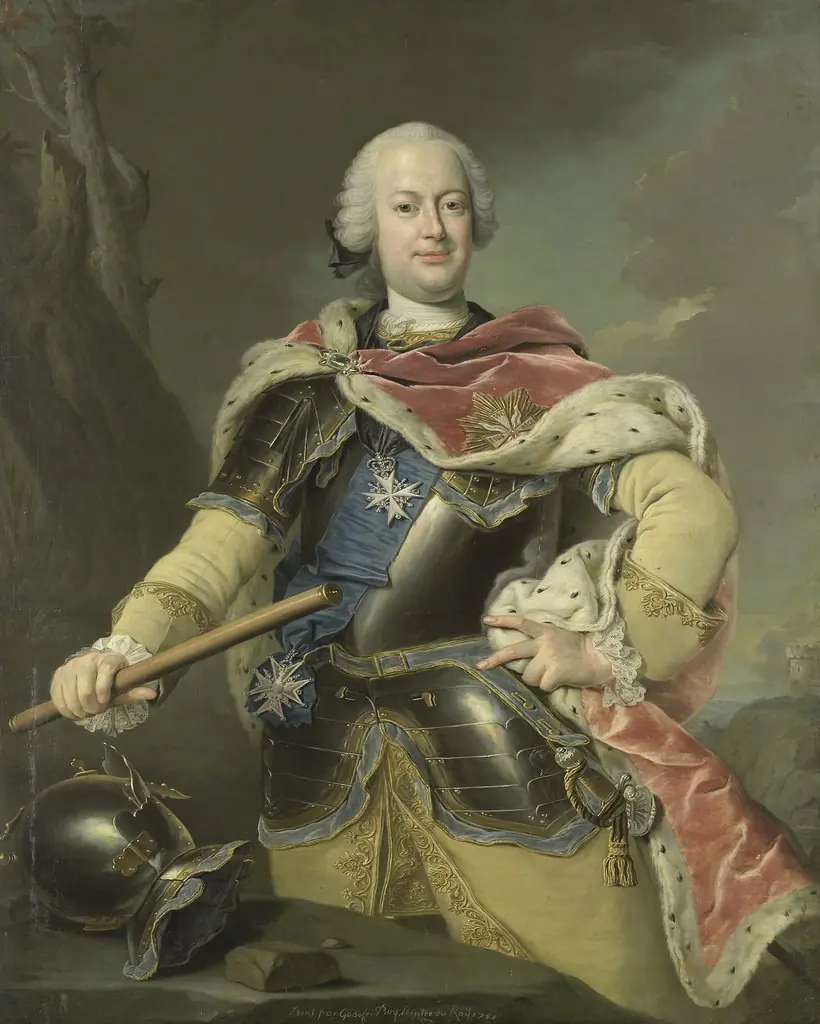 Friedrich Christian (1722-63), Elector of Saxony and King of Poland
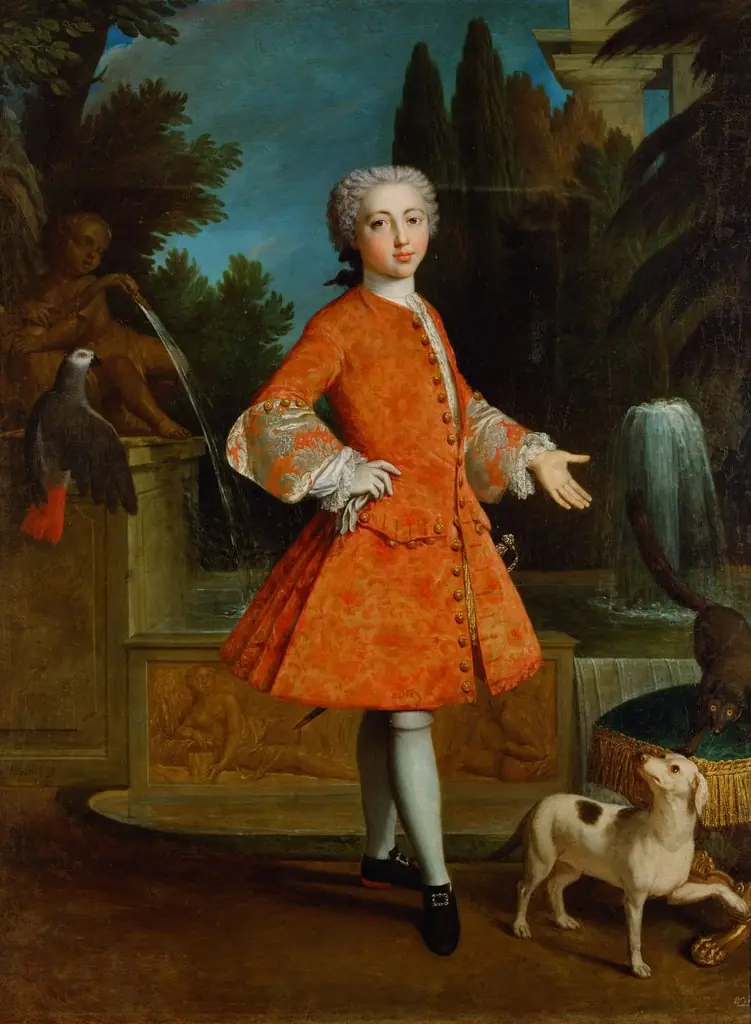 Duke Louis-Philippe of Orleans
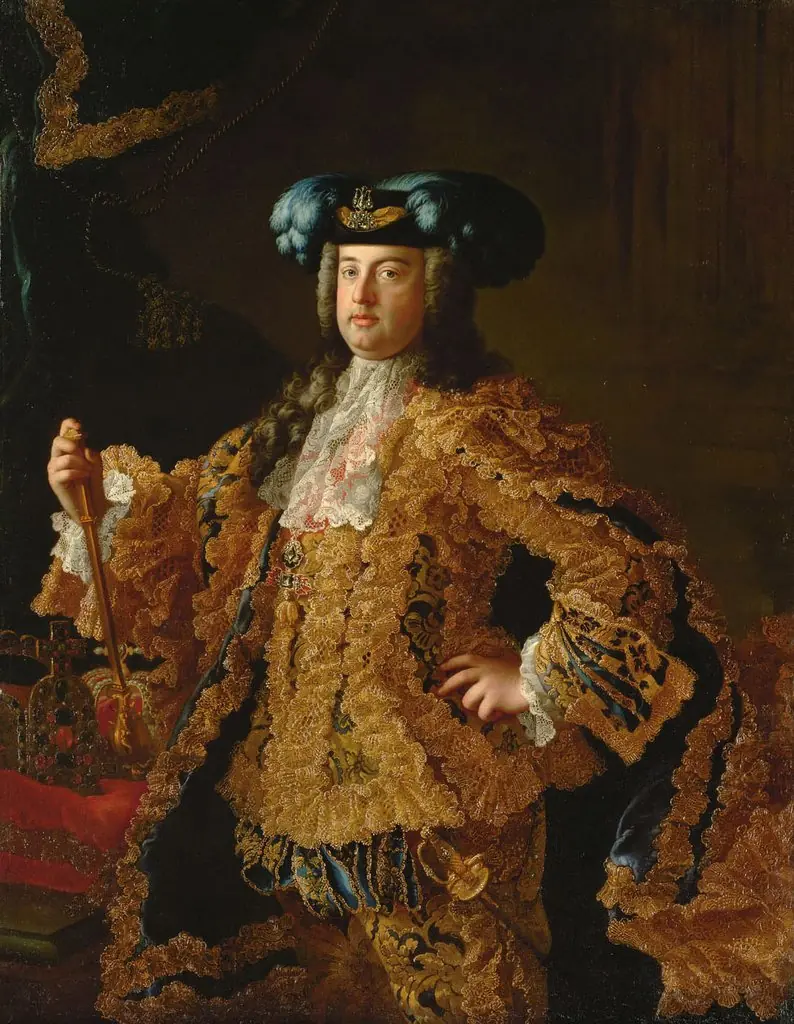 Herzog Franz (I.) Stephan von Lothringen (1708-1765), in reichem Hofkleid, Kniestück
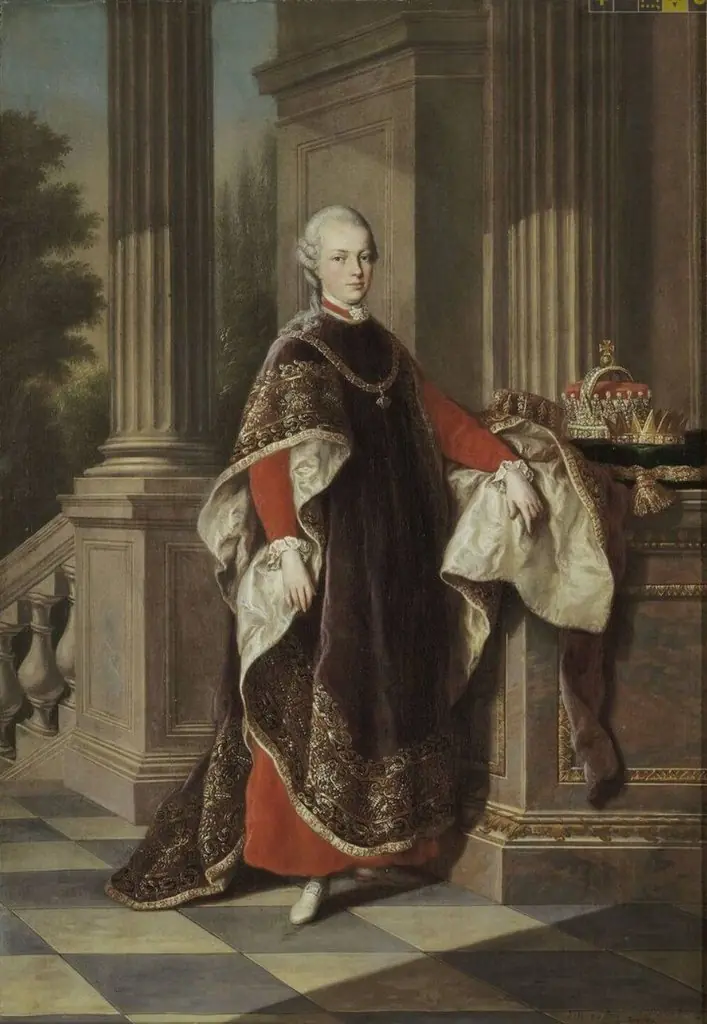 Kaiser Leopold II in Kleidung des Ritterordens vom Goldenen Vlies
 Kurprinz Friedrich Christian von Sachsen (1722-1763)