Artwork
Interior of a Catholic Church
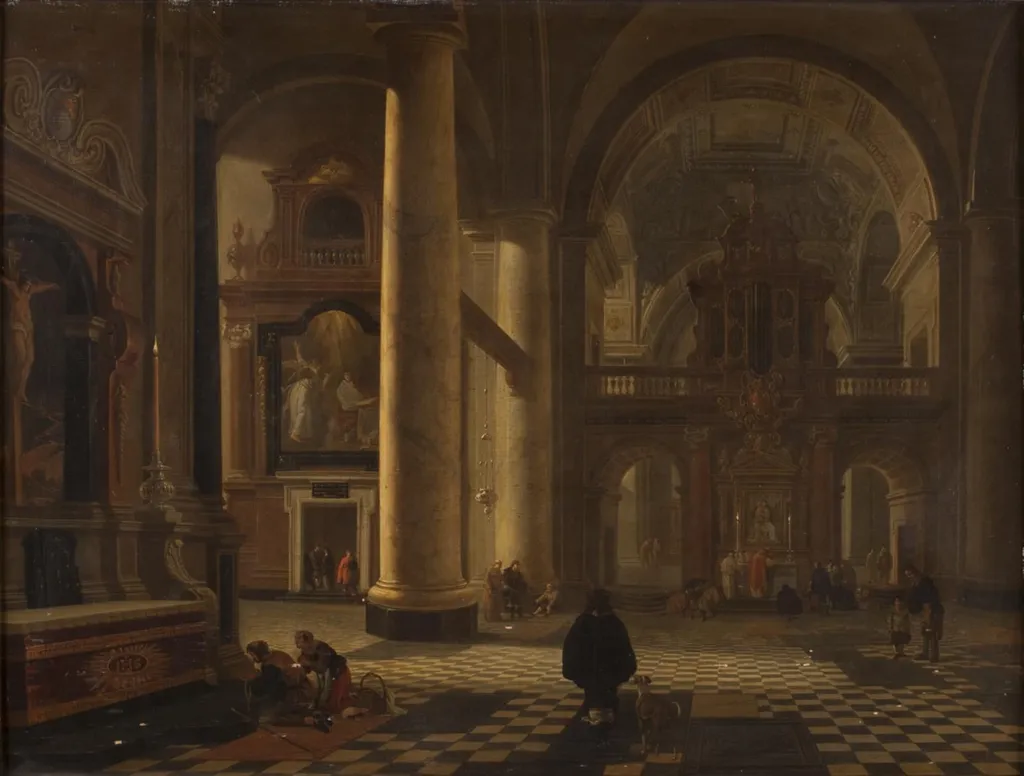
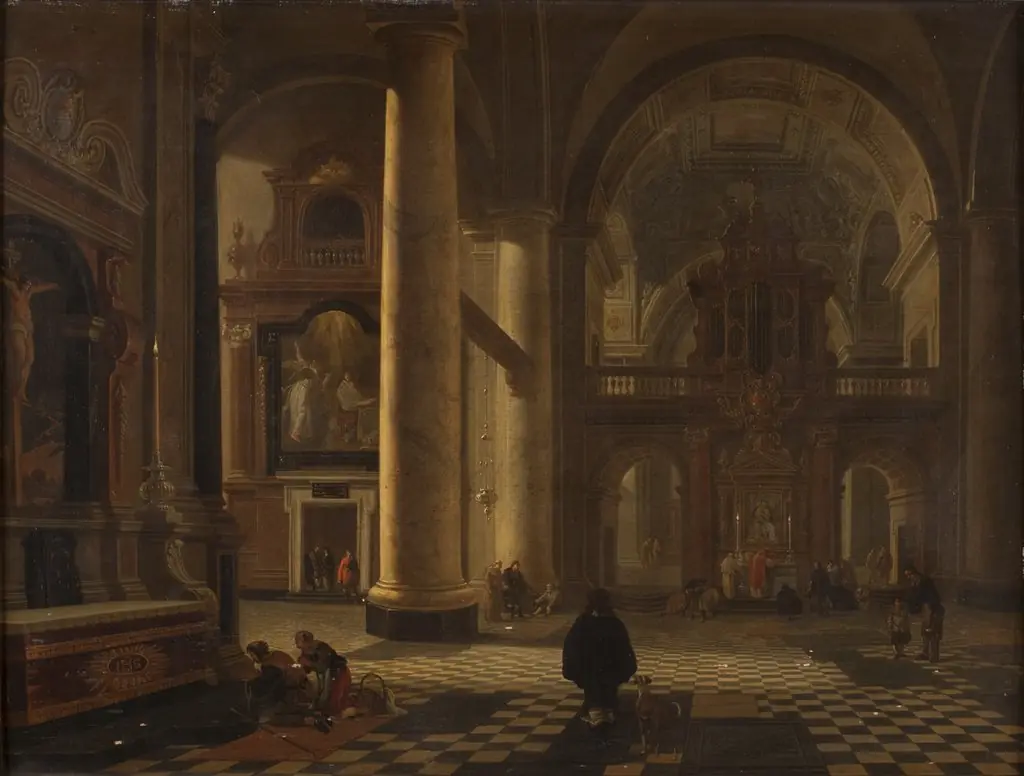
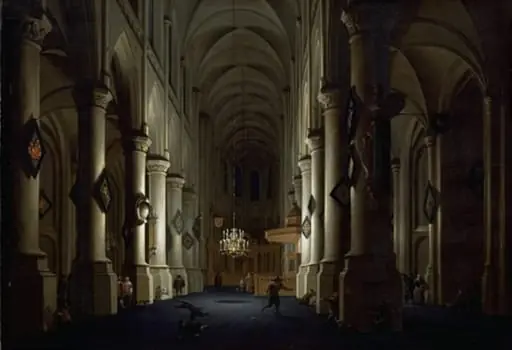
Interior of a Catholic Church is a photography by Unknown. It dates from 1638 and is held in the collection of the Statens Museum for Kunst. Painted around 1638, this interior view of a Catholic church is attributed to 777_person.
About this work
Overview
The work is part of the Museum of Ethnography’s collection and exemplifies a quiet, contemplative approach to sacred architecture.
Painted around 1638, this interior view of a Catholic church is attributed to 777_person. The work is part of the Museum of Ethnography’s collection and exemplifies a quiet, contemplative approach to sacred architecture. Rather than emphasizing ritual or ceremony, the artist focuses on spatial atmosphere, using controlled contrasts of light and shadow to guide the viewer’s perception through the nave and aisles.
Subject & Meaning
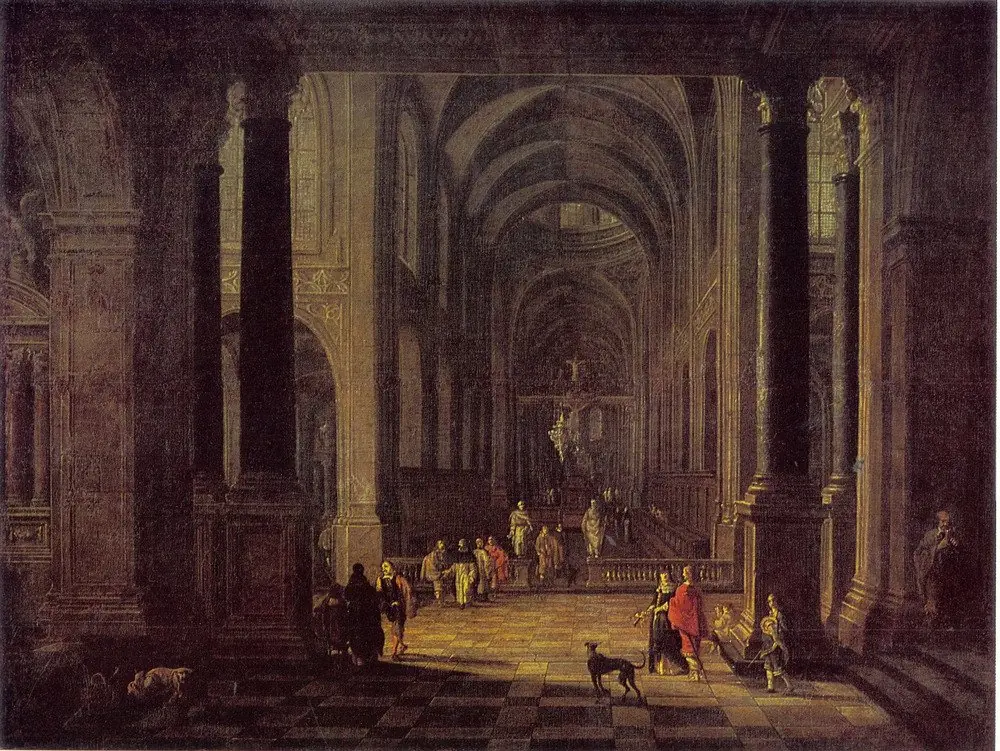
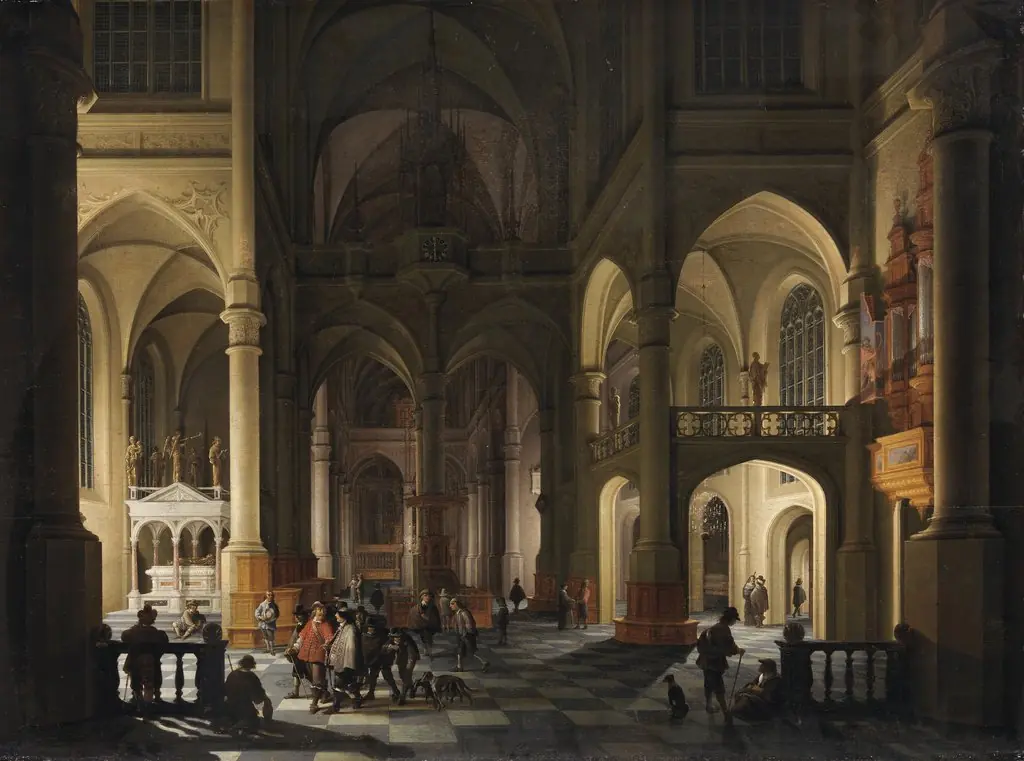
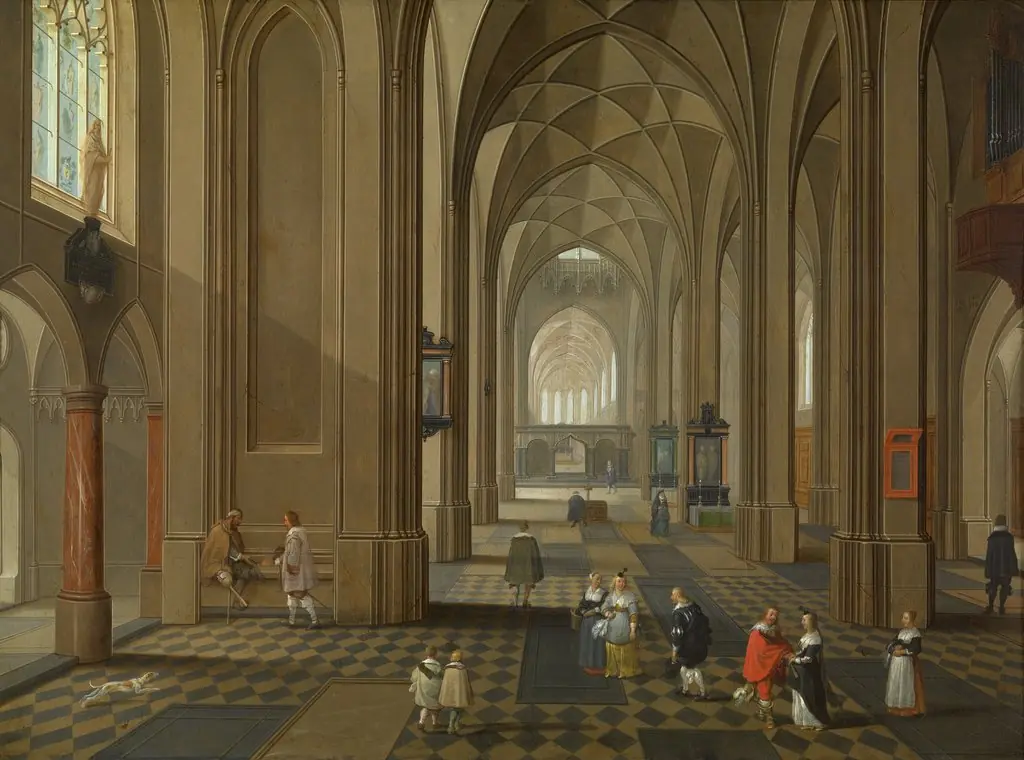
The painting presents a church interior as a silent, monumental space rather than a scene of active worship. Figures are present but minimized, scattered and dwarfed by the architecture. Their presence suggests human transience against the enduring weight of religious structure. The subdued tone and lack of narrative imply a meditation on solitude, devotion, and the physical embodiment of faith.
Technique & Style
The artist employs chiaroscuro to model the vast interior, with deep shadows receding behind pillars and vaulted arches while selective light illuminates stone carvings and distant altars. Brushwork is restrained, favoring tonal gradation over detail. This method draws attention to volume and spatial depth, aligning the work with Northern European traditions that prioritize mood and architectural presence over figural drama.
History & Provenance
The painting has been in the Museum of Ethnography’s holdings since at least the early 20th century, though its earlier ownership remains undocumented. Its attribution to 777_person is based on stylistic parallels with other known works, though no definitive archival records confirm its commission or original location. The absence of inscriptions or signatures leaves its early history partially obscured.
Context
Created during the Counter-Reformation, the image reflects a period when Catholic churches were designed to inspire awe through grandeur and ornamentation. Yet this painting avoids overt propaganda, instead capturing the quiet aftermath of liturgy. It aligns with a growing interest in architectural interiors as subjects worthy of contemplation, distinct from devotional imagery or historical narratives.
Legacy
The work contributes to a quiet lineage of church interior paintings that prioritize atmosphere over narrative. Its emphasis on light as a compositional force influenced later artists interested in the emotional resonance of space. Though not widely reproduced, it remains a significant example of how sacred architecture could be rendered as a psychological landscape rather than a religious symbol.
Artist & collection

 Domestic Scene
 Giacomo and Cardinal Marco, investing Andrea, Abbot of San Zeno, with his Benefice
 The Nymph of Fontainebleau
 Portrait of a Woman
 Madonna and Child with Saints in the Enclosed Garden
 Venus and Minerva
 Family Group of Four on Sofa
 Wall painting from Room H of the Villa of P. Fannius Synistor at Boscoreale