Artwork
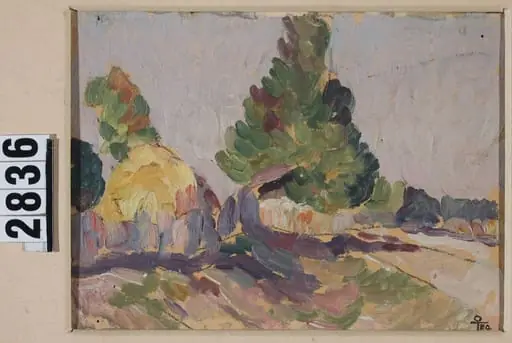
Landscape. Brittany
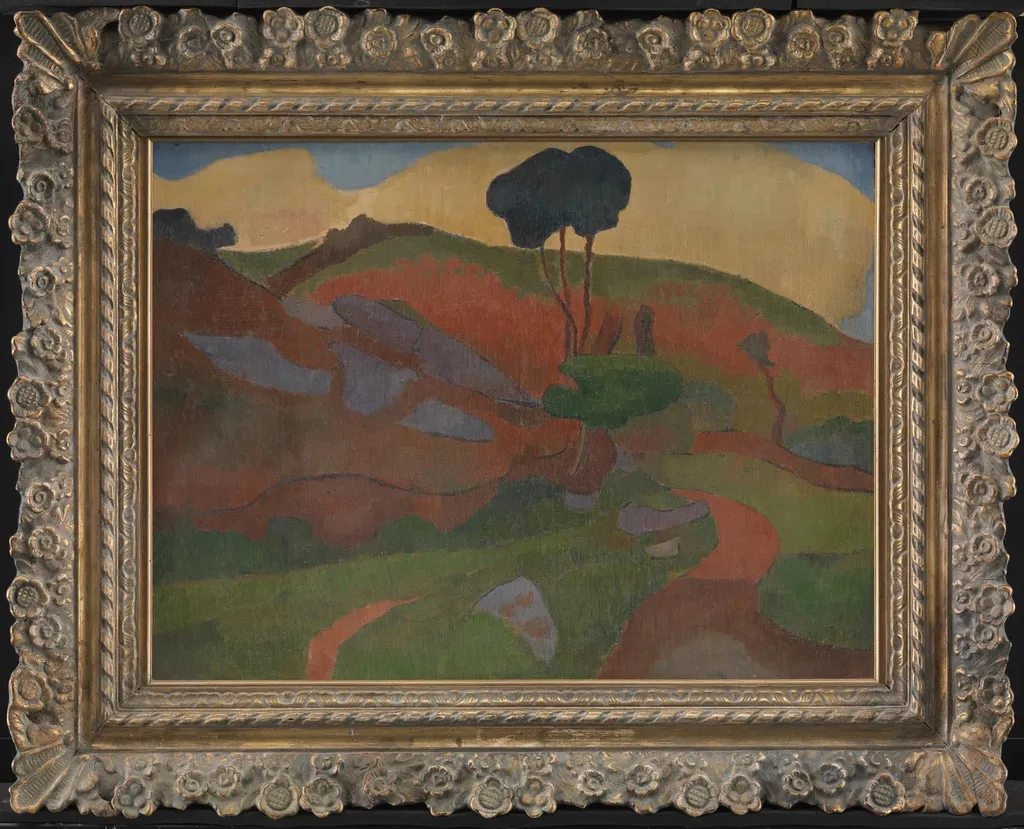
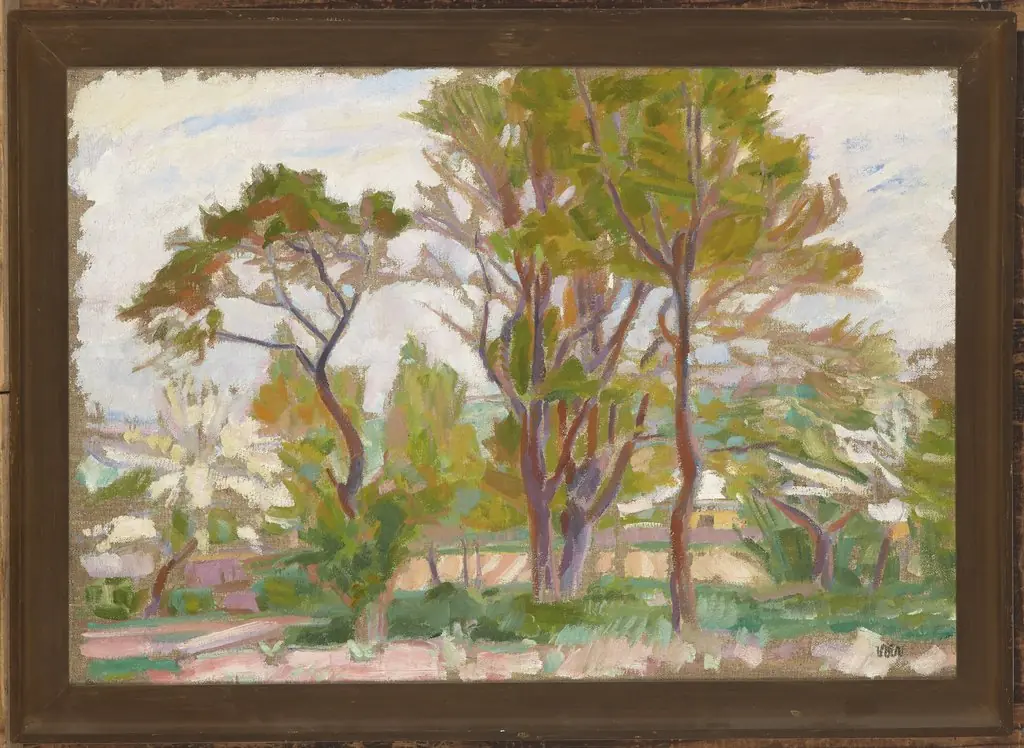
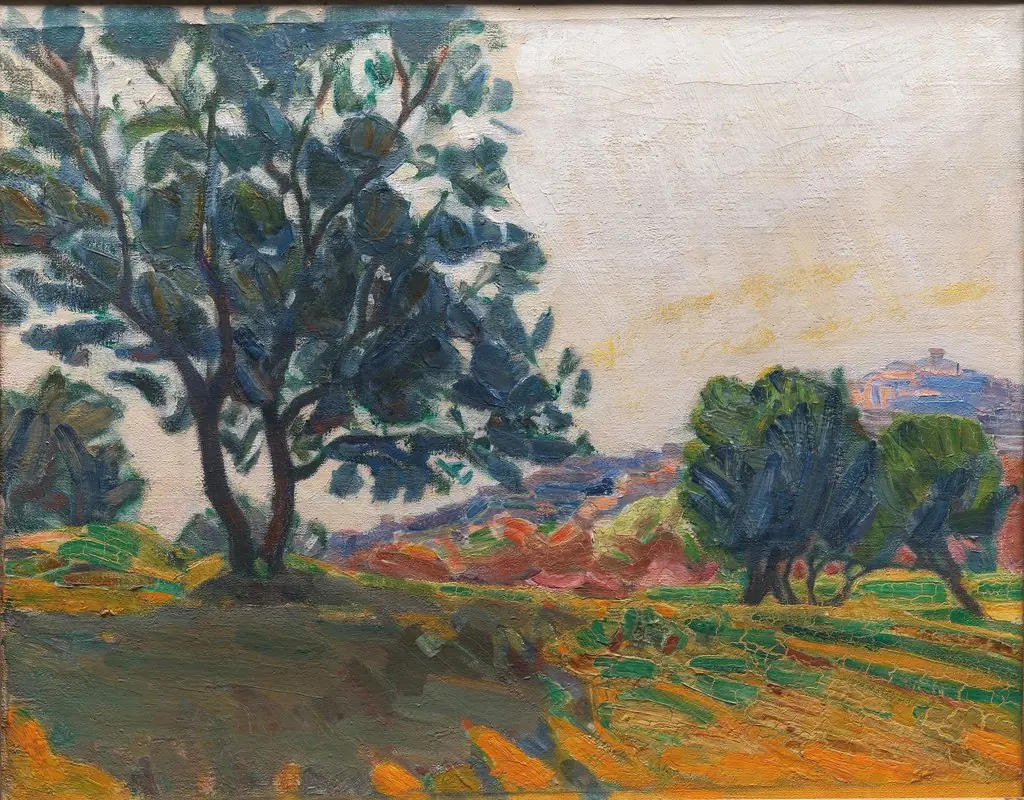
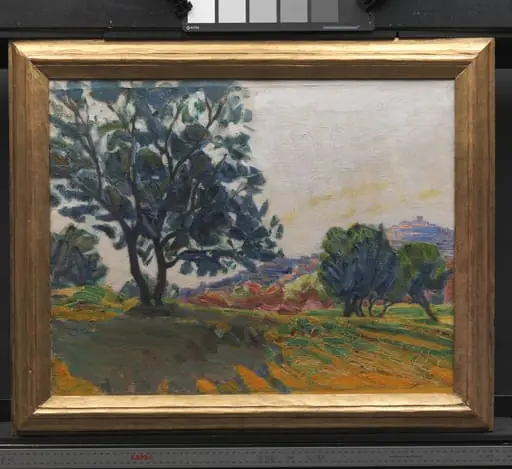
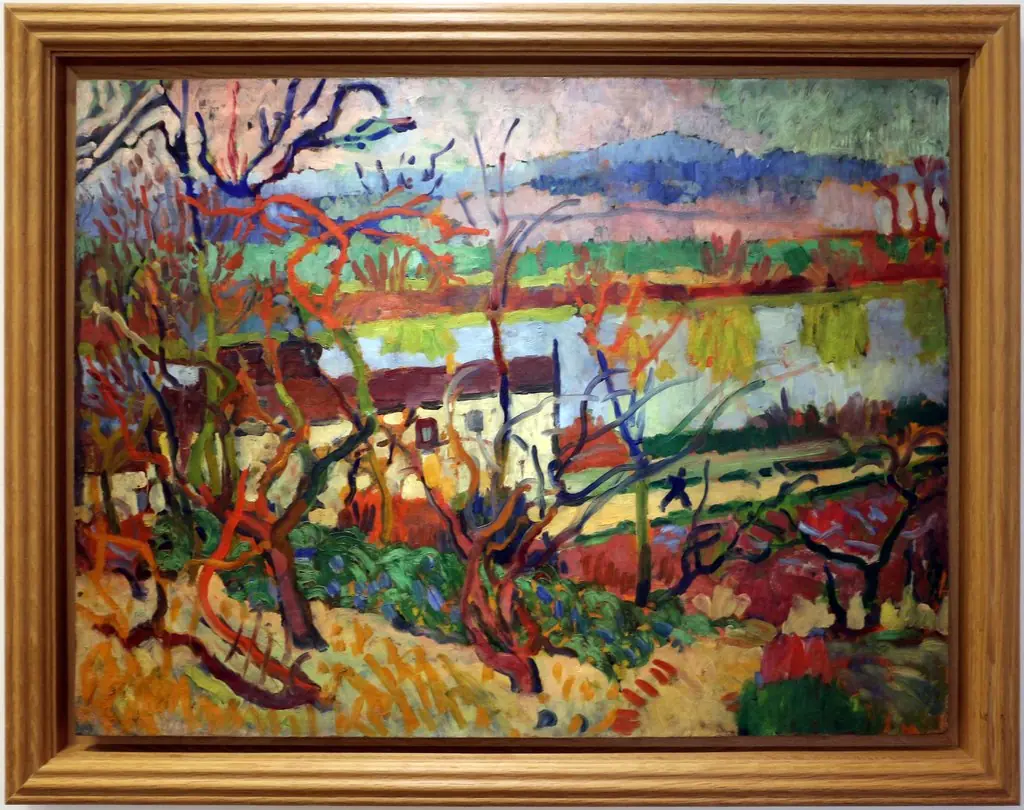
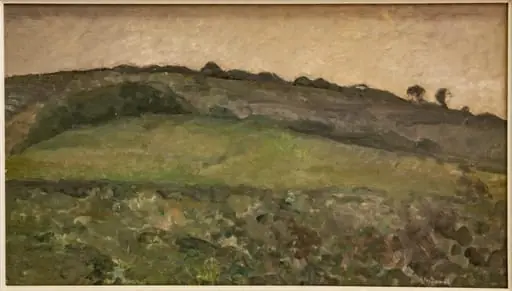
Landscape. Brittany is an unspecified painting by Unknown. It dates from 1850 and is held in the collection of the Statens Museum for Kunst. Painted around 1850, this landscape depicts a rural scene in Brittany, rendered in oil on canvas.
About this work
Overview
The composition centers on a slender tree and undulating hills, arranged with minimal detail and a focus on atmospheric tone.
Painted around 1850, this landscape depicts a rural scene in Brittany, rendered in oil on canvas. The work is part of the Museum of Ethnography’s collection, though its classification there reflects broader 19th-century curatorial practices rather than ethnographic content. The composition centers on a slender tree and undulating hills, arranged with minimal detail and a focus on atmospheric tone.
Subject & Meaning
The scene presents a quiet, unidealized view of the Breton countryside, devoid of human figures or narrative. The emphasis on natural forms—rolling hills, a solitary tree, and a shifting sky—suggests an interest in the region’s topography rather than symbolic or sentimental themes. The absence of human activity points to a contemplative, observational approach to landscape.
Technique & Style
Brushwork is loose and expressive, with layered pigments creating subtle transitions between hues. The sky shifts from pale blue at the zenith to muted indigo near the horizon, while the hills are built from earth tones—ochre, olive, and russet—applied in irregular planes. The tree’s vertical form contrasts with the horizontal sweep of the land, anchoring the composition without dominating it.
History & Provenance
The painting entered the Museum of Ethnography in the late 19th century, likely as part of a broader collection of regional artworks gathered during a period of heightened interest in French provincial culture. Its attribution to 8445_person remains tentative, with no documented exhibition history or correspondence confirming authorship prior to its acquisition.
Context
Created during a time when French artists increasingly turned to rural subjects outside Paris, this work aligns with early movements toward plein air observation. Though not part of the Barbizon School, it shares their preference for unembellished nature. Brittany, then considered culturally distinct, attracted artists seeking authenticity beyond urban centers.
Legacy
The painting’s placement in an ethnographic museum highlights shifting attitudes toward regional identity and artistic value in the 1800s. While not widely exhibited or studied today, it remains a quiet example of how provincial landscapes were collected as cultural artifacts, reflecting broader efforts to document France’s diverse visual heritage.
Artist & collection

 Domestic Scene
 Giacomo and Cardinal Marco, investing Andrea, Abbot of San Zeno, with his Benefice
 The Nymph of Fontainebleau
 Portrait of a Woman
 Madonna and Child with Saints in the Enclosed Garden
 Venus and Minerva
 Family Group of Four on Sofa
 Wall painting from Room H of the Villa of P. Fannius Synistor at Boscoreale