Artwork
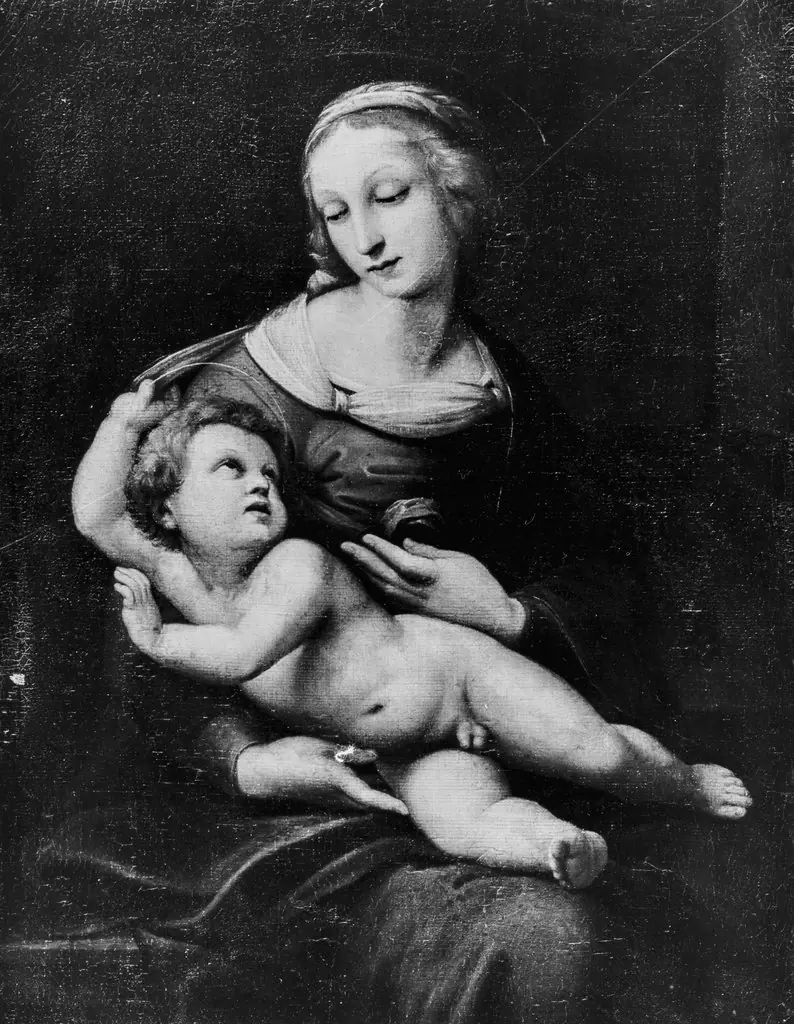
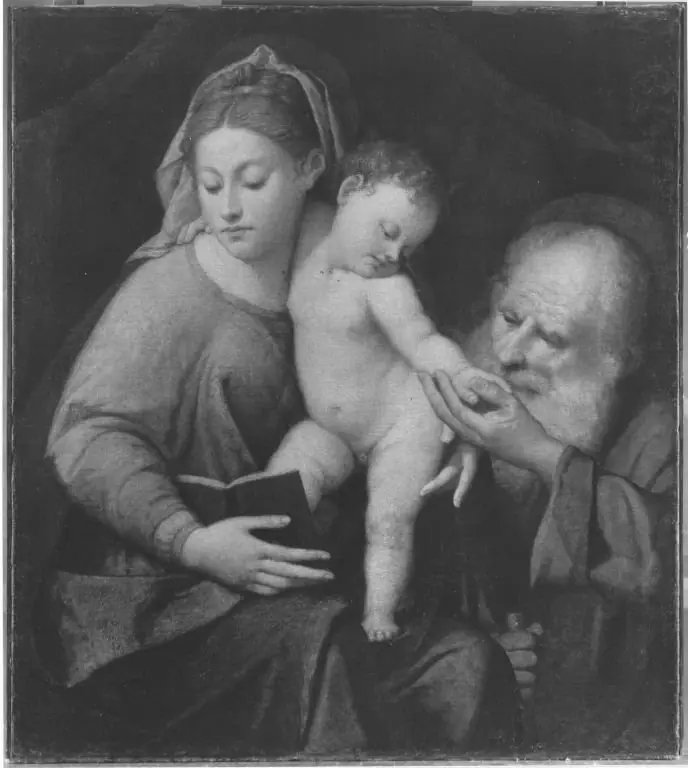
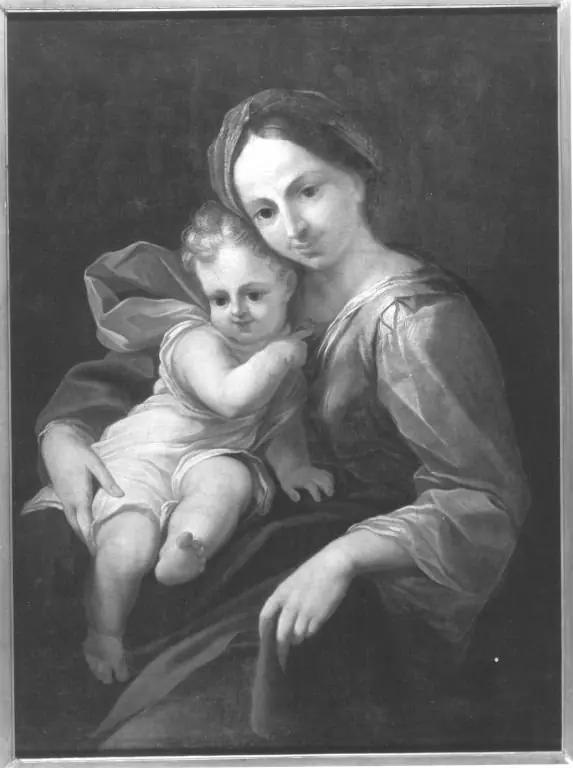
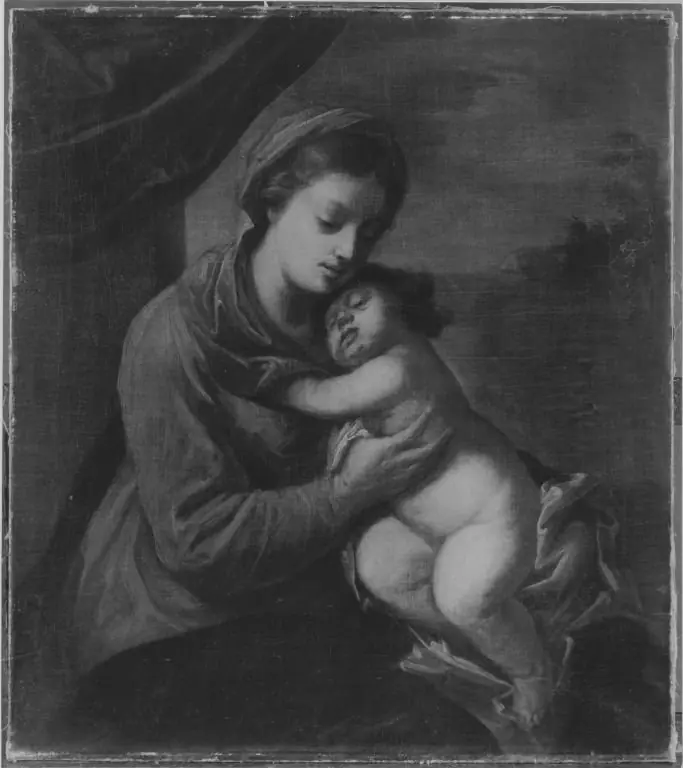
Virgin and Child with St. John
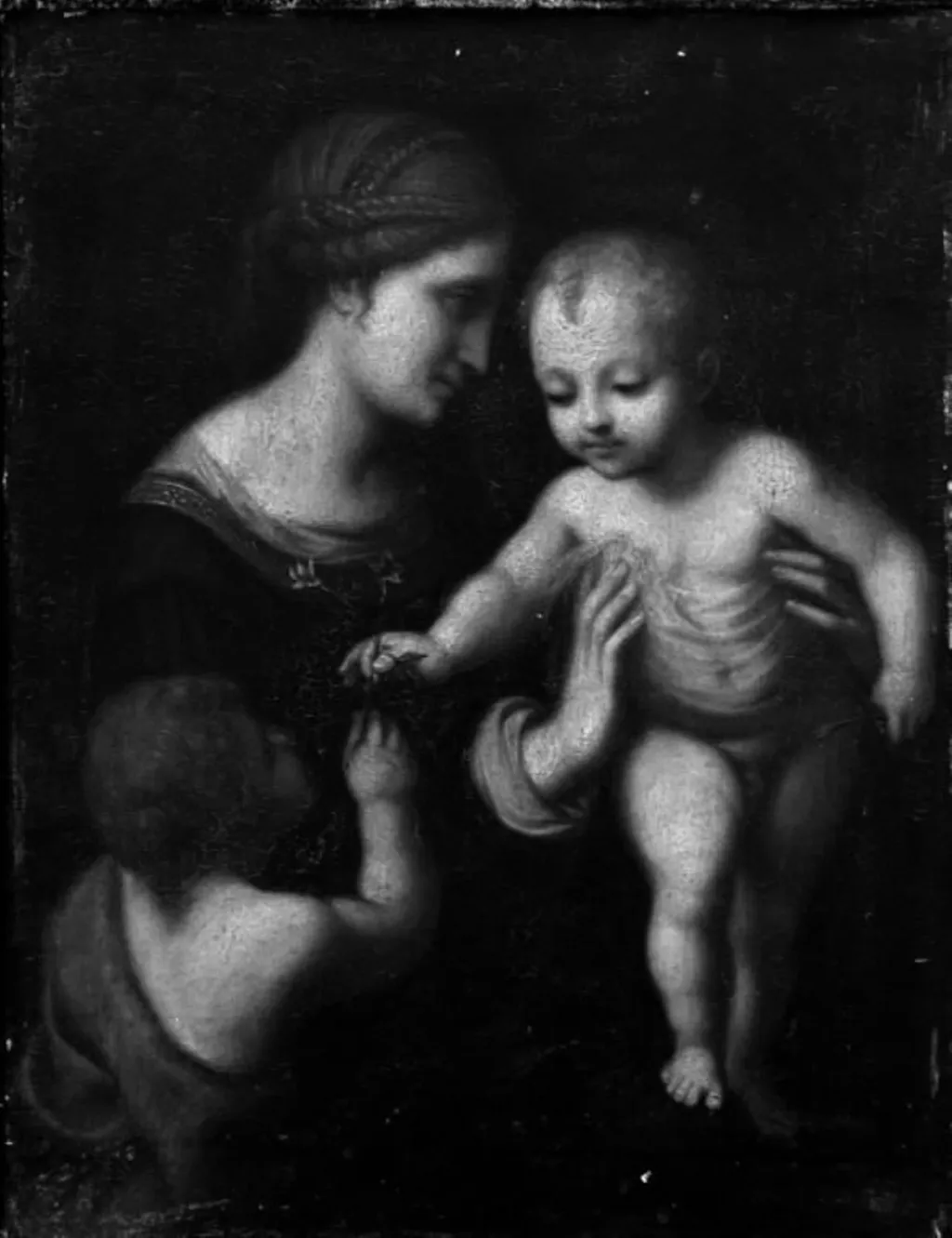
Virgin and Child with St. John is a photography by Unknown. It dates from 1529 and is held in the collection of the Statens Museum for Kunst. This work depicts the Virgin Mary with the infant Jesus and the young John the Baptist, painted around 1529.
About this work
Overview
The composition follows traditional devotional themes but is executed with a striking emphasis on light and shadow.
This work depicts the Virgin Mary with the infant Jesus and the young John the Baptist, painted around 1529. Rendered in monochrome, the image emphasizes form through tonal contrast rather than color. It is currently housed in the Museum of Ethnography, though its original context and authorship remain uncertain. The composition follows traditional devotional themes but is executed with a striking emphasis on light and shadow.
Subject & Meaning
The scene portrays a tender moment between the Virgin, the Christ Child, and John the Baptist, who as a child is often shown in proximity to Jesus as a sign of his future role as prophet. The physical closeness and gentle gestures suggest spiritual kinship and maternal care. The downward gaze of the infant and the reaching hand of the older child imply a quiet anticipation of divine destiny, common in Renaissance religious iconography.
Technique & Style
The image employs chiaroscuro to model the figures with dramatic depth, using stark contrasts between light and dark to define volume and spatial relationships. The Virgin’s curved posture and the soft modeling of the children’s forms suggest a familiarity with Italian Renaissance practices. Despite the absence of color, the tonal range conveys texture and emotional intimacy, enhancing the sense of quiet reverence.
History & Provenance
The painting’s origins are unclear; its attribution to a specific artist remains unverified, and the date of c. 1529 is based on stylistic analysis. It entered the Museum of Ethnography’s collection without documented provenance prior to its acquisition. The black-and-white photographic reproduction suggests it may have been recorded for study or cataloging purposes, possibly as a copy or variant of a lost original.
Context
Created during the early 16th century, the work reflects the enduring influence of High Renaissance devotional imagery, particularly in its focus on human emotion and naturalistic form. While not produced in Italy, its stylistic choices align with broader European trends in religious art. Its presence in an ethnographic museum may indicate its use as a cultural artifact rather than a liturgical object, possibly collected for comparative study.
Legacy
Though not widely exhibited or studied, the image serves as an example of how Renaissance compositional principles were adapted beyond major artistic centers. Its preservation in an ethnographic context highlights how religious imagery was transmitted and reinterpreted across regions and media. The work contributes to understanding the visual language of piety in early modern Europe, even in its more modest or anonymous forms.
Artist & collection

 Domestic Scene
 Giacomo and Cardinal Marco, investing Andrea, Abbot of San Zeno, with his Benefice
 The Nymph of Fontainebleau
 Portrait of a Woman
 Madonna and Child with Saints in the Enclosed Garden
 Venus and Minerva
 Family Group of Four on Sofa
 Wall painting from Room H of the Villa of P. Fannius Synistor at Boscoreale