Artwork
Accounting for the Purchases in the Kitchen
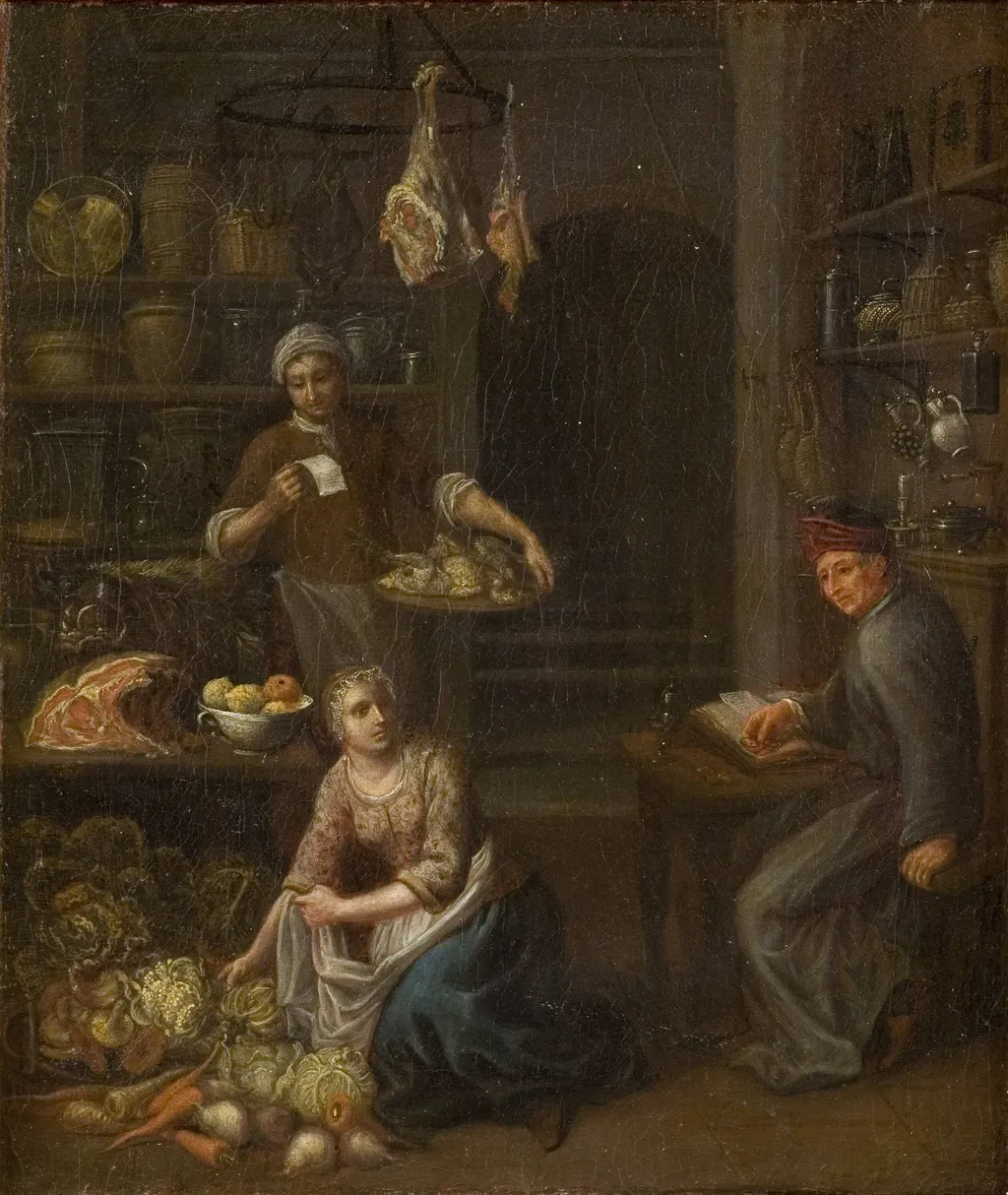
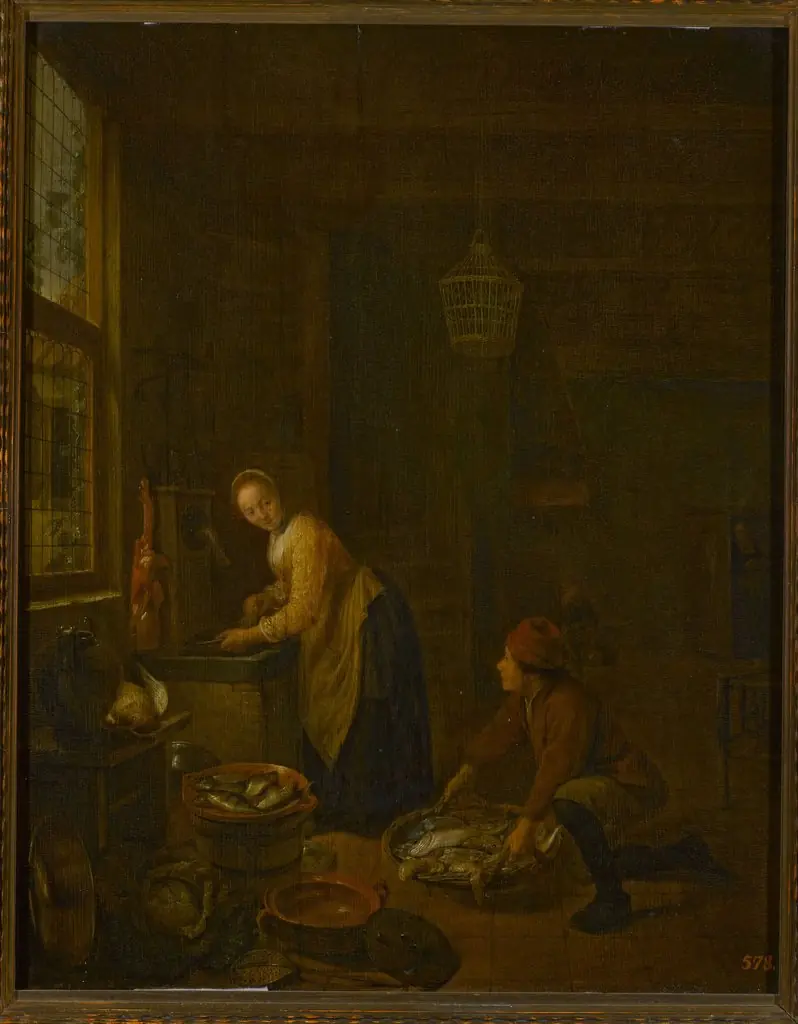
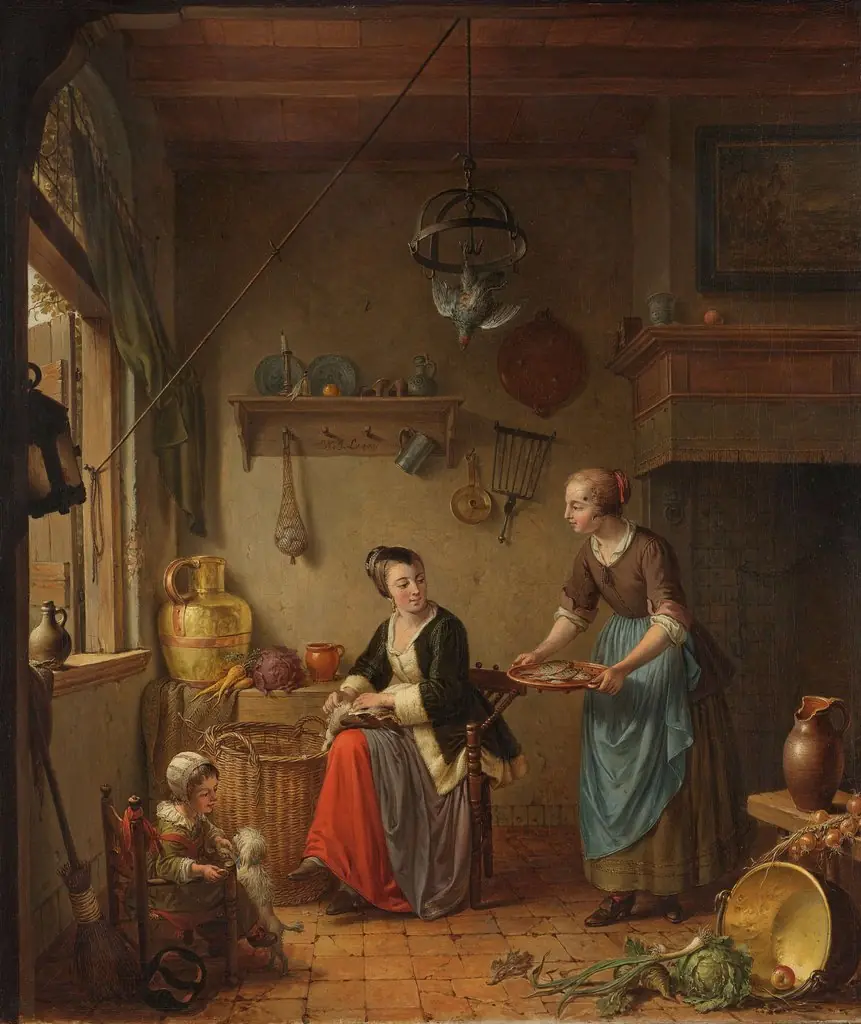
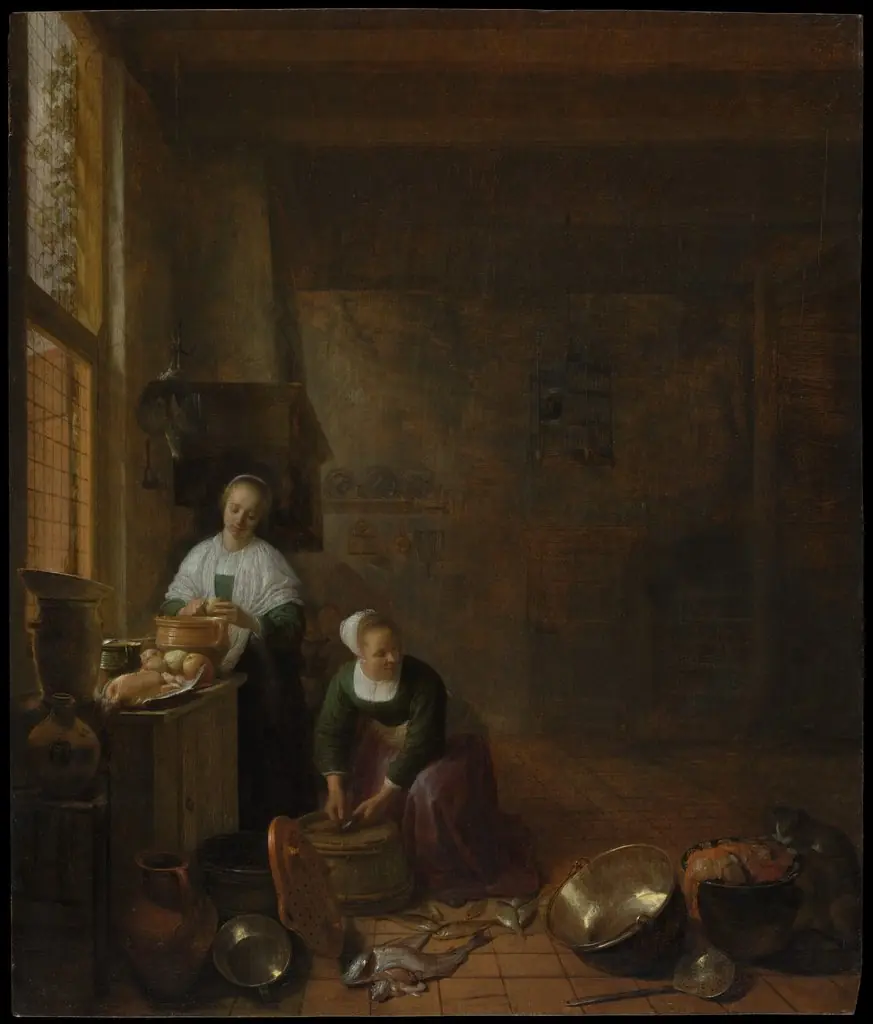
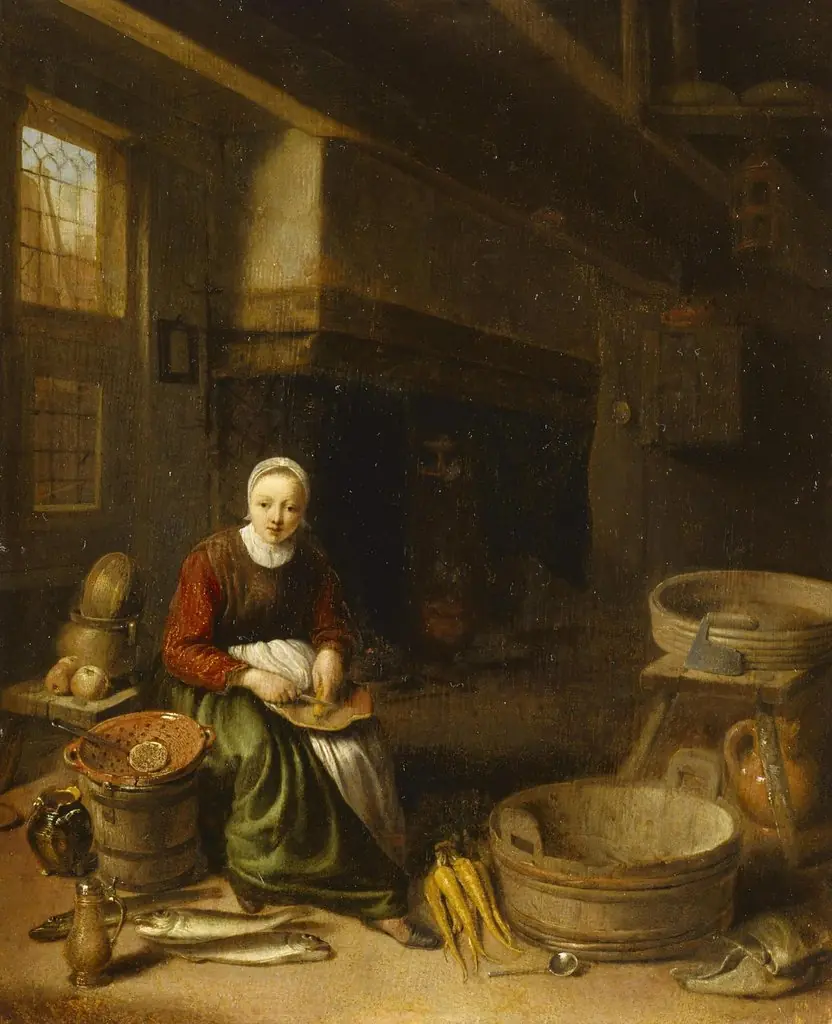
Accounting for the Purchases in the Kitchen is a photography by Unknown. It dates from 1750 and is held in the collection of the Statens Museum for Kunst. Created around 1750, this painting depicts a domestic kitchen in quiet activity.
About this work
Overview
Created around 1750, this painting depicts a domestic kitchen in quiet activity. It is part of the collection at the Museum of Ethnography and reflects the material culture of mid-18th-century household management. The scene captures routine tasks—sorting produce, handling money, preparing food—without overt drama, emphasizing the quiet labor of daily life.
Subject & Meaning
The presence of stored goods and currency suggests an accounting of household resources, possibly for domestic budgeting or small-scale trade.
The painting portrays three individuals engaged in the logistics of kitchen economy: one woman counts money while surrounded by vegetables, another carries bread and coins, and a third peels fruit. The presence of stored goods and currency suggests an accounting of household resources, possibly for domestic budgeting or small-scale trade. The focus on mundane objects implies a valuation of everyday economic order.
Technique & Style
The artist renders textures with careful attention—rough skins of root vegetables, woven baskets, metallic coins, and cured meats. Light falls selectively, defining forms through subtle contrasts rather than dramatic illumination. The dark walls and cluttered shelves ground the scene in realism, avoiding idealization. Composition directs the eye toward the woman handling money, anchoring the narrative in transaction and record-keeping.
History & Provenance
The painting entered the Museum of Ethnography’s collection as part of a broader effort to document domestic life in pre-industrial Europe. Its origin is undocumented prior to its acquisition, but stylistic elements align with regional Dutch or Flemish genre traditions. No records of exhibition or ownership before the 20th century are known, suggesting it remained in private hands until institutional preservation.
Context
In the mid-18th century, household management was a critical domestic responsibility, especially among urban middling classes. Detailed record-keeping of food, supplies, and expenditures was common. This painting reflects a cultural moment when domestic economy was both practical and morally significant, with women often overseeing these tasks as part of their social role.
Legacy
The work contributes to the historical record of everyday labor, offering insight into pre-industrial domestic economies. It stands as a quiet counterpoint to grand historical narratives, highlighting the significance of routine tasks. Its preservation underscores a shift in museum practice toward valuing ordinary life as worthy of study and display.
Artist & collection

 Domestic Scene
 Giacomo and Cardinal Marco, investing Andrea, Abbot of San Zeno, with his Benefice
 The Nymph of Fontainebleau
 Portrait of a Woman
 Madonna and Child with Saints in the Enclosed Garden
 Venus and Minerva
 Family Group of Four on Sofa
 Wall painting from Room H of the Villa of P. Fannius Synistor at Boscoreale