Artwork
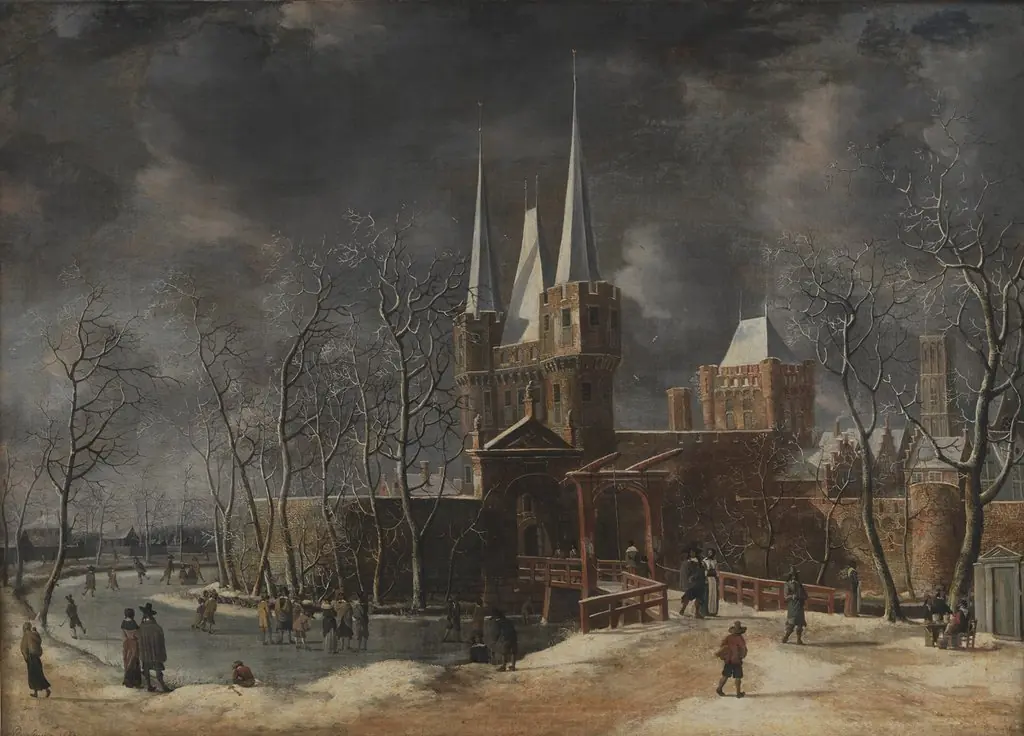
Winter's Day in Breda
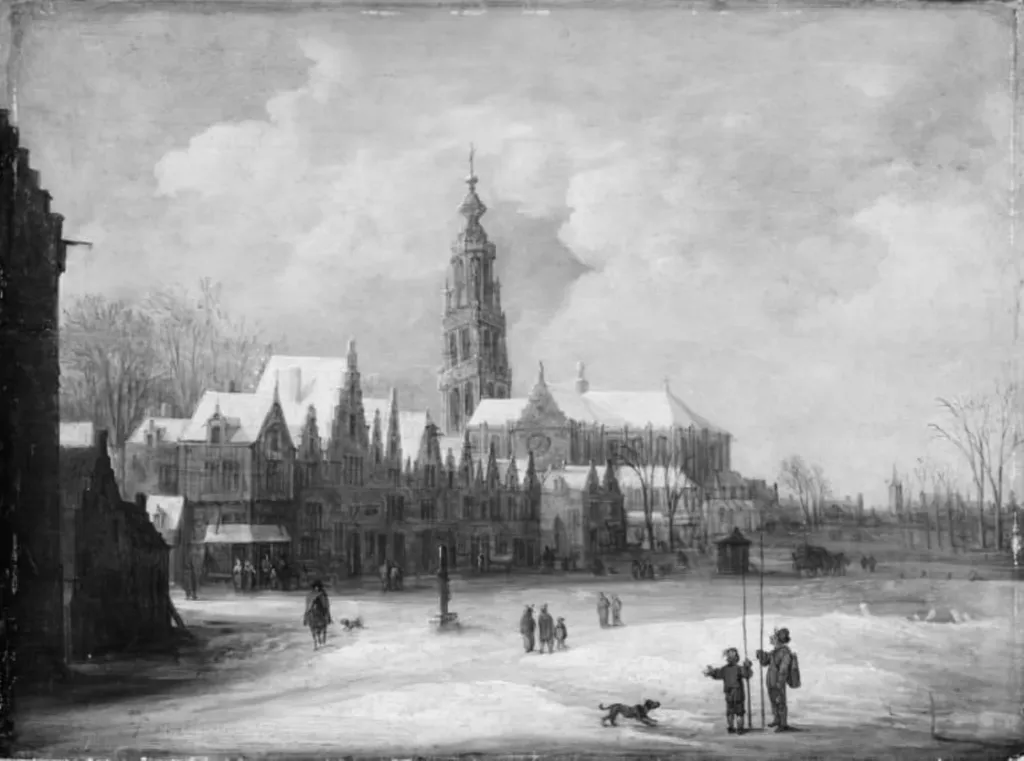
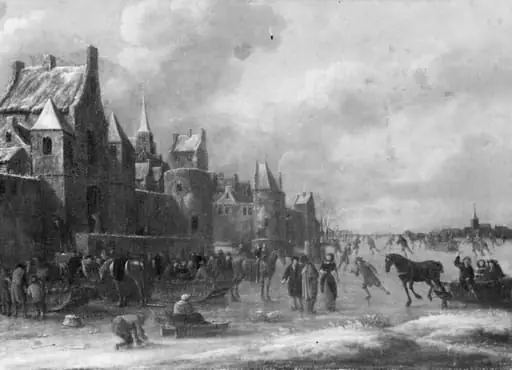
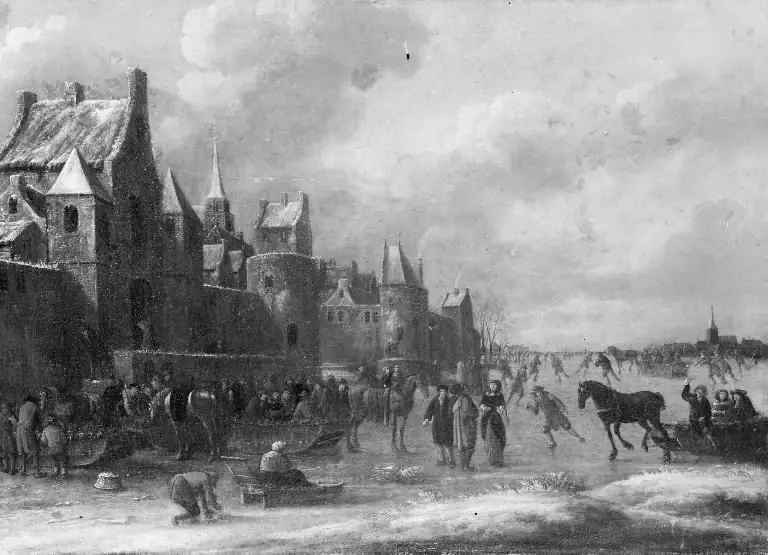
Winter's Day in Breda is a photography by Unknown. It dates from 1650 and is held in the collection of the Statens Museum for Kunst. Winter’s Day in Breda, attributed to the anonymous artist known as 938_person, dates to around 1650.
About this work
Overview
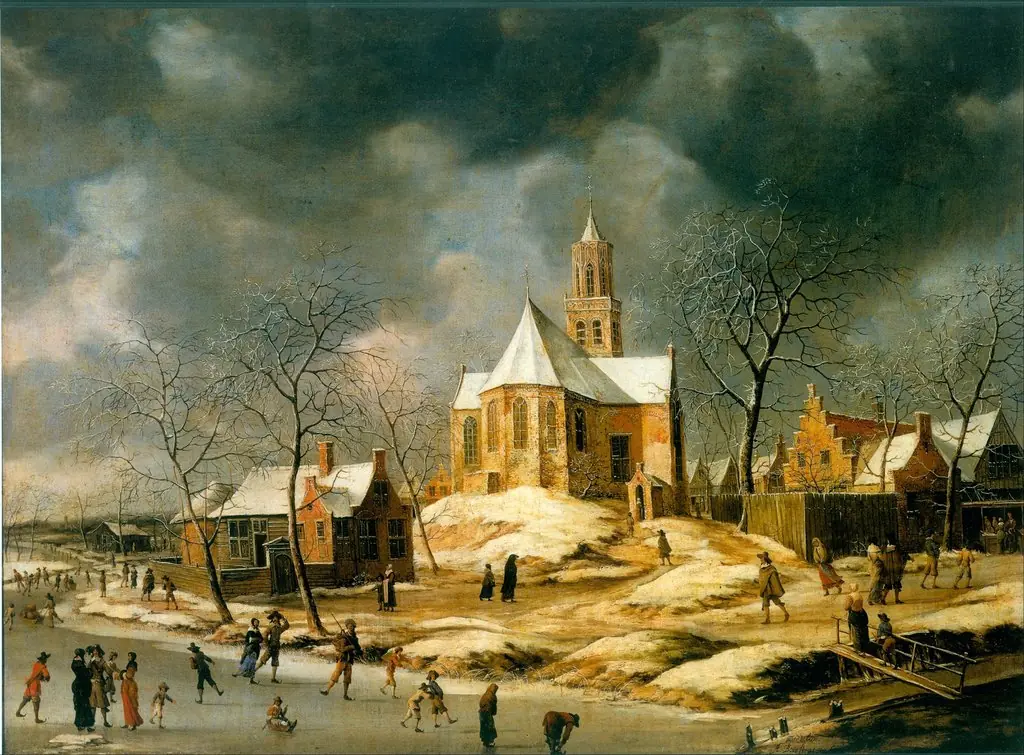
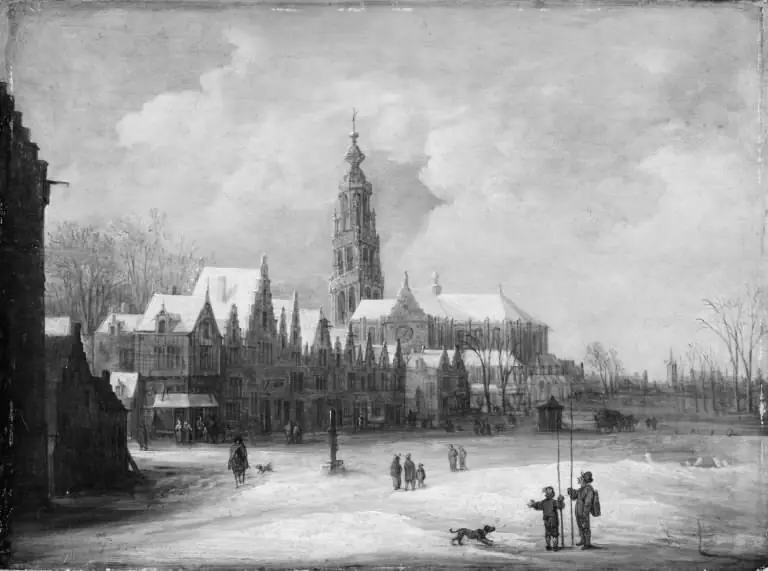
Winter’s Day in Breda, attributed to the anonymous artist known as 938_person, dates to around 1650. The oil painting is part of the collection of the Museum of Ethnography. It depicts a snow‑covered town square dominated by a tall, spired church, with modest surrounding buildings, bare trees, and figures moving through the cold landscape.
Subject & Meaning
The composition centers on daily life in a Northern European winter. Pedestrians bundled against the chill traverse the square, while two boys with sticks and a dog suggest play amid the frost. The scene captures the communal rhythm of a market or gathering place, emphasizing the coexistence of work, leisure, and the harsh seasonal environment.
Technique & Style
Executed in the mid‑seventeenth‑century Dutch manner, the work employs a muted palette of whites, grays, and earth tones to convey snowfall and atmospheric depth. Careful modeling of light on the snow and the reflective surfaces of the church’s spire creates a sense of spatial recession, while the fine brushwork on the figures conveys movement without excessive detail.
History & Provenance
Created circa 1650, the painting entered the Museum of Ethnography’s holdings at an unspecified date, where it remains on display. The artist’s identity is recorded only as the catalog number 938_person, indicating a lack of archival documentation and suggesting the work was likely acquired through a broader collection of regional genre scenes.
Context
The central edifice is the Grote Kerk, a term meaning “Great Church” common to many Dutch towns. Such churches functioned as civic landmarks, hosting religious services, market gatherings, and civic ceremonies. Their prominent placement in winter scenes underscores their role as focal points of community life, especially in towns where the church tower served as a visual anchor in snowy weather.
Artist & collection

 Domestic Scene
 Giacomo and Cardinal Marco, investing Andrea, Abbot of San Zeno, with his Benefice
 The Nymph of Fontainebleau
 Portrait of a Woman
 Madonna and Child with Saints in the Enclosed Garden
 Venus and Minerva
 Family Group of Four on Sofa
 Wall painting from Room H of the Villa of P. Fannius Synistor at Boscoreale